



Moving Well · 18 October 2026 · 5 min read
Why your instructor keeps mentioning your pelvic floor
What it is, why it matters for everyone, and how Pilates trains it.
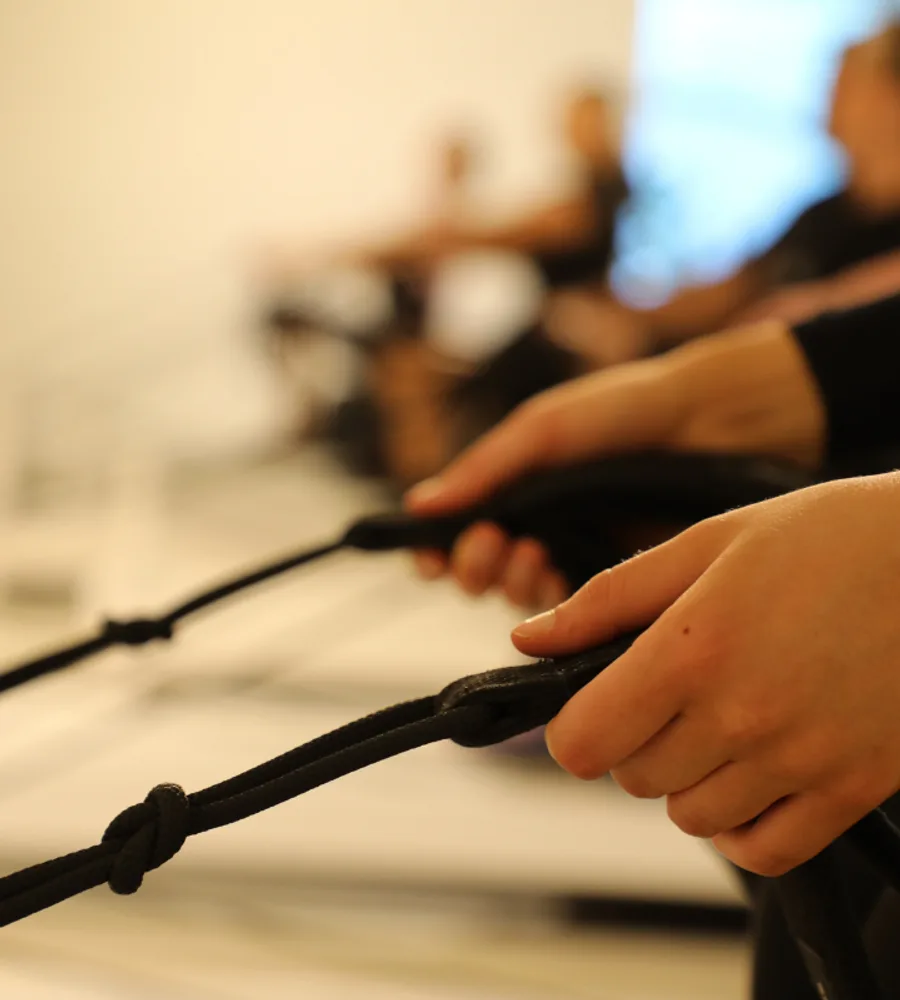
Somewhere in most Pilates classes, between the spring changes and the breathing cues, your instructor will mention your pelvic floor. New members respond in a few classic ways: vague compliance, mild embarrassment, or quietly wondering whether the cue was meant for someone else in the room.
It was meant for you. Everyone has a pelvic floor, every body relies on it constantly, and Pilates is one of the few forms of mainstream exercise that trains it deliberately. Here is the plain language explanation of what it is, why it earns so many mentions, and what those cues are actually asking you to do. The standard note applies: for symptoms and specific concerns, a GP or pelvic health physiotherapist is the right port of call, and what follows is general information.
The muscles nobody taught you about
The pelvic floor is a sling of muscle spanning the base of your pelvis, from tailbone to pubic bone, side to side. Think of it as the floor of your torso, which is exactly where it sits in the core cylinder we describe in what core strength actually means: diaphragm as the roof, deep abdominals and back muscles as the walls, pelvic floor underneath holding the whole operation up.
Its job description is longer than most people realise. It supports your pelvic organs against gravity all day. It manages continence, the function everyone associates with it. It contributes to spinal and pelvic stability every time you lift, carry, cough or climb stairs. And it works as part of the breathing system, moving subtly with every inhale and exhale in partnership with the diaphragm.
Like any muscle group, it can be weak, and, less famously, it can also be overly tense, gripping constantly and never releasing properly. Both directions cause problems, which is why good training involves learning to contract and to let go.
Why it comes up so often in Pilates
Two reasons, one historical and one mechanical.
Historically, the method has always trained from the centre outwards, and the pelvic floor is part of that centre. The deep support system engages first, then the limbs move. That ordering is baked into how every exercise is taught.
Mechanically, the pelvic floor works in a team, and Pilates trains the whole team at once. When you exhale on effort, the breath pattern every class drills, the pelvic floor naturally lifts in coordination with the deep abdominals. When your instructor cues gentle engagement before a heavy press, they are teaching the pre load habit that protects you when you later lift a toddler, a wheelbarrow or the world's heaviest grocery run. Hundreds of coordinated, breath linked repetitions per class, without a single crunch of isolated effort.
This team based approach is why Pilates is so often recommended alongside pelvic health physiotherapy. The physio retrains the specific function. The classes build it into whole body movement, which is where life actually happens.
Who this matters for
The honest answer is everyone, though a few groups have particular stakes.
Women through pregnancy and after birth are the obvious group, since pregnancy loads the pelvic floor for months and birth asks it for the performance of a lifetime. Training before, during with the right modifications, and after, as we cover in Pilates during pregnancy, supports the whole arc, and our Mums and Bubs friendly classes exist for exactly that rebuilding chapter.
Anyone in midlife and beyond, of any gender, has skin in the game too. These muscles change with age and hormones like every other muscle, and the difference between a trained and untrained pelvic floor shows up in continence, comfort and confidence across the later decades. Men are not exempt, and the ones who train it tend to become converts after prostate related health events make its relevance unmistakable.
And people who strain hard, whether lifting weights, chronic coughing or high impact sport, benefit from a base that manages pressure well.
What the cue is actually asking
When an instructor says something like "gently lift through the pelvic floor", here is the translation. Imagine slowing a wee midstream, or gently lifting an internal lift one floor, paired with your exhale. The effort level is quiet, maybe twenty or thirty percent, not a clench. Jaw soft, glutes not gripping, breath still moving.
Just as important is the other half: letting it go on the inhale. The cycle of engage and release, synced with breath, is the training. A permanently clenched floor is not a strong one, the same way a permanently shrugged shoulder is not a fit one.
If you cannot feel anything happening, welcome to the majority of beginners. Awareness arrives with practice, Control classes give you the slow pace to hunt for it, and a pelvic health physio can assess things properly if you want certainty. If anything causes pain or symptoms, that is physio territory, and telling your instructor gets exercises adjusted immediately.
Quiet muscles, loud benefits
Nobody photographs their pelvic floor progress. But members who train it consistently report the kind of benefits that change daily life: laughing and sneezing without calculation, jumping on the trampoline with the kids, running for the bus with confidence, better support under every lift. In Jump classes, a well trained floor is quietly why the bouncing feels secure.
So next class, when the cue floats past, take it personally, in the best way. Book a Control class at Wollongong or Shellharbour through our timetable, breathe as instructed, and give the most underrated muscles you own the training they have been waiting for.