



Benefits of Pilates · 25 September 2026 · 5 min read
What core strength actually means
It is more than abs. How a strong trunk changes the way you walk, sit, run and lift.
Ask ten people what core strength means and nine will point at their stomach. It is an understandable answer, and it is wrong in a way that matters, because chasing a six pack and building a genuinely strong core are two different projects with two different payoffs.
Since the core comes up in nearly every class we teach, let us unpack what your instructor actually means by it, and why it changes so much more than how your midsection looks.
Your core is a cylinder, not a six pack
The muscle everyone knows, the rectus abdominis, is only the front panel. Your core is closer to a cylinder that wraps your whole trunk.
At the front and sides sit the deep abdominals, including the transversus abdominis, which works like a wide supportive band around your middle. Behind them, layers of back muscles run along and between your vertebrae. The top of the cylinder is your diaphragm, the breathing muscle. The base is your pelvic floor. Add the obliques, which handle rotation and side bending, and the glutes, which anchor the whole system to your legs.
When all of that works together, your spine is supported from every direction at once. When only the showy front muscles work, you get someone who can hold a plank but still tweaks their back lifting a toddler. You have probably met that person. Some of us have been that person.
Why it matters more than most training
Every movement you make travels through your trunk. Walking, reaching a high shelf, carrying shopping up from the car, swinging a golf club, getting off the floor. A stable centre lets your arms and legs produce force without your spine paying for it.
This is why core strength shows up in such unexpected places. Members tell us their surfing improved, their running got easier, their back stopped aching on long drives, they stopped bracing before picking up their kids. None of them came to Pilates for those specific things. They came for a stronger middle and the rest followed, because the middle is involved in everything.
There is a protective side too. A well trained trunk shares load across many muscles instead of dumping it into passive structures like discs and ligaments. That is one reason controlled core work features so heavily in modern rehab, and why we wrote separately about Pilates and lower back pain.
Why crunches are not the answer
Crunches train one movement, spinal flexion, mostly in one muscle, at one angle, lying on the floor. Life does not load you that way. Life asks your core to resist twisting when you carry a bag on one shoulder, to stay long and strong when you reach overhead, to transfer force from legs to arms when you push a mower.
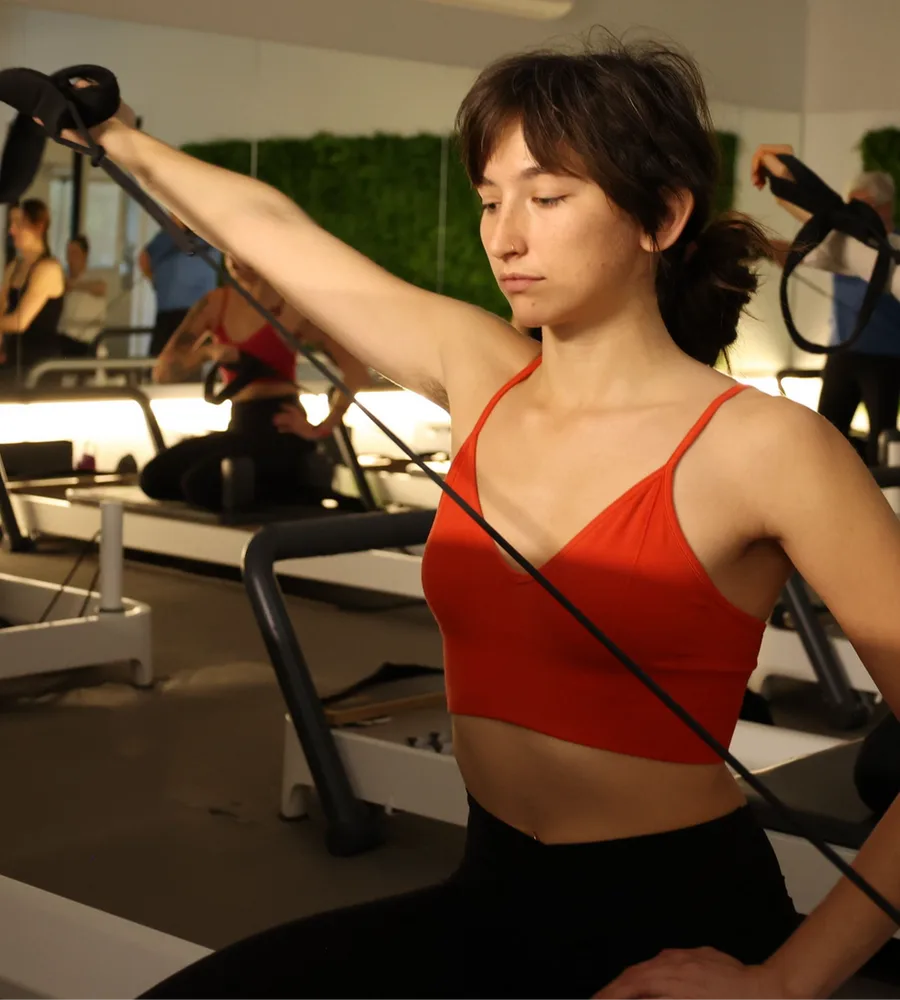
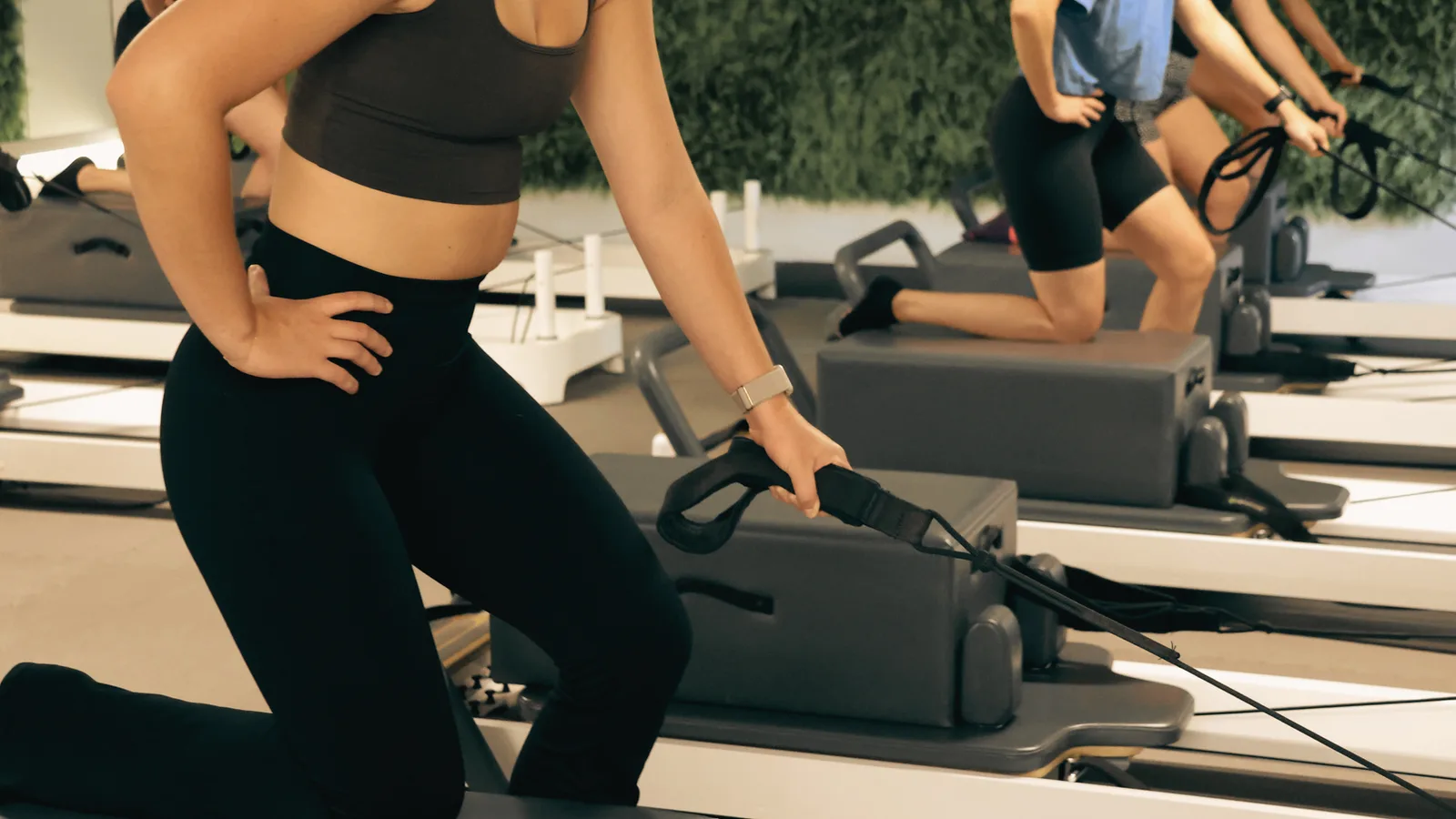
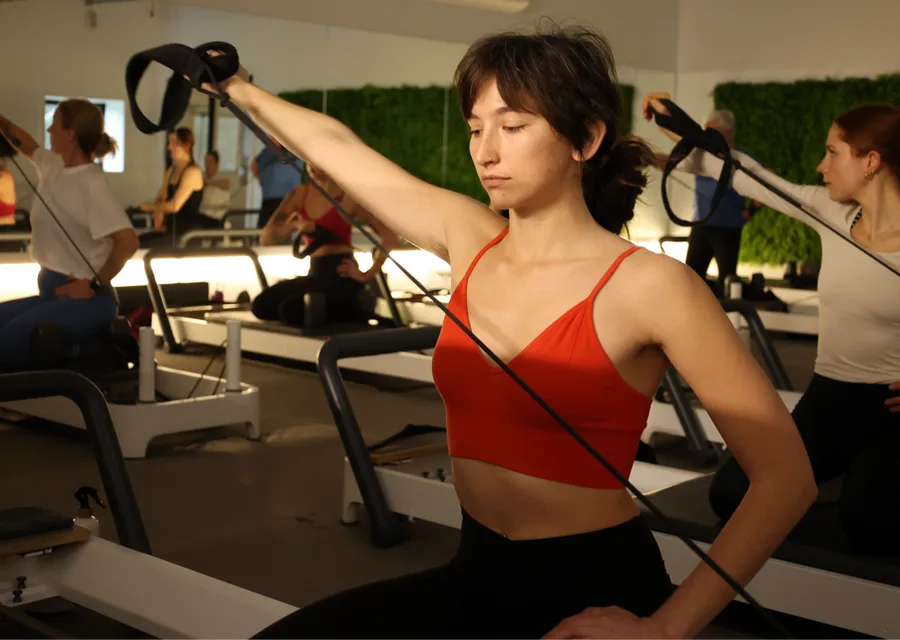
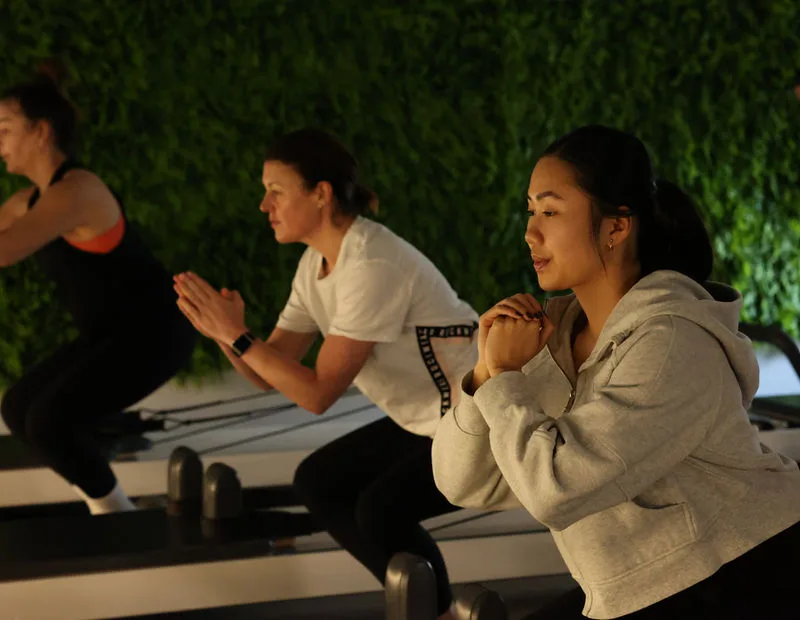
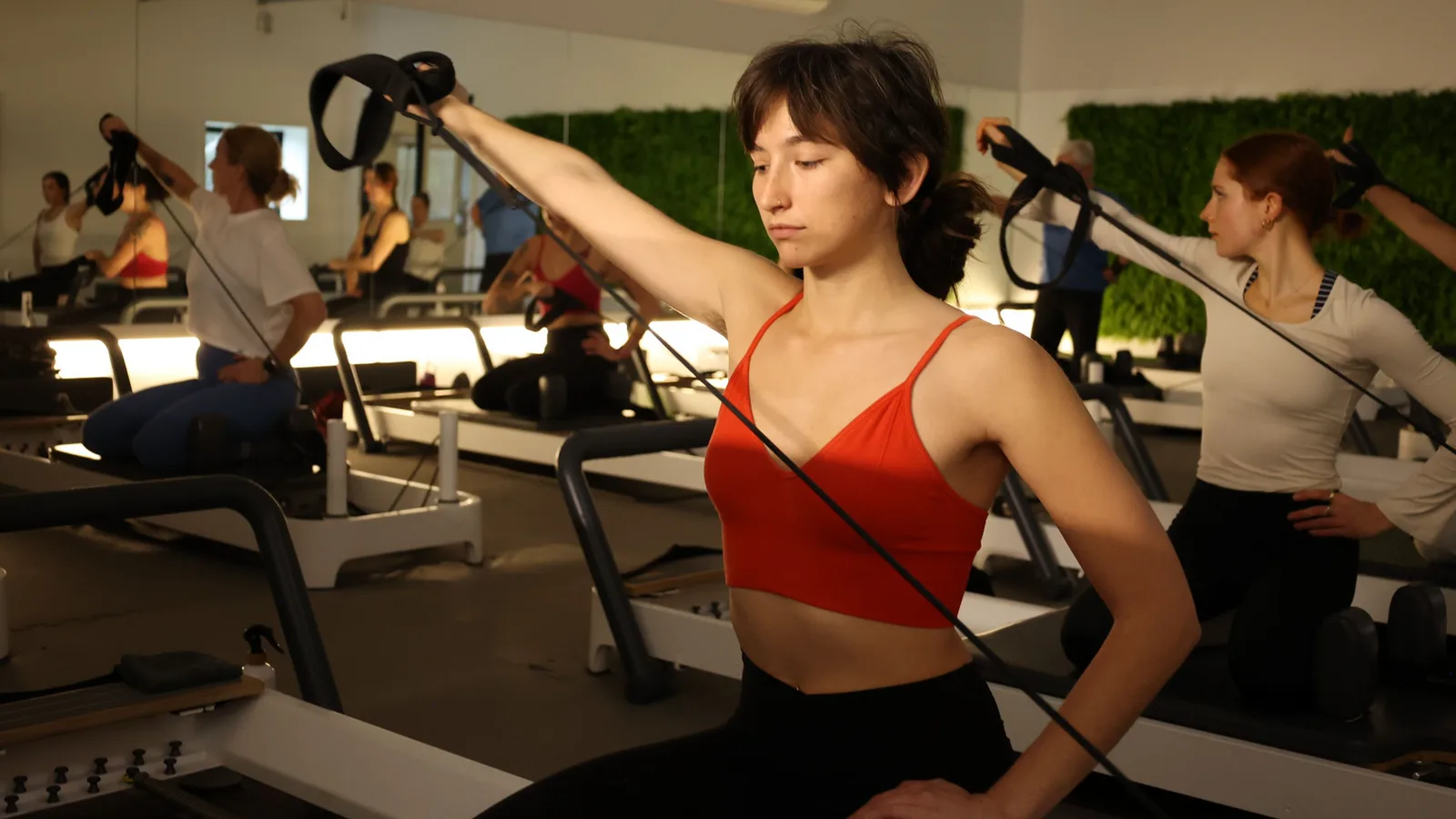
Good core training reflects that variety, and this is exactly where the Reformer earns its keep. The carriage moves underneath you, so your trunk has to stabilise constantly, during leg work, arm work, kneeling work, everything. Half the core training in a Reformer class happens in exercises that do not look like core exercises at all. Your abdominals are working in footwork. They are working hard in lunges. They never really clock off.
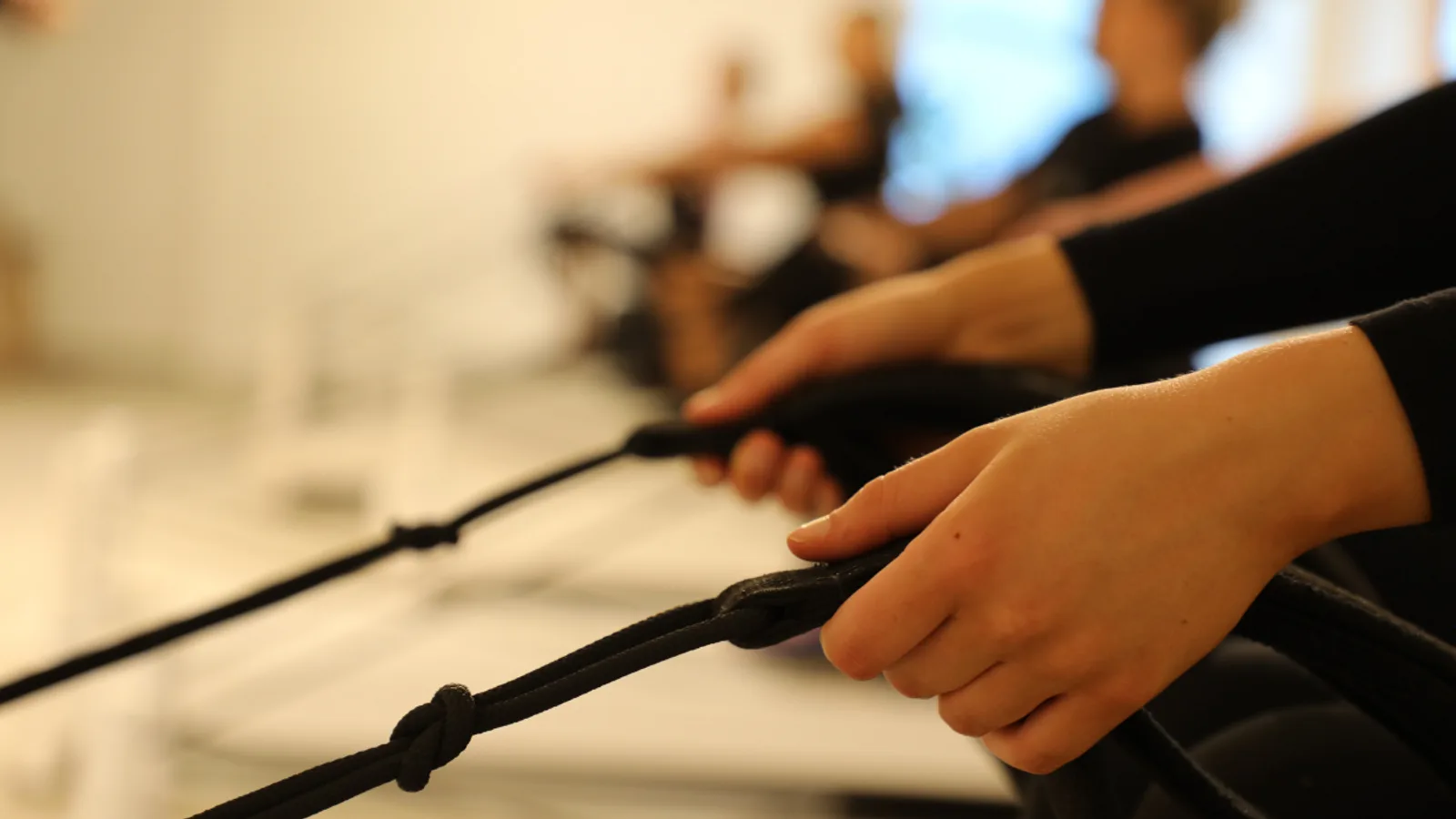
The springs matter too. They load your muscles on the way out and challenge your control on the way back in, so you build strength through full ranges of motion rather than in one cramped little crunch.
What a strong core feels like
Not much like a gym pump, honestly. The signs are quieter and better.
You stand taller without thinking about it, because standing tall stops being effortful. You feel steadier, on a paddleboard, on a ladder, stepping off a kerb. Awkward lifts feel organised instead of risky. Your lower back complains less at the end of a long day. In class, exercises that once left you shaking become smooth, and your instructor cues you less because your body has learned the position on its own.
Most people feel the first hints of this within their first ten or so sessions, usually noticing it in their abdominals first. The deeper changes, the posture and the steadiness, build over a few months of consistent classes. Two or three sessions a week is the sweet spot we suggest, and we cover the why in our realistic guide to Pilates frequency.
Where to feel it for yourself
Any class on our timetable trains your core, because that is simply how the method works, but a few are worth highlighting.
Control is the best starting point. The slow pace gives you time to actually find the deep muscles rather than powering past them, and your instructor can refine your technique while you do. Flow layers that control into a full body workout at a moving pace. Tempo, for the experienced, asks your trunk to keep up while everything happens faster. And Stretch gives the whole system a chance to lengthen and recover.
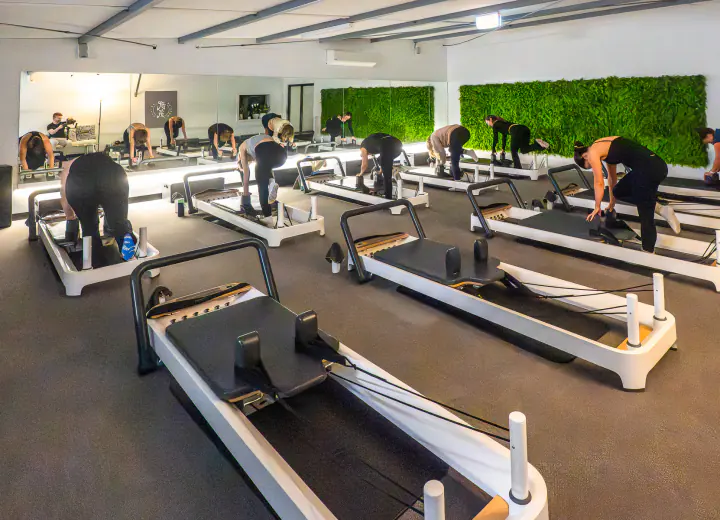
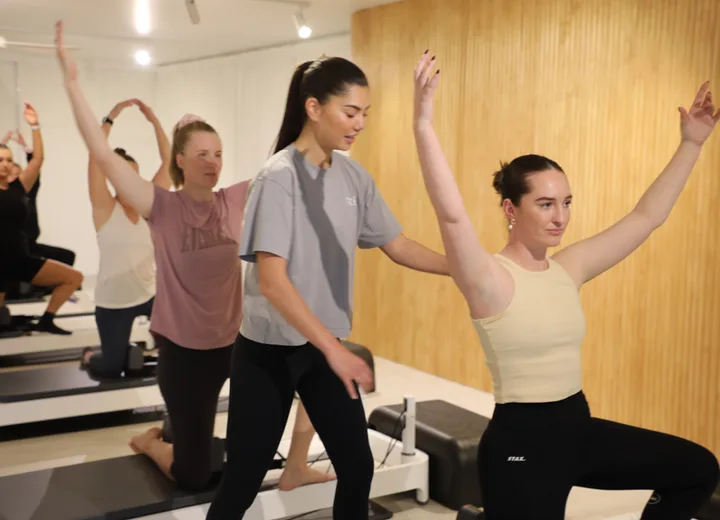
At both our Wollongong and Shellharbour studios, classes are small enough that an instructor can see whether you are genuinely working from your centre or quietly cheating with your neck and hip flexors. Everyone cheats at first. It is fine. Getting caught is how you learn.
The honest summary
Core strength is not about how your stomach looks in a mirror. It is trunk wide support that makes every other physical thing in your life easier, safer and more comfortable, and it responds beautifully to consistent, well coached training.
If yours has been running on factory settings for a few years, come and wake it up. The 21 day trial gets you unlimited classes at both studios for $65, and Control classes run all week. Your future back will thank you for it.