
Getting Started · 2 November 2026 · 6 min read
Reformer words decoded: a beginner's glossary
Carriage, footbar, neutral spine and tabletop. A plain-English guide to the words you will hear in your first month of Reformer Pilates.
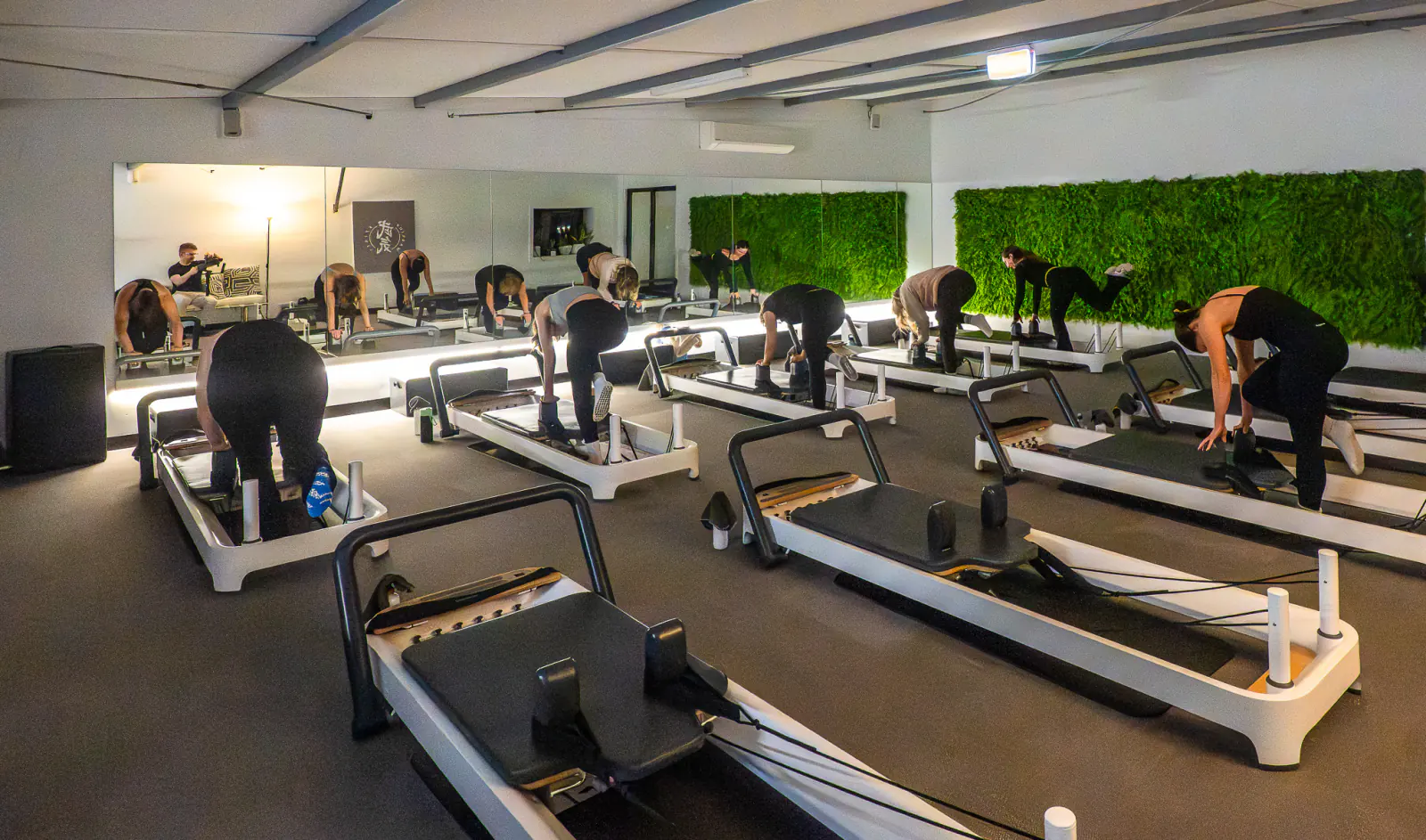
Every activity has its own language, and Pilates has more than most. In your first few classes you will hear about carriages and imprinting, and you may find yourself copying the person next to you while you work out what any of it means.
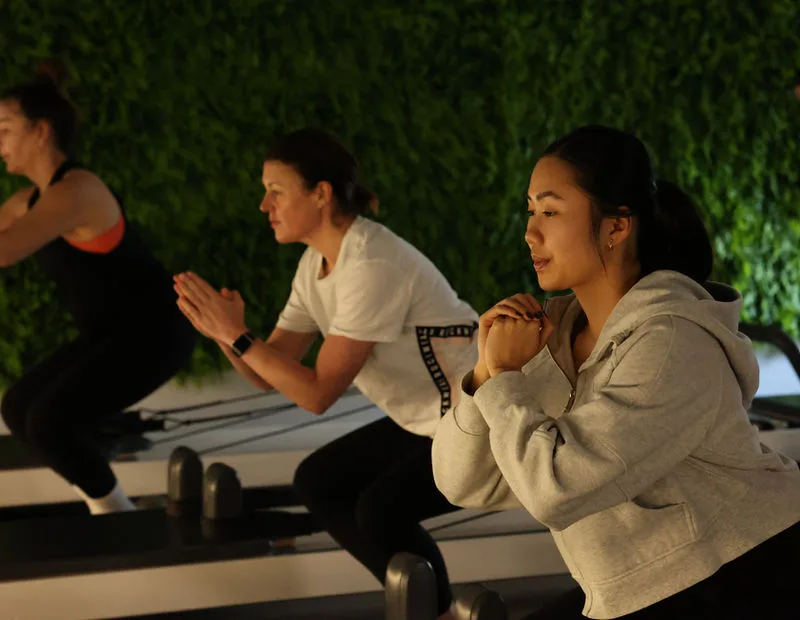
You will pick it all up within a few weeks without trying. If you would rather have a head start, this glossary covers the words you are most likely to hear in a TPW Reformer class, grouped so it is easy to find what you need. Instructors cue in plain language and demonstrate everything, so don't worry about memorising it. Treat this as a cheat sheet.
Parts of the machine
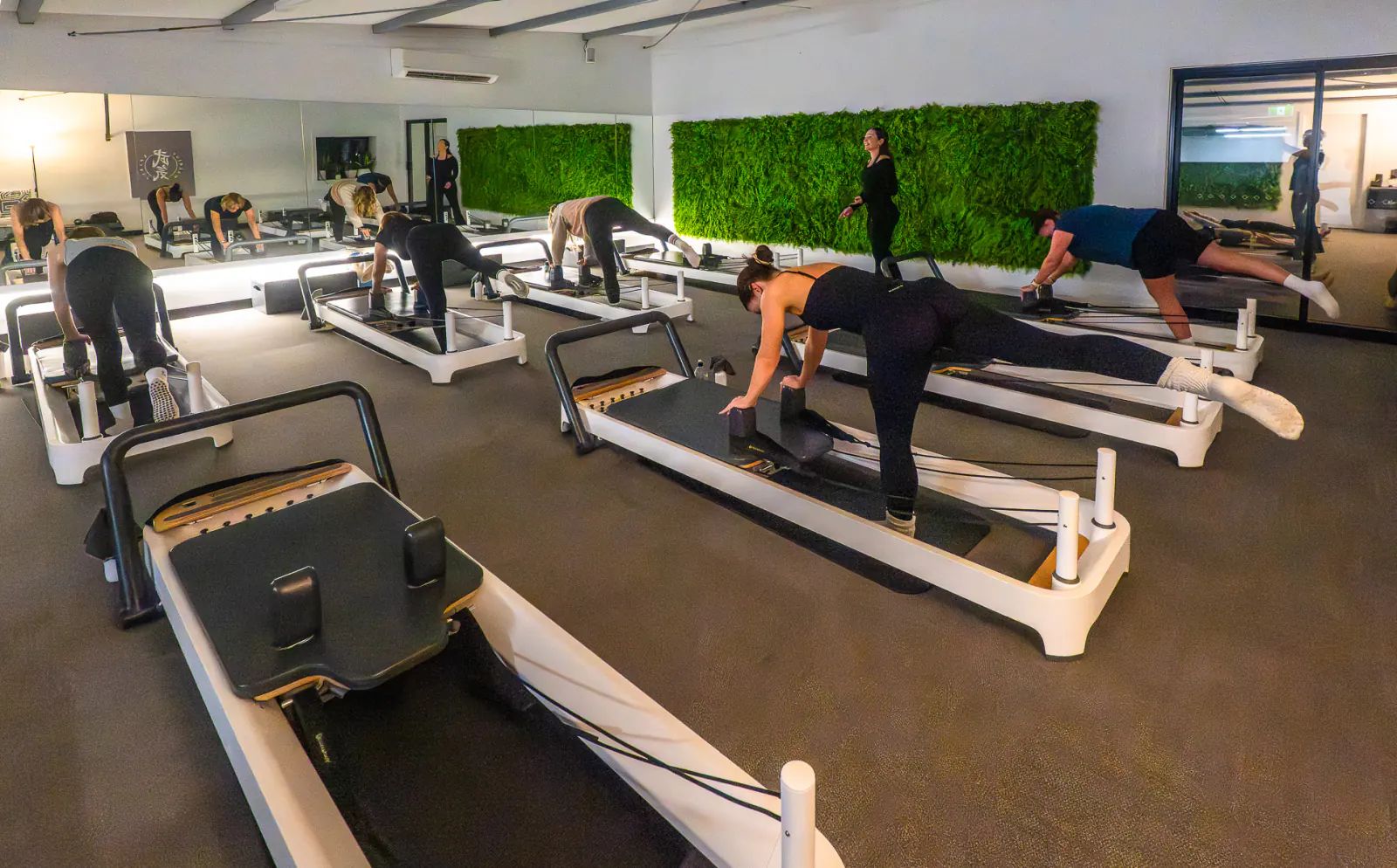
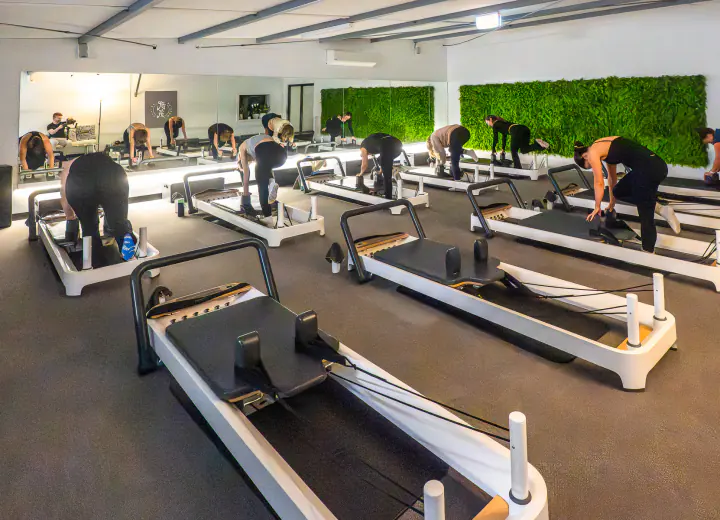
Reformer. The machine itself. A long frame with a sliding bed and a padded bar at one end, with springs underneath. It was developed by Joseph Pilates, who called his method Contrology.
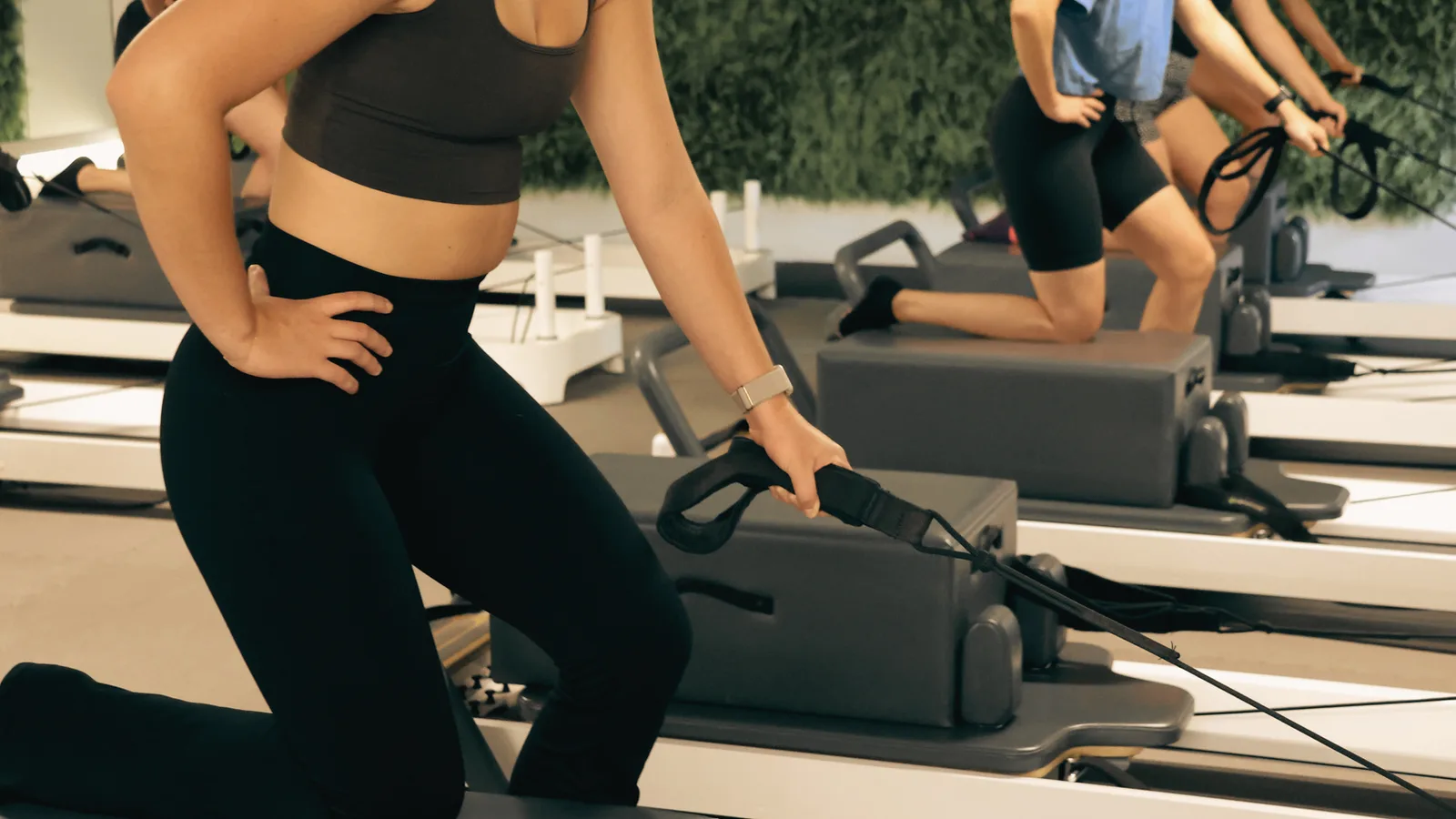
Carriage. The padded bed you lie or kneel on, and sometimes stand on. It slides along rails, and the springs pull it back towards the footbar end. Most of the work in class is either pushing the carriage away or controlling it as it comes home.
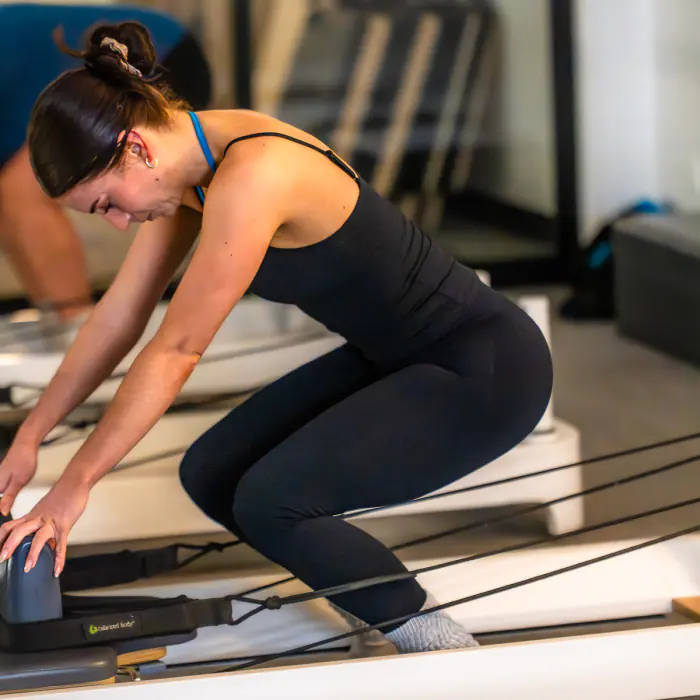
Footbar. The padded bar at the end of the Reformer. You press into it with your feet during footwork, and rest your hands on it for planks and kneeling work.
Springs. The springs under the carriage that create resistance, often colour coded by strength. Different springs have different strengths, and you can combine them to make an exercise lighter or heavier. More springs doesn't always mean easier or harder, which can be confusing at first. Our article on what all those springs do explains how they work.
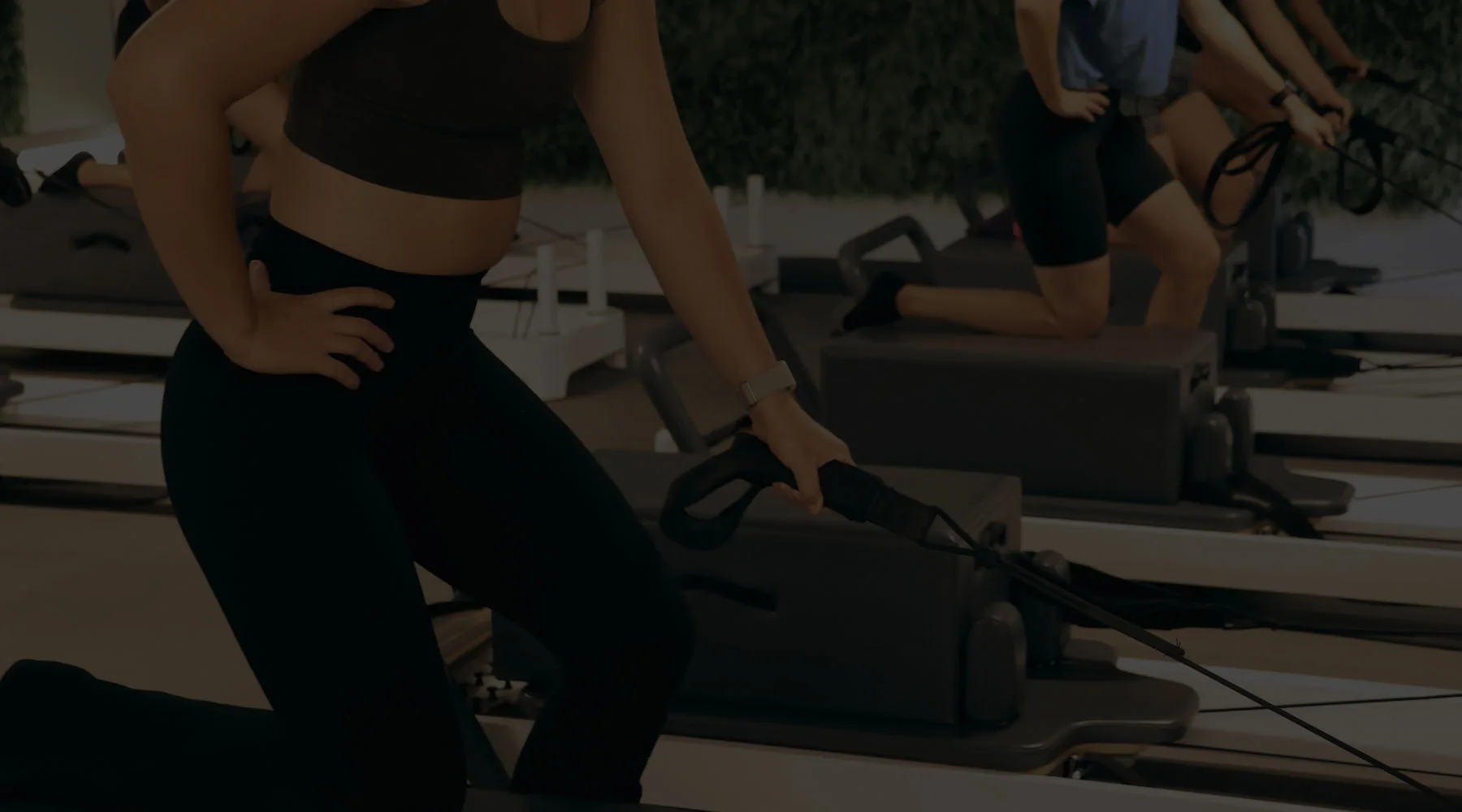
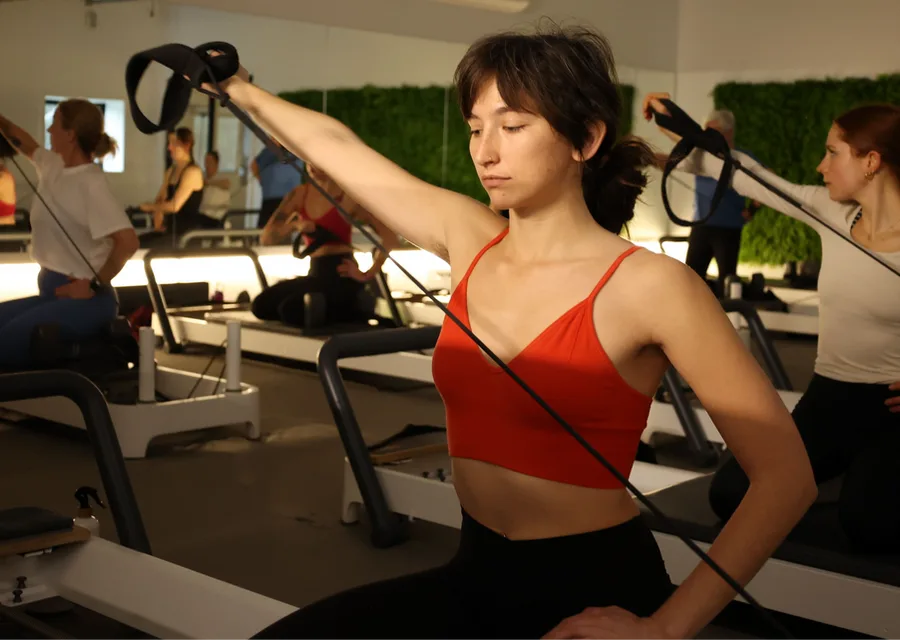
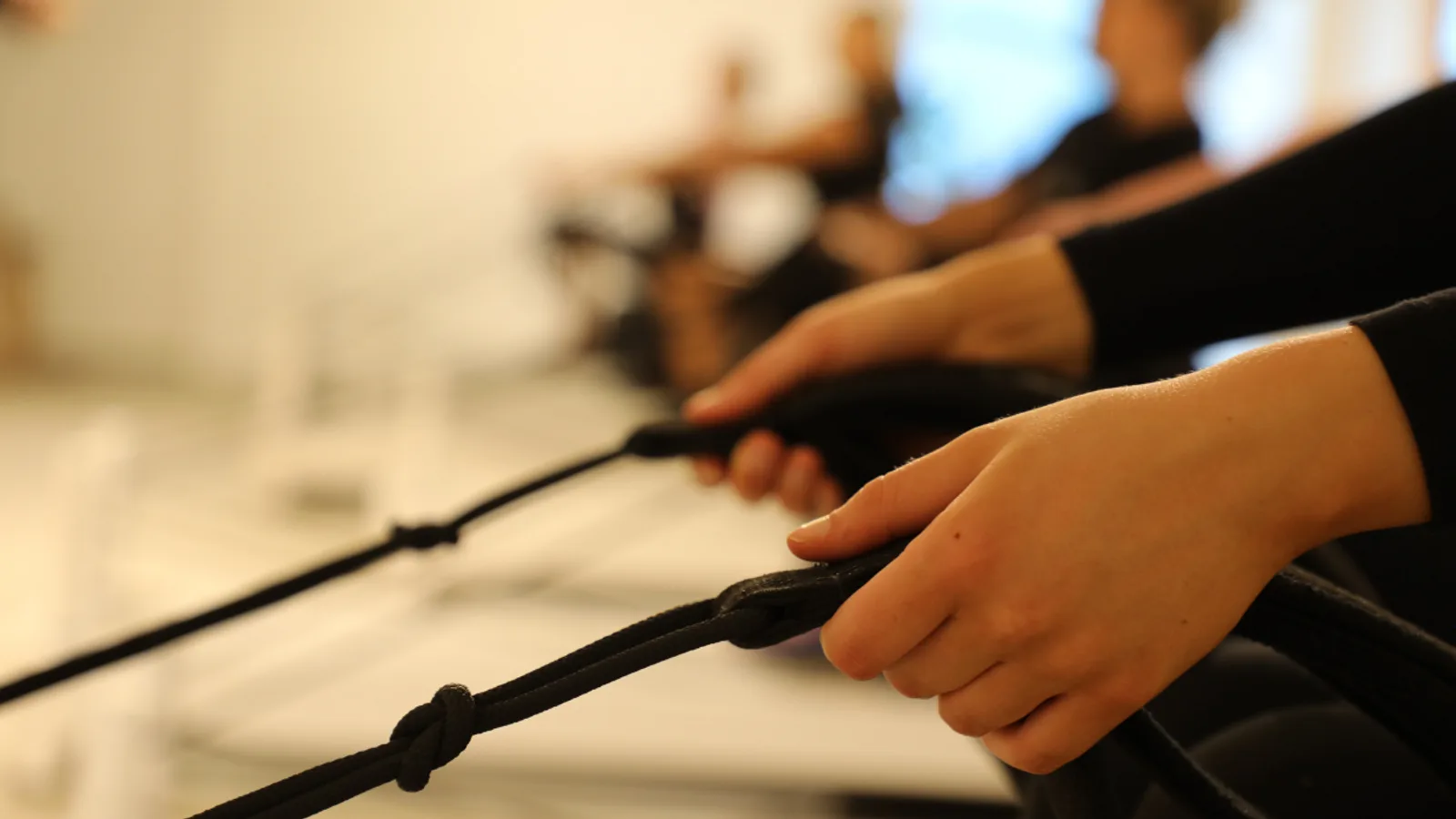
Straps. The ropes with handles or loops at the far end of the machine. You hold them in your hands for arm work, or put your feet in them for leg work.
Headrest. The adjustable cushion at the top of the carriage. Your instructor may ask you to raise or lower it to keep your neck comfortable.
Shoulder rests. The padded blocks either side of the headrest. They stop you sliding off the carriage when you push with your legs.
Platform. The fixed, non-moving section at the end of the Reformer. In standing exercises you may have one foot on the platform and one on the carriage.
Box. A padded box that sits across the carriage. You might lie on it face down or sit on it, which changes the angle and challenge of an exercise.
Jumpboard. A padded board that attaches at the footbar end for Jump classes. You lie on the carriage and jump against it, with the springs absorbing the landing. Our jumpboard guide covers it in more detail.
Positions and body cues
Neutral spine. The natural curves of your spine, with your pelvis neither tucked under nor tipped forward. Lying on your back, you will usually have a small gap under your lower back. Many exercises start here.
Imprint. Gently drawing your lower back closer to the carriage by tilting the pelvis slightly. Instructors often use it when your legs are lifted, to help your abdominals support your back.
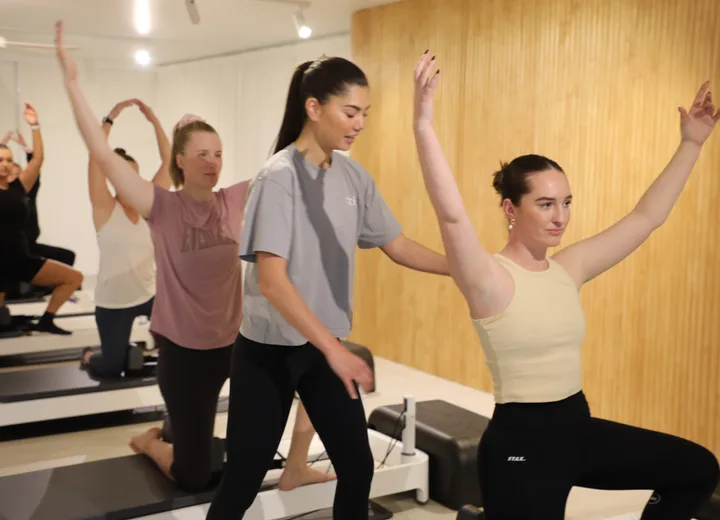
Tabletop. Lying on your back with your knees bent at roughly 90 degrees and your shins parallel to the ceiling or floor. Also used for hands and knees kneeling.
C-curve. A rounded shape through the spine, used in many seated exercises. Picture the letter C from the side.
Pilates stance. Heels together and toes slightly apart, usually used in footwork. The backs of your legs and inner thighs switch on to hold it.
Parallel. Feet and knees pointing straight ahead, hip-width apart.
Articulate. Moving your spine one section at a time, as if peeling it off the carriage and placing it back down. You will hear it during bridges and roll downs.
Powerhouse. A traditional Pilates term for the muscles of your trunk working together. It includes the deep abdominals and the muscles of the back and pelvic floor.
Scoop. A cue to draw your lower abdominals gently in and up, without holding your breath.
Lengthen. A cue to reach long through a limb or the spine, creating space rather than collapsing.
Exercises you will meet early
Exercise names vary a little between studios and instructors, but these are common.
Footwork. The opening series of most Reformer classes. Lying on your back, you press the carriage out with your feet on the footbar in different positions. It warms up the legs and lets your instructor check your alignment.
Bridge. Lifting your hips off the carriage, often while pressing your feet into the footbar. A great one for glutes and hamstrings.
The hundred. A classic breathing and abdominal exercise where you pump your arms while holding a curled-up position. It is named for the hundred counts it takes.
Long stretch. A plank on the Reformer. Your hands are on the footbar and your feet press against the shoulder rests while you move the carriage back and forth.
Elephant. Standing on the carriage with hands on the footbar, hips high, pushing the carriage back with your legs. It stretches the backs of the legs and trains your abdominals.
Mermaid. A seated side stretch, usually done near the end of class. It feels as good as it sounds.
Studio words
Control, Flow, Tempo, Jump, Yoga and Stretch. Our six class styles. Control is our slowest class and where we recommend you start. Flow is the full body staple. Tempo is our fastest class and isn't for beginners. Jump adds cardio on the jumpboard. Yoga and Stretch are your mobility and recovery sessions. Our guide to picking your first TPW class has the details.
Grip socks. Socks with rubber grips on the sole. They are required at all times when exercising in our studios, and you can buy a pair at the studio if you don't have one yet.
Waitlist. If a class is full, you can join the waitlist in the booking system. If someone cancels, a spot opens up.
Cancellation window. We run a two hour cancellation policy for group classes. Cancelling within two hours of a class, or not turning up, incurs a $10 fee.
You will pick it up quickly
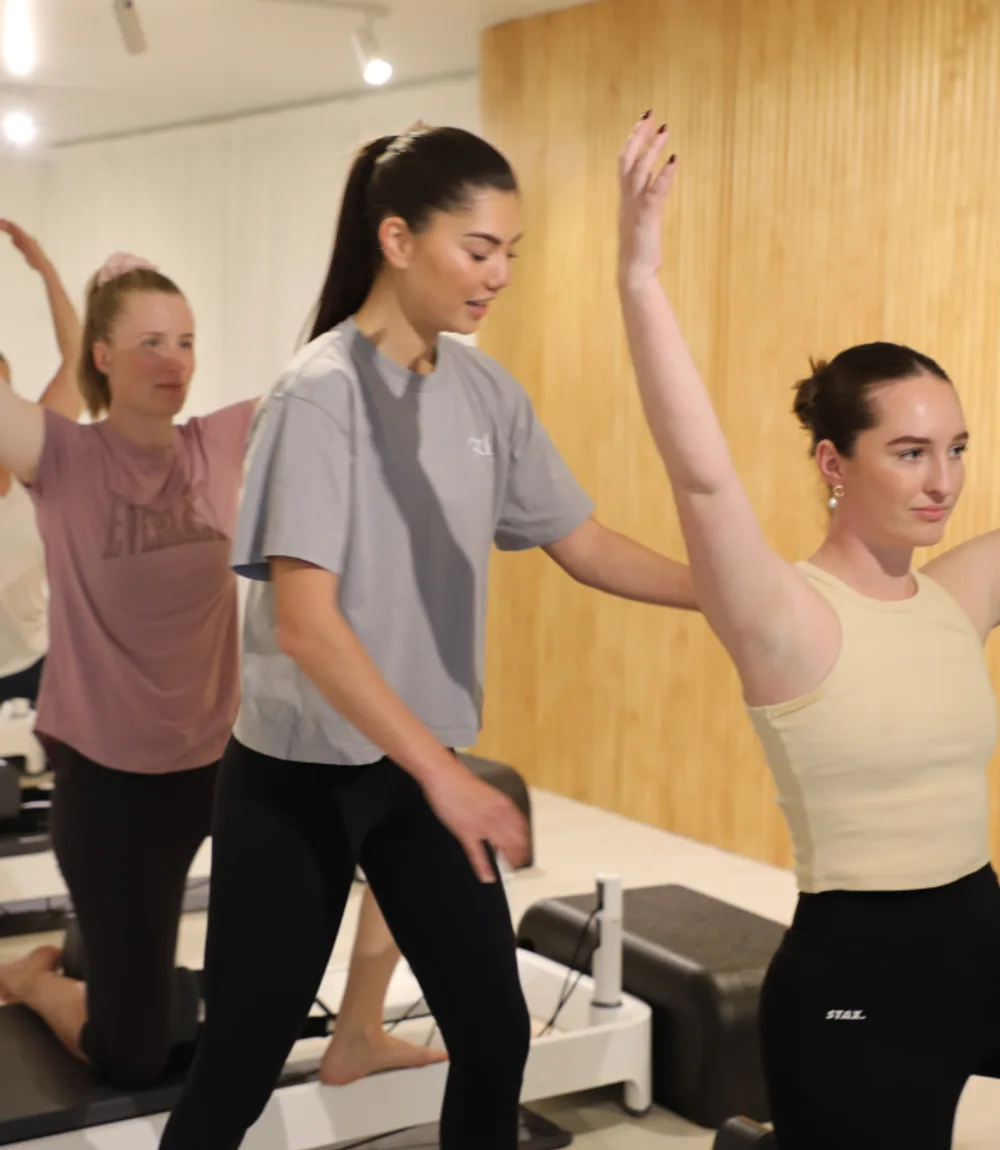
No one expects you to know any of this on day one. Instructors know when it's your first class, they set you up on the machine, and they will happily explain any term that flies past you. Asking questions is welcome, particularly in Control where the pace leaves room for them.
If you are ready to hear these words in person, the 21 day trial gives you three weeks of unlimited group classes at Wollongong and Shellharbour for $65. Book a Control class on the timetable, and by the end of week three you will be the one explaining what a tabletop is.