



Getting Started · 1 October 2026 · 5 min read
What all those springs actually do
A beginner's guide to reformer resistance and why lighter is sometimes harder.
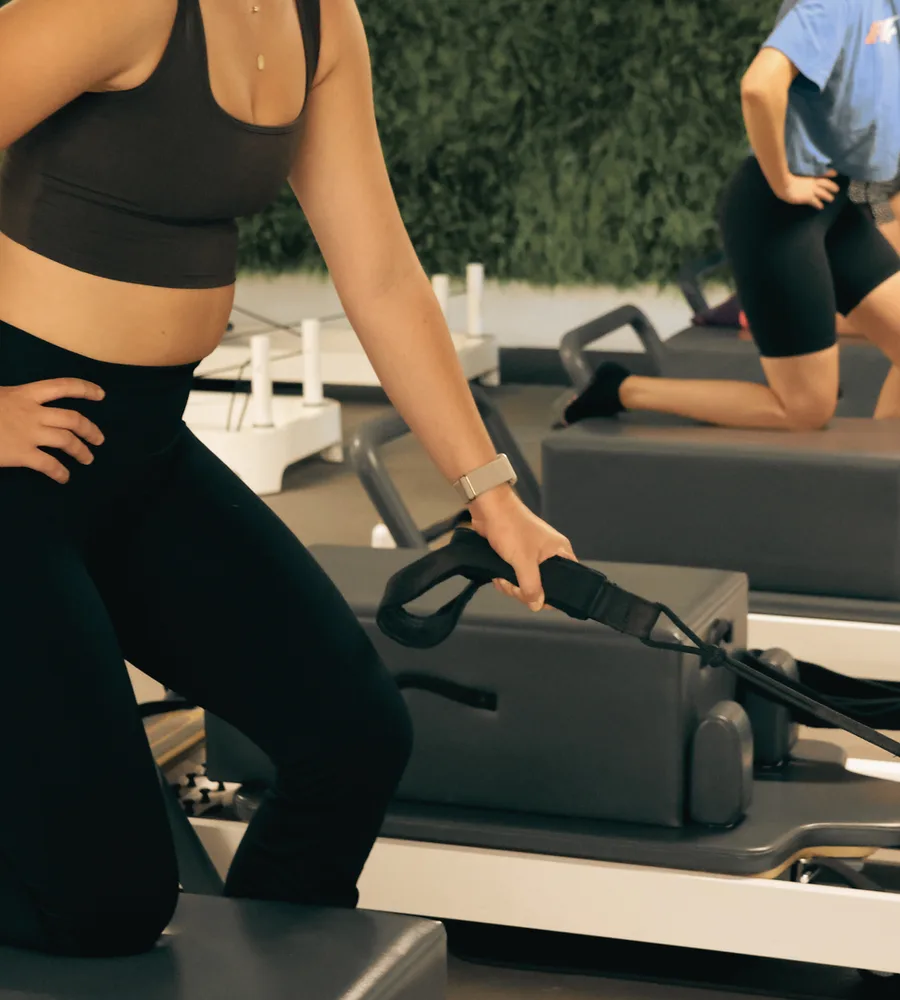
Under every Reformer carriage sits a row of colour coded springs, and watching the regulars flick them on and off between exercises is one of the more mysterious parts of a first class. What are they choosing? Why did the instructor just tell half the room to go lighter? And why did lighter make everyone groan?
Springs are the engine of the whole machine, and understanding them turns a confusing contraption into a genuinely clever piece of equipment. Here is the guide we wish every new member got.
The basics
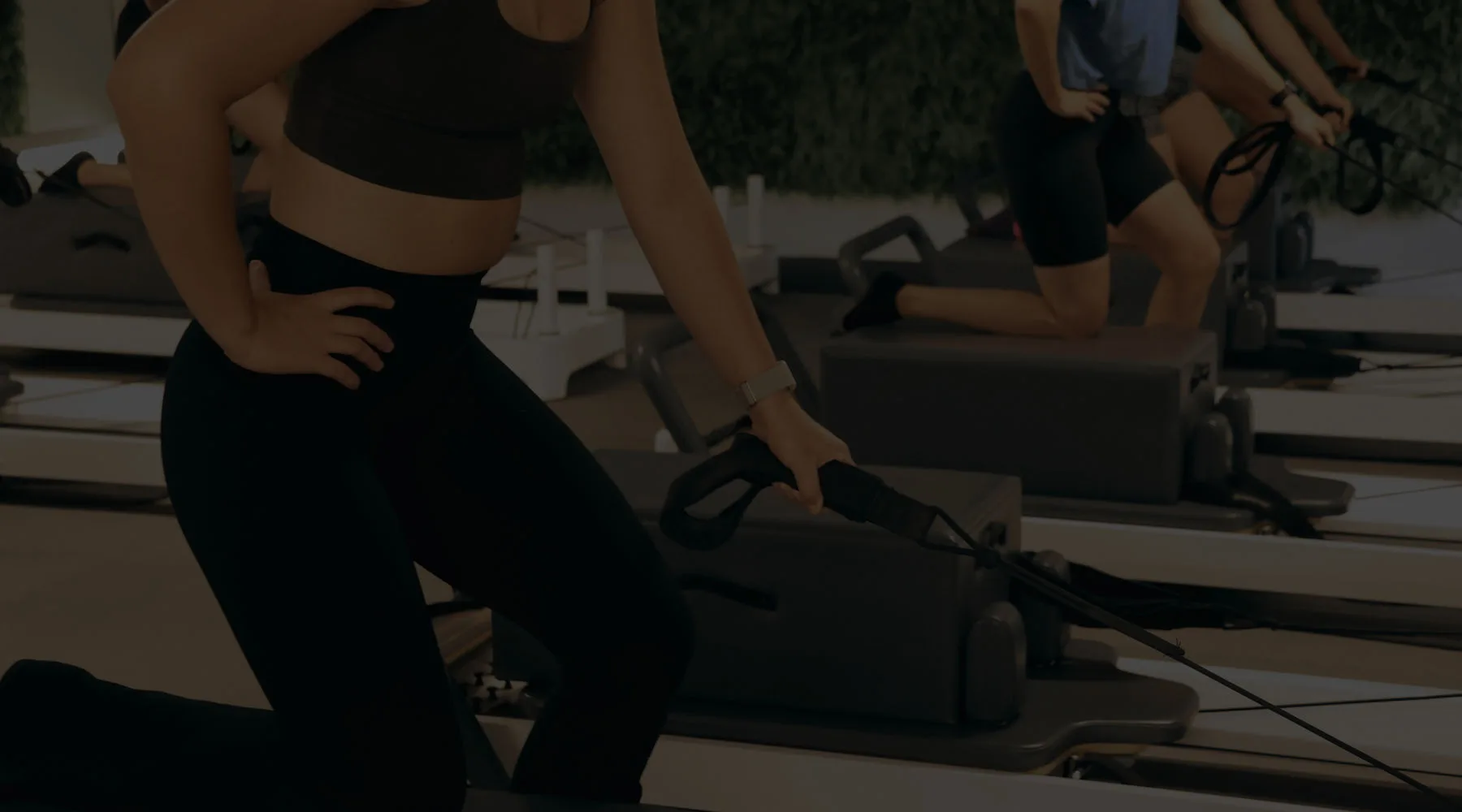
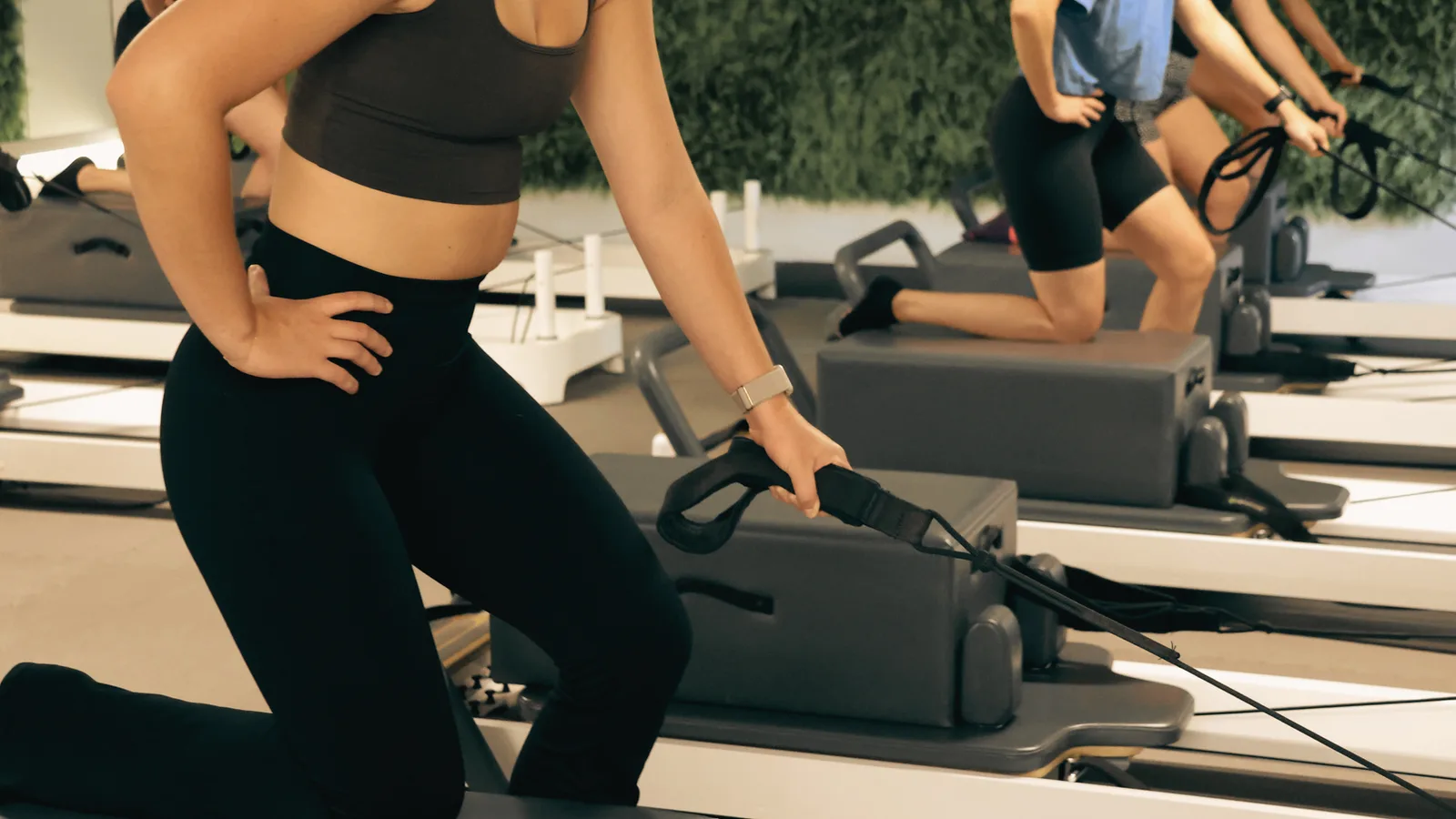
Each spring adds resistance between the rolling carriage and the frame. Clip more springs on and the carriage becomes harder to push away and quicker to pull home. The colours indicate different tensions, so combinations let you dial the load up or down in small steps.
Simple enough. The interesting part is what resistance means on a Reformer, because it is not the same as weight on a bar.
A dumbbell only ever pulls down. A spring pulls along its own line, wherever the machine points it, and its resistance grows as it stretches. That growing resistance is why spring work feels so smooth. The load builds through the movement instead of jolting at the start, which is friendlier on joints and lets you work hard surprisingly deep into an exercise.
The plot twist: lighter is often harder
Every new member discovers this within a week, usually with an audible "hang on". The instructor says "take a spring off", the exercise gets harder, and the room groans.
Here is the mechanism. Springs do not only resist you. They also stabilise the carriage. With heavy springs, the carriage is taut and steady, and your body can lean on that steadiness. Drop to a light spring and the carriage becomes skittish. Now your deep stabilising muscles have to control every centimetre of travel themselves, and controlling a wobbly platform is often far more demanding than pushing a firm one.
So spring settings are not a scoreboard. The person on heavy springs might be doing powerful leg work. The person on one whisper light spring might be doing the hardest abdominal exercise of the class. When your instructor changes your springs, they are choosing the right kind of hard for the exercise, not ranking you against the room.
Assistance: the springs' second job
Springs have another trick that surprises people: they can make exercises easier, and this is where the Reformer becomes something a weights room cannot be.
Take a movement your body finds difficult, or is rebuilding after injury. On the mat, you either can do it or you cannot, and gravity does not negotiate. On the Reformer, a spring can carry part of the load for you, supporting you through the range while your strength catches up. As you improve, the assistance reduces, until one day the spring is resisting you instead.
This is the secret of how one machine serves a rehabilitating client and an athlete in the same class, and it is a big part of why our instructors can adjust almost any exercise for almost any body. The machine has a dial for difficulty in both directions. If you have been telling yourself you are not strong enough for Pilates, the springs are specifically the answer to that worry, something we talk more about in nervous about starting? read this first.
Both directions count
One more thing that makes spring training quietly excellent: the work never stops at the end of the push.
Press the carriage out and the springs resist you. Now you have to come home, and if you simply relax, the springs snap the carriage back with a clunk the whole class will hear. So you control the return, resisting the springs as they shorten. That controlled return is eccentric muscle work, the lengthening under load kind, which research consistently links with strength gains and with that deep next day muscle awareness Pilates people know well.
On a Reformer you cannot skip the eccentric half even if you want to. The spring insists. Every rep pays you twice.
You do not need to memorise any of this
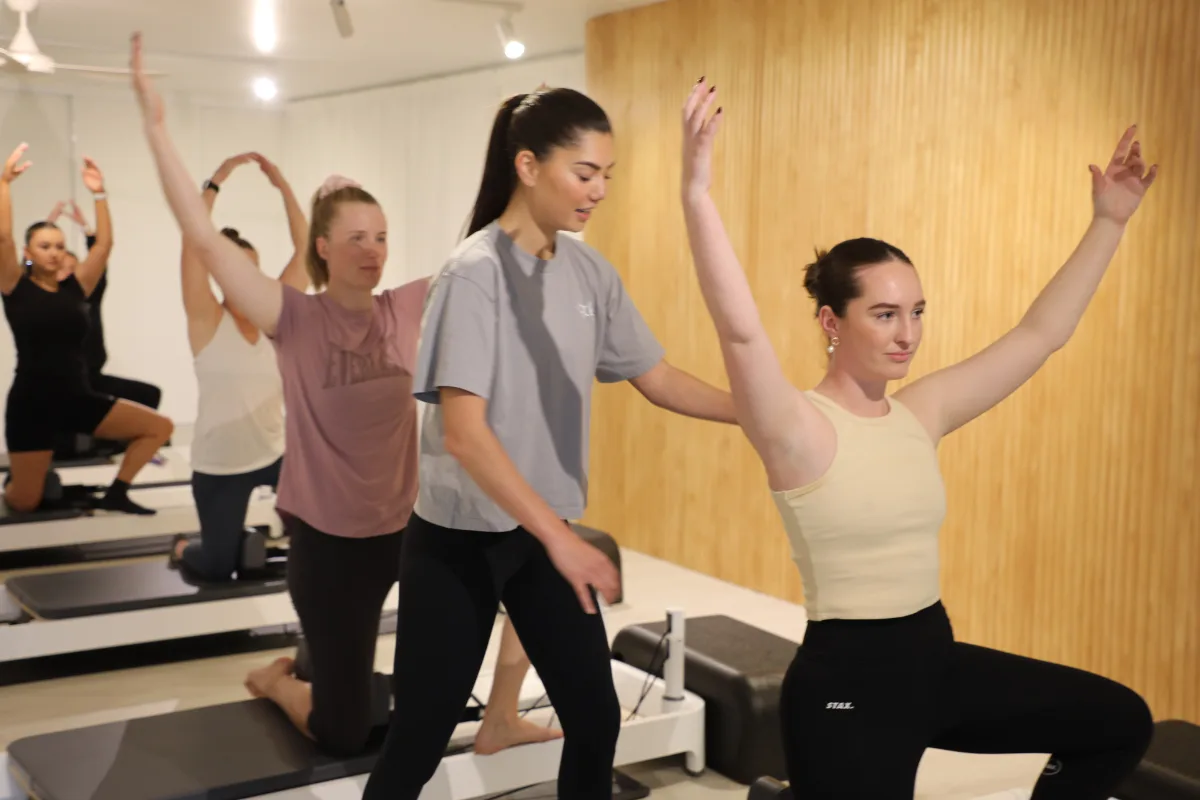
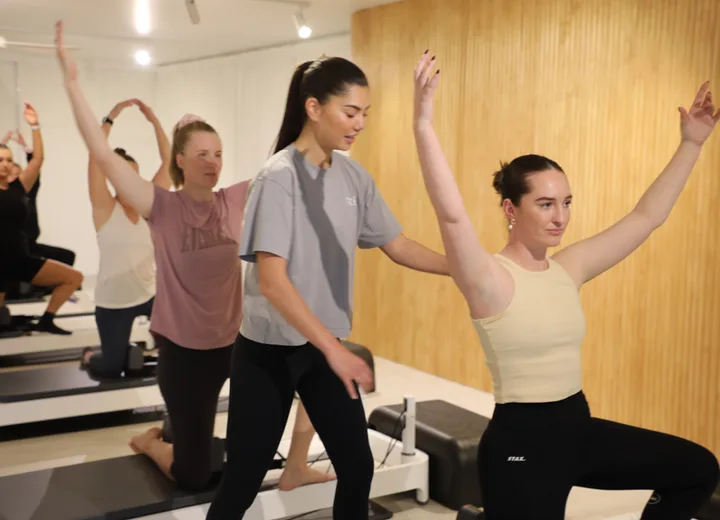
Here is the practical good news: spring selection is your instructor's job, not yours. Every class at our Wollongong and Shellharbour studios comes with continuous spring calls, and with classes as small as ours, the instructor will happily adjust yours individually if an exercise needs to be gentler or meaner for your body that day.
Your only job is the one that matters: notice how each setting feels. Where does your body shake? When does an exercise stop feeling like effort in the right place? That feedback, shared with your instructor, is how your settings get better dialled in over time.
After a few weeks you will find you have learned the colours without trying, the same way you learned which coffee order is yours. And the day you catch yourself flicking springs between exercises without breaking conversation, you are officially one of the regulars.
Feel the difference yourself
Reading about springs is like reading about swimming. The learning happens in the water. A Control class is the perfect introduction, slow enough to actually notice what each spring change does, with an instructor talking you through every adjustment.
The full timetable for both studios is online, and the 21 day trial gives you three weeks of unlimited classes for $65 to experiment properly. Come pull some springs. The groan when you go lighter is a rite of passage, and we promise it turns into a laugh.