



Getting Started · 9 November 2026 · 6 min read
Sore after your first Pilates classes? What is normal and what isn't
Feeling it in places you didn't know you had? Why new members get sore, what helps, and the signs that need a health check.
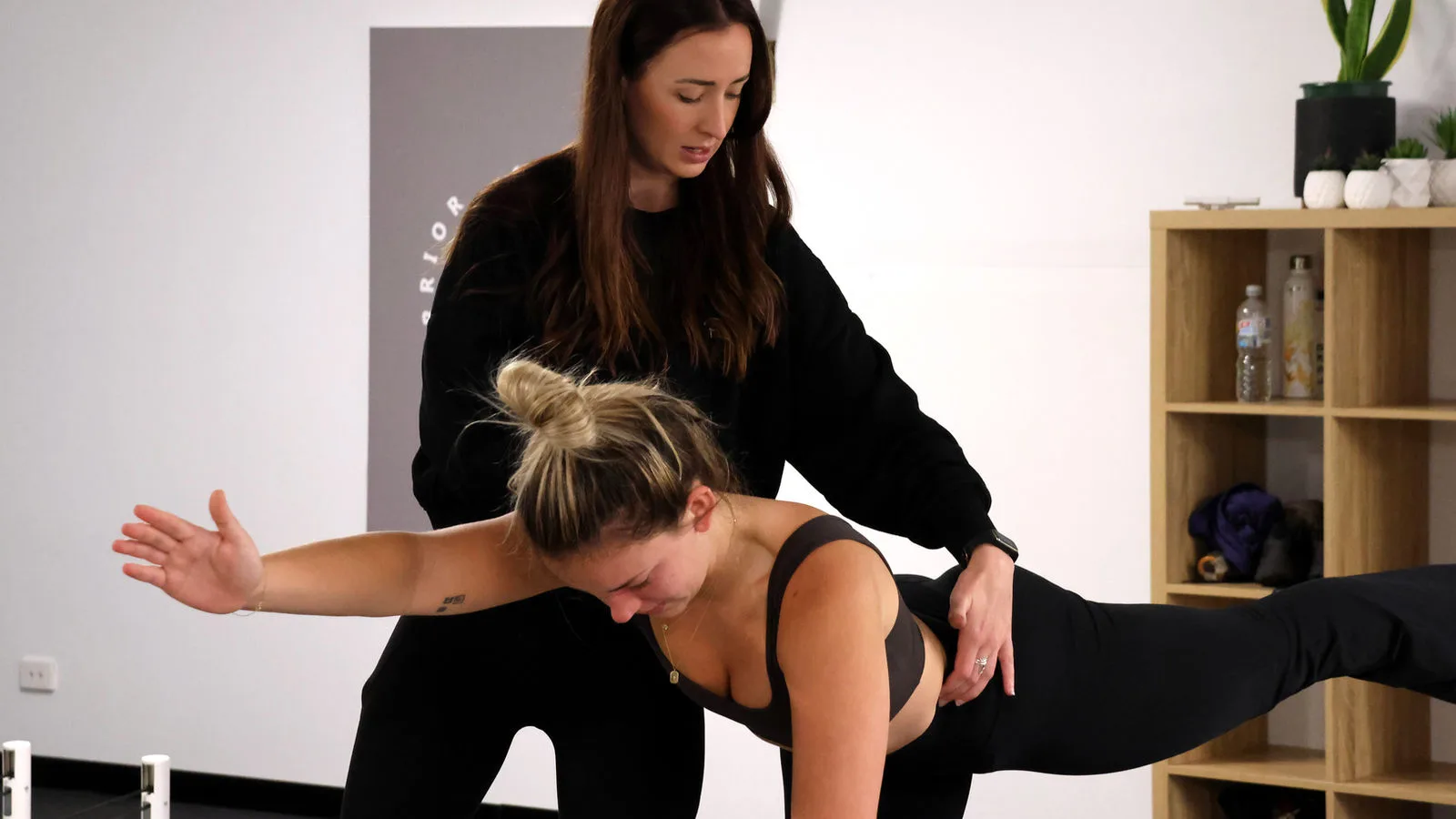
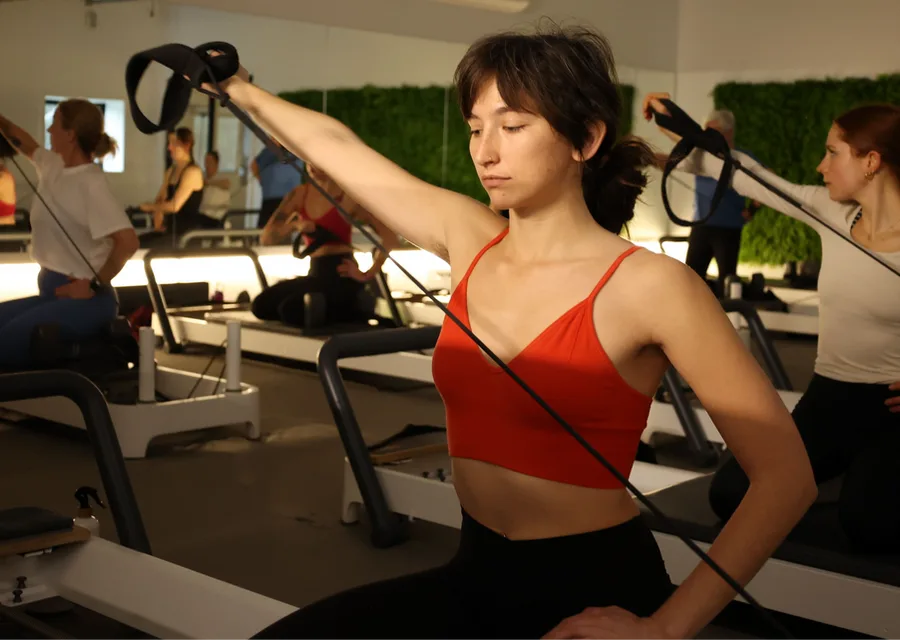
You finish your first Reformer class feeling surprisingly fine. Then the next morning you go to sit on the toilet, or reach for a cup in the top cupboard, and discover muscles you didn't know you had. Laughing hurts a bit, and you take the stairs one careful step at a time.
Soreness after your first few Pilates classes is very common, and in most cases it is a normal response to new work. It can still be off-putting, especially if you weren't expecting it, so this guide explains why it happens and what helps, along with when it is worth getting checked out.
Why Pilates makes new members sore
The soreness most people feel a day or so after new exercise is called delayed onset muscle soreness, often shortened to DOMS. It is linked to small amounts of strain in muscle fibres that aren't used to the work you have just asked of them. Your body responds by repairing and adapting, so the same work causes less soreness next time.
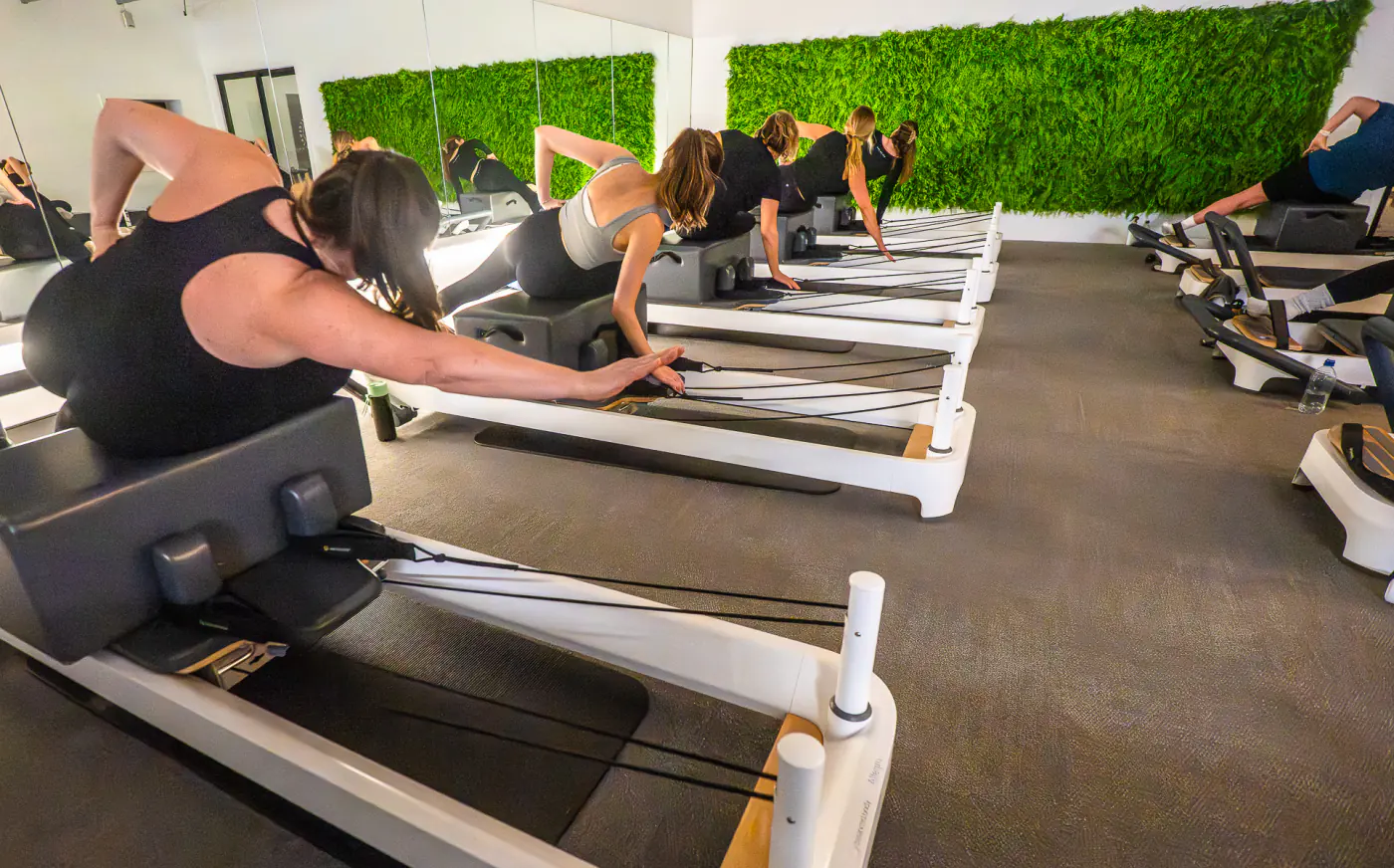
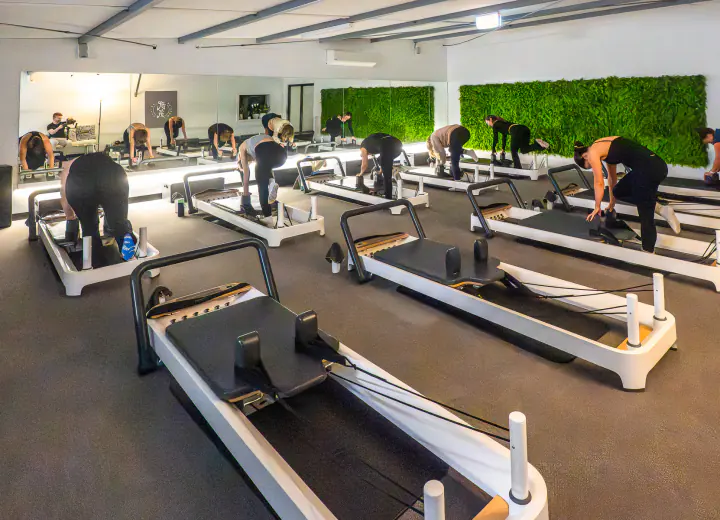
Reformer Pilates is particularly good at finding muscles that haven't been asked to do much for a while. A few features of the method make DOMS more likely in your first weeks.
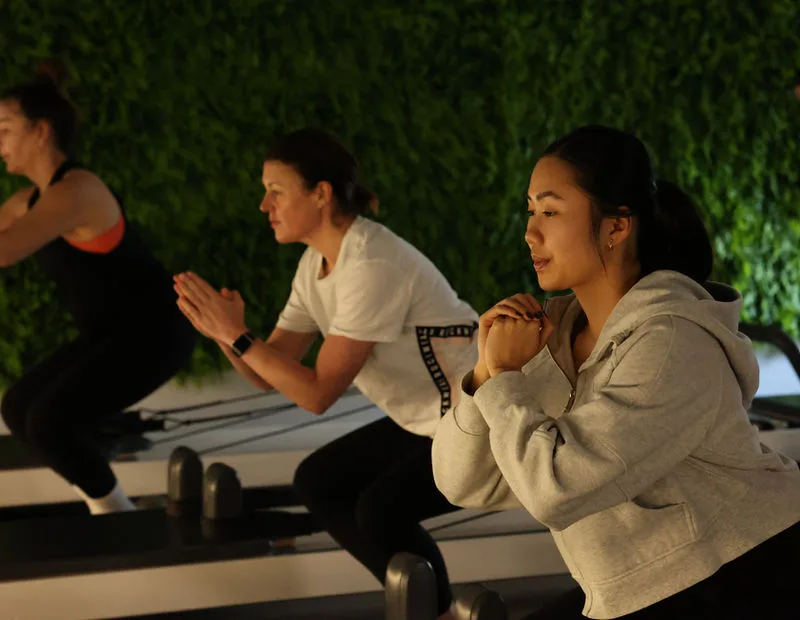
- New muscles. Pilates trains deep stabilisers around the hips and trunk, along with muscles like the inner thighs that rarely get much attention in daily life.
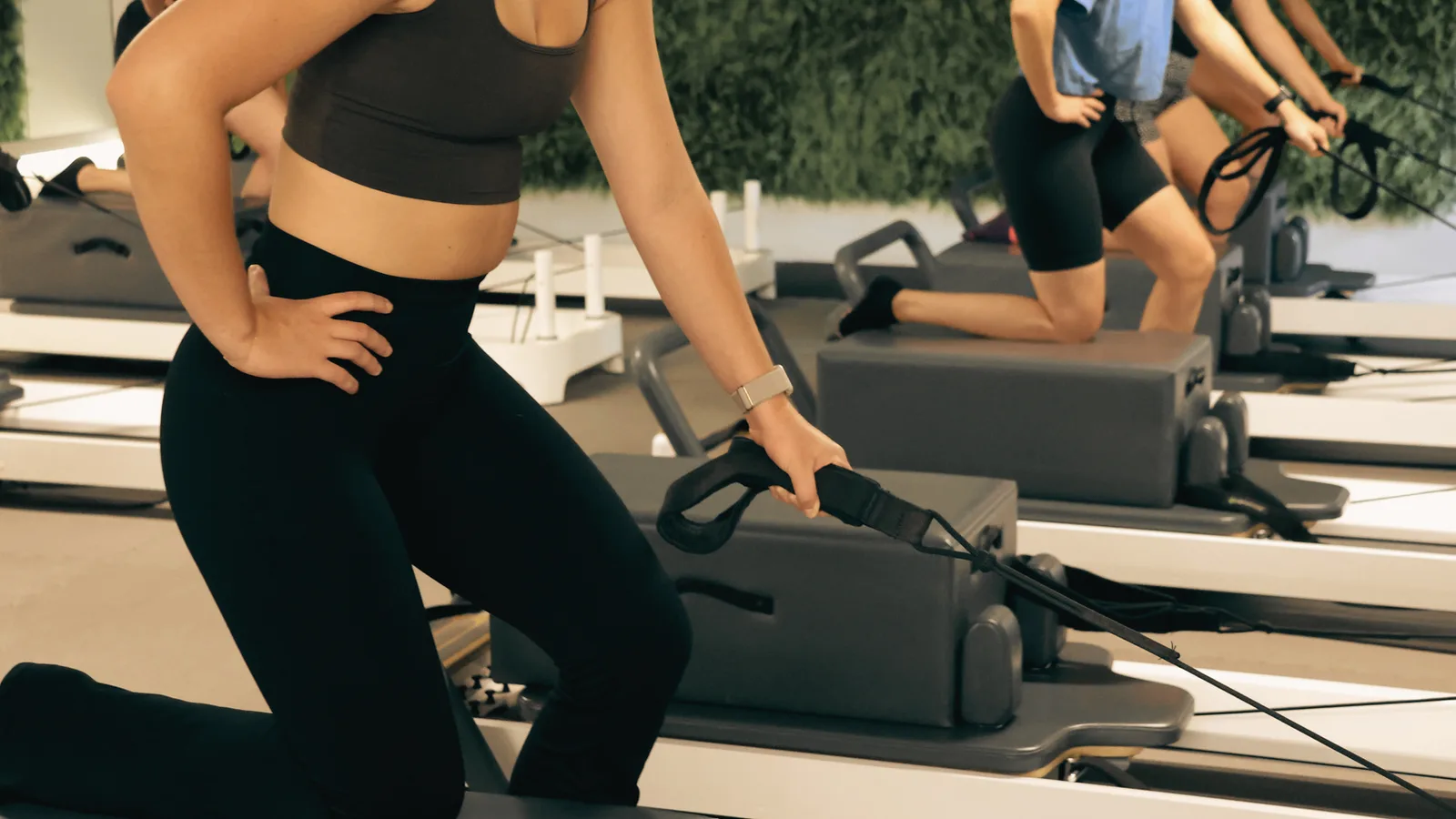
- Slow lowering. On the Reformer, you control the carriage as the springs pull it home. That lengthening work, called eccentric work, is known for causing the most soreness.
- Time under tension. Exercises are slow and continuous, with short rests between them, so muscles spend a lot of time working.
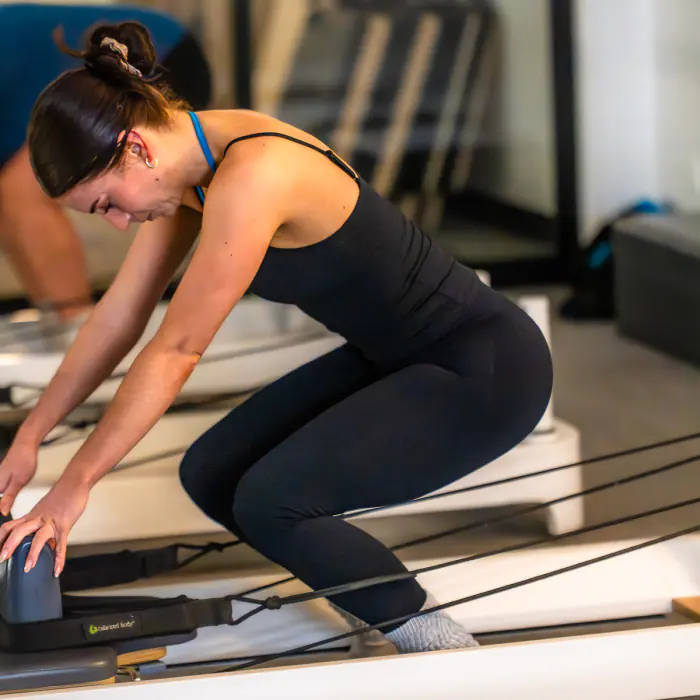
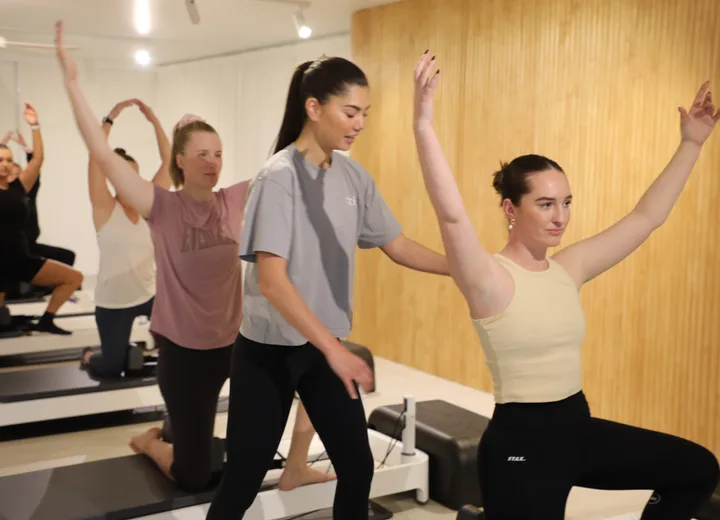
- Unfamiliar positions. Kneeling or standing on a moving carriage loads your body from angles it isn't used to.
None of this means you did anything wrong. It means the class worked parts of you that are new to the job.
Where you are likely to feel it
The most common spot after early classes is the abdominals, which can make laughing or sitting up feel tender. The glutes and inner thighs are close behind. The backs of the upper arms often feel it after strap work. Some people also notice the muscles between the shoulder blades, or the sides of the hips after side-lying leg work.
How long it usually lasts
DOMS typically builds over the day after a class rather than straight away. It is often at its worst a day or two after the session, then fades over the next few days. The first week or two of classes usually brings the most soreness, and it becomes much milder as your body adapts.
If soreness lasts a long time, gets worse instead of better, or stops you doing ordinary things, that is a sign to ease off and check in with a health professional.
What helps
There is no magic fix for DOMS, but a few simple things make it more comfortable.
- Keep moving gently. A walk along the coast or an easy session usually feels better than staying still. Light movement often eases stiffness more than resting completely.
- Try a Stretch or Yoga class. Our Stretch classes use longer holds and a slower pace, and Yoga combines gentle movement with breathwork. Both are kind options when your muscles are tender.
- Sleep well. Recovery happens while you rest, and sleep is when a lot of it gets done.
- Eat and drink normally. Regular meals with enough protein, and plenty of water, support recovery.
- Don't panic about the next class. Mild soreness doesn't mean you need to skip your next session. Let your instructor know you are sore and they can adjust springs or offer modifications.
For more on recovery between sessions, our article on rest days that make you stronger is a good read.
Should you train while sore?
With mild soreness, gentle training is usually fine and often helps you feel better. The key is to listen to your body and keep the effort sensible. Choose a slower class, use lighter springs if your instructor suggests them, and skip anything that makes the soreness sharper rather than easing it. If you are so sore that ordinary movements like walking or sitting are hard, give yourself another day of rest and light walking before your next class.
How to avoid overdoing it early
Many new members get excited and book five classes in their first week. Enthusiasm is great, but it often leads to a lot of soreness and a lost fortnight. A more sustainable start:
- Week one. Two or three classes with a rest day in between. Control classes are ideal.
- Week two. Add a class if your body feels ready, and mix in Flow once you are comfortable on the machine.
- Week three. Settle into the frequency that feels sustainable.
Our FAQ suggests two to three sessions a week with a mix of studio and home workouts, and our guide on how often to do Pilates explains why.
Normal soreness versus a warning sign
It helps to know the difference between muscles that are tired and something that needs attention.
Usually normal:
- A dull ache or tenderness in the muscles you worked.
- Stiffness that eases as you move around.
- Soreness that peaks in the first couple of days and then gets better.
Worth checking with your GP or physio:
- Sharp or pinching pain, especially in a joint.
- Swelling or bruising in one specific spot.
- Pain that gets worse over several days instead of easing.
- Soreness linked to an existing injury or condition.
Seek medical help urgently:
Healthdirect, the government-funded health information service, advises seeking medical attention urgently if you develop muscle swelling or weakness and your urine turns dark, like tea. This is rare, especially in Pilates, but it can follow very intense exercise and needs prompt care.
If you have an injury or a medical condition, or you are pregnant, talk to your doctor before you start, and let us know on your enrolment form and when you arrive so your instructor can adjust your program.
It gets easier, quickly
The good news is that soreness is mostly a beginner's problem. Your body adapts fast, and after a few weeks of regular classes, most people find they finish sessions feeling worked but not wrecked. That is when Pilates really starts to feel good.
If you are ready to start, the 21 day trial gives you three weeks of unlimited group classes at Wollongong and Shellharbour for $65. Book a Control class on the timetable, take the stairs carefully the next day, and come back for your second class, which almost always feels easier than the first.