


Trending · 28 November 2026 · 6 min read
Exercise snacks: why short bursts of movement are catching on
A minute of brisk stairs here, a few sit-to-stands there. What the research says about exercise snacks, and how they fit alongside your classes.
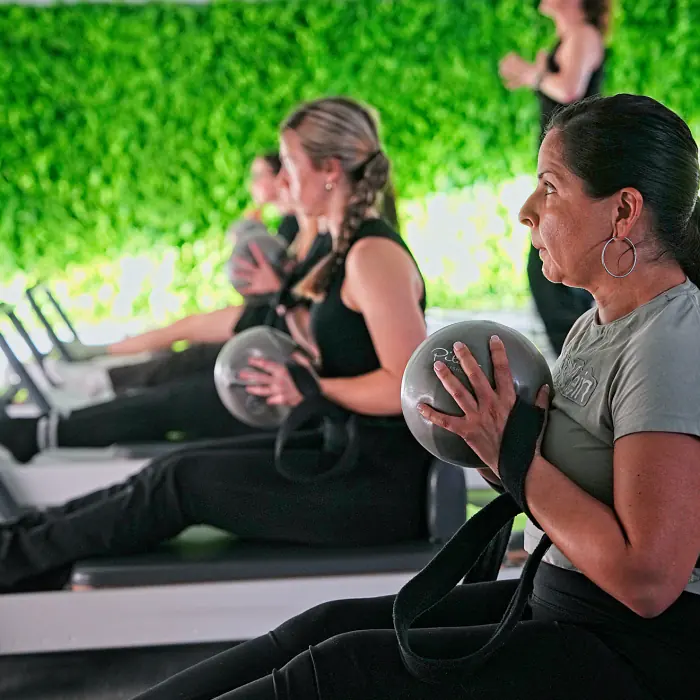
"Exercise snacks" have become one of the more popular fitness ideas of the last few years. The concept is simple. Instead of relying only on a long workout, you add short bursts of movement through the day. Each one usually lasts a minute or two. You might climb the stairs briskly at work, or do some squats while the kettle boils.
It sounds almost too easy, so it is fair to ask whether it does anything. This article looks at what the research says, how to use exercise snacks well, and why they work best alongside regular strength training rather than in place of it.
Where the idea came from
The term has been used by researchers for a while, but interest grew after a study published in Nature Medicine in 2022. Researchers led by Professor Emmanuel Stamatakis at the University of Sydney looked at wrist-worn activity tracker data from more than 25,000 adults in the UK Biobank who did not exercise in their leisure time.
They focused on short bursts of vigorous movement that happened as part of daily life, such as brisk stair climbing or a quick walk uphill. People who did around three of these bursts a day, each lasting one to two minutes, had a lower risk of dying during the follow-up period than people who did none. Compared with those with no bursts, the reduction was around 38 to 40 per cent for death from any cause and from cancer, and about 48 to 49 per cent for death from cardiovascular disease.
These were observational findings, so they show a link and not proof of cause and effect. Still, the results caught attention because they suggested that small amounts of vigorous movement, done without any formal exercise, may matter more than many people assumed.
How this fits with the guidelines
Australia's physical activity guidelines for adults recommend 150 to 300 minutes of moderate activity each week, or 75 to 150 minutes of vigorous activity, or a mix of both. They also recommend muscle-strengthening activities on at least two days a week and breaking up long periods of sitting as often as possible. Importantly, they state that doing any physical activity is better than doing none.
Exercise snacks fit neatly into that last point. If you are not yet meeting the guidelines, a few short bursts each day are a realistic first step. For people who already train regularly, they are a useful way to break up long stretches at a desk or in the car.
What counts as an exercise snack
An exercise snack is any short burst of movement that lifts your heart rate or works your muscles for a minute or two. Some ideas:
- Stairs. Take one flight or several at a brisk pace. Use the handrail for safety.
- Brisk walking. Pick up the pace for a minute or two on your way to the car or the shops.
- Sit-to-stands. Stand up from a chair and sit back down without using your hands, 10 times in a row.
- Calf raises. Rise onto your toes and lower slowly while you wait for the kettle or the microwave.
- Wall push-ups. Hands on the wall at chest height, feet stepped back, 10 slow reps.
- Carrying. Take the shopping bags from the car in one brisk trip instead of three slow ones, as long as the load is safe for you.
The idea is to do something that feels a little challenging. If you can comfortably hold a conversation the whole way through, a brisk snack can go a little faster or a little longer.
Pilates-style snacks
Plenty of Pilates exercises work well as a short break, especially if you sit for long periods. They also help you practise the movement patterns you learn in class.
Standing roll down. Stand with your feet hip width apart. Breathe in, then breathe out as you nod your chin and roll down through your spine, letting your arms hang. Bend your knees as much as you need. Roll back up slowly. Do this 3 to 5 times.
Bridge. Lie on your back with your knees bent and feet flat. Breathe out as you lift your hips, pressing through your heels. Lower slowly. Ten bridges take about a minute and wake up your glutes after sitting.
Standing leg work. Holding the back of a chair, lift one leg out to the side and lower it with control. Keep your pelvis level and a slight bend in your standing knee. Do 10 each side.
Heel raises in parallel. A nod to footwork on the Reformer. Rise up onto the balls of your feet, then lower with control. Keep your ankles straight instead of rolling out.
These are gentle and suit most people. Check with your GP or physio before adding new exercises if you have an injury or a medical condition.
Snacks work best as a top-up
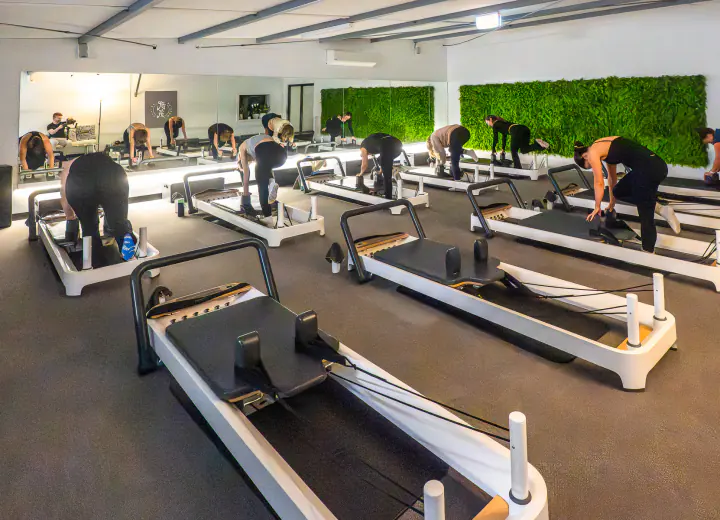
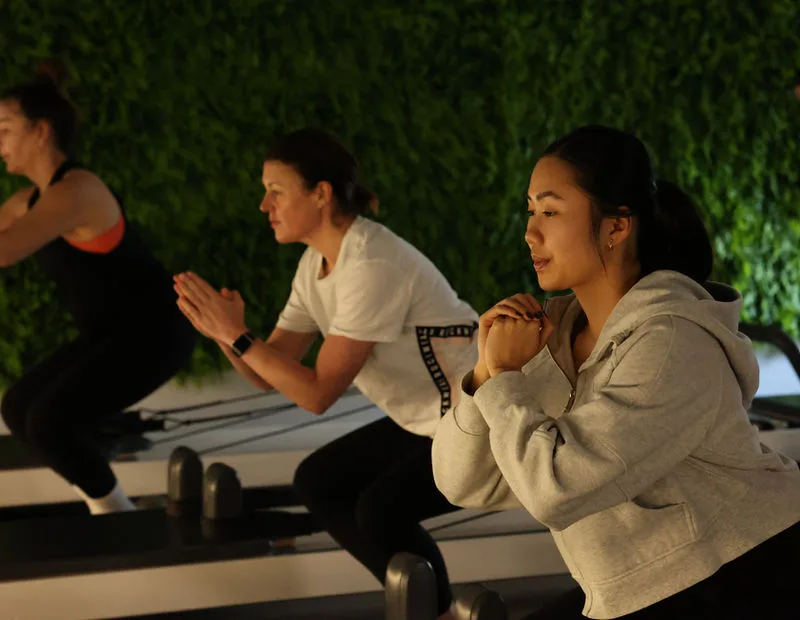
Short bursts of movement are a good addition to your week. They work best on top of a proper program. The guidelines recommend muscle strengthening on at least two days a week, and that kind of training is easier to do well in a structured session. A Reformer class gives you springs for resistance and an instructor to watch your form, and it works your whole body in a way that a few squats in the kitchen cannot match.
Think of exercise snacks as a top-up between classes. Your classes build the strength and control, and the snacks keep you moving on the days in between.
Who should take care
Most people can add short bursts of brisk walking or stair climbing safely. Talk to your GP before adding vigorous efforts if you have a heart condition or high blood pressure. The same applies if you have been told to limit your activity. Start with gentler snacks, like walking at a comfortable pace or sit-to-stands, and build up gradually.
Stop and seek medical advice if you feel chest pain or unusual breathlessness during any activity. Dizziness and palpitations are also signs to stop.
Making it a habit
Tie your snacks to things you already do. You might do calf raises while the kettle boils, or a set of bridges after you brush your teeth at night. Linking a new habit to an existing one makes it more likely to stick.
If you want a bit more structure at home, our video library includes a Homework collection of 35 short, targeted sessions designed to top up your studio training between classes.
Pair your snacks with a class
Exercise snacks work best alongside regular strength training. If you would like to add that to your week, the 21 day trial gives you three weeks of unlimited group classes at our Wollongong and Shellharbour studios for $65. Have a look at the timetable to find a class that suits you, and start with Control if you are new to the Reformer.