


Benefits of Pilates · 26 November 2026 · 6 min read
Pilates for surfers: stronger paddling and a happier back
Surfing asks a lot of your shoulders, back and hips. How Reformer Pilates builds the strength and control that keep you in the water longer.
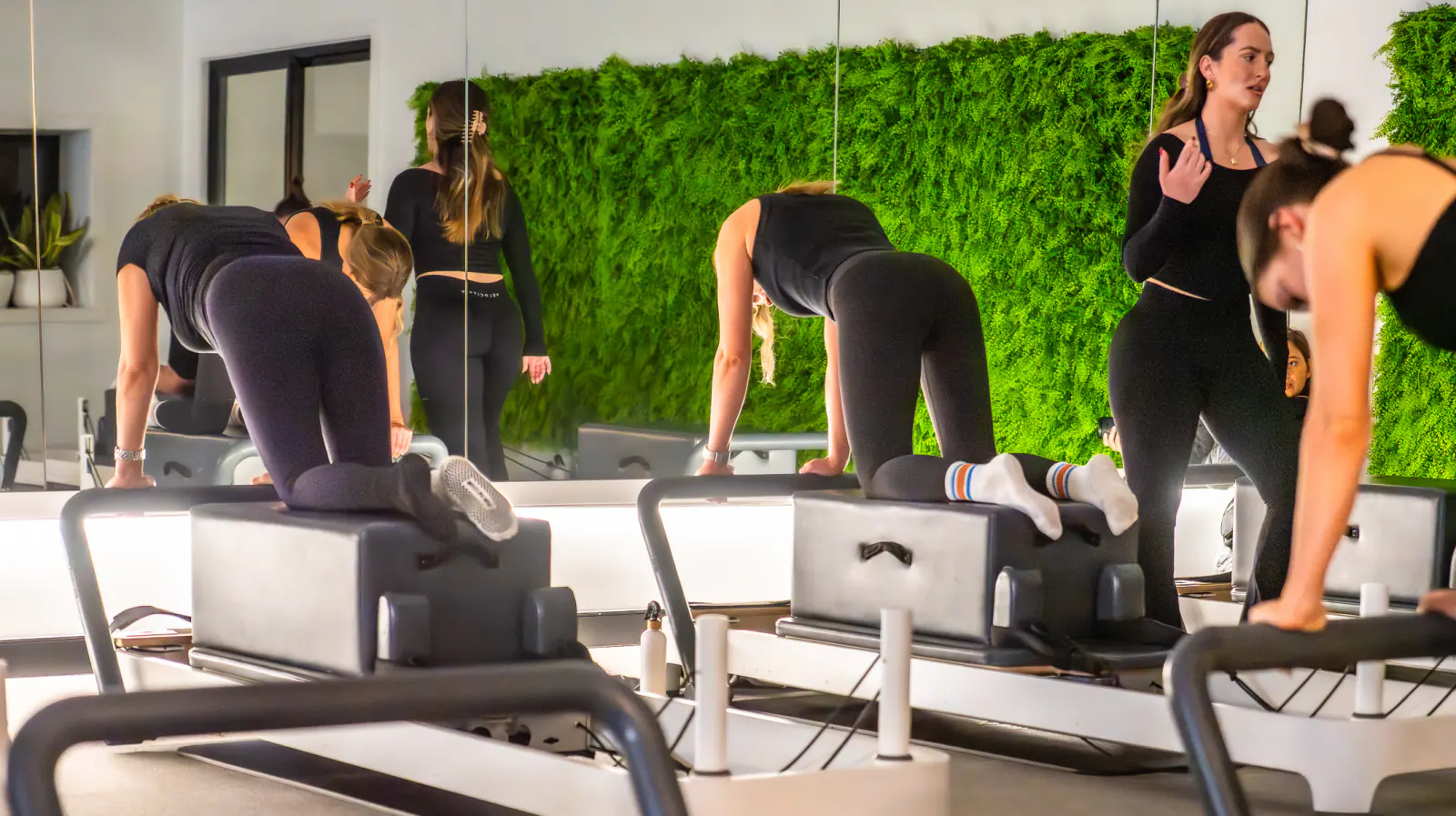
Summer on the Illawarra coast means warmer water and longer evenings, and plenty of locals heading out for a surf before or after work. If you are one of them, you already know surfing is hard on the body in a very particular way. You spend a long time lying on your stomach with your chest lifted, then you need to spring to your feet in a fraction of a second and stay balanced on a moving board.
Reformer Pilates suits surfers well because it trains the same qualities in a controlled setting. This article looks at what surfing asks of your body, the niggles that often come with it, and how a couple of Pilates classes a week can help you paddle for longer and pop up more smoothly.
What surfing asks of your body
Most of a surf session is spent paddling, not riding. Time-motion research on competitive surfers, including a study from Edith Cowan University, has found that paddling takes up somewhere around 40 to 50 per cent of time in the water, with only a small share spent on waves. For recreational surfers chasing a few good rides, the balance is probably similar.
That has a few consequences.
Your shoulders do a huge amount of work. Each paddle stroke reaches overhead and pulls through the water. Over a two hour session that adds up to a lot of strokes, and your shoulder blades are working the whole time to keep the joint stable.
Your back stays lifted for long periods. Paddling with your chest up means the muscles along your spine are holding an extended position for most of the session. A stiff upper back tends to pass more of that bend to the lower back and neck.
Your hips need to move freely. A clean pop-up asks your hips to flex quickly so your front foot can land under your chest. Tight hips often show up as a back knee dropping to the board or a slow, scrambled stand.
Your legs and trunk handle balance and rotation. Once you are up, you are turning through your trunk, shifting weight between your feet and absorbing bumps through your knees and hips.
Common niggles for surfers
Many surfers live with a familiar set of complaints. A tight or achy lower back after a long session is common, often because the lumbar spine is doing most of the extending. Sore shoulders and a stiff neck come up a lot too, especially early in the season when paddling fitness is low. Some people also notice one hip feeling tighter than the other, since most surfers ride with the same foot forward every time.
These are general patterns, not a diagnosis. A few signs are worth getting checked by your GP or a physio before you add new training:
- sharp pain, or pain that wakes you at night
- numbness or tingling in your arms or legs
- a shoulder that clicks and hurts when you reach overhead
How Reformer Pilates helps
Paddling strength from the box
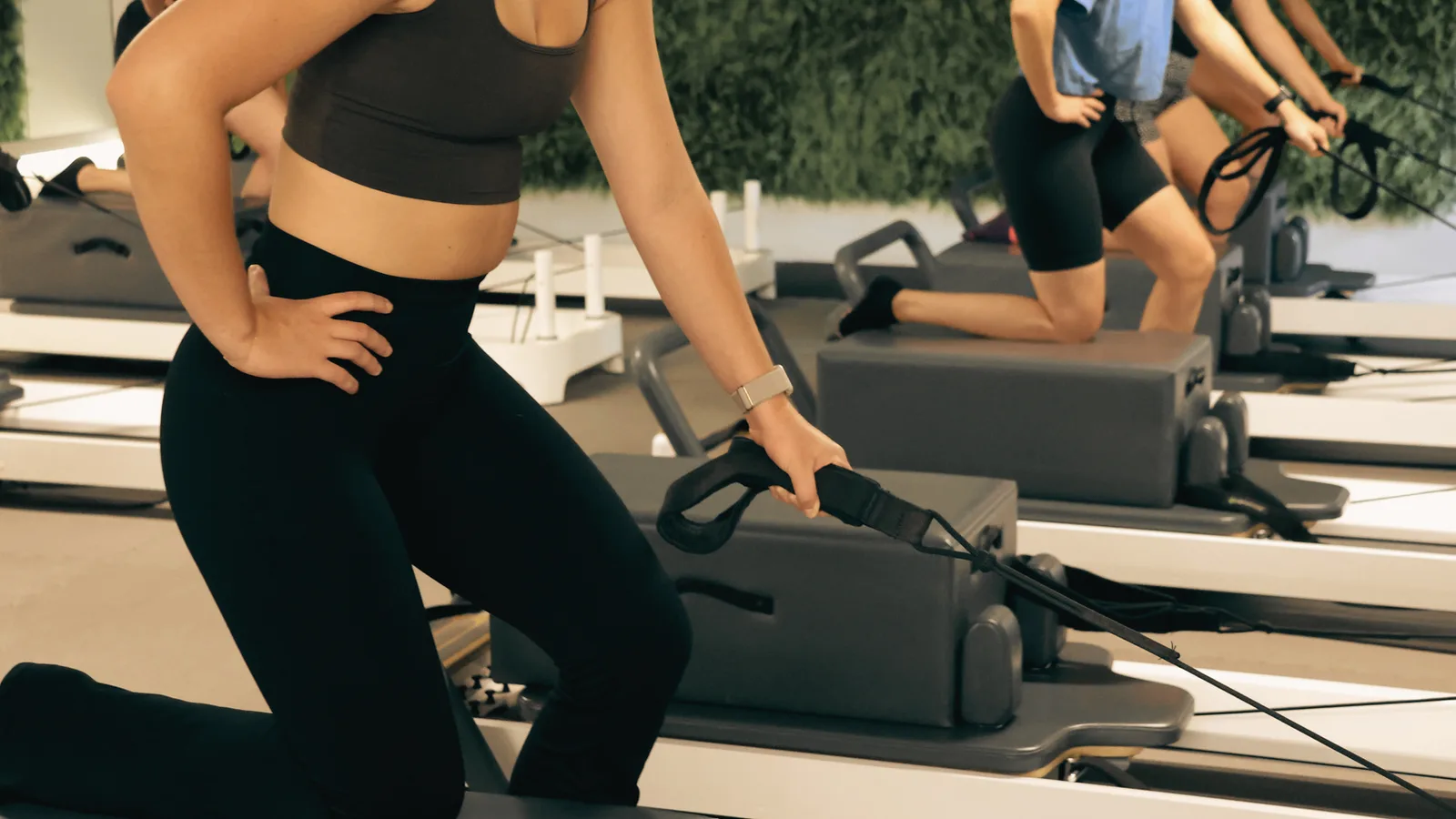
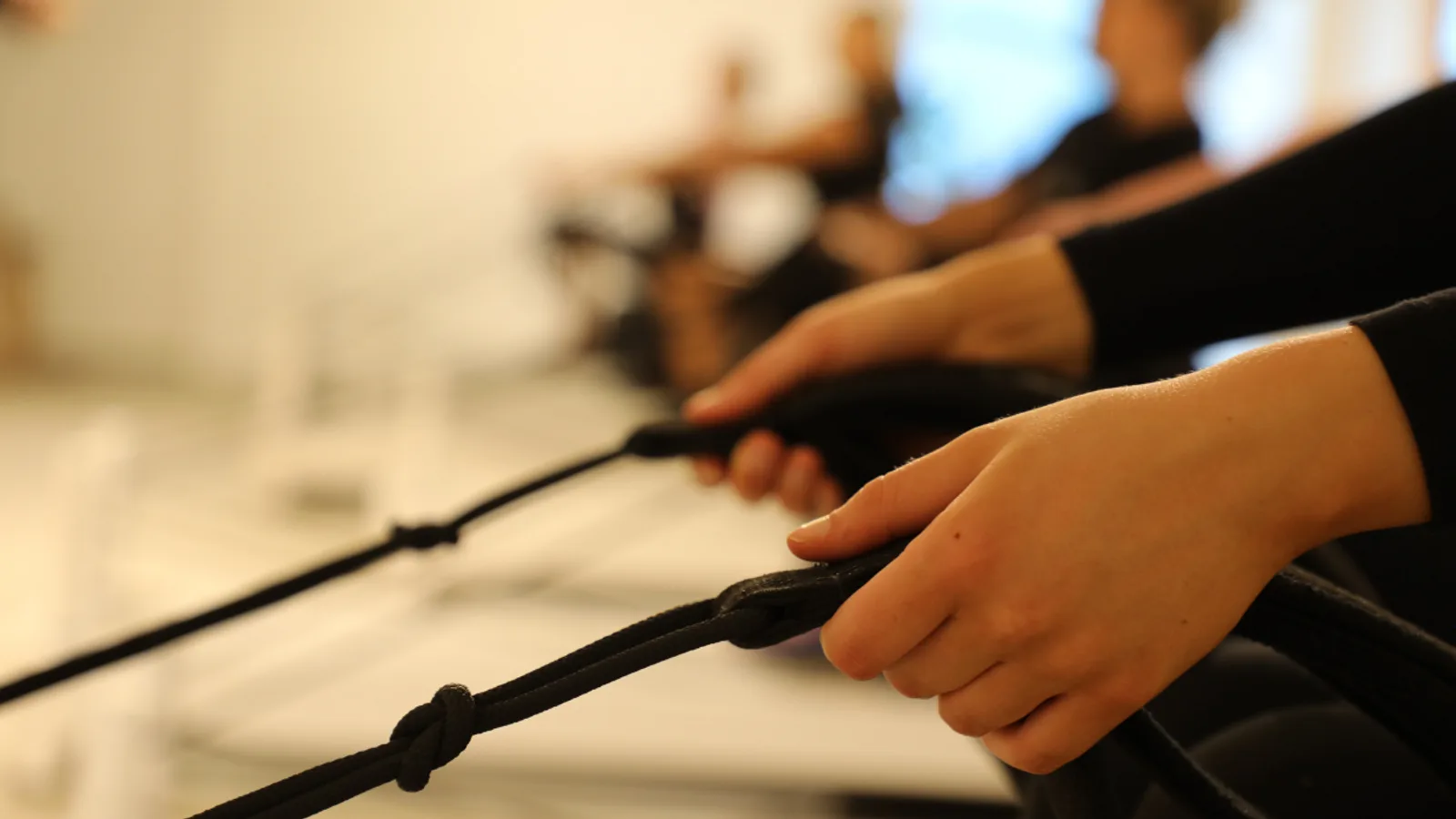
Many Reformer classes include work lying face down on the box, pulling the straps back towards your hips. It is about as close to paddling as you will get out of the water. The springs give steady resistance, and your instructor will cue you to draw your shoulder blades down your back and lift your chest without crunching into your lower back. That is the position that lets you paddle longer with less strain.
Upper back extension
Pilates spends time teaching the upper back to extend, so the bend is shared along the spine. Exercises like swan variations on the box train the muscles between your shoulder blades. Over time, lifting your chest to paddle puts less strain on the lower back.
Shoulder control
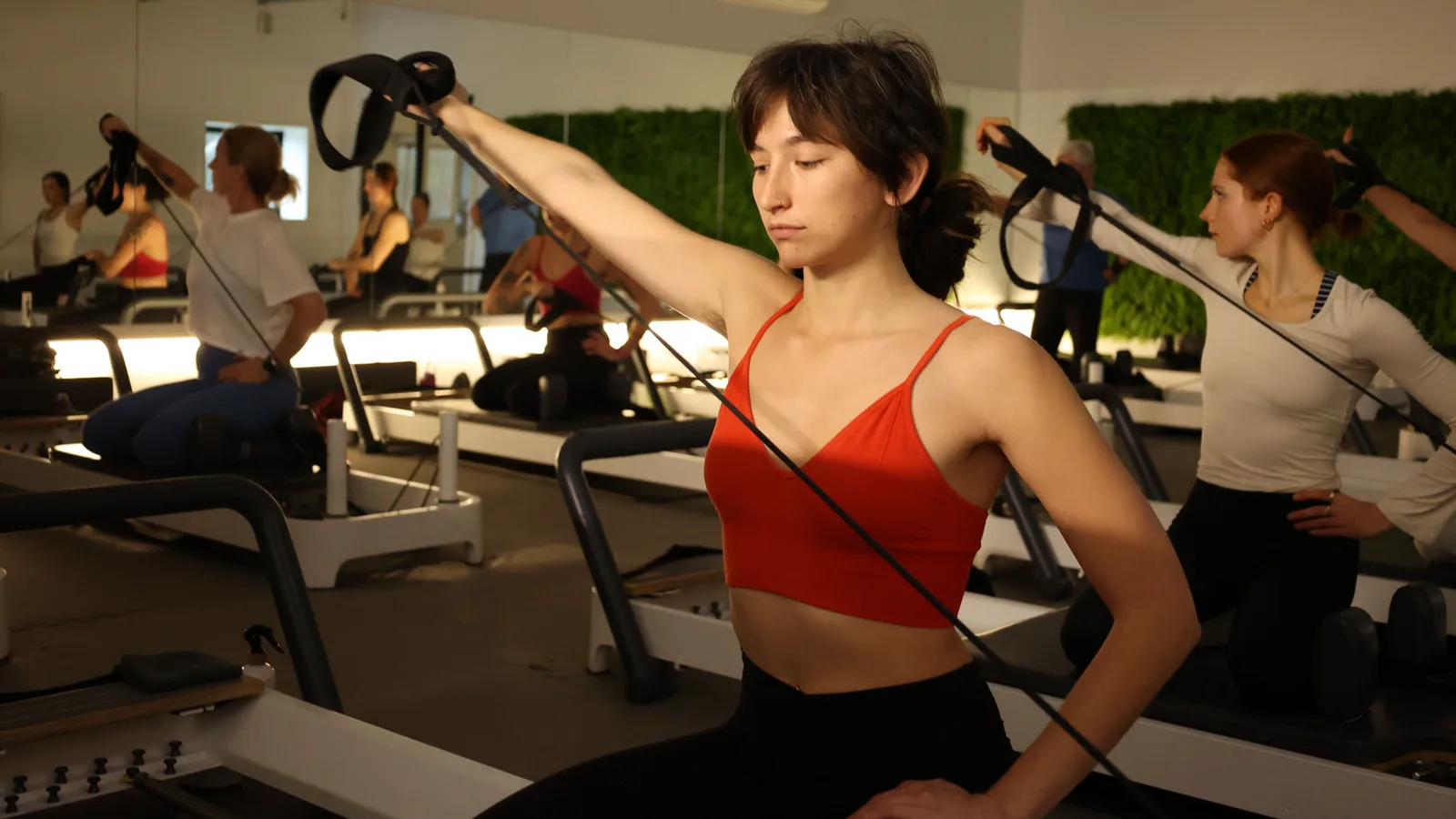
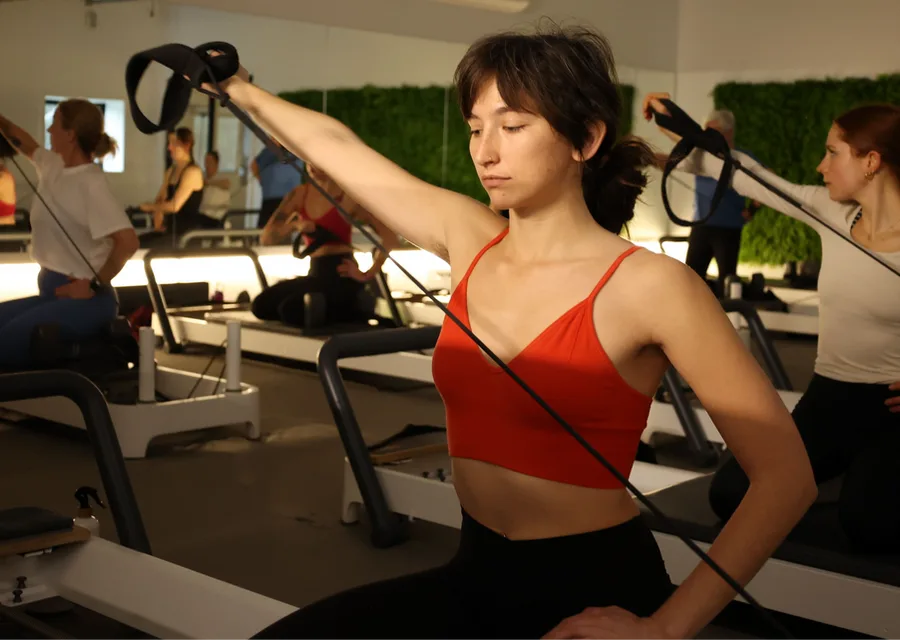
Arm work in straps and planks on the carriage both train the shoulder to stay stable while it moves. The focus is on control through the whole range, which is the quality that keeps shoulders healthy through hours of repeated reaching.
Hip mobility and pop-up power
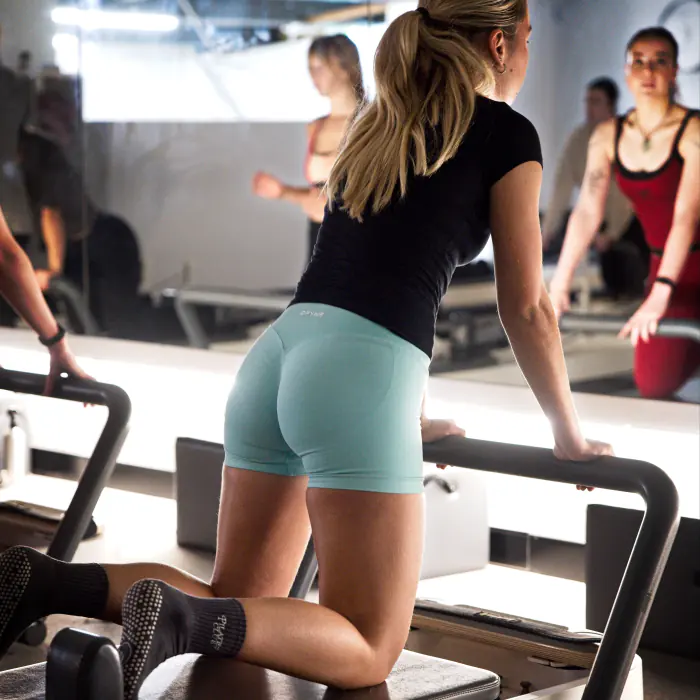
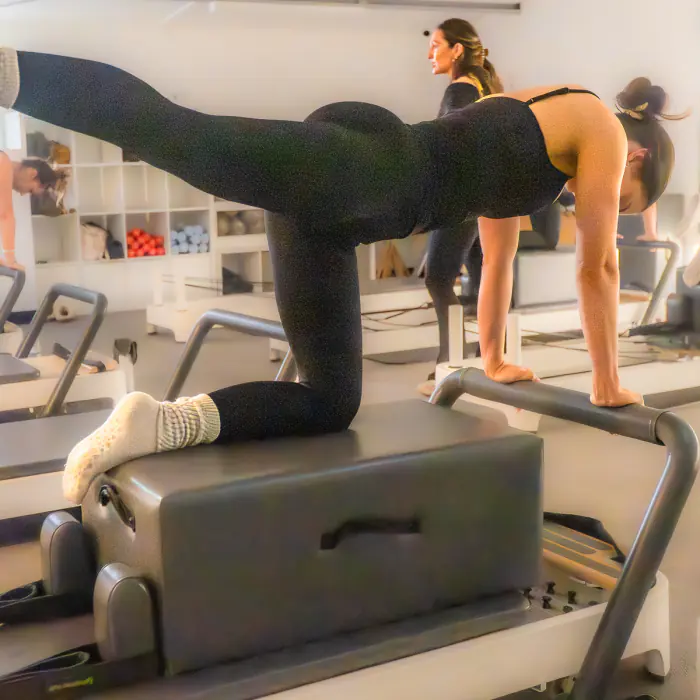
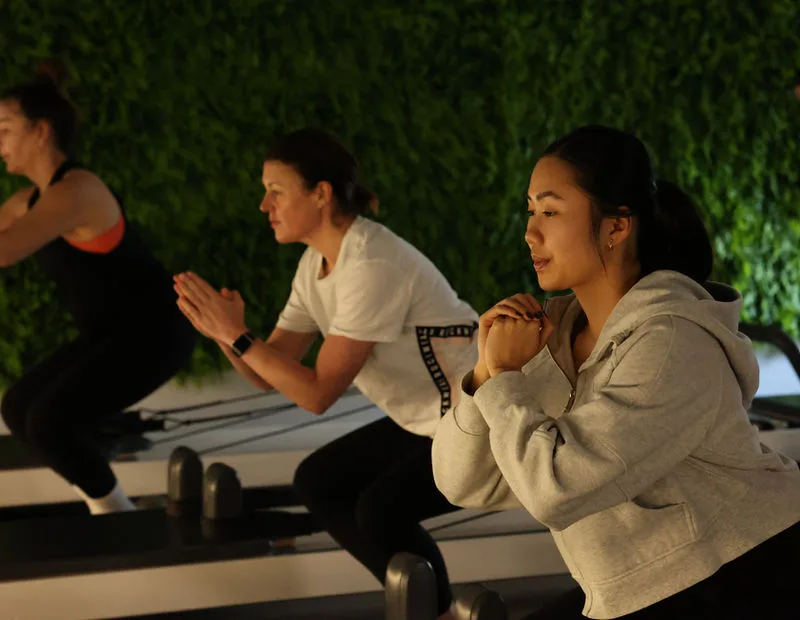
Lunging on the Reformer builds strength and range at the front of the hip. One foot stays on the platform while the other rides the moving carriage. Footwork and jumpboard work build the leg power you need to spring up. Knee stretches kneeling on the carriage train you to drive your legs while your trunk stays steady, which is very close to the action of a pop-up.
Balance and rotation
Standing work on the Reformer asks you to control a moving surface, much like riding a board. Rotation exercises teach your trunk to turn from the upper back rather than twisting only through the lower back. Many surfers find that single-leg and single-arm work also shows up the side that works harder in the water, which gives you something specific to work on.
Fitting Pilates around your surfing
Surf comes and goes, so a flexible approach works best. A few ideas:
- Use flat spells. When the swell drops off, add an extra class. You keep your fitness ticking over and arrive at the next good day with fresh shoulders.
- Go lighter after big sessions. A Control or Stretch class is kinder than a fast Tempo class after a long morning in the water. Your shoulders will thank you.
- Train early in the season. The start of summer is when paddling fitness is lowest and sore shoulders are most common. Two classes a week in the lead-up builds a base before you are out every day.
- Do not skip the legs. It is easy to focus on shoulders. Strong hips and legs make for a quicker pop-up and better control on the wave.
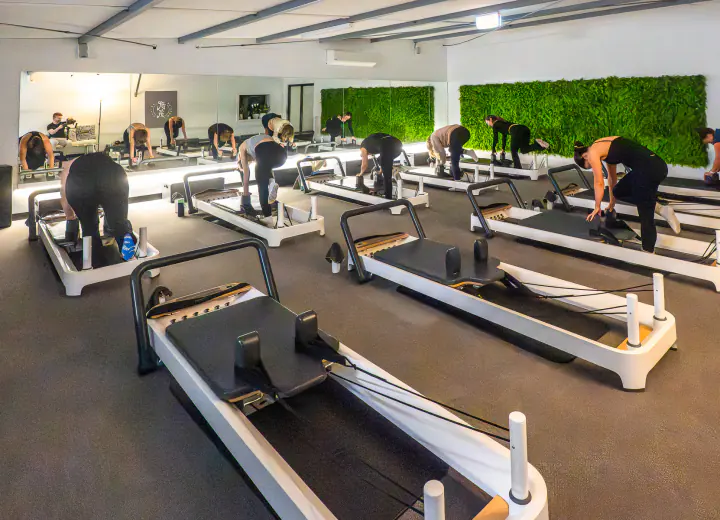
Classes run from early morning at both studios, so it is possible to get in the water at dawn and still make a class later in the day, or the reverse. Check the timetable for current times at Wollongong and Shellharbour.
Getting the most from class as a surfer
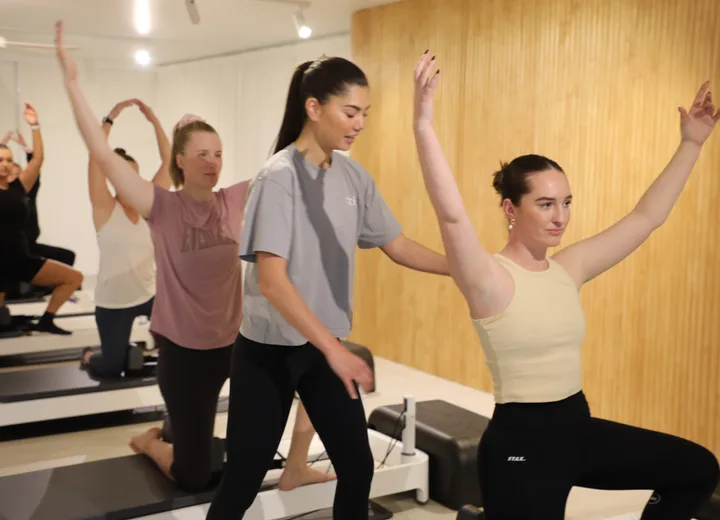
Tell your instructor you surf. They can suggest variations and help you notice where you are compensating. Keep the movements slow and smooth when you are working in straps or on the box, and pay attention to your shoulder blades. Feeling the effort mostly in your neck or the top of your shoulders usually means the load is too much for now. Ask about a lighter spring or a shorter range.
Breathing well helps too. Surfers often hold their breath when duck diving or paddling hard. Pilates breathing, with a long exhale as you work, teaches you to keep breathing under effort, which can make a long paddle back out feel more manageable.
Hydration and sun care matter on summer surf days, and that applies when you come straight from the beach to class. Bring a drink bottle, and if you are coming to Wollongong, the showers on site mean you can rinse off the salt before or after your session.
Book a class before the next swell
If you have never tried Reformer Pilates, the 21 day trial is a good way to see how it feels alongside your surfing. It costs $65 for three weeks of unlimited group classes at both studios, with no lock-in. Start with a couple of Control classes to learn the basics. Once you are comfortable, try Flow or Jump. You can read about each style on our classes page and book from the timetable.