


Getting Started · 25 November 2026 · 6 min read
Moving up from Control: how to know you're ready for the next class
Control builds your foundations. The signs you are ready to add Flow or Jump, when Tempo makes sense, and how to make your first step up go well.
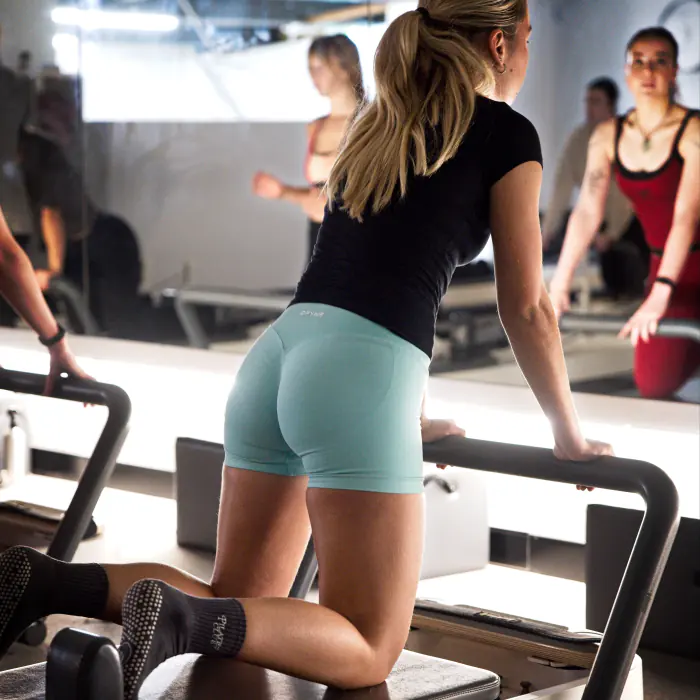
Most people who start Reformer Pilates with us begin in Control, our slowest paced class. It is where you learn how the machine works and how each exercise should feel. After a few weeks, a common question comes up. When should I try something else?
There is no fixed number of classes that makes you ready. Some people feel comfortable after half a dozen sessions, while others like to stay in Control for a couple of months. This guide explains the signs to look for, what changes as you move into our other class styles, and how to make the step up without losing the good habits you have built.
What Control gives you
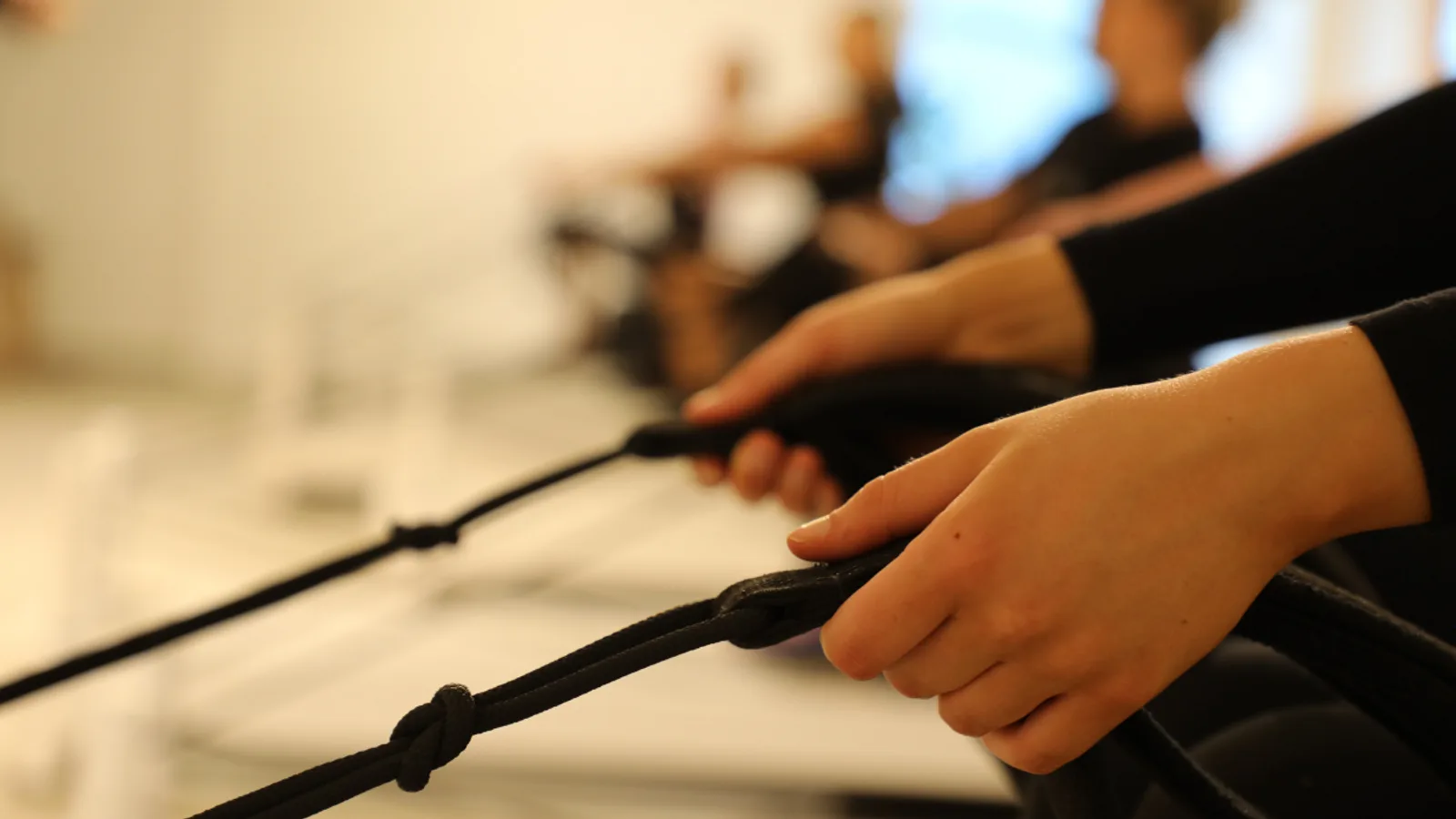
Control is a slower paced workout built for perfecting the finer details. Simple exercises are introduced and then built upon as the class goes on. The slower pace gives your instructor time to explain each set-up and correct your form, and it gives you time to feel which muscles are working.
That foundation matters later. Faster classes move quickly between exercises, and there is less time to explain each one. If you already know the basics, you can spend your attention on working well instead of working out what to do next.
Signs you are ready to try Flow
Flow is our medium paced, full body Reformer class, suitable for all levels. It is the natural next step for most people. You are probably ready if most of these sound familiar:
- You can set up your Reformer without help. You know how to change the springs and move the footbar, and you can adjust the headrest without watching the person next to you.
- The common exercises have names you recognise. Footwork and bridging feel familiar, and so does the basic strap work.
- You can find neutral spine and imprint. When your instructor asks for one or the other, you know what they mean and can get there.
- Your breathing stays steady. You no longer hold your breath through harder exercises.
- You can feel the right muscles. When you are told where you should feel an exercise, you can usually find it.
- Your body is recovering well. Soreness after class has settled to a mild, normal level.
You do not need to tick every box. When most of them fit, it is time to book a Flow class and see how it feels.
What changes in Flow
The biggest difference is pace. Transitions between exercises are quicker, and the class covers more variety in the same time. You will meet some new exercises. Familiar ones may come with added challenge, such as longer sets or a change of spring.
Your instructor will still watch your technique and give corrections. The difference is that they will assume you know the basic set-ups and positions. If something is new, it is fine to take an extra moment to get set up properly.
Where Jump fits
Jump is a cardio class on the jumpboard, a padded board that attaches to the end of the Reformer so you can push off while lying down. It adds dynamic movement and gets your heart rate up without the impact of jumping on the ground. It is suitable for all levels, so many people try it soon after their first Flow class.
Pregnancy and a recent birth are both reasons to check with your GP or women's health physio before jumping. The same goes for any pelvic floor concerns. Let your instructor know too, so they can offer options.
When Tempo makes sense
Tempo is our fastest class. It includes complex flows and harder transitions, and every muscle works hard. It is not suitable for people who are new to Pilates, and it is designed for those who know their way around a Reformer.
A good guide is to wait until Flow feels comfortable. That means you can keep up with the transitions, you rarely need help with set-ups, and you can hold good form when you are tired. For most people that takes a few months of regular classes. When you do try Tempo, expect it to feel hard, and give yourself a few classes to settle into the pace.
How to make your first step up go well
A few simple habits help:
- Tell your instructor. Let them know it is your first Flow or Jump class. They can keep an eye on you and suggest options if you need them.
- Arrive a little early. Getting set up before the class starts gives you one less thing to worry about once it is moving.
- Choose lighter options. If you are unsure, start with a lighter spring or a smaller range. You can always add more next time.
- Pause if you need to. Taking a breath while the class keeps going is completely fine. Rejoin at the next exercise.
- Keep form ahead of speed. Slow down and keep the movement clean when the pace gets away from you. Good technique matters more than keeping up.
Keep Control in your week
Moving up does not mean leaving Control behind. Many experienced members keep a Control class in their week because the slower pace helps them refine details that get rushed in faster classes. It is also a good choice after a few days off, or when you are coming back from a niggle.
A balanced week might look like this for someone doing three classes:
- One Control class to work on detail
- One Flow class for a full body workout
- One Jump class for cardio, or a Stretch class when you need recovery
Yoga and Stretch are both suitable for all levels and pair well with Reformer classes if you prefer a slower session in your mix.
When to hold off
There are times when staying in Control, or going back to it for a while, is the right call. The slower pace gives you and your instructor more time to adapt each exercise when you are returning after an injury or managing pain. The same applies during pregnancy. Check with your GP or physio about what is suitable, and let your instructor know before class.
Book your next class
When you feel ready, have a look at the timetable for Flow and Jump classes at Wollongong and Shellharbour. You can read more about each style on our classes page. If you are not a member yet, the 21 day trial gives you three weeks of unlimited classes for $65, which is a good way to try Control first and step up when you are ready.