





Moving Well · 8 November 2026 · 6 min read
Neutral spine and imprint, explained
Two of the most common Pilates cues in plain language, with a simple way to find each position and the mistakes to watch for.
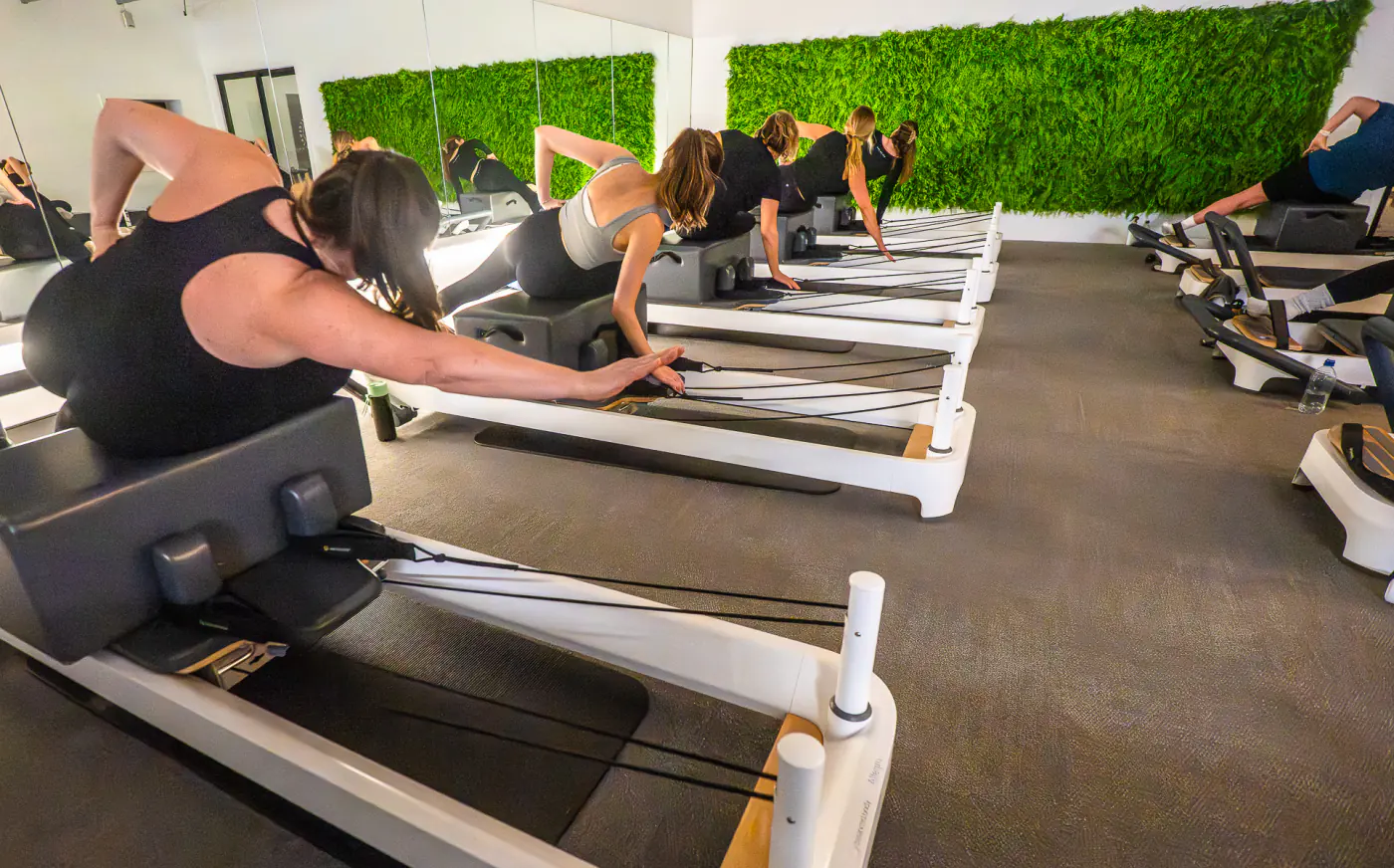
Lie down on the Reformer in your first few classes and you will hear two phrases again and again. One is "find your neutral spine". The other is "imprint your spine". Instructors say both with such confidence that it feels like everyone else in the room already knows what they mean.
They are two of the most useful ideas in Pilates, and they are simpler than they sound. Once you can find both positions, a lot of instructions in class start to make sense. This guide explains what each one is and how to find it. It also covers when each is used and the most common ways people get it slightly wrong.
Your spine has curves for a reason
Seen from the side, a healthy spine is not straight. It curves gently inwards at the neck and lower back, with an outward curve through the upper back in between. Those curves help your spine absorb load and move efficiently.
Neutral spine simply means keeping those natural curves, without flattening or exaggerating them. It is the position your spine sits in when nothing is pulling it out of shape. For most people it is a comfortable place to work from.
This position is also a range rather than a single exact point. Everyone's spine is shaped a little differently, so your neutral may not look identical to the person on the next Reformer. Your instructor is looking for your version.
How to find neutral lying down
The easiest way to learn neutral is on your back, which is where many Reformer exercises start. Try this on the floor at home or on the carriage before class.
- Lie on your back with your knees bent and feet flat, hip width apart.
- Place the heels of your hands on the bony points at the front of your hips, with your fingertips pointing towards your pubic bone. Your hands make a small triangle.
- Gently tilt your pelvis so your lower back flattens towards the floor. Notice the triangle tip back towards you.
- Now tilt the other way, so your lower back arches slightly away from the floor. Notice the triangle tip the other way.
- Rock between these two positions, making the movement smaller each time until you settle in the middle. Your triangle should now be roughly level.
That middle position is neutral. You will usually feel a small gap under your lower back, enough to slide a hand into but not much more. Your ribs should feel heavy, resting down instead of lifting towards the ceiling.
What imprint means
Imprint is a gentle change from neutral. You use your deep abdominal muscles to draw your lower back lightly towards the mat, so the small gap disappears. The pelvis tilts back slightly as a result.
The key word is gentle. Imprint is not a hard tuck, and it should never come from squeezing your glutes or pushing with your feet. Think of your lower tummy sinking down towards your spine while your lower back lengthens along the mat.
Start from neutral. Breathe out and let your lower abdominals draw in and down until your lower back rests lightly on the mat. Keep breathing as you hold it. Your glutes and shoulders should stay relaxed the whole time. Then release back to neutral.
When each one is used
Different Pilates schools use these positions in slightly different ways, and your instructor will tell you which one an exercise needs. There is still a general pattern.
Neutral is often used when your feet are supported, such as during footwork with your feet on the bar. It also suits many exercises where the load on your trunk is moderate. Working in neutral trains your deep muscles to support the spine in its natural shape, which is the shape you carry through daily life.
Imprint is often used when the load on your trunk increases, especially when both legs are lifted off the bar or mat in a tabletop position. If your lower back starts to arch away as your legs move, imprint gives you a more supported position. It is particularly helpful for beginners who are still building abdominal strength.
As your strength improves, you may be able to hold neutral in exercises where you once needed imprint. That is a sign of progress, and your instructor may cue it once they see you are ready.
Common mistakes
These are the patterns instructors correct most often.
- Squeezing the glutes to flatten your back. This tucks the pelvis but switches off the deep abdominals you are trying to train. Relax your seat and let the movement come from your tummy.
- Pressing hard into the mat. Imprint is light. If your neck or shoulders tense up, you are working too hard.
- Ribs popping up. When people arch their lower back, the front ribs often lift towards the ceiling. Let the ribs drop down towards your hips.
- Holding your breath. Both positions should be held while breathing. Our guide on how to breathe in a Pilates class helps with this.
- Chasing a flat back all the time. Some people assume imprint is the "correct" position and stay there for every exercise. Neutral matters just as much, and spending a whole class flattened can leave your back feeling stiff.
Why it matters outside the studio
You will not walk around the supermarket thinking about your pelvic triangle, and you do not need to. The value of practising these positions in class is that your body learns where its middle is. It also learns how to control movement around that middle.
That awareness carries into daily life. You may notice when you are arching your lower back while reaching into a high cupboard. You might catch yourself slumping heavily into one hip while standing in a queue. The deep abdominal control you build while holding neutral and imprint also supports the posture changes we describe in what eight weeks of Pilates does for your posture.
There is also no single perfect posture to hold all day. Your spine is designed to move through many positions. Neutral is a useful home base to come back to, and you never need to lock into it.
Where to practise
Control classes are the best place to get comfortable with these ideas. The slower pace gives you time to set up each exercise and find your position before you move on, and your instructor has time to give feedback. Our article on why Control classes build the best foundations explains more about how they work.
Stop and let your instructor know if either position causes pain in your back. Back pain that is new or severe is worth checking with your GP or physio, and so is pain that lingers.
Next time you hear "find your neutral" in class, you will know what to look for. Pick a Control class on the timetable at Wollongong or Shellharbour and give your pelvic triangle a try.