




Benefits of Pilates · 6 October 2026 · 5 min read
What eight weeks of Pilates does for your posture
The changes members notice first, why they happen, and how long they take.
Posture is the change people notice in the mirror before they notice it in themselves. A member catches their reflection in a shop window around week six or seven and realises they are standing differently. Taller. More open through the chest. Less like someone carrying an invisible backpack.
It is one of the most reliable changes Pilates delivers, so let us walk through what actually happens across the first eight weeks, and why the fix works when years of "sit up straight" never did.
Why telling yourself to sit up straight fails
Everyone has tried the willpower approach. You read something about posture, you snap upright, and ninety seconds later you are back in the slump. The conclusion people draw is that they lack discipline. The real problem is mechanical.
Holding an upright position requires certain muscles, chiefly the deep core, the mid back and the muscles at the back of the shoulders, to work continuously at low intensity. If those muscles are weak and their opposite numbers are tight, upright is genuinely tiring, so your body returns to the slump because the slump is cheaper. No amount of reminding changes that arithmetic.
The actual fix is to change the arithmetic: strengthen what holds you up, release what pulls you down, until upright becomes the cheap position. That is a training project, it takes weeks rather than days, and it is precisely the project a Reformer class runs by default.
Weeks one and two: awareness
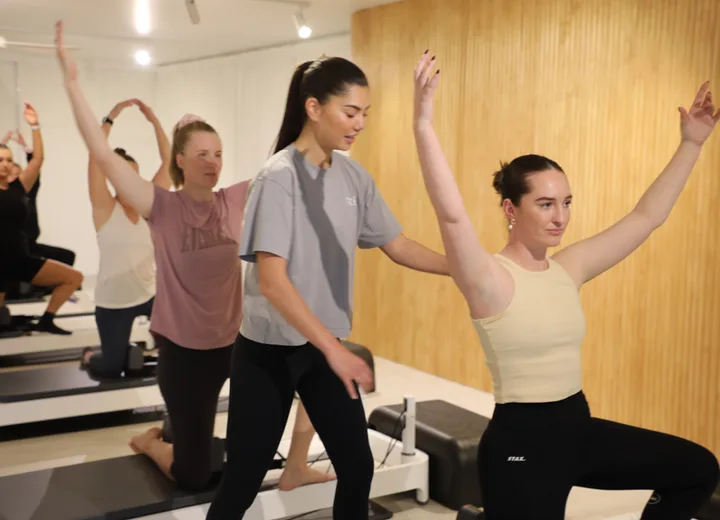
The first change is not physical, and members consistently report it. After a handful of classes you simply start noticing your body during the day. You catch the slump at the desk. You feel which shoulder rides higher. You notice you always stand with weight on the same hip.
This is your instructor's cueing taking up residence in your head, and it matters more than it sounds. You cannot adjust a position you never notice, and Pilates makes you a noticing person surprisingly fast. Nothing has been fixed yet. The lights have come on.
Weeks three to five: the muscles report for duty
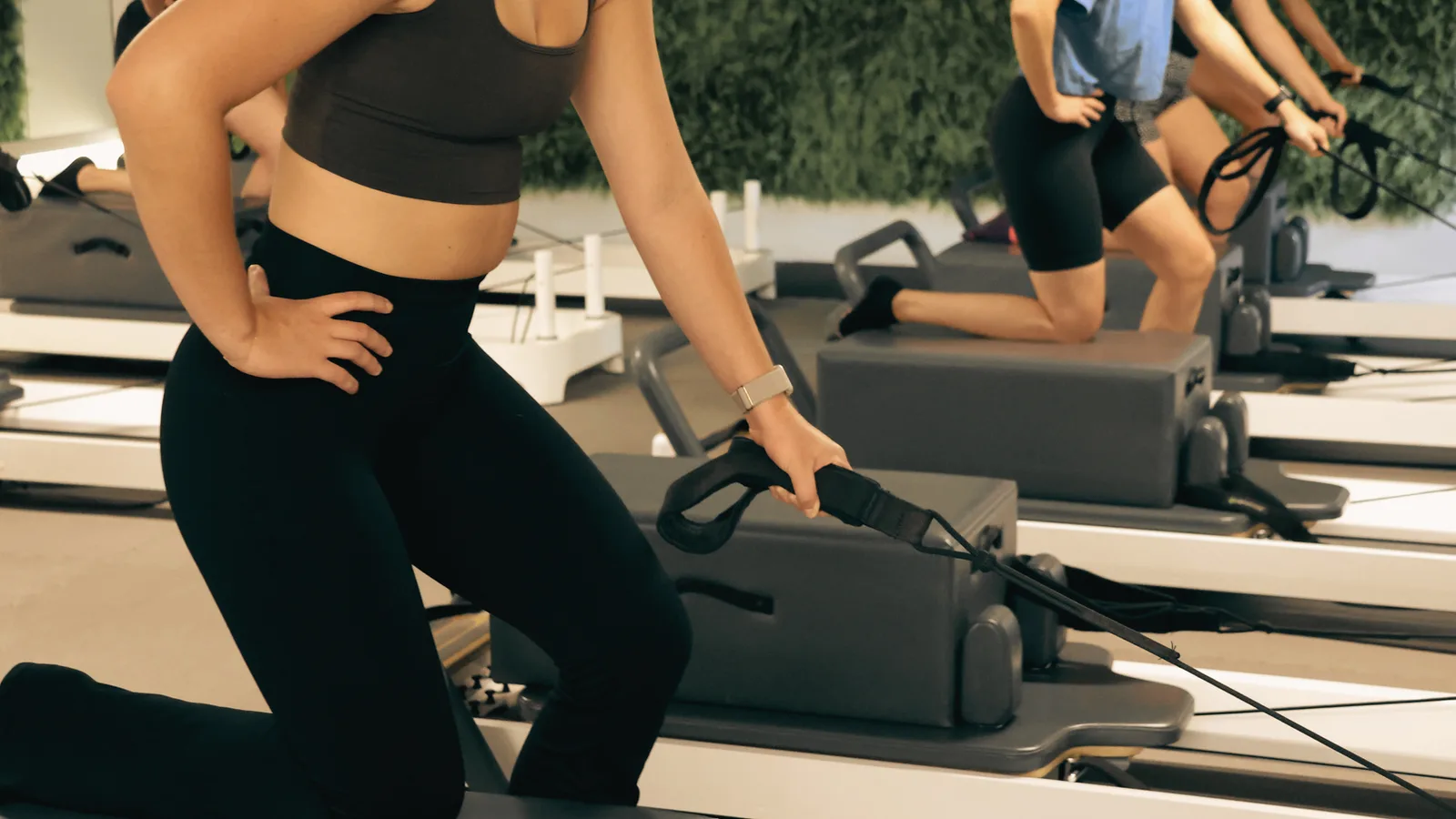
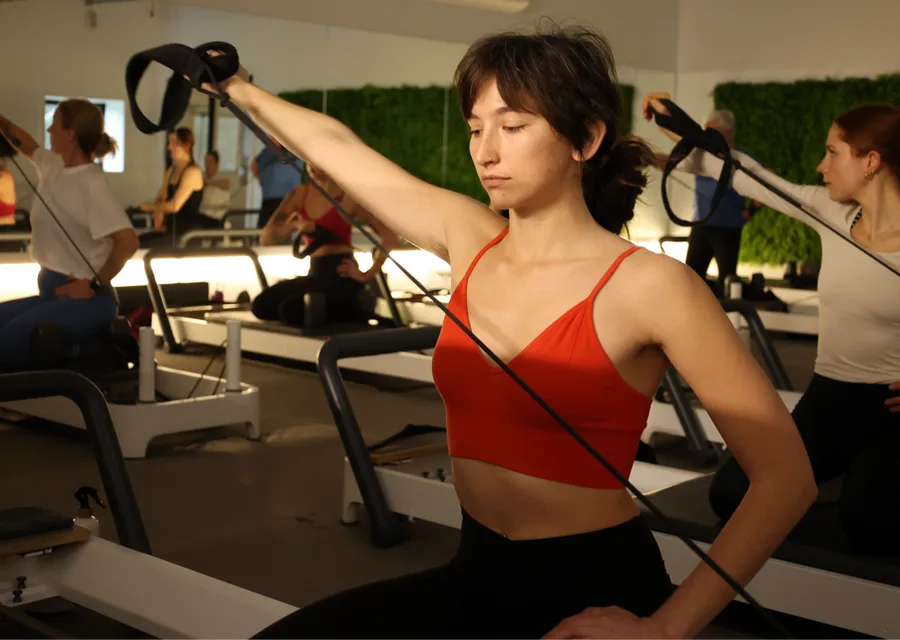
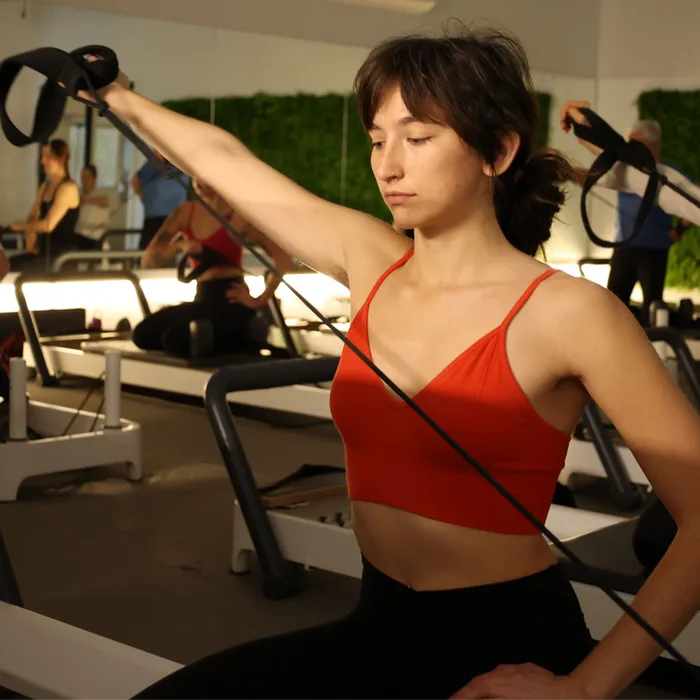
By now the training is biting. The deep abdominals are learning to support your trunk, something we unpack in what core strength actually means. Arm work in the straps is strengthening the muscles between your shoulder blades. Extension exercises are asking your upper back to bend backwards, a direction it may not have visited in years.
Daily life starts feeling different in small ways. Standing at the school gate or in a queue, you realise your lower back is not aching the way it used to. Upright moments last longer before the tiredness arrives. The slump still wins by evening, but the contest has become a contest.
Two to three classes a week is the frequency that makes this stage arrive on schedule, for reasons covered in our guide to how often.
Weeks six to eight: other people notice
This is shop window territory. The changes cross a threshold where they are visible: you stand taller without deciding to, your shoulders sit back and down at rest, your head has drifted back over your shoulders where it belongs.
People start commenting, usually vaguely, because they can see something changed without being able to name it. "You look well" and "have you lost weight" are the classics. What they are seeing is often posture. An upright, open stance reads as taller, leaner, younger and more confident, which is a remarkable return on a few hours a week.
The deeper change is that upright has become your default rather than your effort. The strong muscles hold the position on autopilot, and now the slump is the position that takes deciding. That reversal is the whole game, and once it arrives it is yours for as long as you keep training.
What posture change actually buys you
Cosmetics aside, the practical dividends are real.
Necks and shoulders complain less, because the head sitting over the spine unloads the muscles that were holding it forward all day. Breathing improves, since an open chest gives the lungs room a slump was stealing. Lower backs settle, with the pelvis and ribs stacked so load passes through structures designed to carry it. Desk workers feel this stack of benefits most sharply, which is why we wrote them their own guide.
And there is the confidence piece, which we will not oversell, except to say that members mention it unprompted, often. Standing tall changes how a room receives you, and how you feel walking into it.
Making your eight weeks happen
The recipe is unexciting, which is why it works.
- Two to three classes a week for eight weeks, booked as standing appointments.
- A foundation of Control classes early, so the positions are learned precisely.
- Flow classes as your strength grows, with the straps work doing quiet wonders for your upper back.
- A Stretch or Yoga class weekly to release the front line of hips and chest that sitting shortens.
- Between classes, no heroics required. Just use the awareness when you notice it.
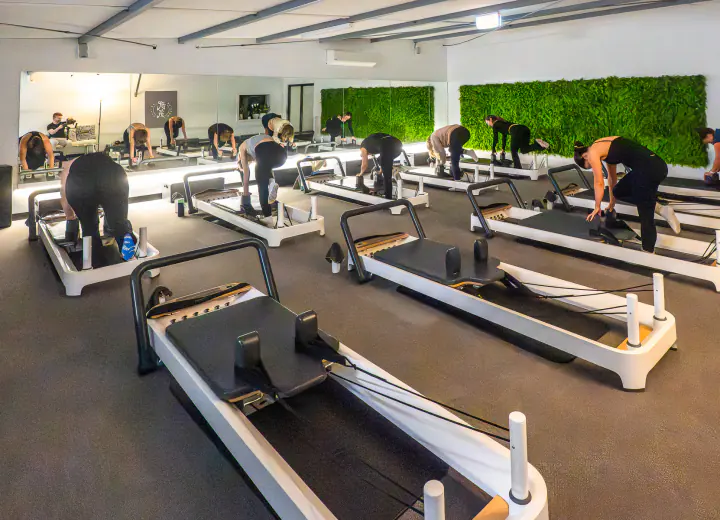
Both the Wollongong and Shellharbour studios run all of these across the week, mornings from 5:45am and evenings after work, on one shared membership.
Eight weeks from today is going to arrive whichever way you spend it. The 21 day trial covers your first three weeks for $65, unlimited classes, which is exactly enough to get through the awareness stage and into the strength stage. The shop window moment is closer than you think.