



Moving Well · 13 November 2026 · 6 min read
Shoulders away from your ears, and other shoulder cues explained
What instructors mean when they talk about your shoulder blades, why shoulders creep up during class, and how to fix it without overcorrecting.
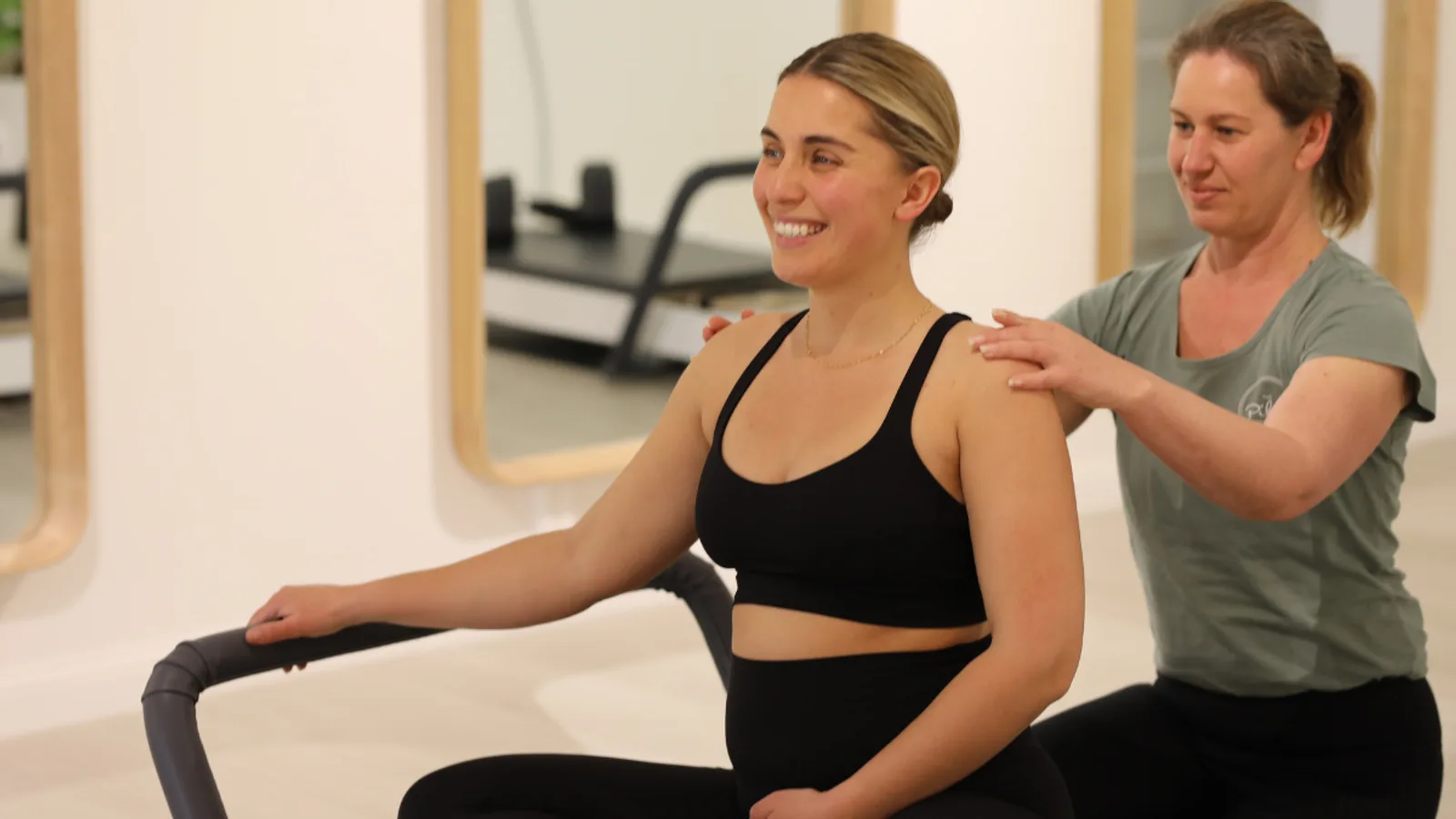
If there is one correction you are almost guaranteed to hear in a Reformer class, it is some version of "relax your shoulders". The arm work starts in the straps and the effort rises. Slowly but surely, the shoulders drift up towards the ears. Then your instructor places a light hand on your shoulder as they walk past, and suddenly you realise how tense you were.
Shoulder cues can be confusing because there are so many of them, and some seem to contradict each other. This guide explains what is happening at the shoulder and what the common cues mean in practice. It also shows how to build better control without swinging too far the other way.
A quick look at how the shoulder works
Your shoulder is more than the ball and socket joint at the top of your arm. The shoulder blades sit on the back of your ribcage and glide around it whenever your arms move. They slide up and down and rotate as you reach. The muscles around them steady the socket so the arm has a stable base to move from.
Reaching and pulling feel smooth and strong when the shoulder blades and their muscles work well together. When some muscles do too much and others too little, the shoulder tends to hitch up or roll forward.
Why shoulders creep up
There are a few common reasons, and most people have more than one of them.
The upper traps take over. The upper trapezius runs from your neck to the top of your shoulder. It is strong and keen to help. When an exercise gets hard it often jumps in and lifts the shoulder, even when the work should come from muscles lower down your back.
Desk posture. Hours at a keyboard tend to round the shoulders forward and lift them slightly. That position starts to feel normal, and you carry it into class without noticing.
Stress. Many people hold tension in their shoulders and neck. A busy day often shows up as shoulders sitting a centimetre or two higher than usual.
Effort with nowhere to go. When your arms are working hard and your trunk is not quite stable yet, the shoulders brace to help hold everything together.
What the common cues mean
Here is a plain language translation of the cues you will hear most.
- "Shoulders away from your ears." Let the tops of your shoulders drop. Imagine lengthening the side of your neck.
- "Slide your shoulder blades down your back." A gentle drawing down of the shoulder blades, as though sliding them towards your back pockets. Gentle is the important word.
- "Wide collarbones." Let the front of your chest stay open without puffing it out. Your collarbones feel long from side to side.
- "Keep your arm connected." Feel the work in the muscles under your armpit and along the side of your back, instead of only at the front of your shoulder.
- "Don't pinch." Avoid squeezing your shoulder blades hard together behind you. That creates a different kind of tension.
The overcorrection trap
Once people learn their shoulders are creeping up, many try to fix it by yanking them down and back as hard as they can. That creates its own problems. Jamming the shoulders down stiffens the neck. Squeezing the blades together limits how freely the arm can move.
Your shoulder blades are meant to move. When you lift your arms overhead, they need to rotate upward to make room, and some upward movement is normal and healthy at the top of that reach. The aim is control. Your shoulders should sit well placed and steady, ready to move when the arm needs them to.
A good test is your neck. If it feels long and relaxed while your arms work, you are probably in a good place. Tightness or strain in the neck is a sign to ease off the effort at the shoulders.
Where you will meet this on the Reformer
Shoulder control comes up in most parts of a class, including:
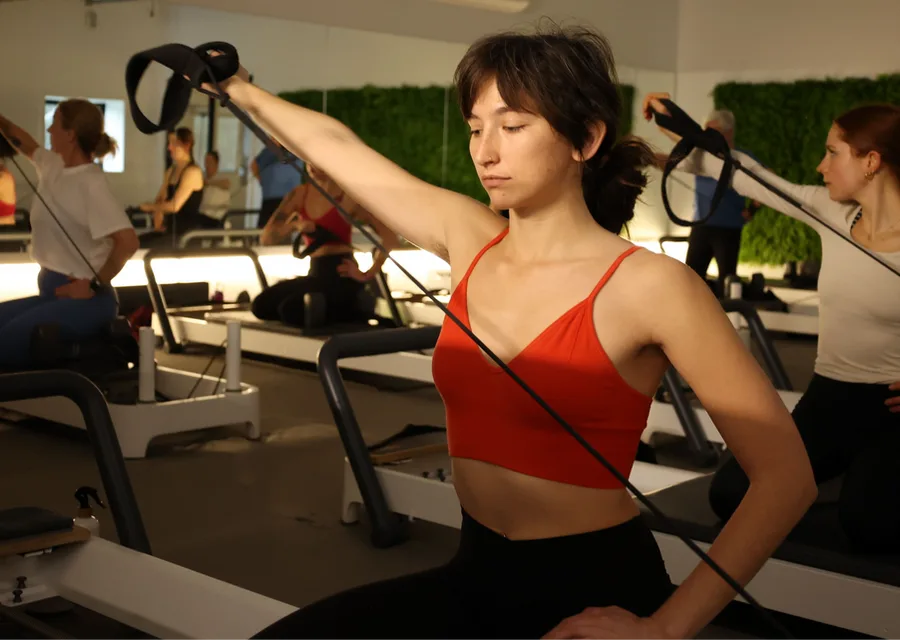
- Arm work in the straps lying on your back. A classic place for shoulders to lift off the carriage. Keep the back of your shoulders heavy.
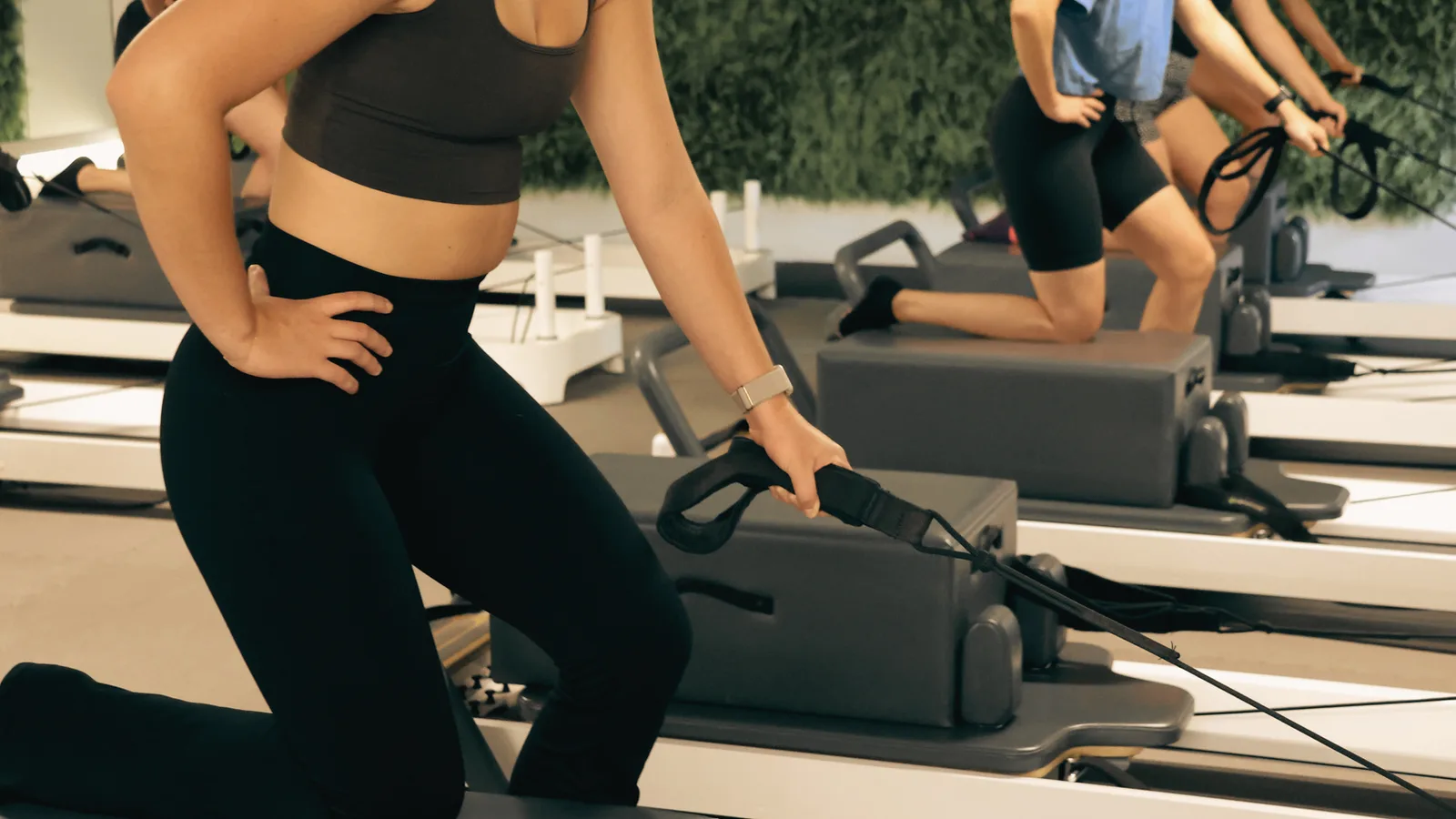
- Seated and kneeling arm work. Without the carriage supporting your back, you have to hold your trunk upright while the arms pull. Shoulders often hitch here.
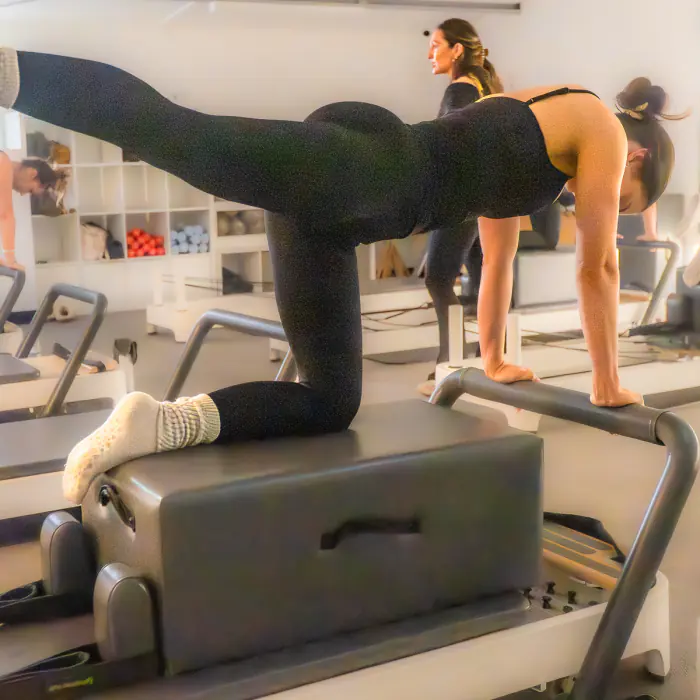
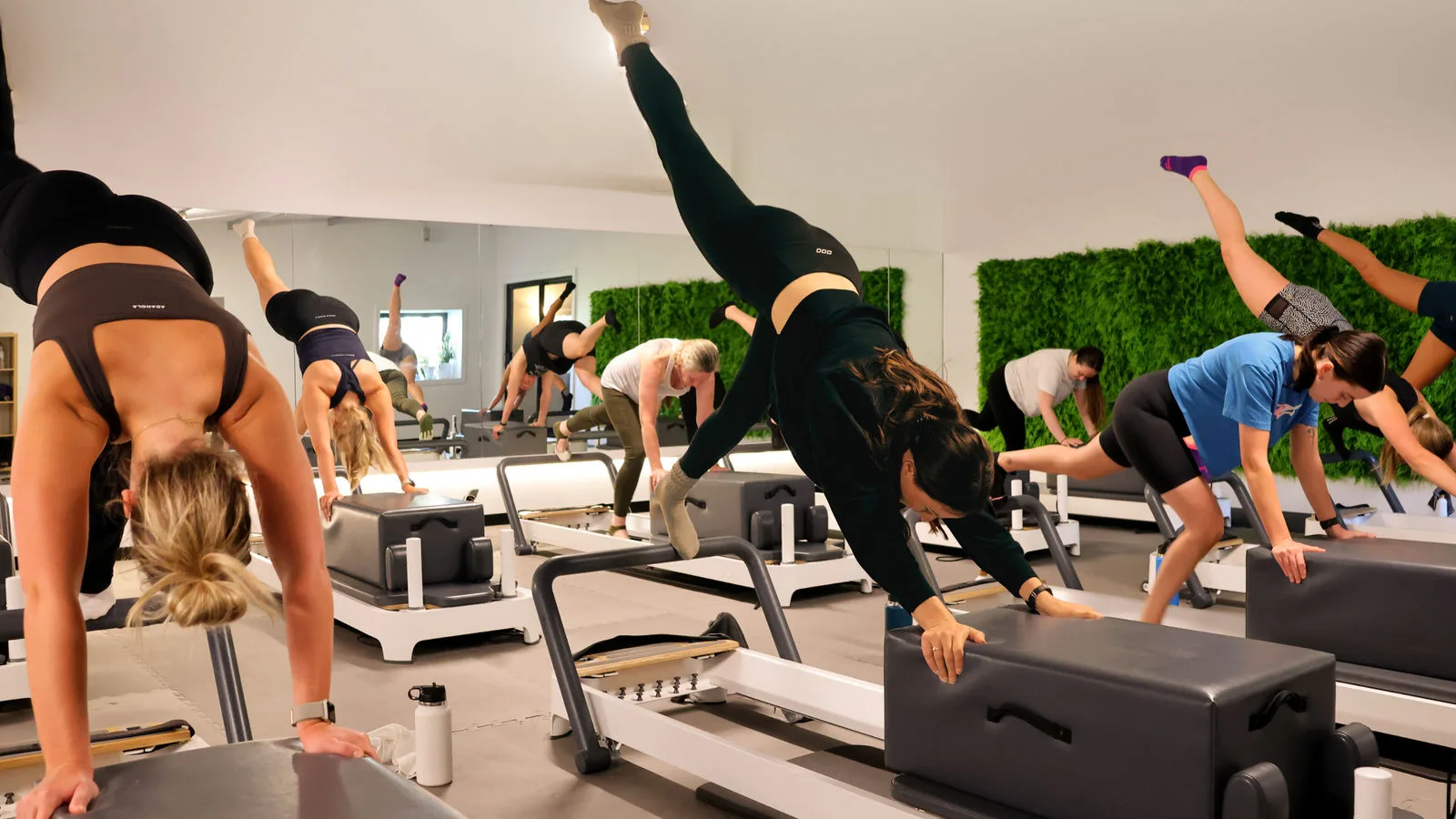
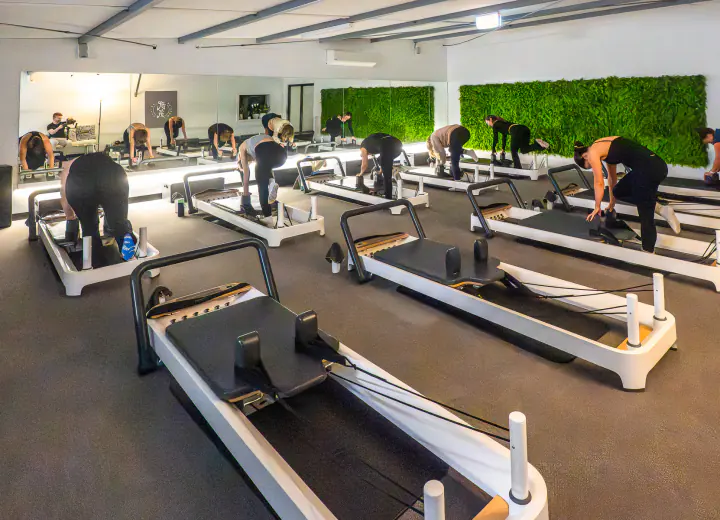
- Plank and kneeling exercises with hands on the bar or frame. Your shoulder blades need to stay steady on your ribcage, without collapsing in between or hunching up.
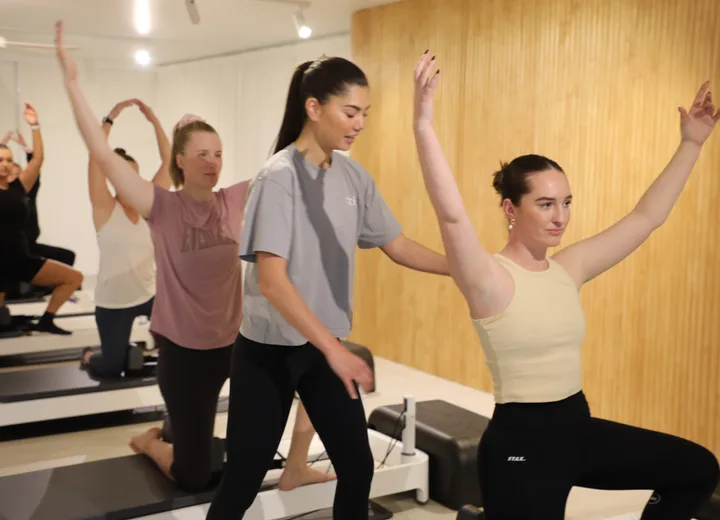
- Exercises where your arms go overhead. This is where you practise letting the shoulder blades rotate smoothly while keeping the shoulders away from your ears.
Lighter springs often make shoulder control easier to find. If your shoulders keep creeping up in an exercise, ask your instructor whether to lighten the load while you learn the pattern.
Two simple drills to try at home
These are gentle and suit most people. Stop if anything causes pain.
Shrug and release. Sit or stand tall. Breathe in and lift your shoulders up towards your ears. Breathe out and let them drop down without pushing. Repeat five times, noticing where your shoulders settle on the last one. That is often lower than where they started.
Wall push. Stand facing a wall with your hands on it at shoulder height and your arms straight. Keep your elbows straight and let your chest sink slightly towards the wall, so your shoulder blades move together. Then push the wall away so they spread apart. Keep your neck long throughout, and do eight to ten slow repetitions.
Check with your GP or physio before trying new shoulder exercises if you have a shoulder injury or ongoing pain. Painful clicking is also worth getting checked. Let your instructor know about any of these before class.
Patience pays off
Shoulder habits are often years in the making, so do not expect them to change in a week. What usually happens is that you start catching yourself sooner. At first it takes your instructor's hand on your shoulder. A few weeks later you notice halfway through the exercise. Eventually you set your shoulders at the start without thinking about it.
Many people find this carries over into everyday life, from how they sit at a desk to how they carry shopping bags. If your desk job is part of the story, our desk worker's guide has more ideas.
Our instructors watch technique closely and will help you find a shoulder position that feels steady and comfortable. Find a Control or Flow class on the timetable and see how much lighter your shoulders feel by the end.