




Health & Wellbeing · 2 October 2026 · 5 min read
The desk worker's guide to undoing a day of sitting
Five habits plus the classes that reverse tight hips and rounded shoulders.
Eight hours in a chair, a commute at either end, then the couch. If that is the shape of your average day, your body has been quietly adapting to it, and not in directions you would choose. Tight hips, a rounded upper back, a neck that creeps forward towards the screen, and a lower back that files complaints by Thursday.
None of this is a moral failing. Sitting is how modern work happens, and no amount of guilt changes a Tuesday. What actually helps is understanding what all that stillness does, and building a short list of habits that push back. Here is ours.
What sitting actually does
Your body is ruthlessly efficient. It maintains what you use and lets go of what you do not, and a chair sends very clear signals about what you are using.
Hip flexors, the muscles across the front of your hips, spend the day shortened, and over months they adapt to that length. Stand up and they tug your pelvis forward, which your lower back then has to counteract all evening. Glutes, meanwhile, spend the day switched off and squashed, and they get progressively worse at their actual job, which is powering you up stairs and holding your pelvis level when you walk.
Up top, shoulders round towards the keyboard, the chest muscles shorten, and the upper back lengthens into a slump it eventually accepts as home. Your head drifts forward, and every centimetre of drift adds real load to the muscles holding it up. By evening, that is the headache brewing at the base of your skull.
The good news is that all of it is adaptation, and adaptation runs in reverse just as readily. Give the body different signals and it rebuilds the other way.
The workday habits
Nothing here requires standing desks or willpower athletics. Small and frequent beats perfect and abandoned.
- Stand up briefly every half hour or so. A trip to the tap counts. The point is interrupting the signal, and thirty seconds does that.
- When you stand, reach both arms overhead and take one slow breath. Ten seconds, and it reverses the fold your body has been marinating in.
- Set your screen at eye height. Laptop users, a stand or a stack of books changes your neck's entire afternoon.
- Take one call standing or walking, if your work allows it. Movement you attach to an existing habit actually happens.
- Uncross your legs occasionally and plant both feet. Symmetry is a small kindness your pelvis notices.
That is the whole office program. Modest, sustainable, effective.
The training that reverses the pattern
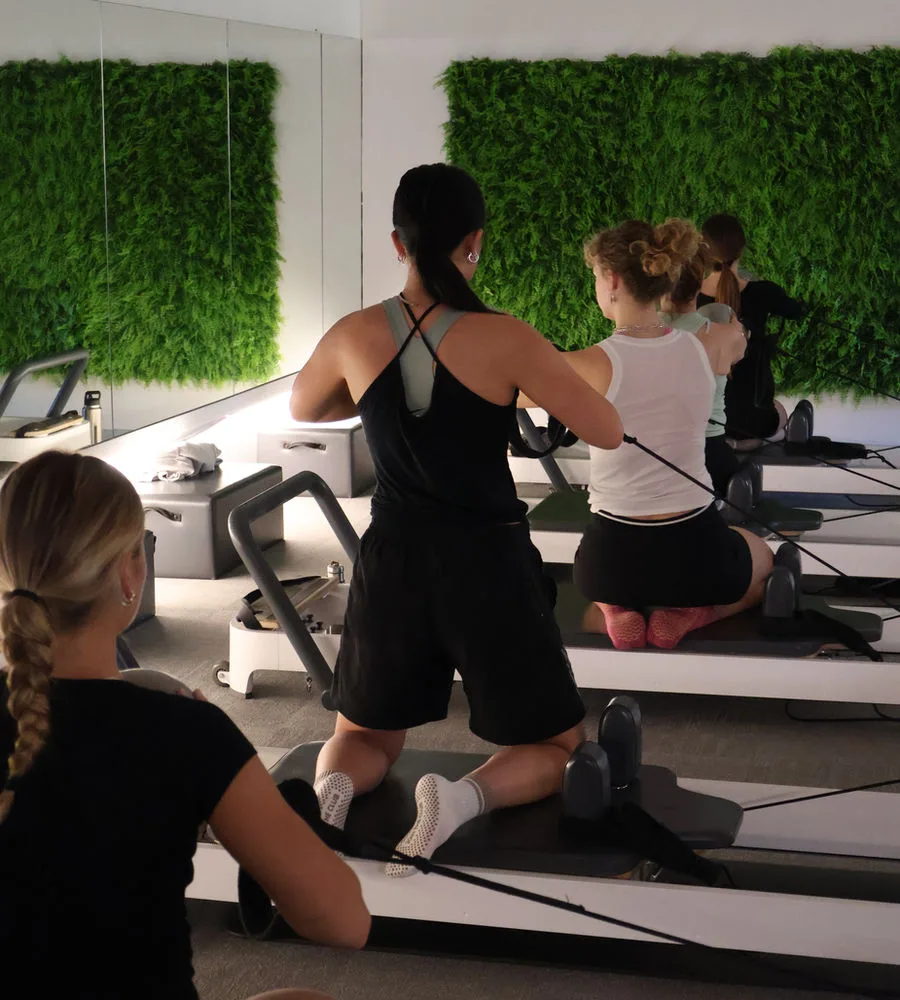
Habits slow the slide. Training reverses it, and this is honestly the territory where Reformer Pilates shines brightest, because the method targets almost exactly the muscles a desk switches off.
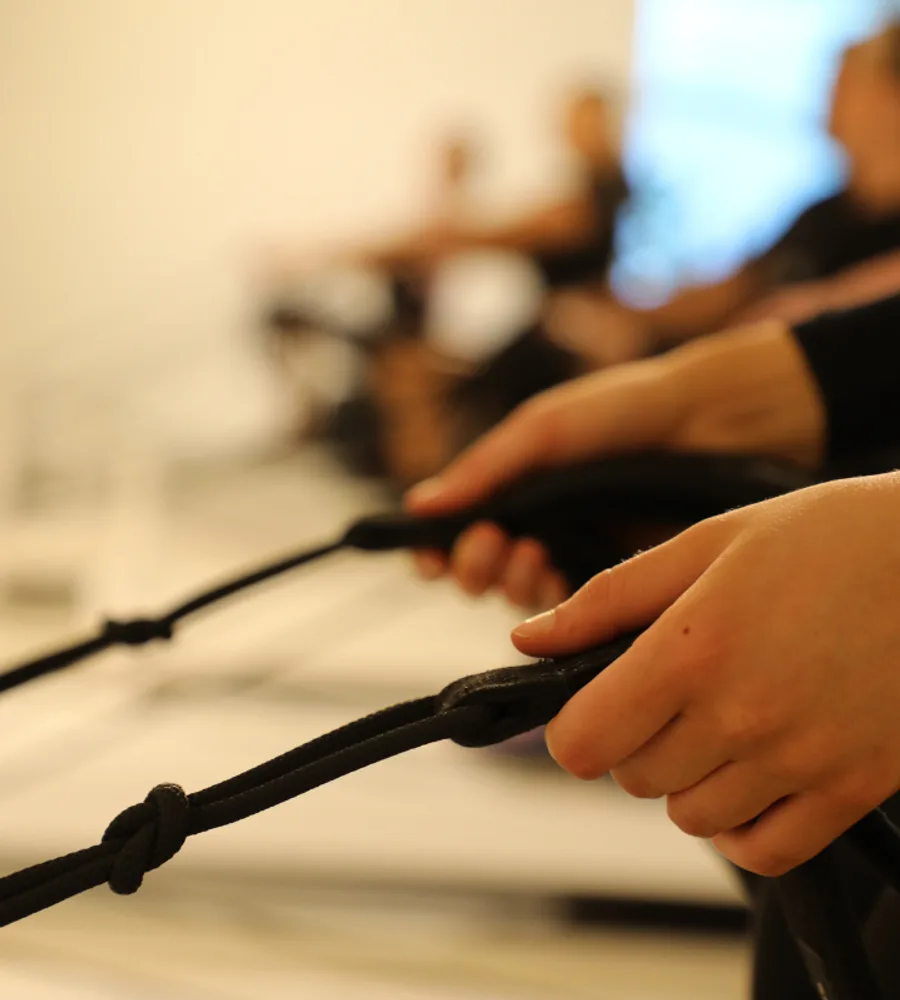
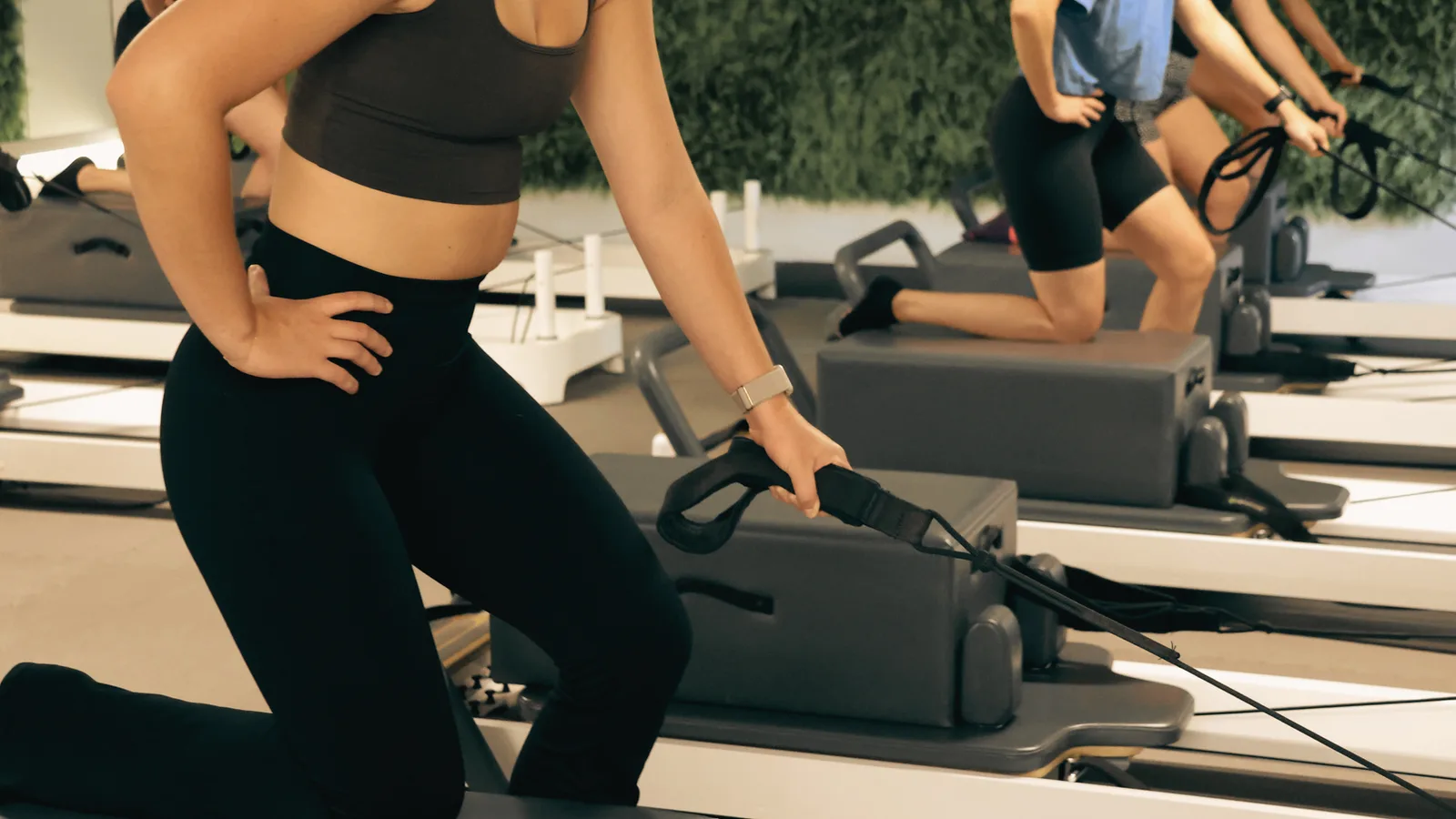
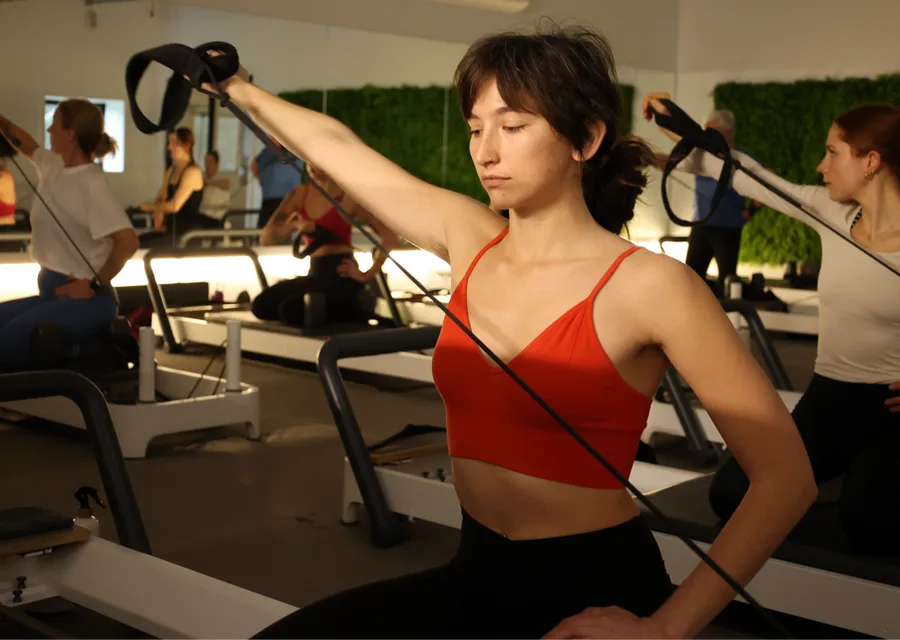
Every class trains the deep core that stops your pelvis tipping and your lower back overworking. Leg and footwork wakes the glutes up and reminds them they have a job. Arm work in the straps strengthens the mid back muscles that pull your shoulders back where they belong, and extension exercises restore movement to a thoracic spine that has spent the week curled around a laptop.
Then there is the simple matter of range. A class moves your joints through positions your workday never visits: spine rotating and extending, hips opening, shoulders reaching. Twice a week, that variety alone is transformative for a chair shaped body. Members with office jobs routinely tell us the afternoon back ache faded somewhere in their first month, before they had even set foot in an advanced class. The mechanics behind that are covered in what core strength actually means.
Which classes to book
For the desk bound body, the timetable has a natural recipe.
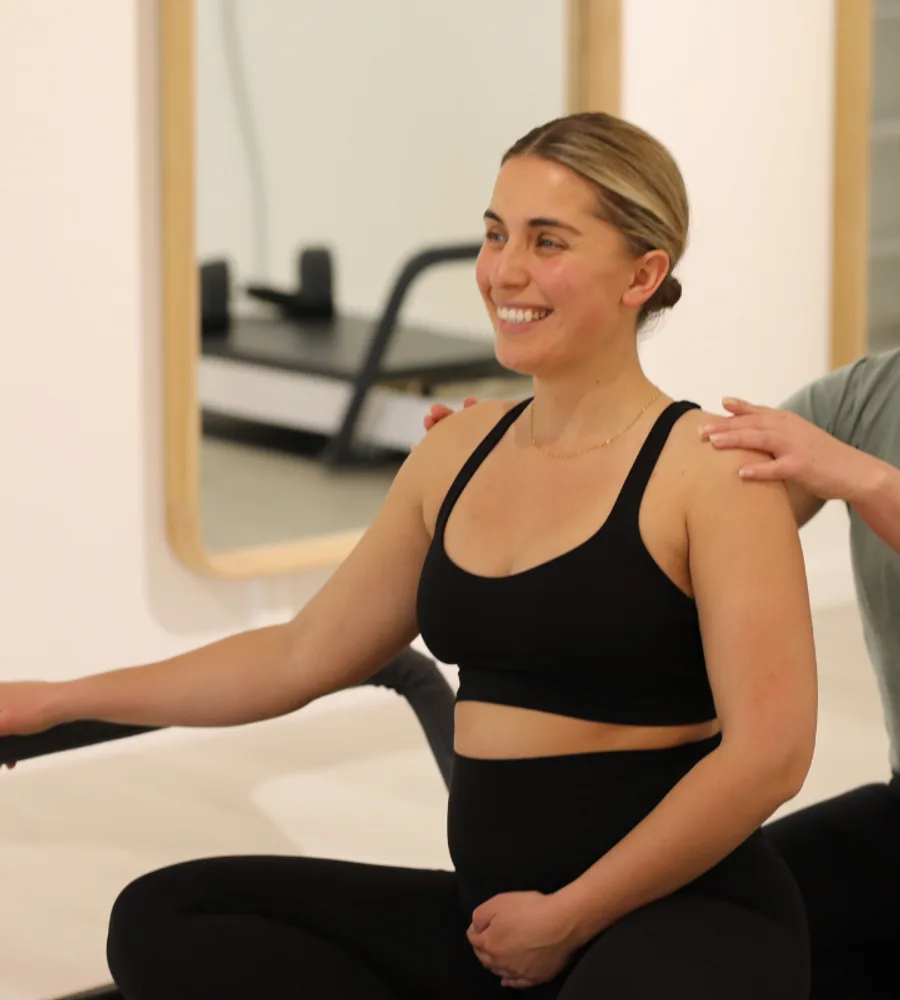
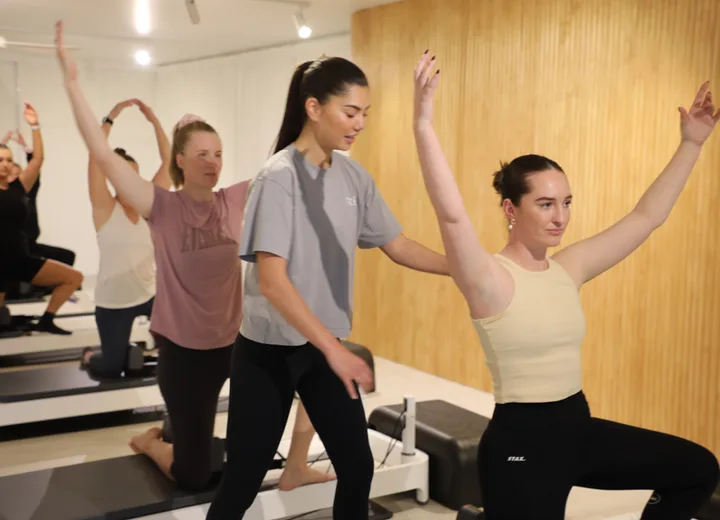
Start with Control, where the slow pace lets you actually find the muscles that have been asleep. Rushing past dormant glutes is easy at speed and nearly impossible at Control pace, with an instructor watching.
Add Stretch as your standing appointment. Long holds and deep release for hips, chest and back, it is the single most direct antidote to sitting we offer, and desk workers who try it once tend to guard their Stretch spot fiercely.
As things wake up, a weekly Flow builds the strength that makes good posture effortless rather than effortful. Because that is the truth about slumping: nobody fixes it through vigilance. You fix it by making the upright position the strong, comfortable, default one, and that is a training outcome. We wrote more about that journey in what eight weeks of Pilates does for your posture.
Making it fit around work
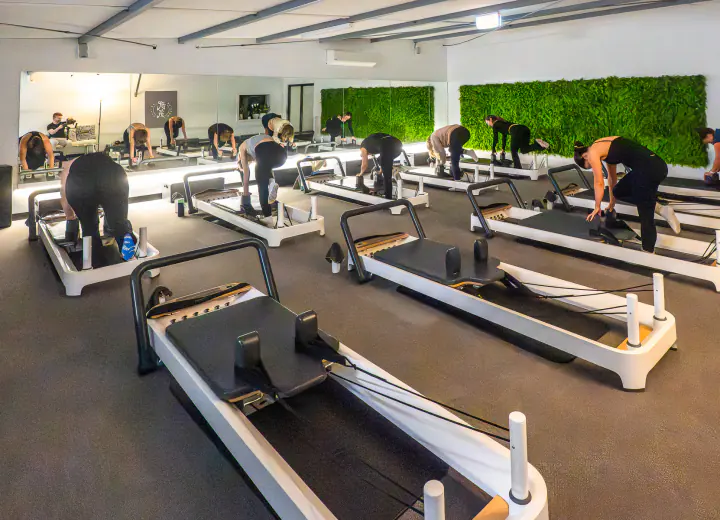
We built the timetable for working weeks. Classes start at 5:45am at both studios, which gets you trained before the first email lands, and evening sessions run late enough to catch the after work crowd. The Wollongong studio on Keira Street has showers on site, so a morning class can flow straight into the workday. Shellharbour sits opposite the Stockland car park, which makes the lunch break class genuinely feasible.
Both studios run on one membership, so you can train wherever the day takes you. Book the same two or three slots every week and treat them like meetings. Your calendar already runs your sitting. It may as well run the antidote.
Start before Thursday
Your body will keep adapting to whatever you give it. Give it something other than the chair.
The 21 day trial is $65 for unlimited classes across both studios, which is enough time for a desk worker to feel the afternoon stiffness begin to lift. Book a Control class, mention the desk job on your enrolment form, and let your instructor take aim at those hips.