




Benefits of Pilates · 6 November 2026 · 6 min read
Strength training that is kind to your joints
Most Australian adults miss the guideline for muscle strengthening. Why Reformer Pilates is a joint-friendly way to close that gap.
Australia's physical activity guidelines ask adults to do muscle strengthening activities on at least two days each week. Most of us don't. According to the federal Department of Health, 73 per cent of adults aged 18 to 64 aren't doing enough muscle strengthening, and that rises to 84 per cent for people aged 65 and over.
There are plenty of reasons for the gap. Some people find gyms intimidating. Others have tried lifting weights and ended up with sore knees or a cranky lower back. A lot of people simply assume strength training has to be heavy and hard on the body.
Reformer Pilates offers a different route. It is genuine resistance training, built in a way that goes easy on your joints. This article explains how, and who it suits.
Why joints like the Reformer
Joints cope well with work. Trouble tends to come from sudden load, or from more stress than the surrounding muscles can handle. The Reformer is designed to reduce both.
Springs instead of weights
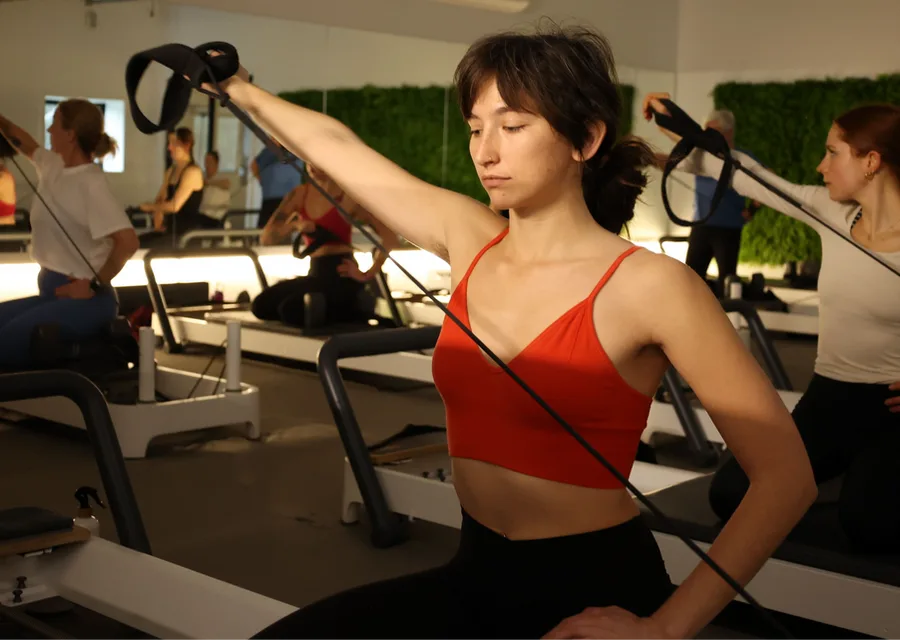
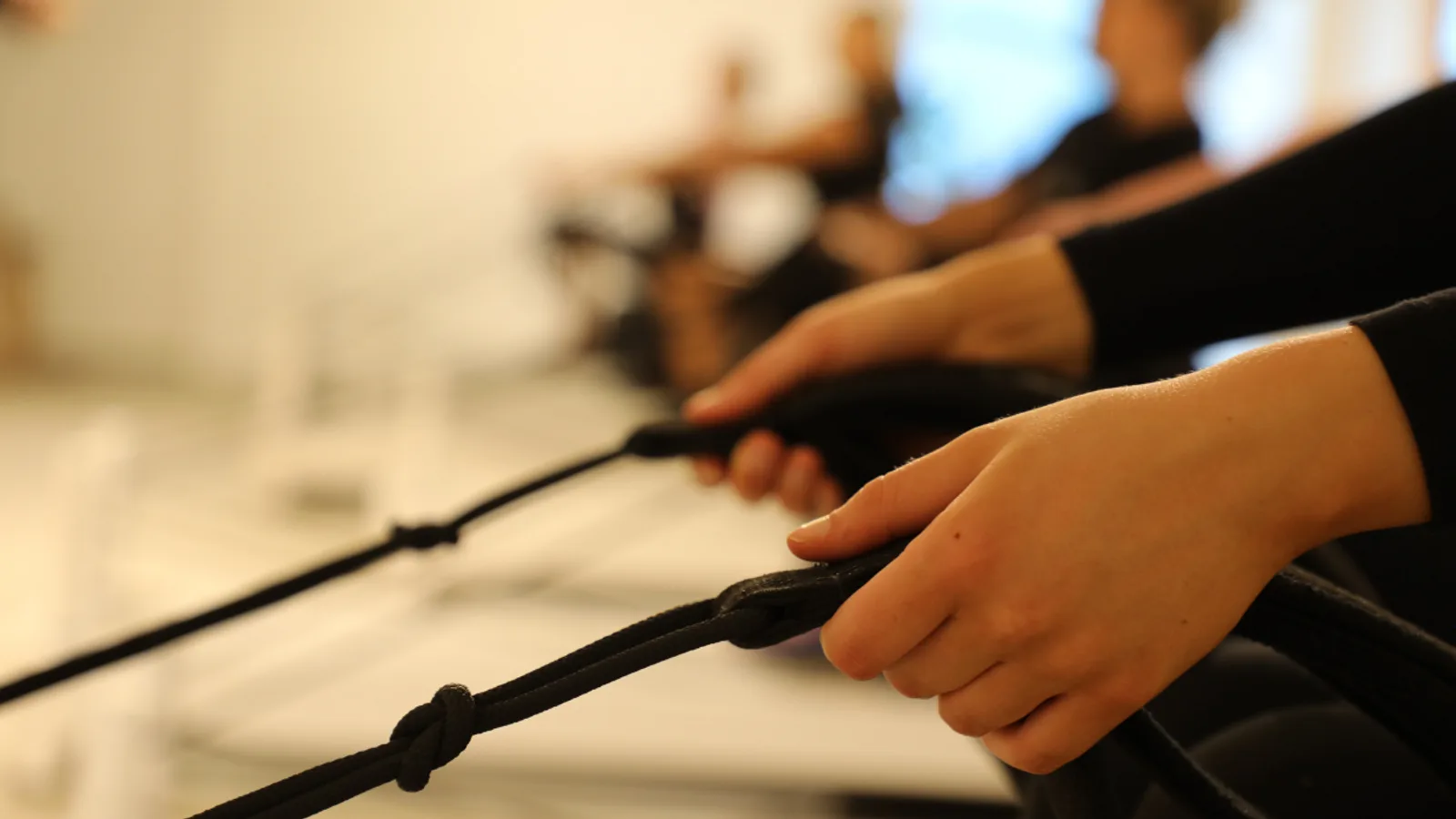
A dumbbell weighs the same at every point of a lift, and if you lose control of it, gravity takes over. Springs behave differently. The resistance builds smoothly as you push and eases as you return, and the load never drops on you suddenly. That gradual build-up means the load arrives smoothly rather than all at once.
Springs are also easy to adjust. If a setting is too much for your knee or shoulder on a given day, your instructor can lighten it in seconds, and you keep working rather than sitting the exercise out. Our article on what all those springs do goes into the detail.
No impact
Running and many group fitness classes involve repeated landings, where your joints absorb a force several times your body weight. In most Reformer work your body stays in contact with the machine throughout, so there is no landing at all. Even the jumpboard in our Jump classes has you lying down, with springs absorbing the landing.
Supported positions
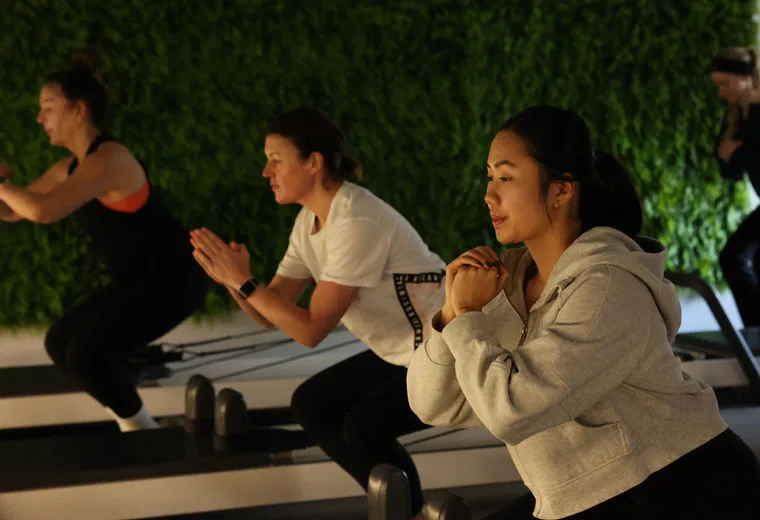
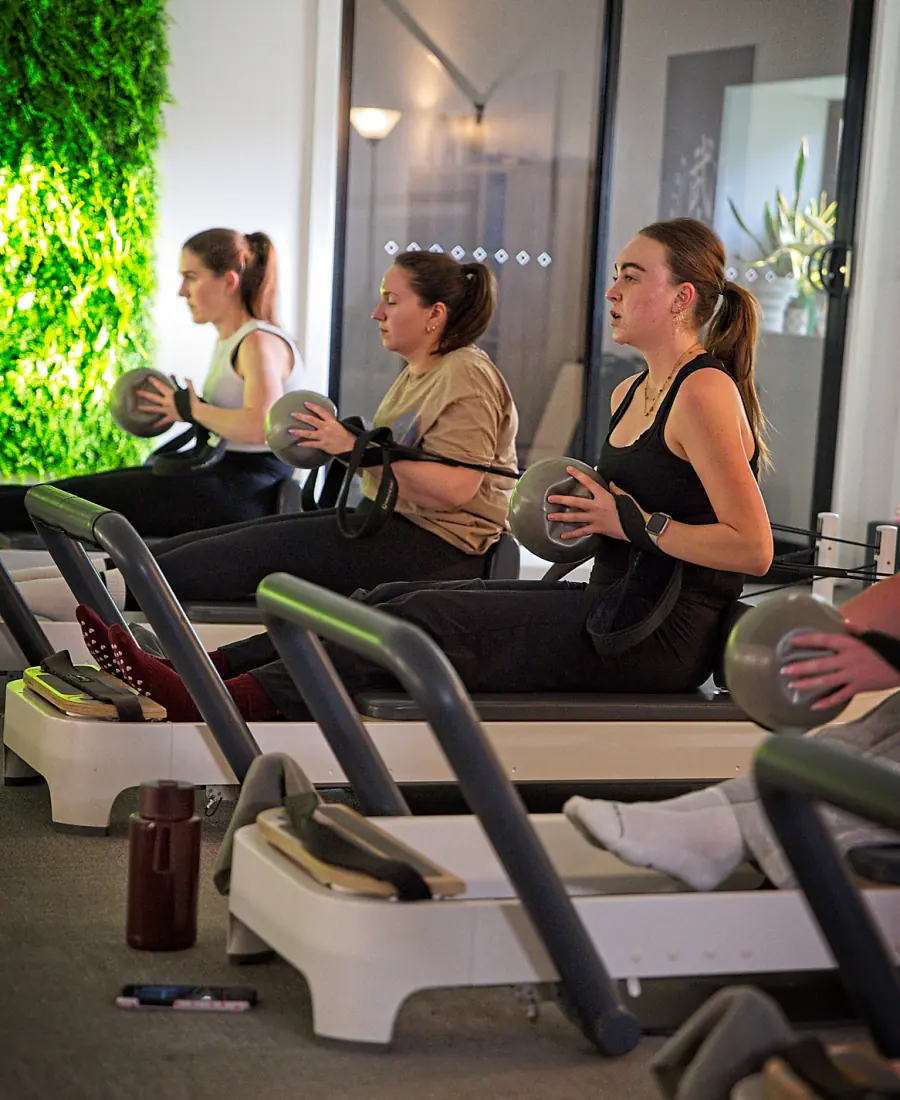
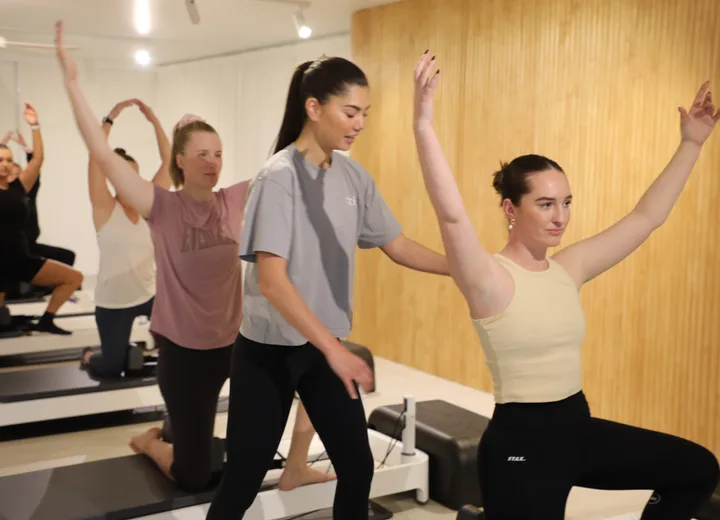
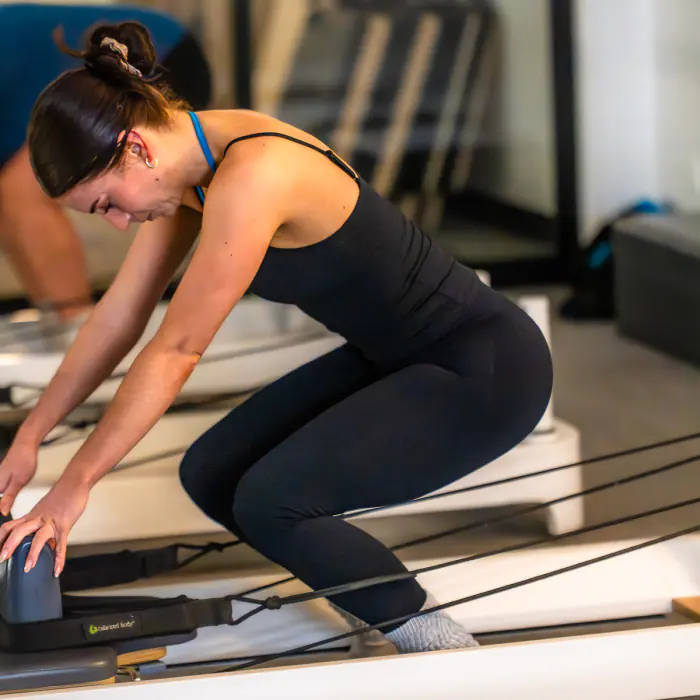
Much of a Reformer class happens lying on your back or side, or kneeling, with the carriage supporting your body. That means you can load the muscles around your hips and knees without your joints also carrying your full body weight. For people with sore knees, lying down to do leg work is often the difference between avoiding strength training and enjoying it.
Controlled range
Pilates teaches you to move through a range you can control, and to build that range gradually. There is no bouncing or swinging, and no forcing a joint into a position it isn't ready for. Over time, a controlled range tends to become a bigger one.
Strong muscles, supported joints
The muscles around a joint act as its shock absorbers and guide rails. Strong quads and glutes help steady the knee. A capable trunk and hips help protect the lower back, and the muscles around the shoulder blade help the shoulder move well overhead.
When those muscles are weak, the joint takes more of the load itself. That is one reason strength training is recommended so widely for joint health. Arthritis Australia's information sheet on physical activity lists strength training among the options for people with arthritis. Its examples of low-impact activity include yoga and Pilates. It also makes an important point. There isn't one exercise that suits everyone with arthritis, and people who haven't exercised for a while may need to start with shorter sessions and build slowly.
That fits the way we teach. Every body is different, and the Reformer makes it easy to give each person in the room the right level of challenge.
Who this suits
Joint-friendly strength training isn't only for people with sore joints, though it suits them well. It also suits:
- People who have never lifted weights and want to start strength training without learning barbell technique first.
- Runners and other athletes who already put plenty of impact through their bodies and want strength work that doesn't add more.
- People returning to exercise after a long break, who want to build back gradually.
- Older adults who want to keep strength and independence for the decades ahead.
- Anyone who has been put off by gym soreness or fear of hurting themselves.
If you have a diagnosed joint condition or a recent injury, please talk to your GP or physio before starting, and tell your instructor when you book in. They can adjust exercises and springs so the class works for your body.
What a joint-friendly week can look like
Two Reformer classes a week meets the guideline for muscle strengthening on its own. Here is one simple way to set it up:
- Start with Control. Our slowest class teaches the positions and lets you feel how each exercise sits in your joints. Stay here for your first few weeks.
- Add Flow when you are ready. Flow is our medium paced full body class, and it becomes the staple for most members.
- Use Stretch or Yoga for recovery. Longer holds and gentle movement help joints and muscles feel good between harder sessions.
- Walk on the other days. Low-impact cardio pairs well with Reformer strength work, and the Illawarra has no shortage of flat coastal paths.
Pay attention to how your joints feel in the 24 hours after class. Muscle tiredness is normal. Joint pain that lingers or gets worse is a signal to tell your instructor and check in with a health professional.
Questions people often ask
Will kneeling hurt my knees?
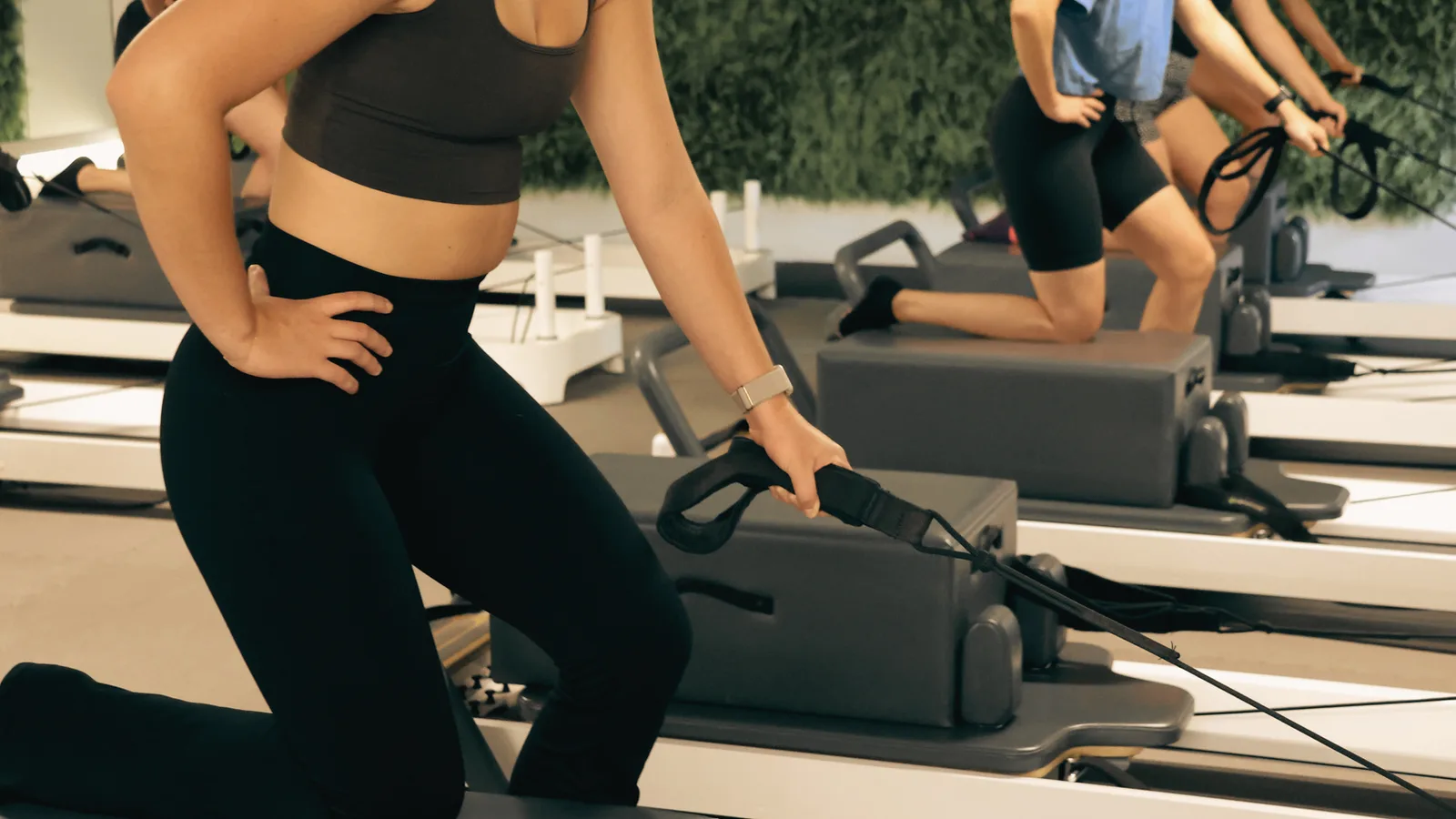
Some Reformer exercises involve kneeling on the carriage, which can be uncomfortable for sensitive knees. Tell your instructor before class. There is almost always an alternative position, such as standing or lying down, that works the same muscles without pressure on the kneecap.
What if a joint feels sore during class?
Stop the exercise and let your instructor know. A lighter spring or a different position often solves it on the spot. Muscles working hard is expected. Pain in the joint itself is your cue to change something, and if it keeps happening, to get it checked by your GP or physio.
Can I do Pilates after a joint replacement?
Many people do, but the timing and the movements to avoid depend on your surgery. Get clearance from your surgeon or physio first, bring any guidance they give you, and share it with your instructor so they can adjust your program.
Make strength the easy habit
Strength training doesn't have to be something you dread or fight through. On the Reformer it can be steady and supported, even something you look forward to, which makes it far more likely you will keep doing it.
If you would like to try it, the 21 day trial gives you unlimited group classes at Wollongong and Shellharbour for $65, with no lock-in. Start with a Control class on the timetable, let your instructor know about any joints that need extra care, and see how good strength work can feel.