




Benefits of Pilates · 15 November 2026 · 5 min read
What Pilates does for your mood
Many people come for the strength and stay for how they feel afterwards. What the research says about Pilates and mood, and why the studio helps.
People sign up for Pilates for all sorts of reasons, from a sore back to a friend who wouldn't stop talking about it. Ask them a few months later why they keep coming, and the answer often shifts. It becomes about how they feel walking out the door at 6:30am, or how a Thursday evening class takes the edge off a long week.
That feeling is worth taking seriously. Exercise is one of the most reliable tools we have for supporting mental health, and Pilates has a few features that make it particularly good at it. This article looks at what the research says and which parts of a class seem to help, with a few ideas for getting the most from it.
What the research says
The best-known summary of the evidence is a 2018 meta-analysis by Fleming and Herring, published in Complementary Therapies in Medicine. The researchers pooled controlled trials of Pilates and found meaningful reductions in symptoms of depression and anxiety in the people who did Pilates, compared with those who didn't. Those doing Pilates also reported less fatigue and more energy.
The authors were careful to point out the limits. Only a handful of small trials were included, and the comparison groups weren't doing another activity, so the results are encouraging rather than conclusive. That is a fair way to read it. Pilates isn't a treatment for mental illness, and it doesn't replace professional care. As part of a balanced week, though, there is good reason to think it helps.
It also sits inside a much bigger body of evidence on exercise and mental health in general. The American College of Sports Medicine's survey of fitness trends for 2026 ranked "Exercise for Mental Health" sixth in the world, a sign that people are increasingly choosing their training for how it makes them feel as well as how it makes them look.
Why a Pilates class feels so good
Research tells us that it helps. The studio experience gives a few clues as to why.
Your attention has somewhere to go
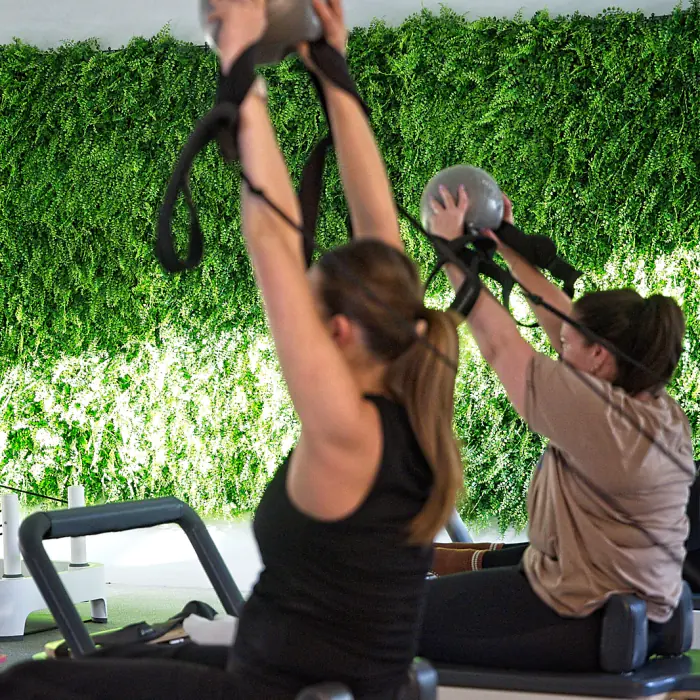
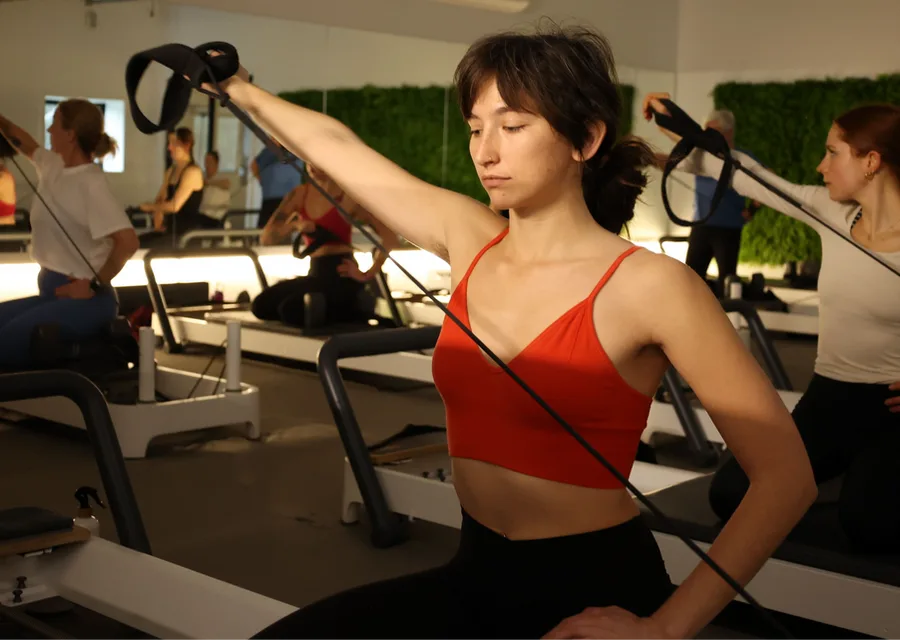
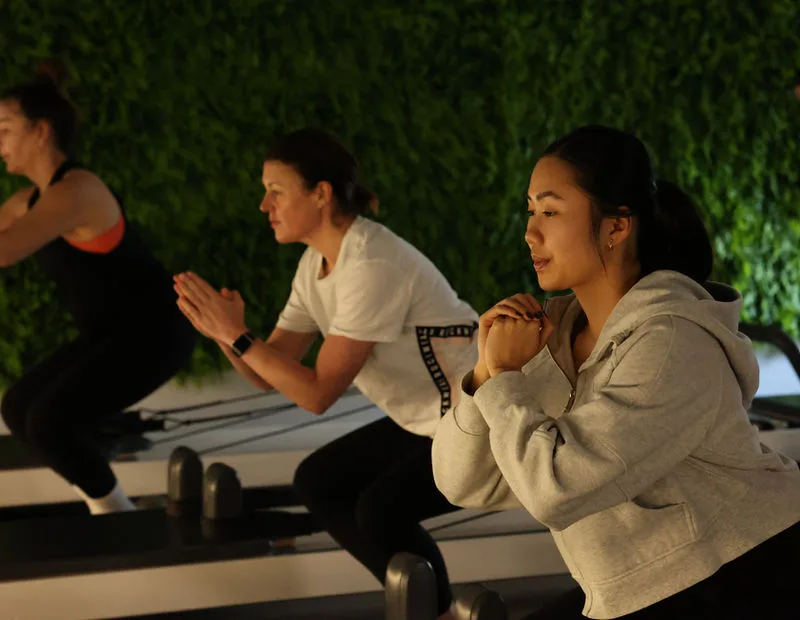
A Reformer class asks for a lot of focus. You are coordinating breath with movement while listening for cues and feeling for the right muscles. There isn't much room left over for replaying a work meeting or writing tomorrow's to-do list.
That full focus is restful in its own way. For 45 minutes, your brain gets a break from the usual loops, and many people walk out feeling clearer than when they walked in. Phones go on silent for every class at our studios, which helps too.
Breathing slows you down
Pilates uses deliberate breathing patterns, usually a long exhale on the effort. Slow, steady breathing is one of the simplest ways to settle the body's stress response, and in Pilates you practise it dozens of times a session without thinking of it as a relaxation exercise. We covered this in more detail in how to breathe in a Pilates class.
Progress you can feel
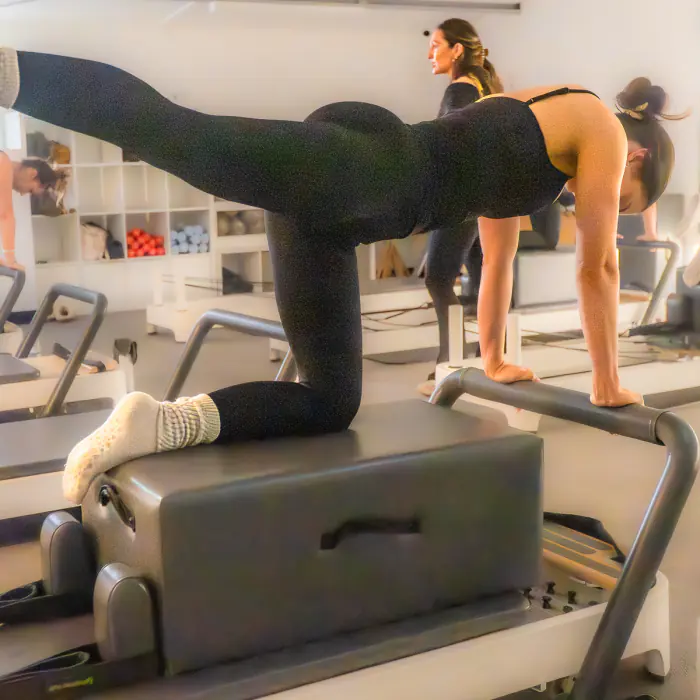
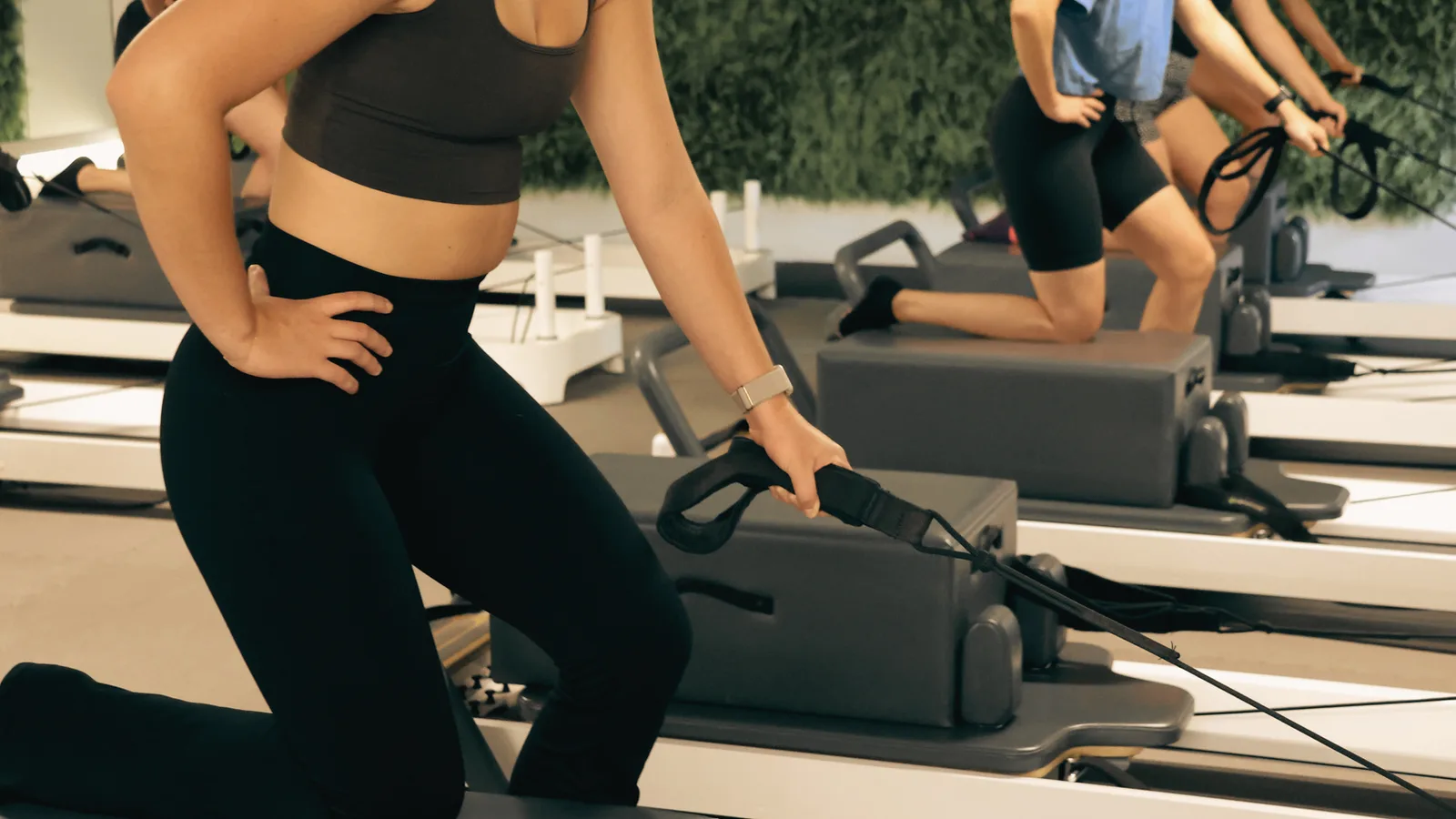
There is real satisfaction in being able to do something this month that you couldn't do last month. In Pilates, those wins come often. The kneeling exercise that felt impossible in week one becomes steady. You move up a spring. Your instructor gives you a harder variation. Small, regular evidence that you are getting stronger is good for confidence, and confidence is good for mood.
Our studio ethos is "Be Confident, Be Strong", and we chose it on purpose. The two go together more often than you would think.
You are part of a room
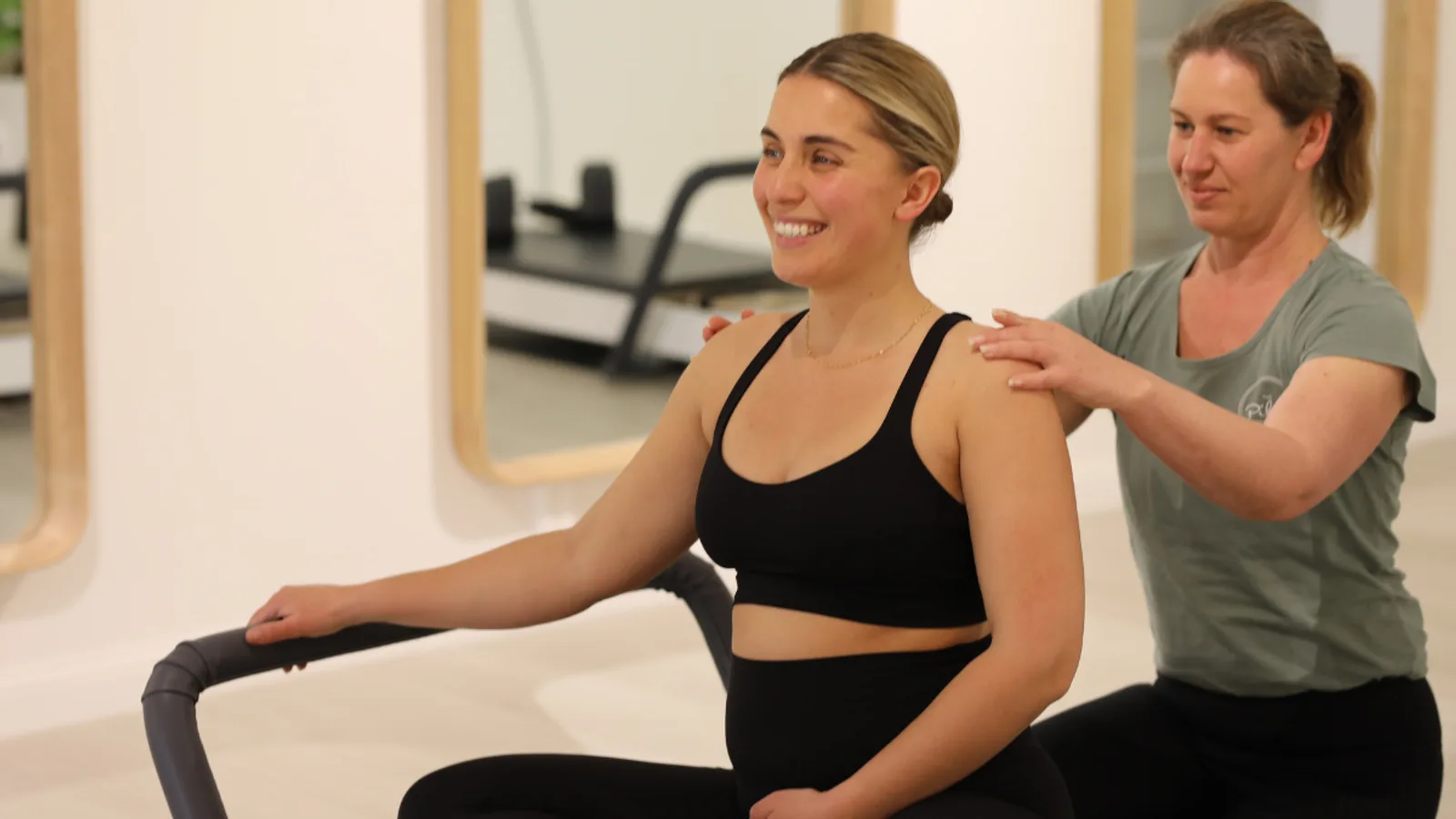
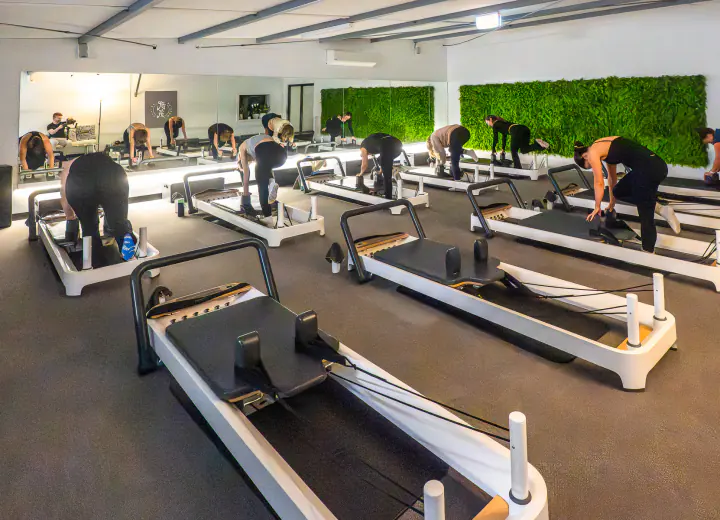
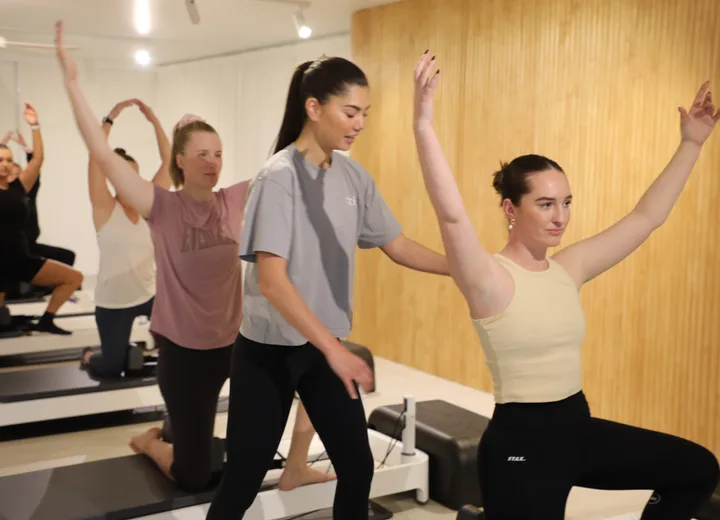
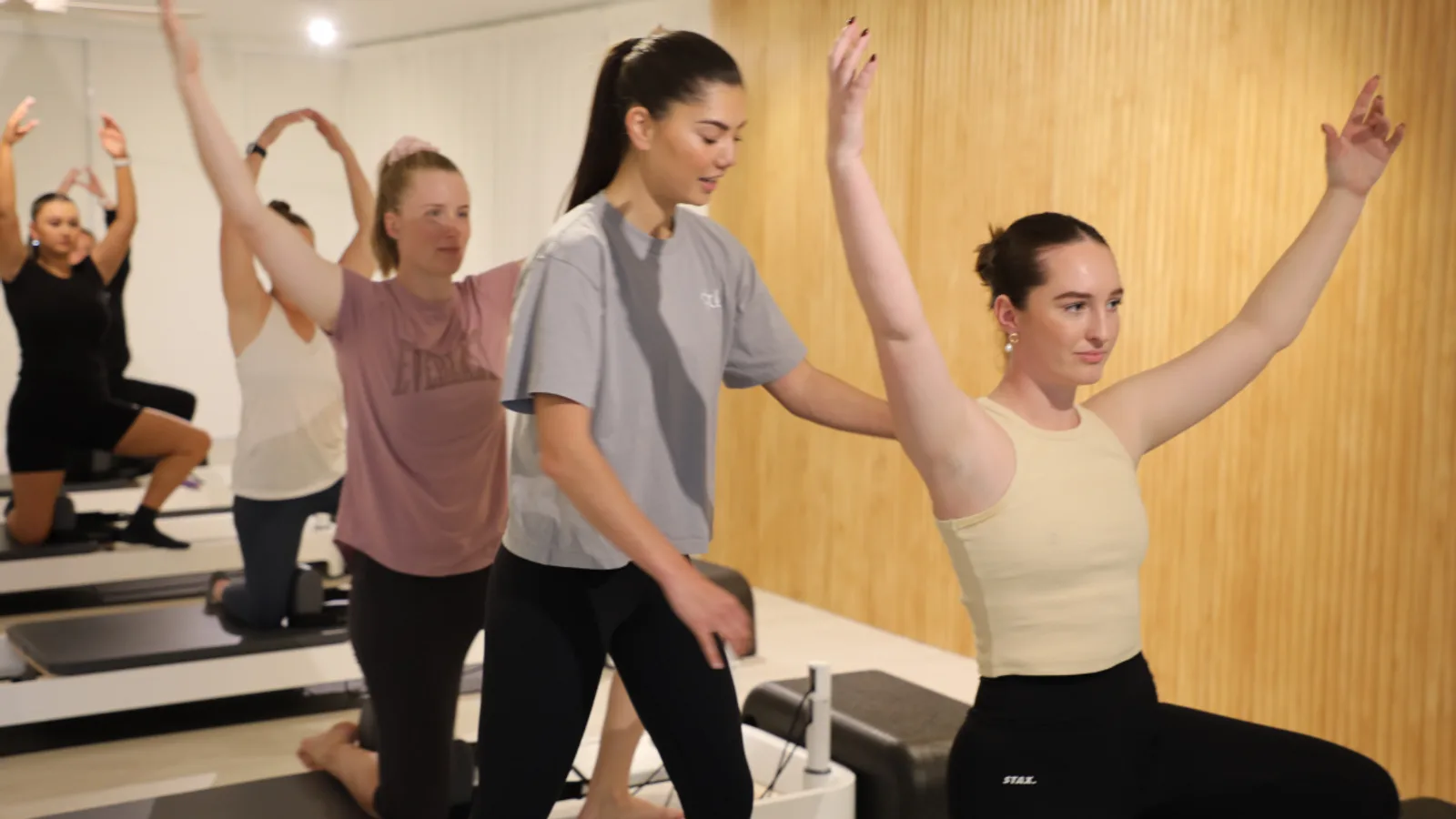
Classes are small, and the same faces turn up at the same times each week. The instructors learn your name, and someone notices when you have been away. That sense of belonging is easy to underrate. For people who work from home, or who have moved to the Illawarra without a big network, a regular class can be one of the most social parts of the week.
It is gentle on a tired body
High intensity sessions are great for some days. On low days, though, the idea of a punishing workout can be enough to keep you on the couch. Pilates scales up and down easily, and a Stretch or Yoga class is a kind option when your energy is low but you still want to move. Going gently still counts.
Making it work for your mood
A few practical ideas, drawn from what tends to help.
- Book ahead, especially for hard weeks. When your mood dips, decisions get harder. A class already sitting in your booking takes the decision away.
- Pick a time that protects your day. Some people love an early class because it sets the tone before anything can go wrong. Others prefer an evening session as a line between work and home. Both studios run classes from 5:45am and into the evening on weekdays.
- Mix your styles. Pairing a Flow or Jump class with a slower Stretch or Yoga session gives you both the energy lift and the calm.
- Notice how you feel afterwards. A quick note in your phone after class ("tired going in, much better out") builds a record you can look back on when motivation is low.
- Don't punish yourself for missing one. One missed class doesn't undo anything. Rebook and keep going.
When to get more support
Movement helps, but it isn't everything. If low mood or constant worry has been hanging around for weeks, or it is making daily life hard, please talk to your GP. They can help you work out what is going on and connect you with the right support. If you are in crisis, call Lifeline on 13 11 14 or emergency services on 000.
Pilates can be a steady part of looking after yourself alongside that support. It doesn't need to do everything to be worth doing.
Come and feel it for yourself
You don't need to take anyone's word for how a class feels. Book one and notice the difference between how you walk in and how you walk out.
The 21 day trial is the easiest way to try it. You get unlimited group classes at Wollongong and Shellharbour for $65, with no membership and no lock-in. Find a class that suits your day on the timetable, and give yourself three weeks to see what regular movement does for your mood.