



Moving Well · 1 November 2026 · 5 min read
How to bend and lift well with a hip hinge
The hip hinge is the movement behind picking up the washing basket or a child. How to learn it, and how Pilates builds the strength behind it.
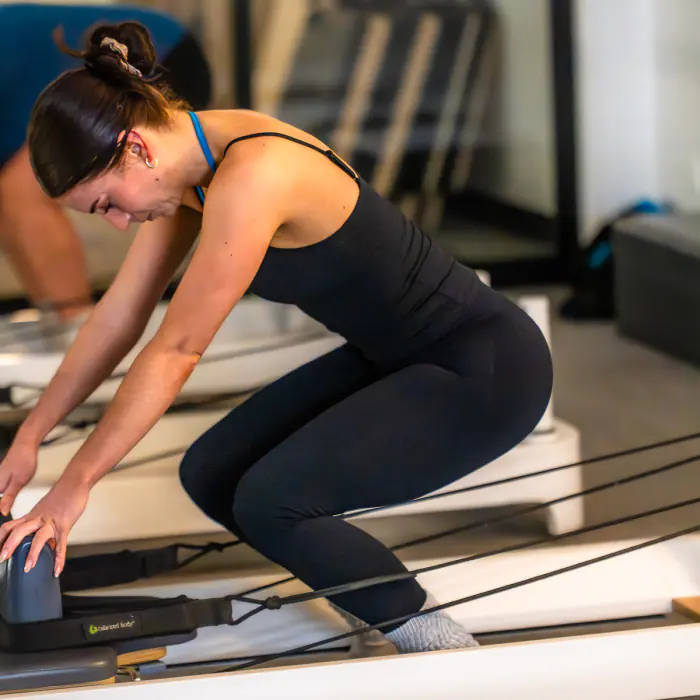
You bend down dozens of times a day, whether you are loading the dishwasher or lifting a toddler out of the car seat. Most of the time you do it without a thought, which is exactly how it should be.
Some bends are harder than others, though. Heavier loads and repeated lifting ask more of your body, and so do long sessions bent over the garden bed. That is where a movement pattern called the hip hinge becomes useful. It lets the big, strong muscles around your hips do more of the work. This article explains what the hinge is and how to practise it, plus how Pilates builds the strength that makes it feel natural.
What a hip hinge is
A hip hinge is a way of bending forward where most of the movement happens at your hips. Your hips move backwards as your chest tips forward. The knees bend slightly while your spine stays long and fairly steady.
Your glutes and hamstrings at the back of the hips and thighs control the movement on the way down, then power you back up.
A squat looks different. In a squat your knees bend a lot and your hips drop down towards the floor. Both are useful patterns. The hinge tends to suit reaching down to pick something up from in front of you, while the squat suits getting down low or sitting.
A word on bending your back
You may have heard that you should never bend your back when lifting. Many physiotherapists now take a more relaxed view than that. Your spine is designed to bend, and rounding to pick up a sock or pat the dog is perfectly normal. There is no single correct way to lift that suits every person and every load.
The hinge is best thought of as a useful option. For heavier or repeated lifts, sharing the work with your hips spreads the load across larger muscles and often feels easier and more stable. Having the pattern available means your body can choose it when the job calls for it.
Follow any specific lifting advice your physio has given you, and let your instructor know about it. The same goes for back pain.
How to find your hinge
Try these simple drills at home. Move slowly and stop if anything is painful.
The wall touch. Stand with your back to a wall, about a foot length away from it, feet hip width apart. Bend your knees slightly. Keeping your chest long, push your hips back until your bottom touches the wall, letting your chest tip forward to balance. Then press through your feet and stand tall by bringing your hips forward. Repeat eight to ten times. As it gets easier, step a little further from the wall.
The broomstick check. Hold a broomstick or a long dowel along your back, with one hand behind your neck and the other behind your lower back. The stick should touch the back of your head and your upper back, plus the base of your spine. Hinge forward by sending your hips back. If any of those contact points come away from the stick, your spine is bending more than your hips. Go only as far as you can while keeping all of them in contact.
Hands down the thighs. Stand tall with your hands resting on the front of your thighs. Slide your hands down towards your knees by pushing your hips back. Stop when you feel a stretch in the back of your thighs, then return to standing. This is a gentle way to feel how far your hamstrings let you hinge today.
Why it is worth practising
The hinge is a skill, and skills need repetition before they become automatic. Practising a few slow hinges while the kettle boils builds the pattern without any extra time in your day. Many people find that after a few weeks of practice, they start hinging naturally when they reach for something heavy, without having to think it through first.
Common mistakes
- Squatting instead of hinging. If your knees push forward and your hips drop, the movement has turned into a squat. Think "hips back" instead of "hips down".
- Locking the knees. Straight, locked knees make the hinge much harder on the hamstrings. Keep a small bend.
- Weight in the toes. Your weight should sit through the middle of your feet and towards your heels. Rocking onto your toes makes you less stable.
- Cranking the neck. Some people look up hard while they hinge. Keep your gaze a little in front of you so your neck stays in line with your spine.
- Reaching from far away. Whatever you are lifting, bring it close to your body before you stand up.
How Pilates builds the strength behind it
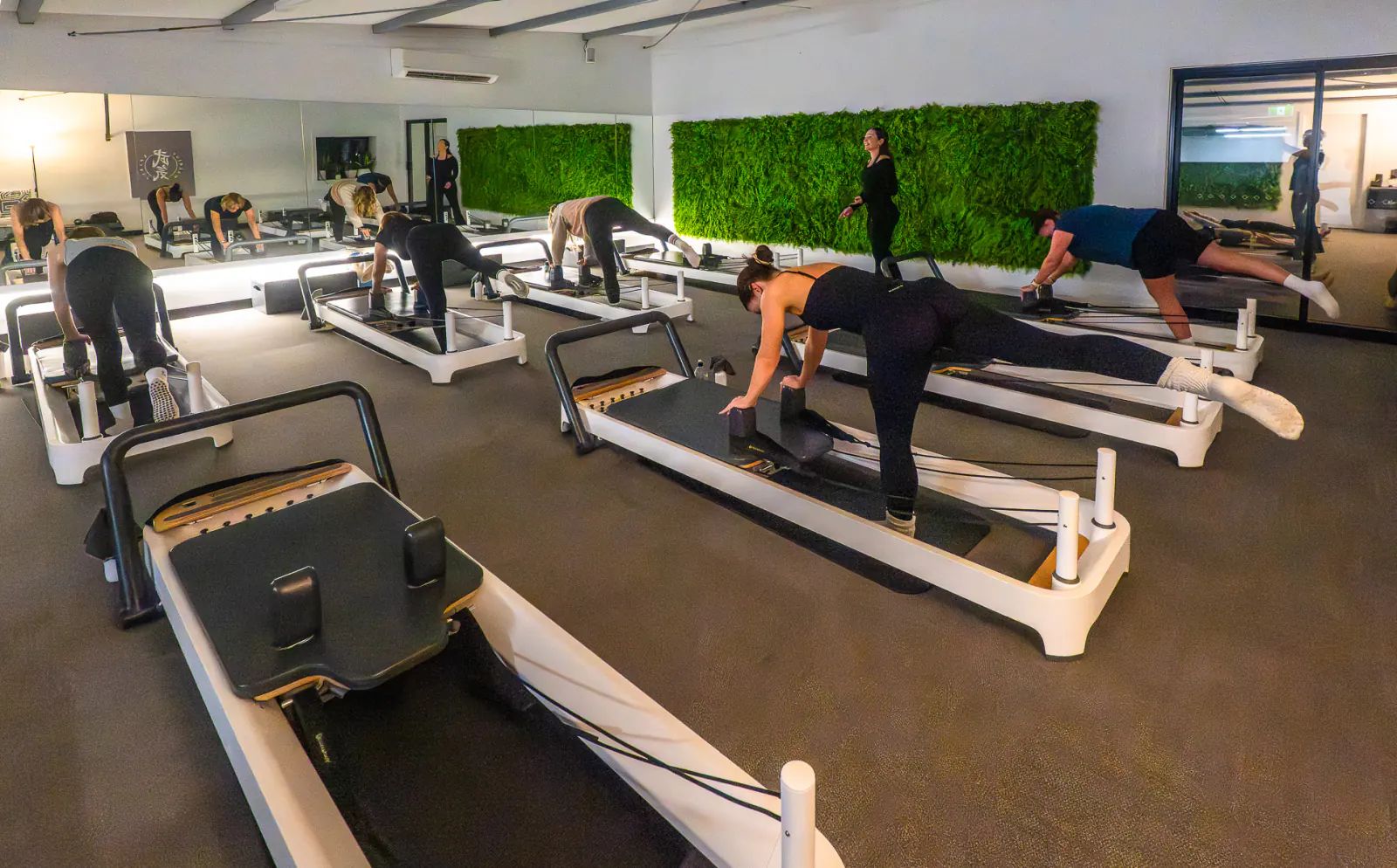
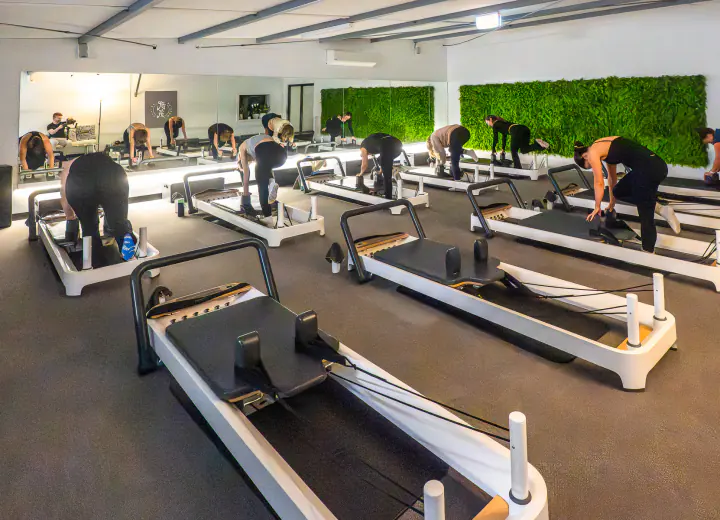
A good hinge relies on strong glutes and hamstrings, along with a steady trunk. Reformer Pilates trains all of these, often in positions that take the load off your back while you build strength.
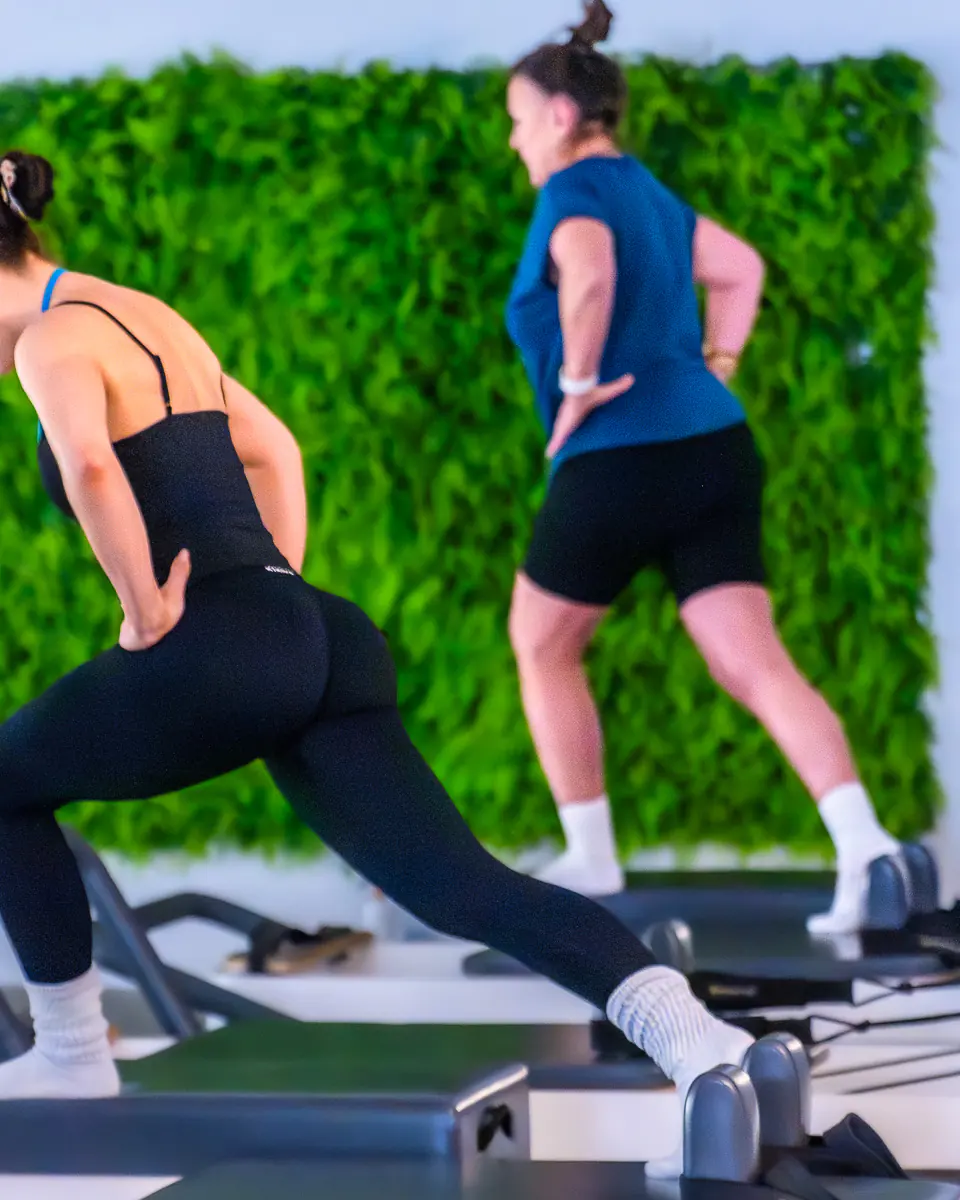
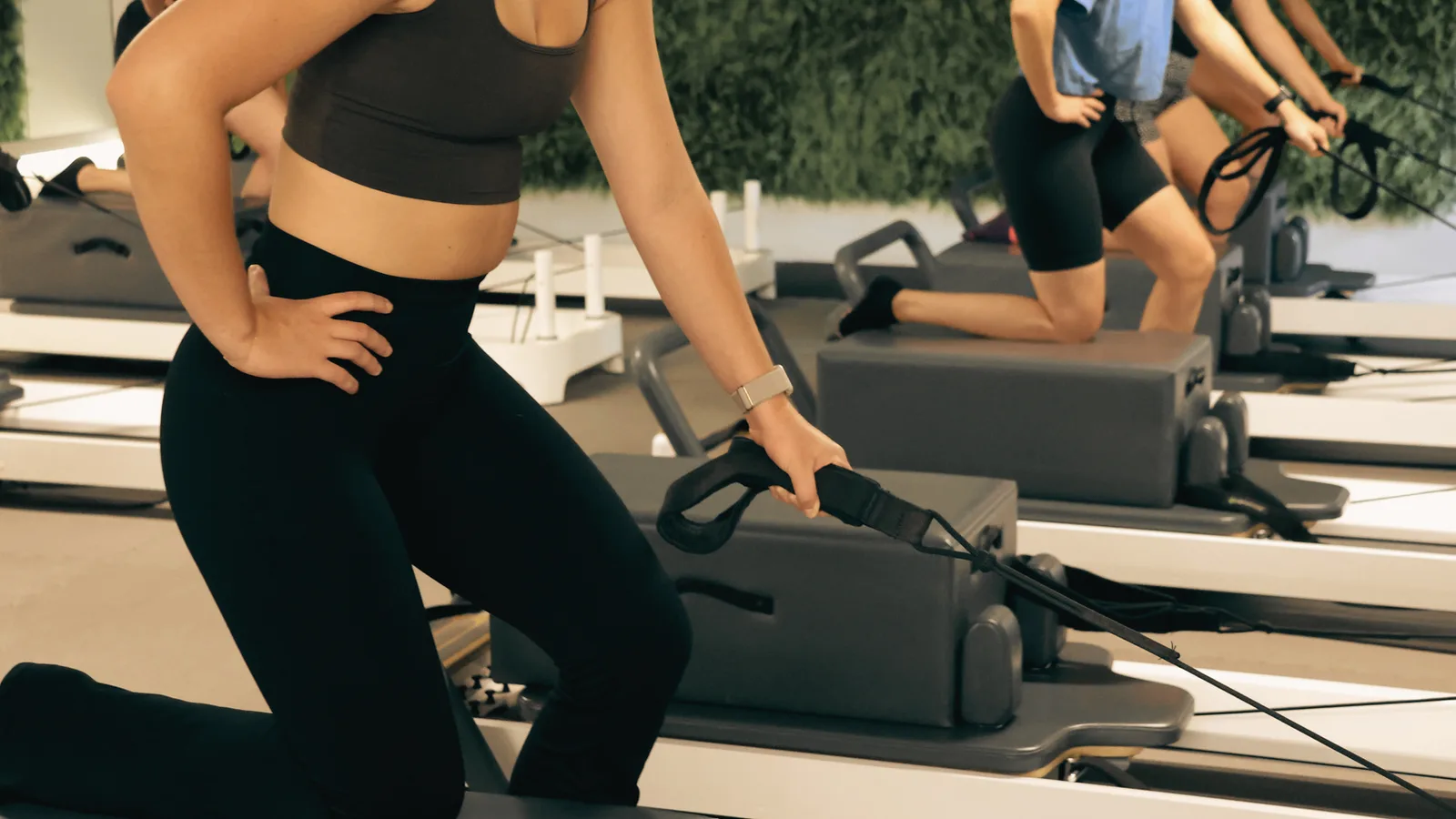
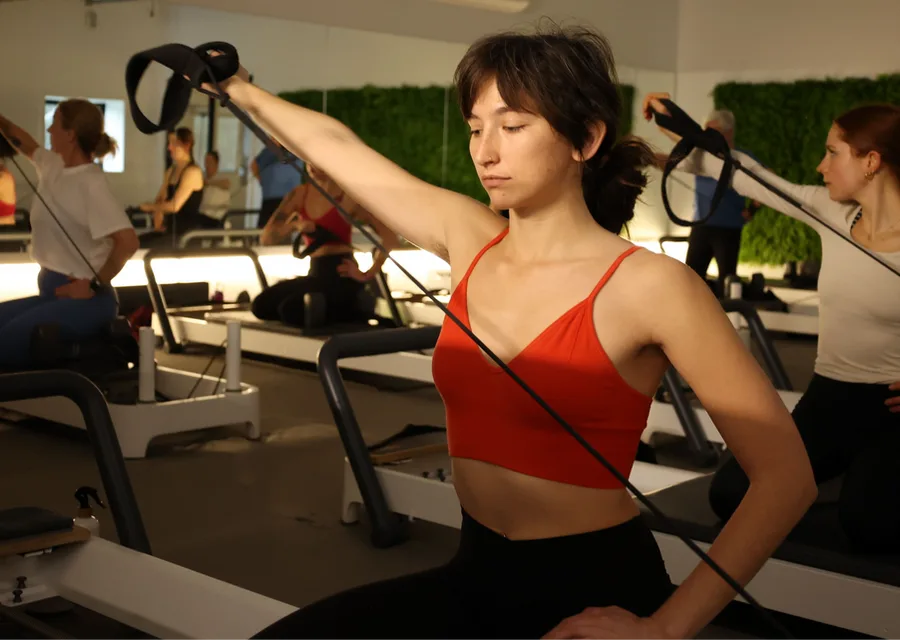
Bridging exercises work the glutes and hamstrings through hip extension, which is the movement that brings you back up from a hinge. Leg work in the straps strengthens the hamstrings through a long range. Kneeling and standing exercises on the moving carriage teach your hips to stay controlled while your trunk holds steady above them. The deep abdominal work in every class supports your spine as you bend and straighten.
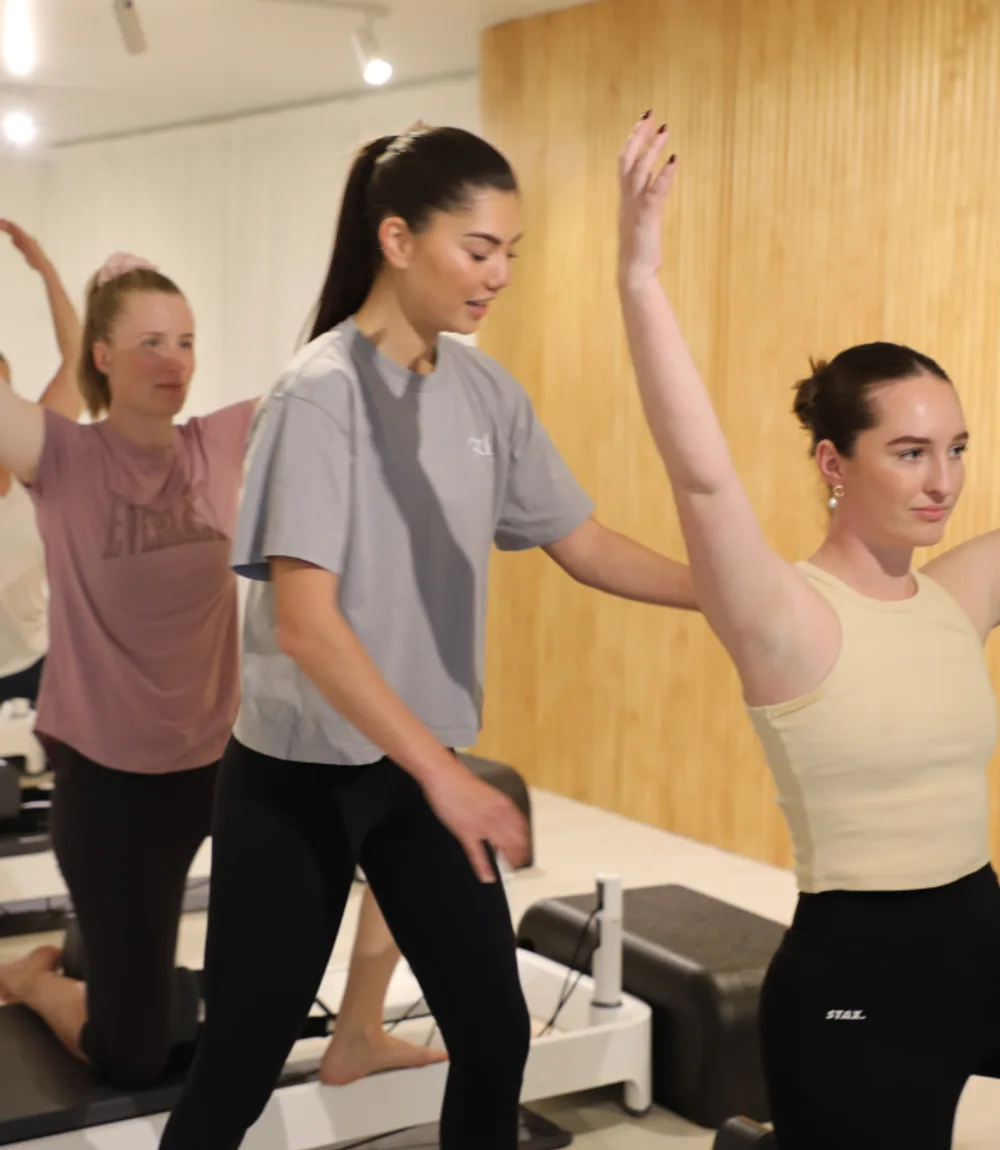
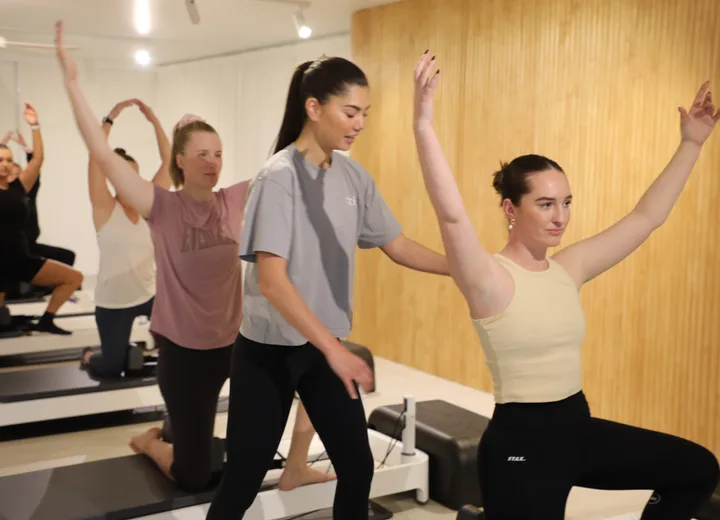
Your instructor may also cue a hinge directly, for example when you set up for standing work beside the Reformer. Over time, the pattern you practise in class starts showing up when you pick up the shopping.
Putting it to work
Next time you lift the washing basket, try it. Stand close to the basket, feet hip width apart. Send your hips back with a slight bend in your knees. Grip the basket and bring it close. Then press through your feet and bring your hips forward to stand. The same approach works for picking up a toddler or a bag of potting mix, and for most other things you lift from in front of you.
A Control class is a good place to build the strength and awareness behind a reliable hinge, with time to ask your instructor about your own technique. Find a session on the timetable at Wollongong or Shellharbour.