




Trending · 3 November 2026 · 6 min read
Hybrid training: why Pilates is the piece people are adding
Mixing strength work and cardio across one week is the training style of the moment. Where Reformer Pilates fits, with sample weeks to copy.

A few years ago, most people picked a lane. You were a runner or you were a gym person, and your week mostly reflected that. Now the most common training week in many studios looks more like a mix. A run on Tuesday, weights on Wednesday, a boxing class on Friday and a Reformer class on Saturday morning.
This approach usually goes by the name hybrid training, and it reflects a broader shift in what people want from exercise. Fewer people are chasing one extreme goal. More are trying to be fit and strong enough to enjoy whatever life throws at them, from a weekend hike to a backyard cricket match with the kids. Pilates turns out to be a natural fit in that kind of week.
What the trend data says
The American College of Sports Medicine surveys about 2,000 health and fitness professionals each year to rank worldwide fitness trends. Its list for 2026 is a good picture of the hybrid mindset. Wearable technology sits at number one. Further down the top ten you will find "Balance, Flow, and Core Strength" at fifth and "Exercise for Mental Health" at sixth. "Traditional Strength Training" comes in at seventh, with "Functional Fitness Training" rounding out the list at tenth.
Read together, those rankings say people no longer want to choose between strength and mobility. They want both, and they are building weeks that cover more than one base.
Why Pilates fits a hybrid week
It fills the gaps other training leaves
Running builds the heart and lungs. Lifting builds big, strong muscles. Boxing builds power and conditioning. Each one leaves gaps. Runners are often short on hip stability and upper body strength, while lifters can be strong but stiff. Pilates works on the deep stabilising muscles and the controlled range of movement that the other styles tend to skip over.
It is low impact
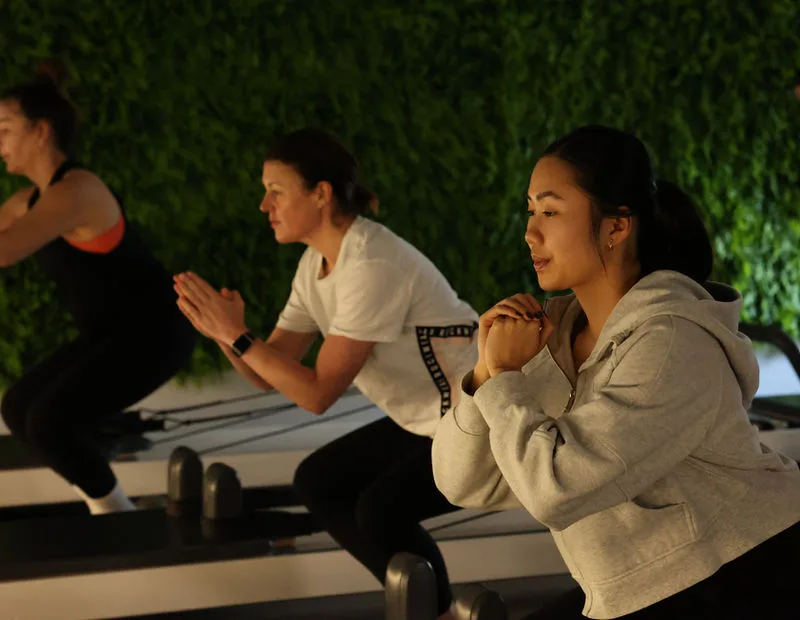
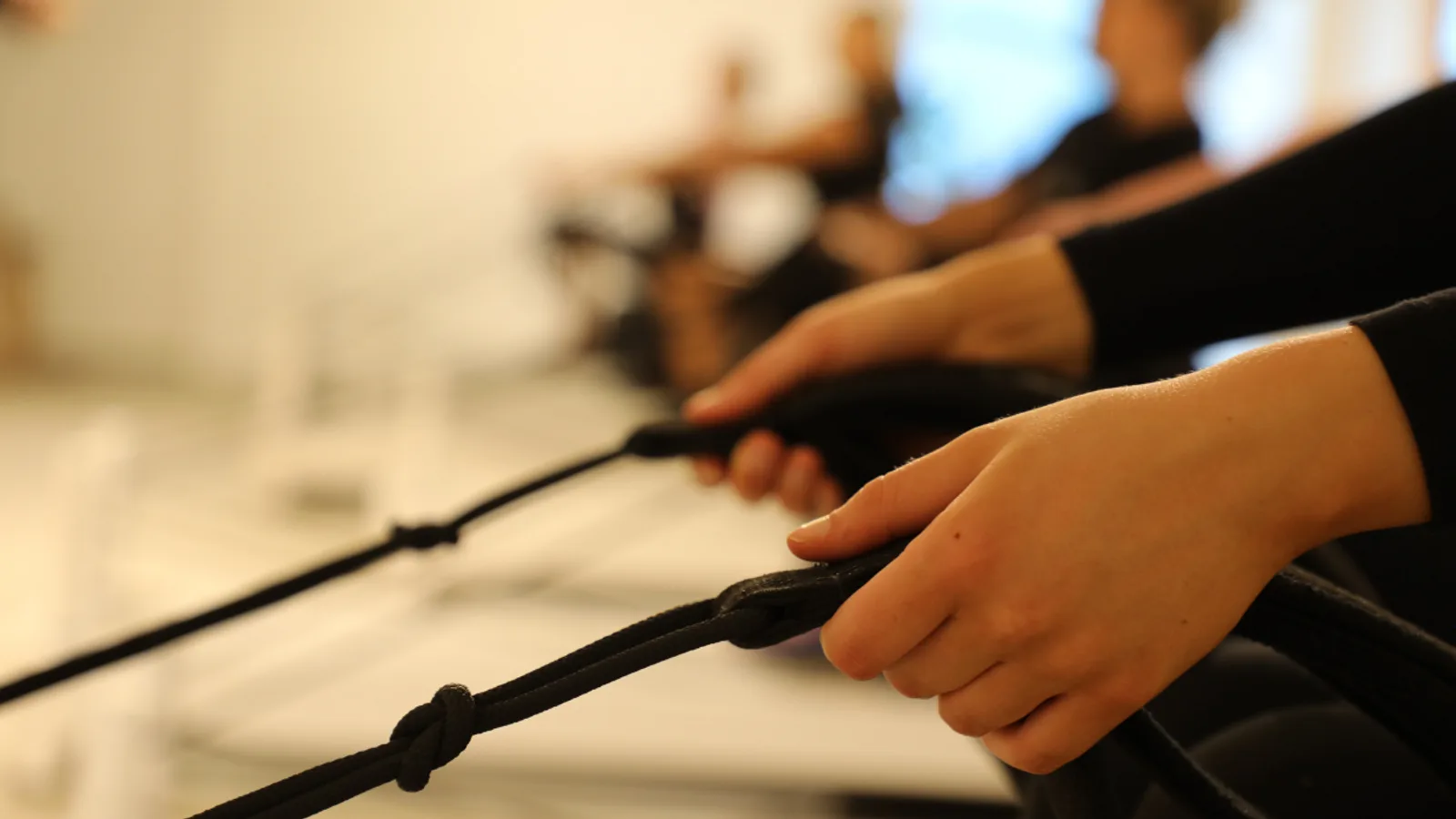
A hybrid week can put a lot of load through the body, and adding another high-impact session can tip it into too much. Reformer work uses springs for resistance and involves little or no impact, so it adds training without adding pounding. Even Jump classes on the jumpboard are done lying down, with springs absorbing the landings.
It scales to how you feel
The same Reformer can be set up for a hard session or a gentle one. That makes Pilates useful on different days of a hybrid week. A Tempo class is a serious workout for experienced members. A Control or Stretch class can be a lighter day that still moves you forward.
It improves the rest of your training
Better trunk control and hip stability tend to carry over into everything else. Many people find their running feels smoother once they add regular Pilates, and that their lifts feel more stable. Boxers may find that their punches feel better connected to their legs and trunk.
Sample hybrid weeks
These are examples, not prescriptions. Adjust them to suit your fitness and your schedule, along with any advice from your health professionals.
The runner
- Two or three runs, including one longer, easy run.
- One Flow class for full body strength.
- One Stretch class after the long run day, with plenty of time on the hips.
- One rest day.
The gym regular
- Three strength sessions in the gym.
- One Control or Flow class on a lighter day, focusing on alignment.
- One Yoga or Stretch class for mobility.
- One active rest day, such as an easy swim.
The boxer
- Two or three Mpower sessions across the different formats.
- Two Reformer classes, for example one Flow plus one Control, to build trunk strength and controlled movement.
- One rest day.
The time-poor generalist
- Two Flow classes for strength.
- One Jump class for cardio.
- Plenty of walking in between.
Making it work
A few principles keep a hybrid week productive rather than exhausting.
- Don't stack hard days. Avoid putting a heavy leg session and a long run on consecutive days, then adding a Tempo class on top. Spread the hardest efforts out.
- Use Pilates strategically. Slower classes work well the day after a big session. Faster classes suit fresher days.
- Keep at least one rest day. Recovery is when your body adapts. Our article on rest days that make you stronger explains why.
- Watch for warning signs. Soreness that won't settle, or a run of poor sleep, can mean you are doing too much. Ease off for a few days and talk to your GP or physio if things don't improve.
- Tell your instructor what else you do. If you ran a half marathon yesterday or lifted heavy this morning, mention it before class. They can suggest springs and options that suit how your body feels.
How much Pilates is enough
You don't need to turn your whole week over to the Reformer to feel the benefit. For most hybrid trainers, one or two classes a week is plenty to start, especially alongside other strength work. Our FAQ suggests two to three sessions a week with a mix of studio and home workouts, and that range works well if Pilates is your main strength training. If your week is already full, a single Flow class plus ten minutes of mat work at home on another day keeps the habit going.
Pilates and Mpower under one roof
If boxing and conditioning are part of your hybrid week, our Wollongong studio makes it easy. Mpower Martial Fitness runs on site, with high energy Box, Build & Burn small group sessions and live Myzone heart-rate tracking in the studio. Combined Pilates and Mpower memberships are available at a major discount, so you can do both in one place.
The Wollongong studio also has changing rooms and showers, plus an on-site cafe. Massage is available on site too, with bookings essential. That makes it simple to train before work and still turn up to the office fresh. You can read more on our amenities page.
Summer training, sorted
With summer coming, plenty of Illawarra locals add ocean swims and longer rides to their weeks. It is a great time to add a couple of Pilates classes as well, so your body is ready for the extra load and better able to recover from it. Both studios run classes from 5:45am on weekdays, which makes it easy to fit a session in before the day heats up.
If you are curious, the 21 day trial gives you unlimited group classes at Wollongong and Shellharbour for $65, with no membership and no lock-in. Plug a few classes into your current week using the timetable, and ask the team about combined Mpower memberships if you want both.