


Health & Wellbeing · 17 October 2026 · 4 min read
Pilates during pregnancy: what is safe and what to change
Trimester by trimester guidance, and why you should tell us you are expecting.
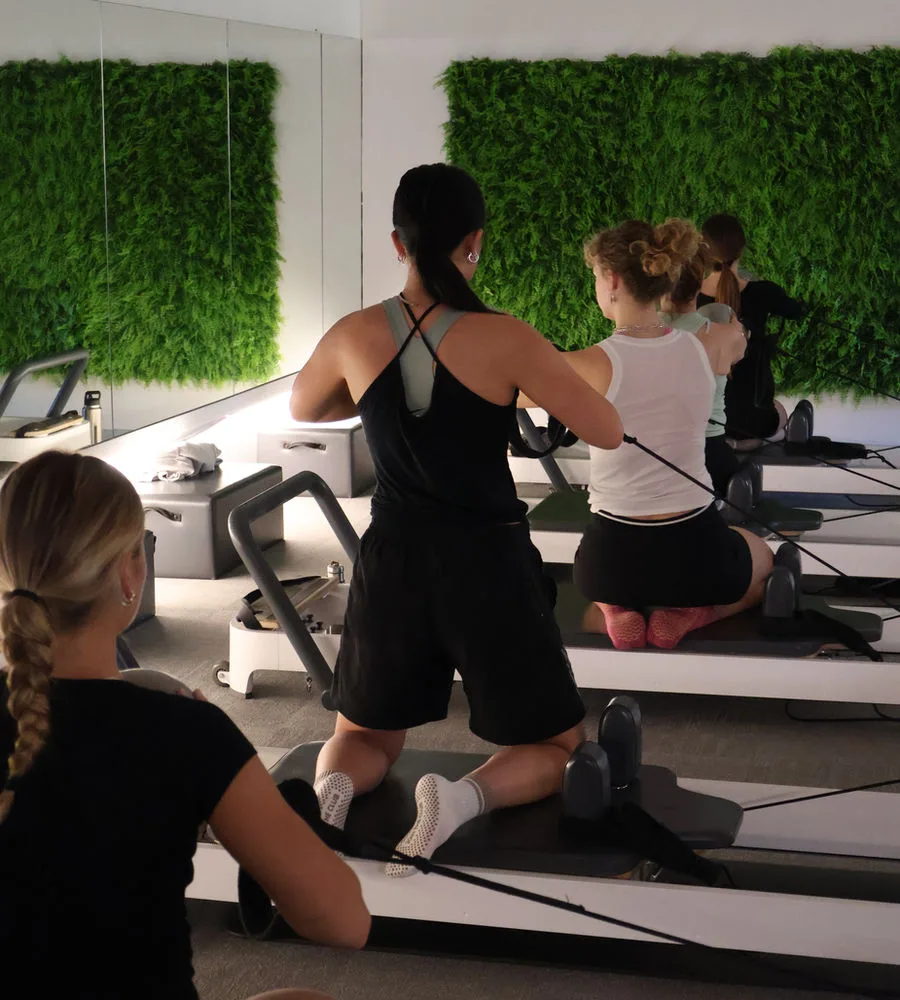
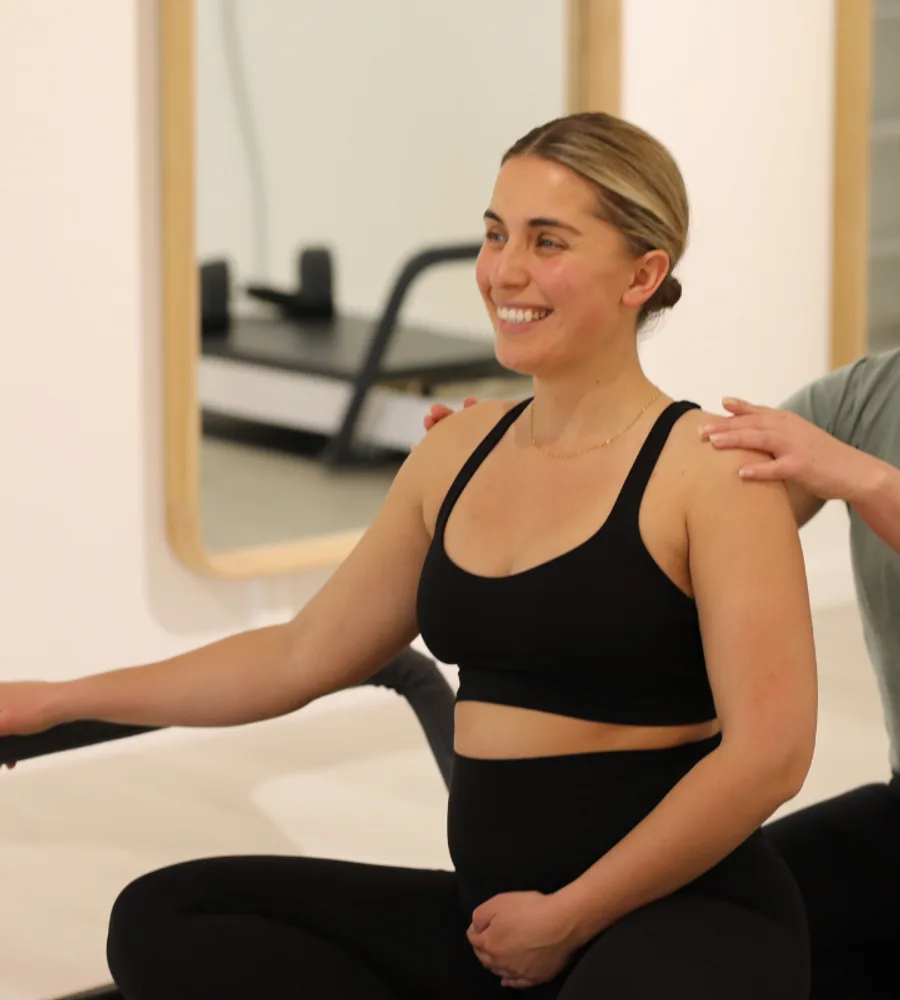
Can you do Pilates while pregnant? Yes. It is one of the most commonly recommended forms of exercise through pregnancy, many of our members train with us across all nine months, and quite a few say it changed their whole experience of pregnancy and birth for the better.
The fuller answer is yes, with communication and modifications, so here is the practical guide: what pregnancy Pilates looks like at our studios, what changes trimester by trimester, and the ground rules that keep everything safe. The essential caveat up front: every pregnancy is individual, so your first conversation is with your midwife, obstetrician or GP, and their advice outranks anything written here. Complications, restrictions or any bleeding or pain mean medical guidance first, always.
Why Pilates suits pregnancy so well
The mainstream guidance for uncomplicated pregnancies now firmly favours staying active, and Pilates happens to tick an unusual number of the boxes that pregnancy exercise needs.
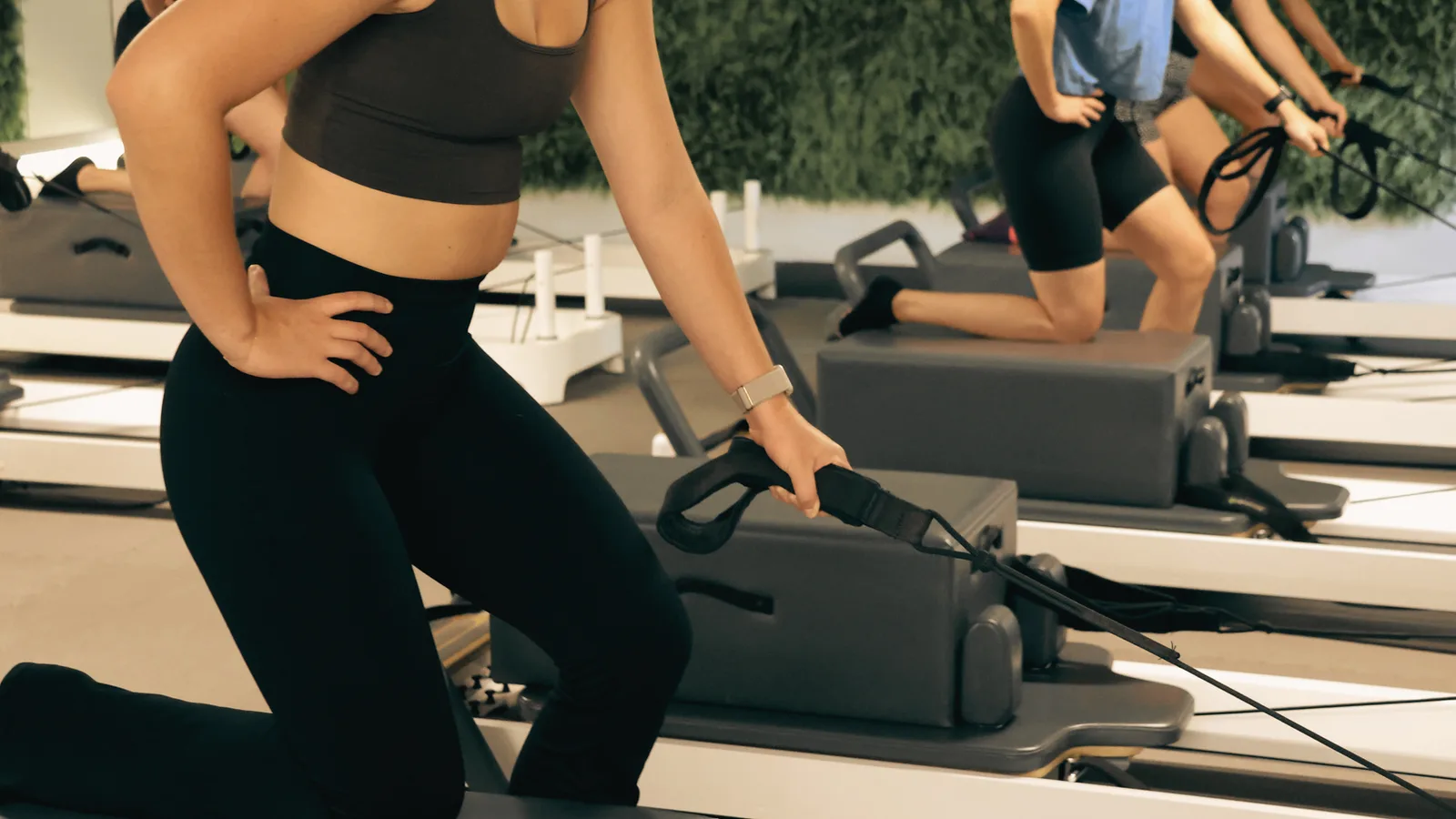
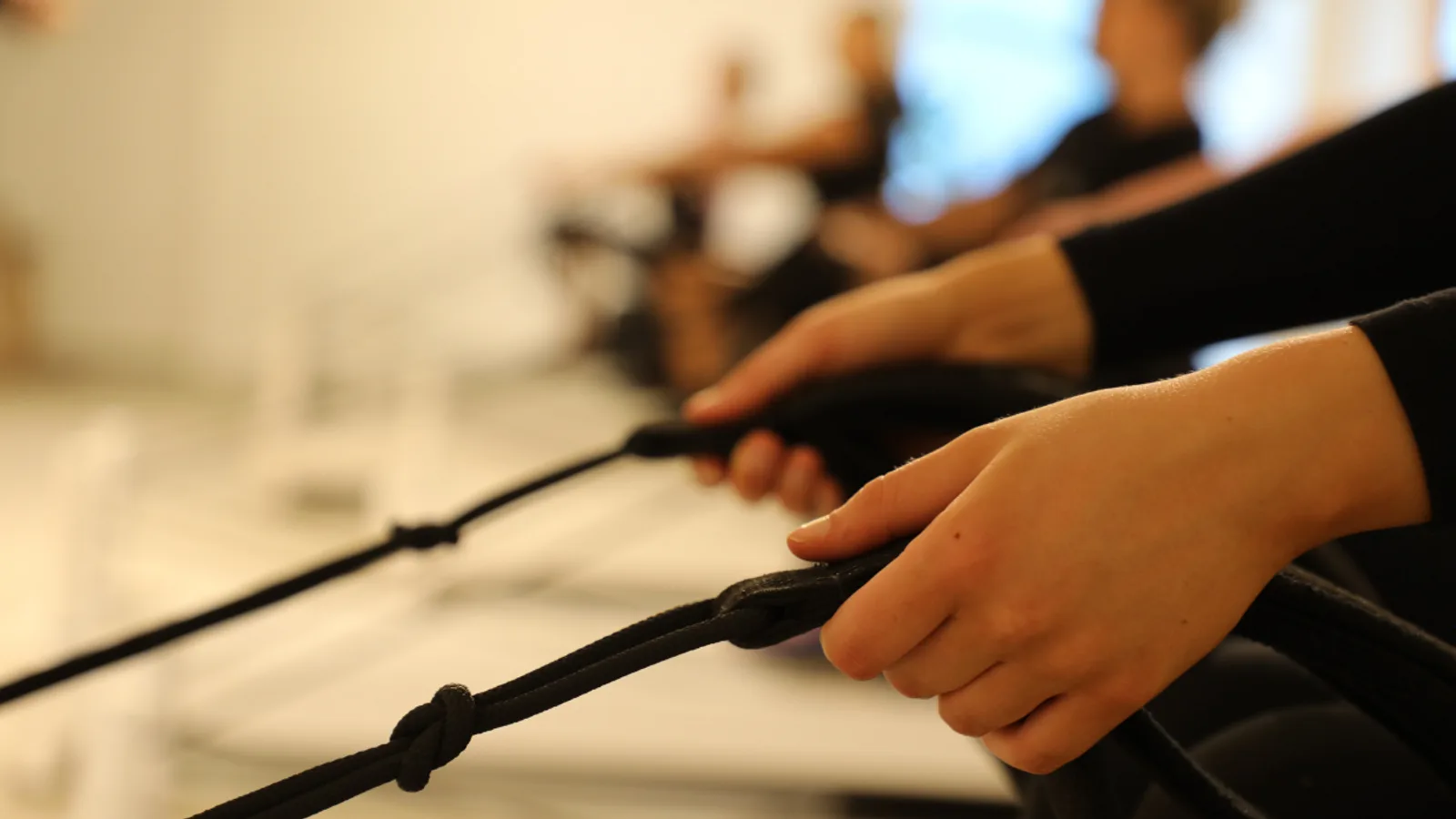
It is low impact and controlled, with no jarring and no sudden directional chaos. The load adjusts instantly, because springs can assist as easily as resist, so the same exercise scales week by week as your body changes. It strengthens exactly the regions pregnancy taxes hardest: the deep core supporting a growing load at the front, the back and glutes holding posture as your centre of gravity migrates, and the pelvic floor, which is preparing for the biggest assignment of its career, a topic that gets its own article.
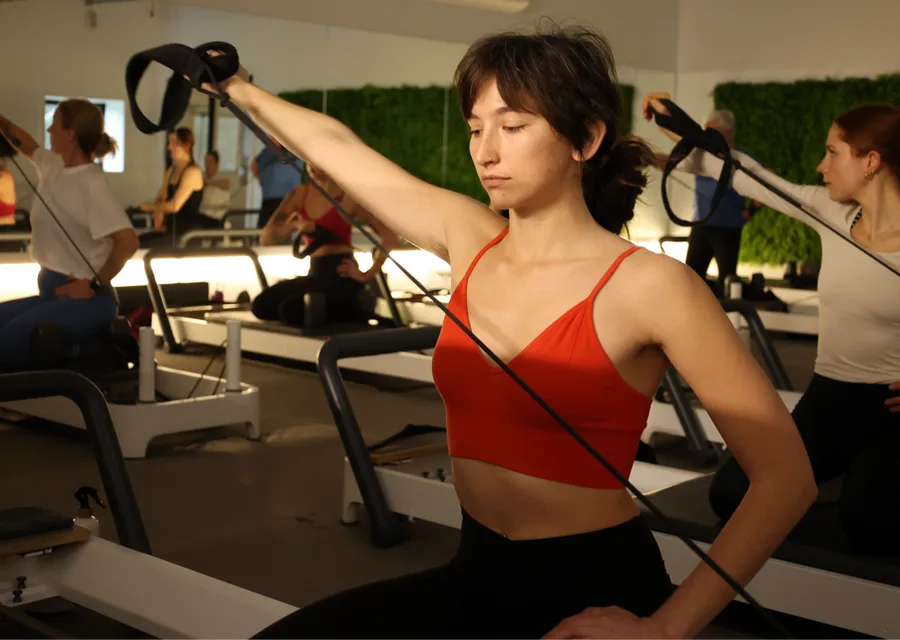
Add the breath training, which turns out to be remarkably relevant preparation for labour, and the balance work for a body whose balance point moves monthly, and it is not hard to see why midwives and physios keep pointing pregnant clients towards the Reformer.
The first and most important rule: tell us
Everything at the studio starts with us knowing. Tell us when you book and tell your instructor, even in the very early weeks when you are telling almost nobody else. Instructors are professionally discreet, and knowing changes how they cue and modify for you from day one. Our policy is the same for existing members: if you become pregnant during your time with us, let us know as soon as you are comfortable doing so.
Share the boring details too: how far along, any conditions, anything your care provider flagged. In classes our size, individualised modifications are a normal Tuesday, not a special request.
What changes, roughly by trimester
With your care provider's blessing, the arc typically looks like this.
First trimester: often minimal visible change. Existing members usually continue their normal classes, with fatigue and nausea setting the pace, and honesty with the instructor covering the rest. Beginning Pilates for the first time while newly pregnant is usually fine for uncomplicated pregnancies, ideally in Control classes, with medical clearance first.
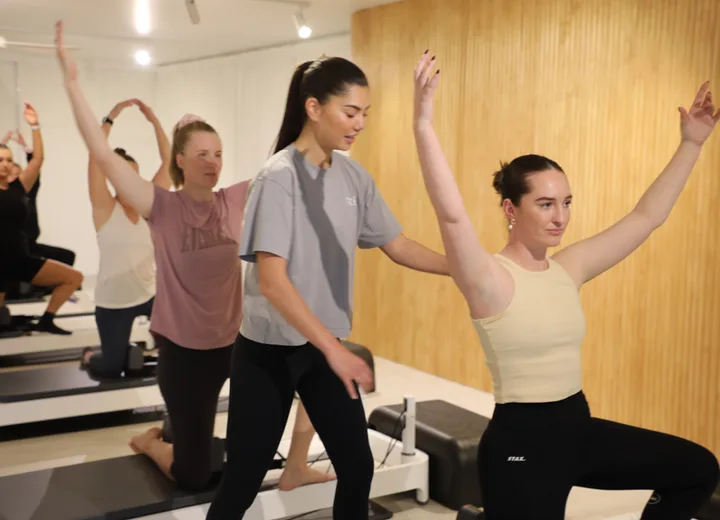
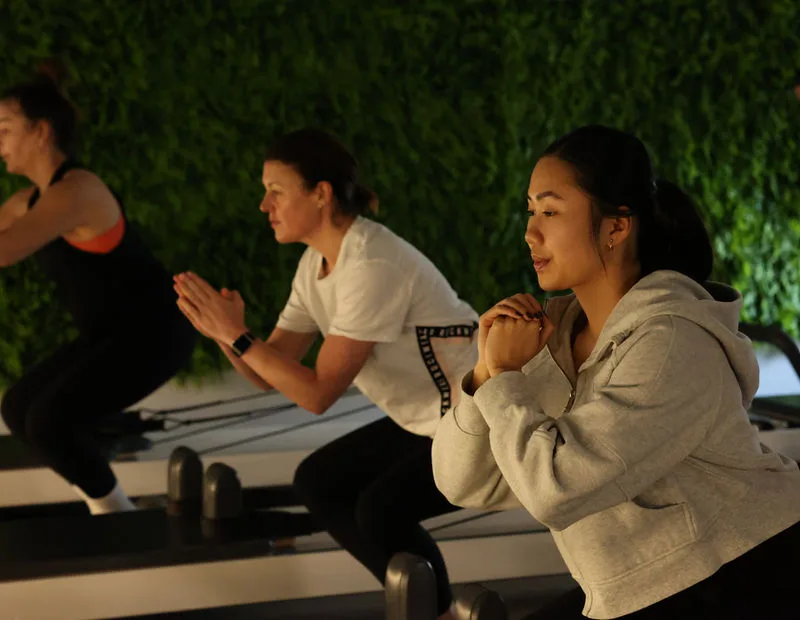
Second trimester: modifications become visible. The main one is limiting time flat on the back, which mainstream guidance recommends from around mid pregnancy, so your instructor repositions those exercises to inclined, seated or side lying versions. Deep abdominal flexion work, the crunch shaped exercises, gives way to core work that supports rather than strains the stretching midline. The Reformer's repertoire is deep enough that these swaps feel like variety rather than restriction.
Third trimester: the emphasis shifts towards comfort, circulation, hips, posture and breath. Springs lighten, ranges adjust around the bump, balance work gets extra support. Many members train happily into their final weeks, and the mums in the room will tell you those late pregnancy classes were some of the most valuable, both physically and mentally.
Which classes to book
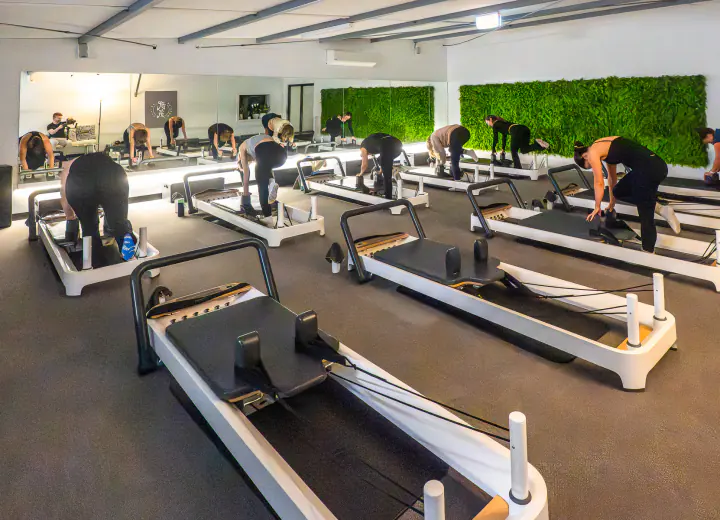
Control is the pregnancy home base: slow, precise, maximum instructor attention. Stretch and Yoga classes earn their keep for hips, backs and nervous systems along the way. Flow suits many experienced members through the middle months, adjusted as needed. The classes to shelve for the duration are Jump and Tempo, for the obvious impact and pace reasons.
And afterwards, when you are cleared for exercise post birth, the studio is unusually welcoming on the other side too. Our Mums and Bubs friendly Flow sessions let you train with your little one in the room, no babysitter required, which is exactly how many members close the loop, rebuilding core and pelvic floor strength with the cause of the whole situation gurgling beside the Reformer.
The quiet payoffs
Ask members who trained through pregnancy what it gave them and the answers repeat. Less back ache in a period famous for it. Better posture as the load grew. A body that felt capable rather than fragile. Breath skills they reached for during labour. And, not least, the routine itself: a familiar class, familiar faces and 45 minutes that felt like themselves, at a time when everything else was changing weekly.
We would never promise any individual outcome, and pregnancies write their own rules. But supporting women through them has been part of this studio since 2016, and it is work we take real pride in.
Start the conversation
If you are pregnant, or planning, and wondering whether Pilates fits: ask your care provider, then come talk to us at Wollongong or Shellharbour. Book into a Control class, tell us your news on the enrolment form, and let your instructor tailor things from there. You are welcome here for all nine months, and for the lovely chaotic chapter after.