



Yoga · 4 October 2026 · 4 min read
Pilates and yoga: the differences, the overlap, and why we teach both
A clear comparison for people deciding where to spend their week.

"So is Pilates basically yoga with a machine?" We hear this question weekly, usually from someone deciding which one deserves their limited free evenings. It is a fair question with a genuinely interesting answer, because the two practices are cousins rather than twins, and knowing the difference helps you use each one well.
We run both at our studios, on purpose. Here is the honest comparison.
Where each one comes from
Yoga is ancient, developed in India over thousands of years as a complete practice spanning movement, breath, meditation and philosophy. The physical postures most Western classes focus on are one limb of something much larger.
Pilates is barely a century old. Joseph Pilates developed his method during and after the First World War, drawing on gymnastics, boxing and rehabilitation to rebuild injured bodies, later refining it in New York where dancers adopted it obsessively. It was engineered from the start as physical conditioning: systematic, progressive and anatomical.
That history explains their different personalities. Yoga tends to flow towards stillness, awareness and holding. Pilates moves constantly, with precision, towards strength and control. Neither is better. They are answering different questions.
What a class actually feels like
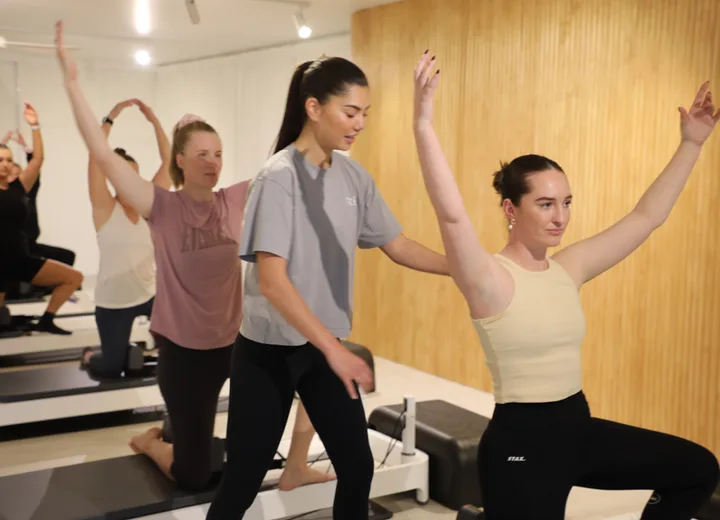
In our Yoga classes you work on the mat, moving through postures linked by breath, holding positions, balancing and finishing calmer than you arrived. The work is real, particularly for your balance, your open hips and your patience, but the texture is meditative.
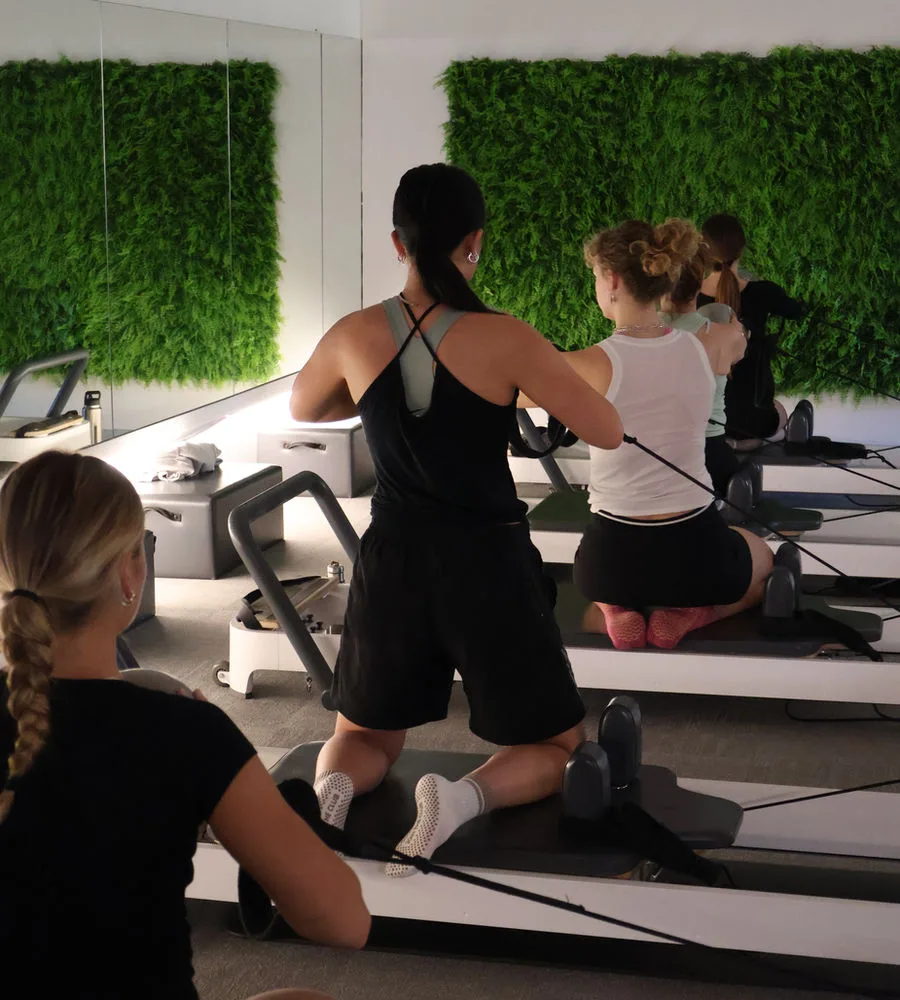
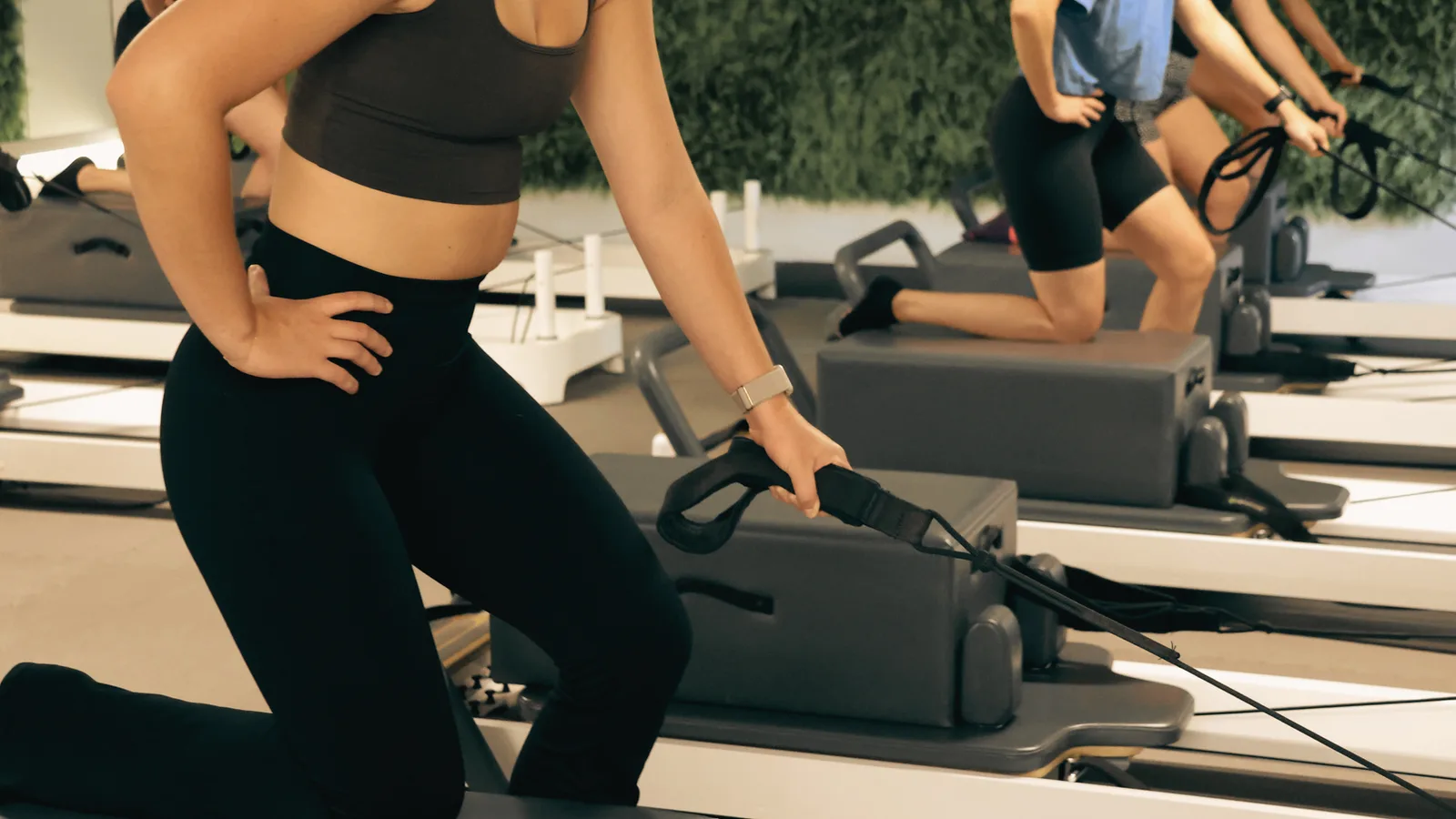
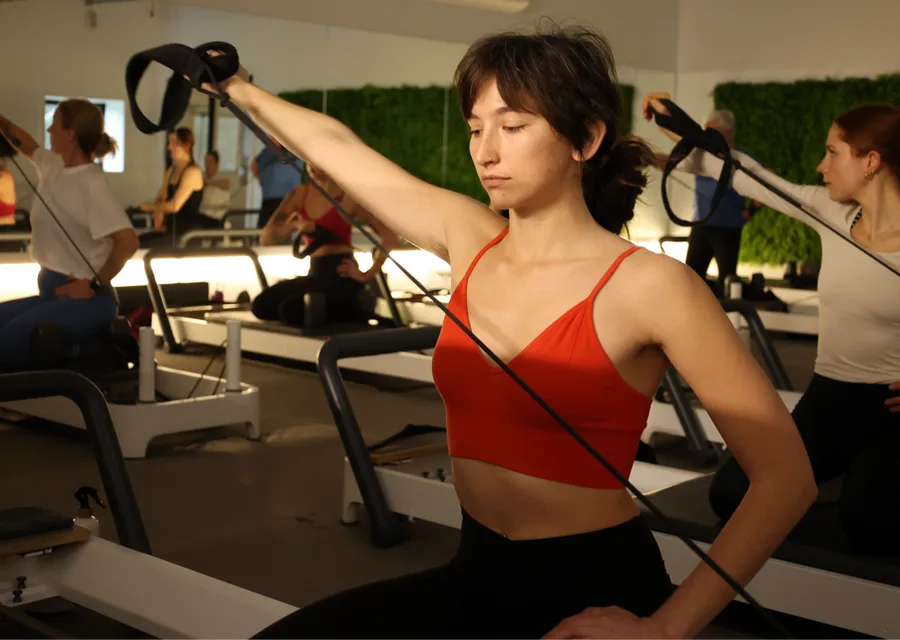
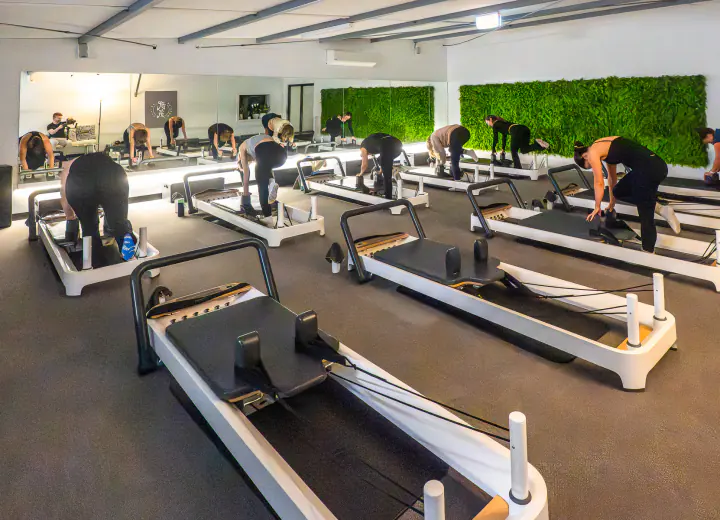
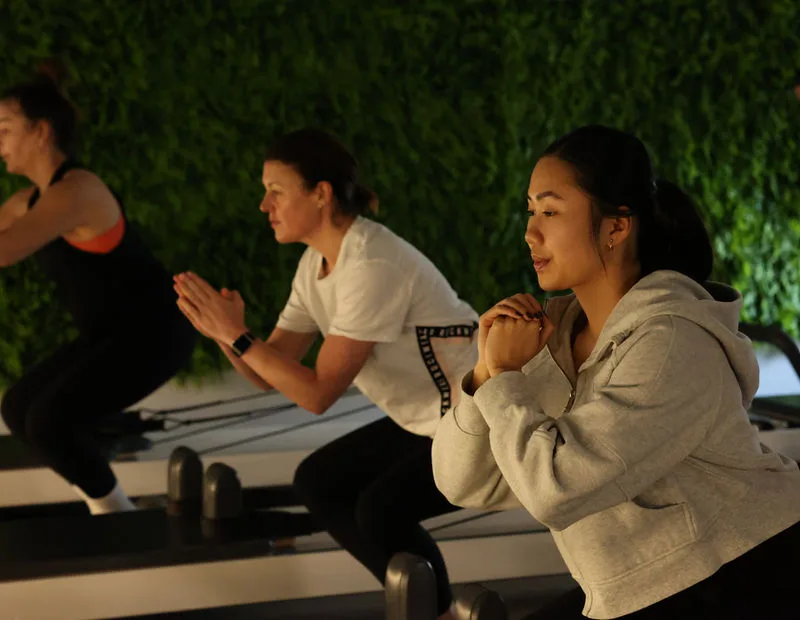
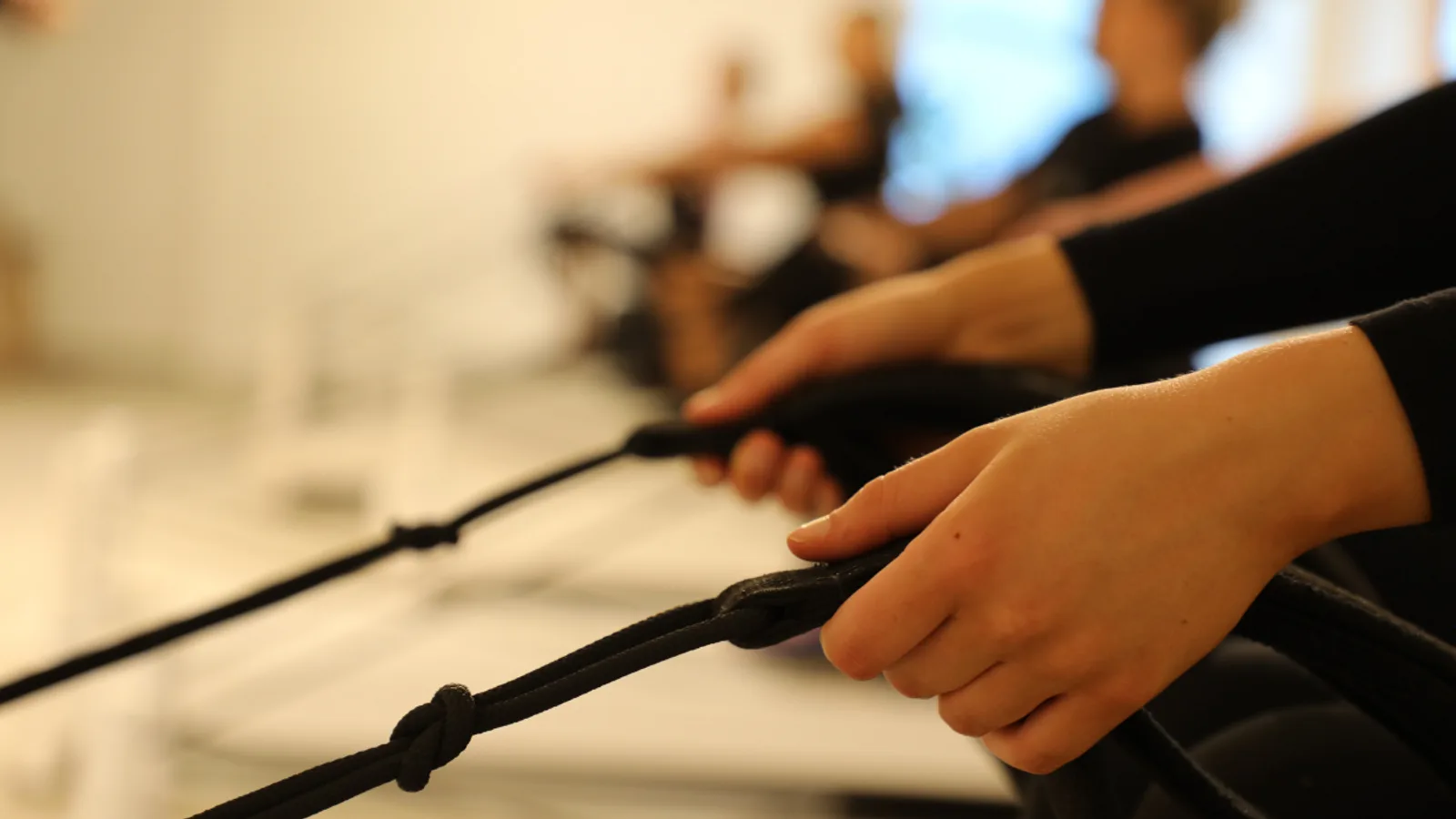
A Reformer class is a different animal. The carriage moves, springs resist you, the exercises change every minute or two and your instructor cues form throughout. Your deep core works continuously, and the burn arrives in places you did not know had muscles. The texture is focused effort, closer to strength training than to meditation, even though the breath work runs underneath everything, as we describe in how to breathe in a Pilates class.
Strip both back and the family resemblance is obvious: controlled movement, breath as the metronome, quality over repetitions, a distrust of mindless exercise. That shared DNA is why people who love one usually take quickly to the other.
What each one is best at
Being honest about strengths, since that is the actual decision most people are making.
Choose Pilates first when your goals are strength, especially deep core strength, posture, rebuilding after injury, or a resistance workout your joints can live with. The springs give it a progressive resistance system yoga simply does not have, which is why physios refer to it so often and why we wrote about its record with lower back pain.
Choose yoga first when your goals are flexibility through long holds, balance, and a practice that directly trains stillness and stress regulation. A good yoga class works the nervous system in a way few other hours of the week touch.
Notice those lists barely overlap. This is why "which one is better" is the wrong question. They are different tools, and most bodies eventually want both jobs done.
Why we teach both under one roof
Our timetable is built around Reformer Pilates, and yoga earns its place on it because the pairing works so well in practice.
Pilates builds the strength and the stable centre. Yoga takes that strong body and teaches it length, balance and calm. Members who mix them report the combination specifically: the yoga poses became more available once Pilates built the strength, and the Pilates classes smoothed out once yoga opened the hips and shoulders. Each practice quietly fixes the other's blind spots.
There is also the plain convenience of it. One membership, both studios, six class styles including Yoga, one booking system. Your week might hold two Flows, a Yoga and a Stretch, and that is a genuinely complete movement diet, covering strength, mobility, cardio via a Jump class when you fancy it, and recovery.
We unpack the yoga side further in what a weekly yoga class adds to your Pilates practice.
If you can only pick one
Forced to choose, we would give slightly different advice depending on where you are.
If you are starting exercise again after years away, or rebuilding after injury, or your main complaints are weakness, back pain and posture, start with Pilates. The scalable springs and the close coaching make it the safer, faster road back, and a Control class will meet you exactly where you are.
If you are already strong from other training but wound tight, stiff and stressed, yoga might be the more urgent addition.
And if you are simply curious, come try both within the trial and let your body vote. It will have opinions by the end of week one. The 21 day trial covers every class style at both studios, unlimited, for $65, which makes it the cheapest way in the Illawarra to settle a debate that fitness media has milked for decades.
The peace treaty
Pilates or yoga was never a real fight. The machine did not replace the mat, and the mat does not make the machine redundant. Strong and supple beats either one alone, and a timetable that offers both means you never have to choose a side.
Book whichever class you are most curious about, at Wollongong or Shellharbour, and know the other one will be there waiting when you want it. Cousins, after all, belong at the same table.