


Benefits of Pilates · 26 October 2026 · 6 min read
Body awareness, the Pilates benefit you feel first
Long before your posture or strength changes, Pilates teaches you to feel what your body is doing. Why that matters in and out of the studio.
Some of the first changes Pilates brings are hard to photograph. You start noticing how you stand at the kitchen bench, or you catch yourself hunching over the laptop and sit up without anyone telling you to. When you carry the groceries in, you can feel which side of your back is doing most of the work.
That growing ability to sense what your body is doing is called body awareness, and it is one of the most useful things Pilates gives you. It also tends to arrive well before the changes you can see in a mirror, which is why it deserves its own article.
What body awareness means
Your body has a built-in sense of position and movement, separate from sight. Close your eyes and touch your nose, and you can do it because sensors in your muscles and joints are constantly reporting where each limb is. Physiotherapists call this proprioception.
Most of the time it runs in the background. You don't think about where your shoulder blades sit when you reach for a mug, and you don't need to. The trouble is that habits form in that background too. If you spend years sitting with your pelvis tucked under, or standing with your weight sunk into one hip, your sense of "normal" shifts to match. Neutral starts to feel strange, and the slouch feels straight.
Body awareness is the conscious side of that sense. It is the ability to tune in to what is happening and make a small adjustment on purpose. Pilates trains it directly, every class.
How a Reformer class builds it
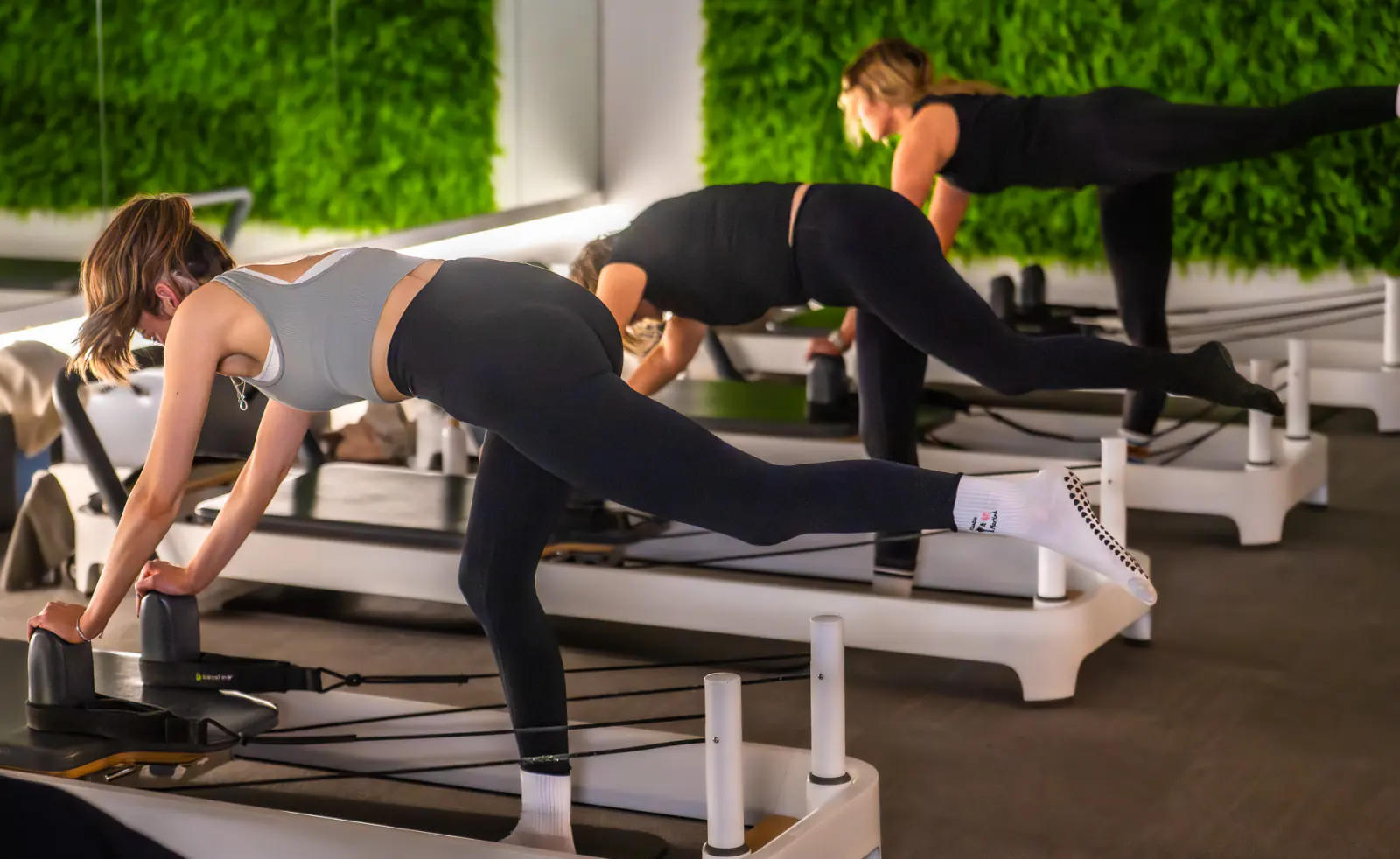
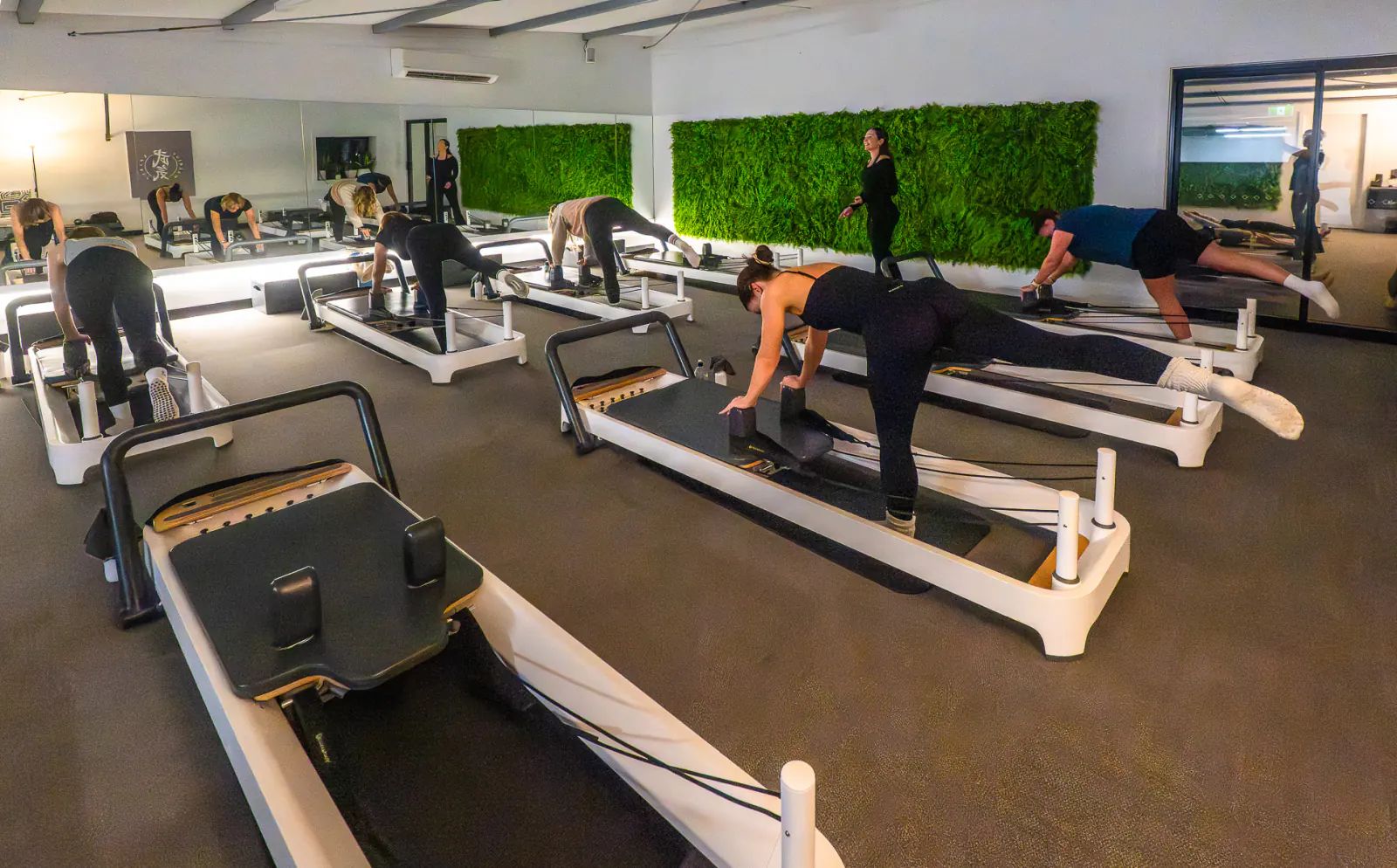
Joseph Pilates called his method Contrology, and the name gives the game away. The whole system is built around controlling movement with attention, and several features of a Reformer class keep your attention where it needs to be.
Precise cues
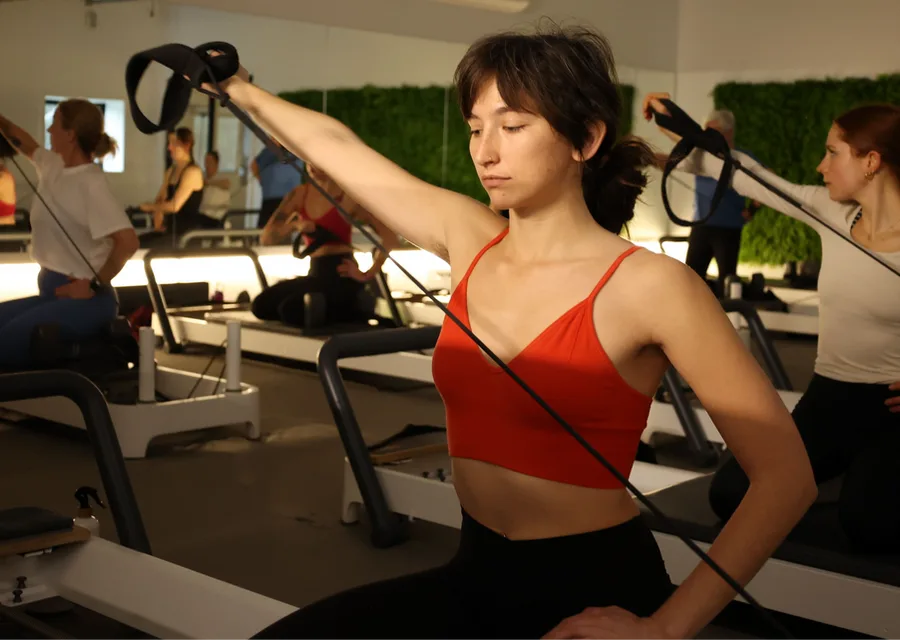
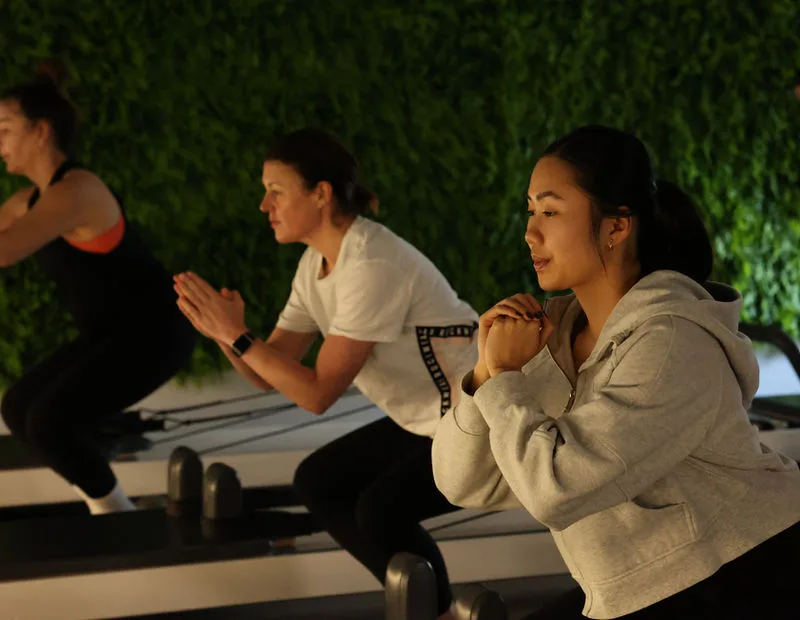
Instructors don't only tell you which exercise to do. They also tell you which part of you should stay still while another part moves. "Keep the ribs heavy." "Let the shoulder blades slide down your back." "Press evenly through both heels." Each cue asks you to check in with a specific part of your body, and over weeks those check-ins become automatic.
Hands-on and eyes-on feedback
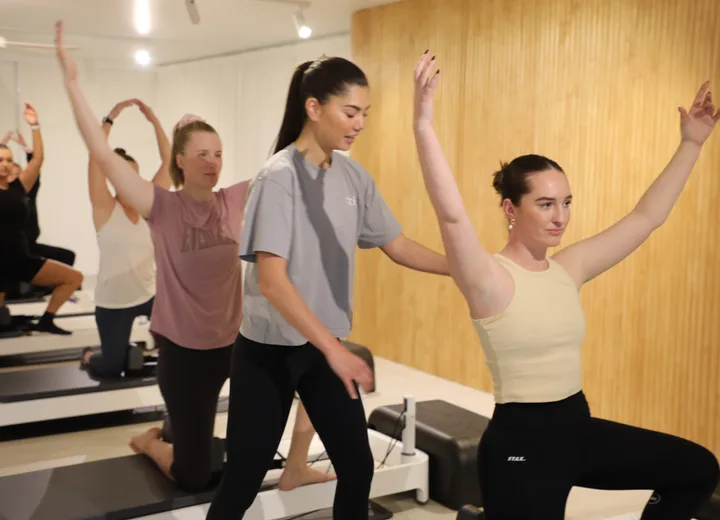
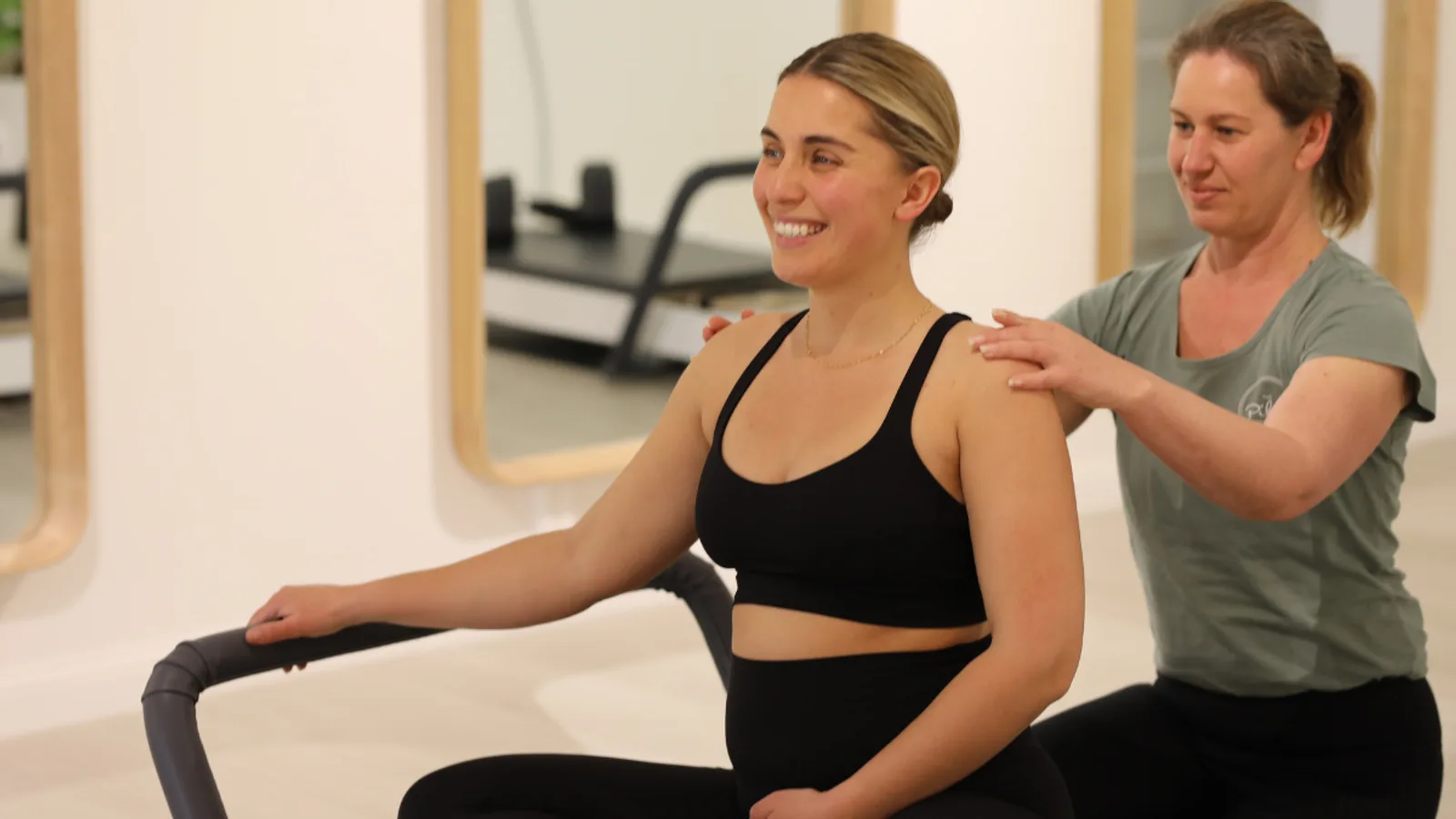
Our instructors watch your technique and correct it throughout the class. A light hand on a shoulder, or a quick "lengthen through the back of your neck", gives your body information you couldn't get on your own. You feel the difference between where you were and where you are meant to be, and that contrast is how your internal map gets updated.
A moving carriage
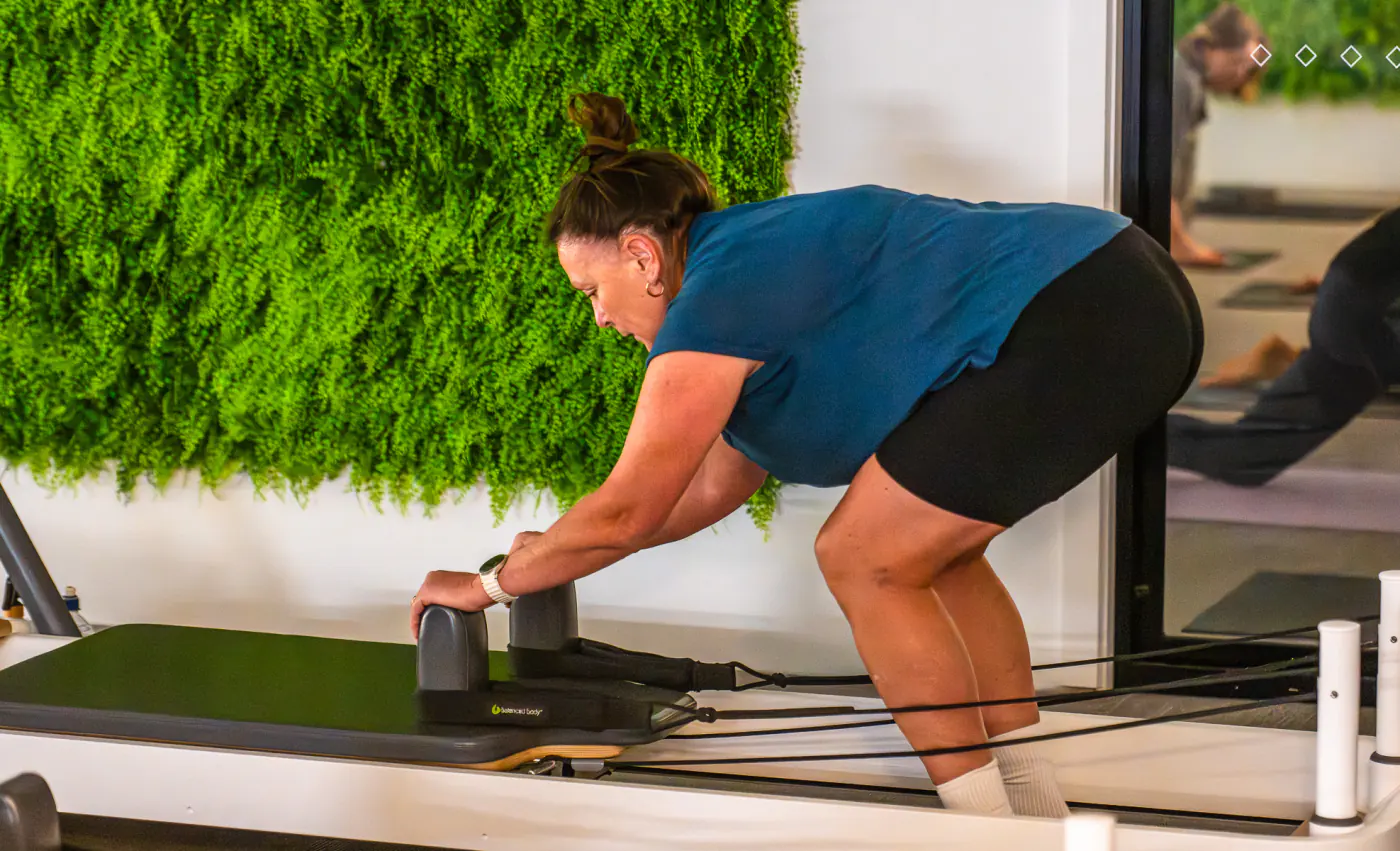
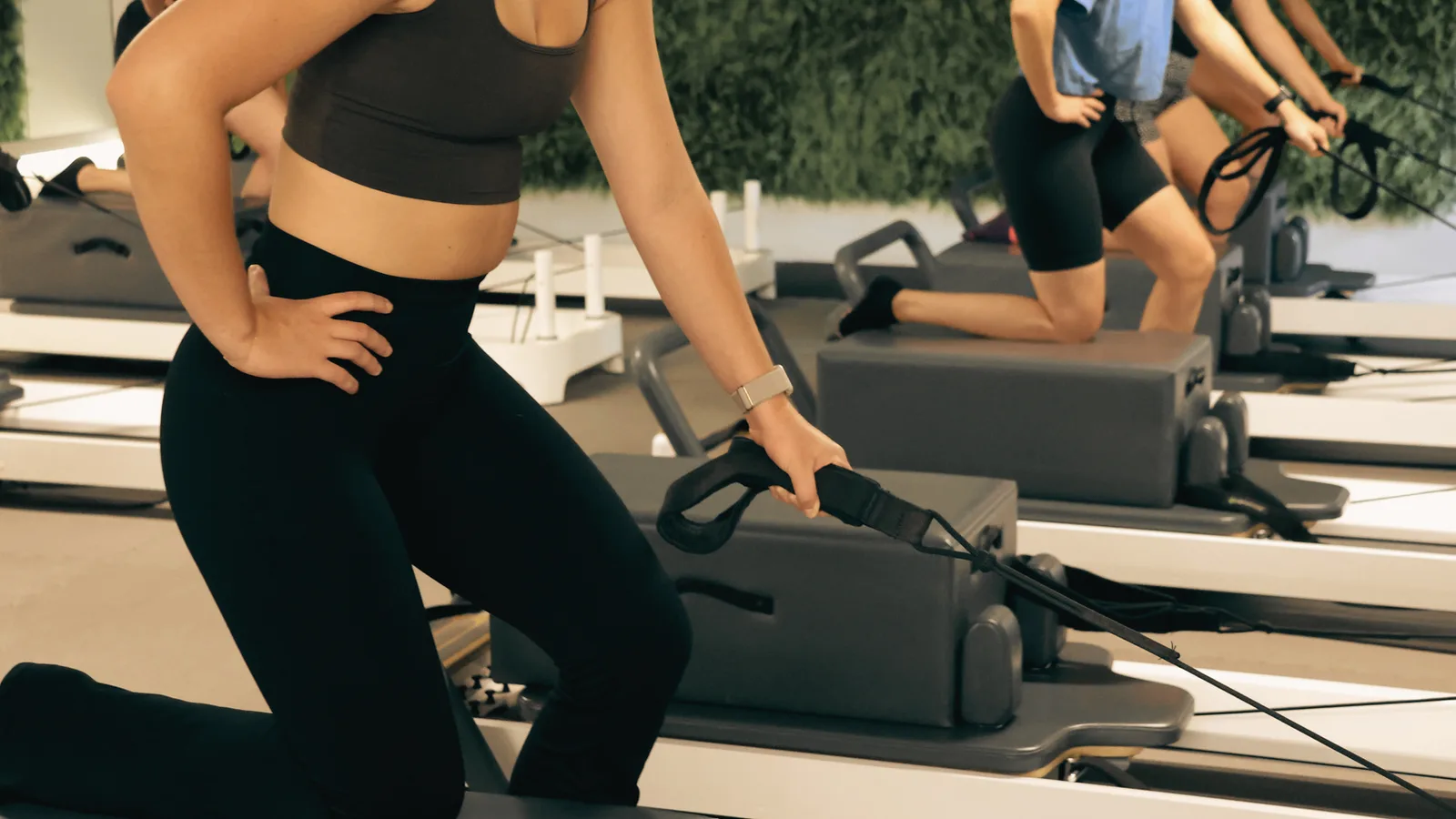
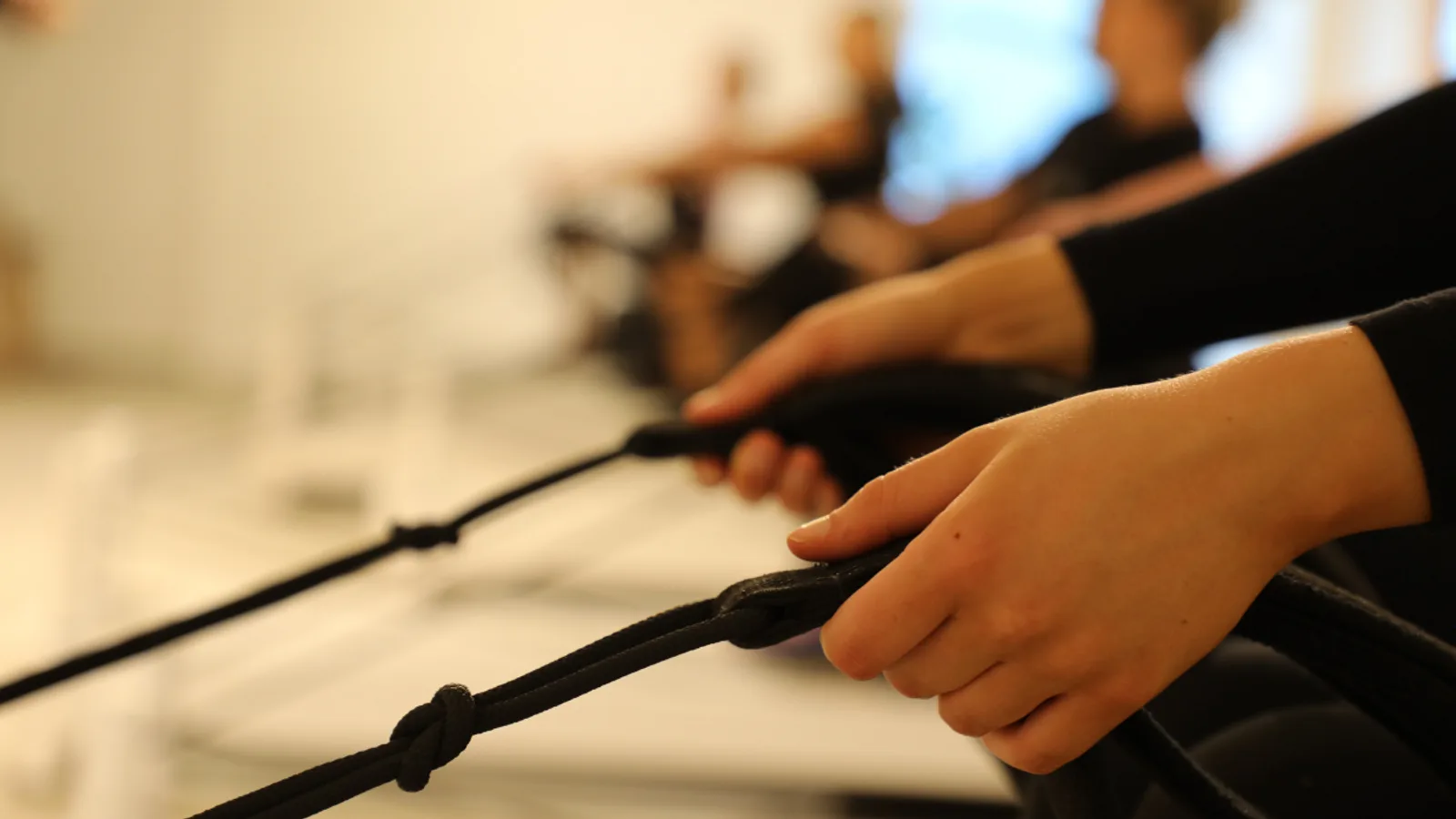
The carriage slides, so any wobble or uneven push shows up straight away. If one leg is doing more work during footwork, the carriage tells you. If your pelvis rocks during a kneeling exercise, you feel it. The machine works as an honest feedback loop, which makes it a very good teacher.
Slow, controlled tempo
Control classes in particular slow everything down. When a movement takes four counts instead of one, you have time to notice what your body is doing through the whole range. Speed hides compensation, while slowness reveals it, which is why we recommend Control as the starting point for everyone and why we wrote about why slow classes build the best foundations.
Why it matters outside the studio
Body awareness is useful because it travels with you. Once you can feel what neutral spine is like on the Reformer, you start to recognise when you have drifted away from it at your desk or in the car. The correction becomes yours to make, any time, without an instructor in the room.
A few everyday places you may notice it:
- At work. You catch the shoulders creeping up towards the ears during a tense email and drop them.
- Lifting. Picking up a toddler or a heavy bag of potting mix, you feel your trunk brace and your legs share the load, before you even think about it.
- In other sport. Runners notice their foot strike. Golfers and tennis players notice when they are rotating from the lower back instead of the upper back and hips.
- When something is off. You become quicker to notice early signs of tightness or fatigue, which gives you a chance to rest or check in with a professional before a niggle becomes a problem.
That last point is important. Better awareness doesn't replace medical advice. If you notice pain that hangs around, or numbness that doesn't settle, see your GP or physio. Body awareness simply helps you notice sooner.
Signs your awareness is improving
Progress here is subtle, so it helps to know what to look for. You may find that instructor cues start making sense faster, because you can find the muscle they are describing. Looking down at your feet during footwork becomes unnecessary. You might notice that one side of your body feels different from the other, which is a good sign, because you can't work on an imbalance you can't feel.
Breathing often becomes easier to coordinate with movement too. Breathing is a big part of Pilates and a big part of awareness, and if you want to go deeper, our guide on how to breathe in a Pilates class walks through it.
The FAQ on our website puts it simply. You won't see a difference after one session, but your thought process may change, even a little. That shift in thinking is body awareness starting to build.
How to speed it up
Awareness grows with practice, and a few habits help it along.
- Close your eyes sometimes. During simple exercises like footwork, closing your eyes for a few reps sharpens what you feel. Only do this when you are stable and lying down.
- Book a Stretch or Yoga class now and then. Longer holds give you time to notice small differences between sides, and Yoga's focus on breath pairs well with the awareness you build on the Reformer.
- Do a quick body scan before class. Lying on the carriage while everyone settles in, notice how your back meets the carriage and whether your weight sits evenly. Then check again at the end.
- Notice one habit a week. Pick something small, like how you stand while waiting for the kettle, and pay attention to it for seven days.
Your body, better understood
Strength and posture get most of the headlines, and they are real benefits. Body awareness sits underneath all of them. When you can feel what your body is doing, you can train it with more care and carry what you learn into the rest of your day.
If you would like to start building it, the 21 day trial gives you three weeks of unlimited group classes at both studios for $65. Book a Control class on the timetable and let an instructor show you what your body has been trying to tell you.