



Health & Wellbeing · 12 October 2026 · 5 min read
Why athletes are adding reformer Pilates to their training
Runners, surfers and footy players are on the reformer. What they get out of it.
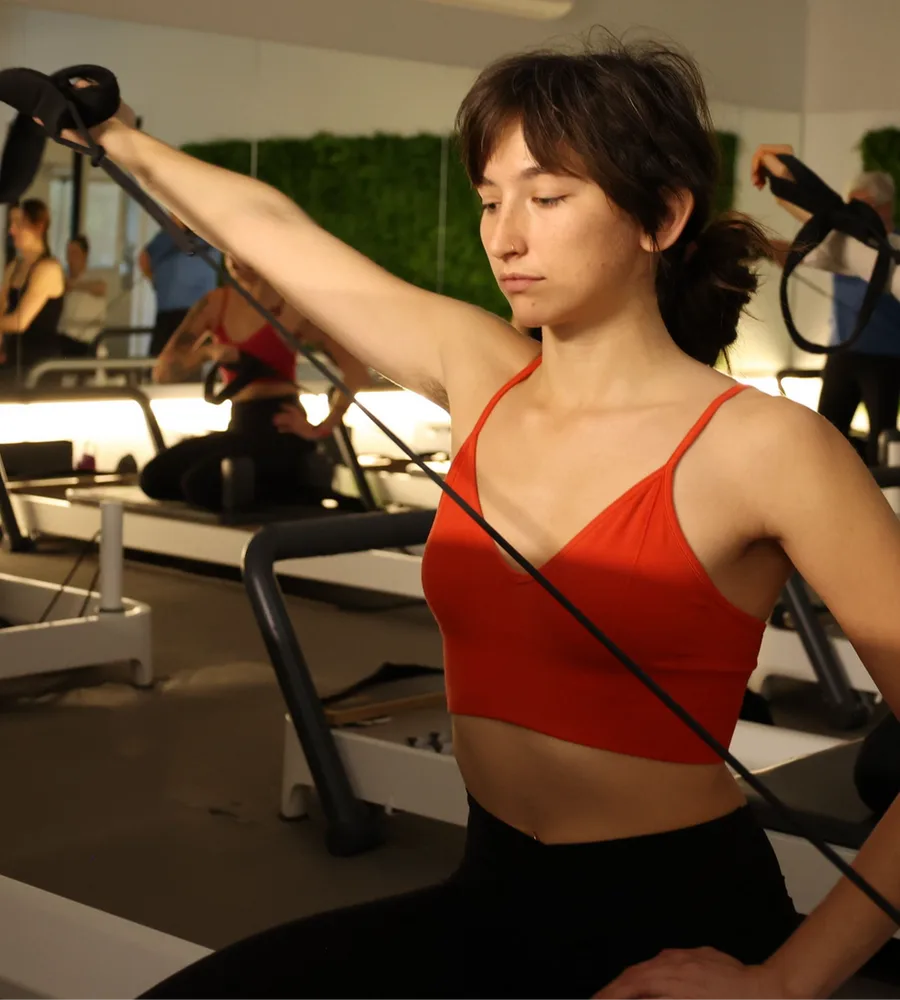
A decade ago, a footballer on a Reformer was a punchline. Today it is a recovery day. Professional athletes across AFL, NRL, tennis, swimming, running and surfing have added Reformer Pilates to their training weeks, the trend reports confirm it is one of the fastest growing corners of the industry, and here in the Illawarra our own classes hold more runners, surfers and weekend competitors every season.
Athletes are ruthless about their time. They do not adopt training methods because they are fashionable. Here is what they are getting from the machine, and what the same benefits look like for the rest of us.
The stability layer under every skill
Ask a coach what separates good athletes from injured ones and the conversation lands on control: the ability to keep the trunk and pelvis organised while the limbs produce force at speed. Power leaks through an unstable centre, and injuries concentrate wherever the leak is.
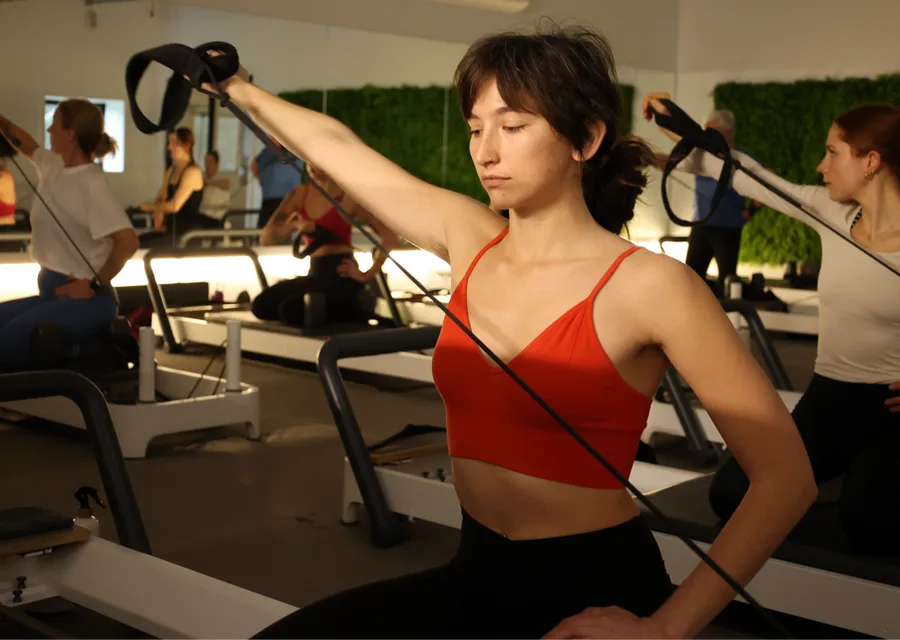
This is precisely the quality Reformer training builds, and the moving carriage is the reason. Every exercise on a surface that glides underneath you is a small stability exam, hundreds of reps per class, for the deep trunk system we describe in what core strength actually means. For a surfer reading a moving wave or a netballer landing from a rebound, that transfer is direct. The Reformer is a controlled instability machine, and sport is uncontrolled instability with a scoreboard.
Filling the gaps the sport creates
Every sport is a repetition machine. Runners log thousands of identical strides, cyclists thousands of identical pedal strokes, and all that repetition strengthens some tissues while quietly neglecting their neighbours. Sooner or later the neglected ones send an invoice, usually mid season.
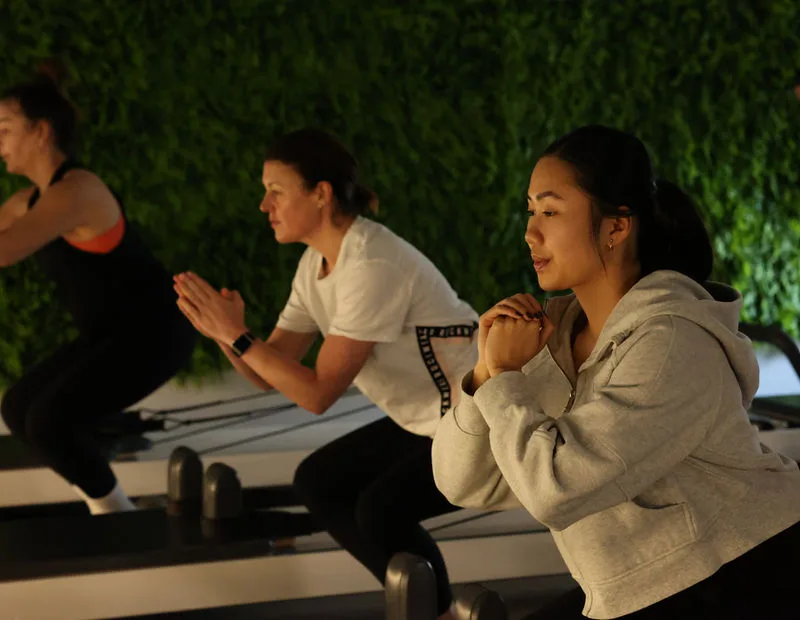
Pilates is close to the perfect antidote because it is systematically balanced. A class moves you through flexion, extension, rotation and side bending, works left and right independently, and loads muscles at long lengths sports rarely visit. The single leg work alone is revealing: plenty of strong athletes discover on the carriage that one side has been doing the other's homework for years.
The mobility dividend matters too. Hips that sit all day and then run, shoulders that swim without ever reaching backwards. The strength through range approach we outline in how Pilates improves flexibility restores the movement options a sport slowly narrows, which is both performance and insurance.
Hard training that does not cost recovery
Here is the scheduling genius that makes Pilates fit an athlete's week: it trains seriously without draining seriously.
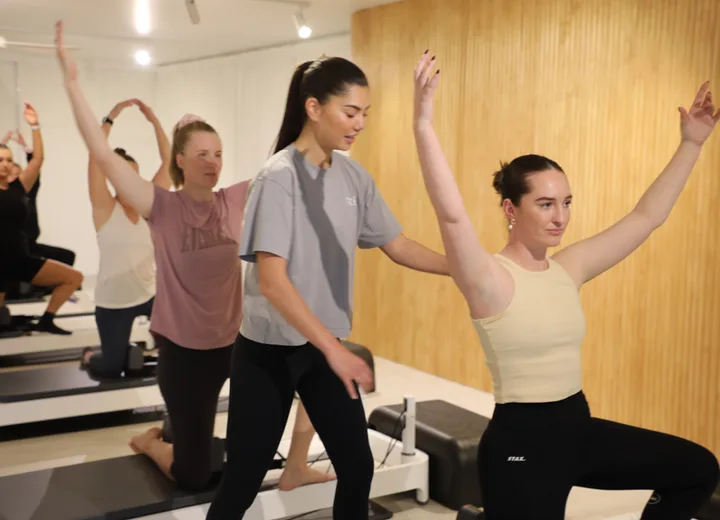
A Reformer session is low impact and joint friendly, so it layers onto a training load without adding to the pounding a body is already absorbing from the road or the court. That makes it ideal second session material, quality work on the days between hard days. A Stretch class after the weekend's race, a Control session mid week for movement quality, and for conditioning, Jump classes deliver real cardio at a fraction of the impact, which is exactly why runners protecting their legs love them.
Breath control comes along free. The exhale under effort patterns drilled in every class are the same ones athletes reach for at the back end of a race or a tight final quarter.
What this means if you are not an athlete
Maybe you are reading this as a parkrunner, a social netballer, a golfer, a surfer of the merely enthusiastic kind. The logic transfers completely, because your body faces the same problems at lower wattage: repetitive load from your chosen activity, gaps it never trains, joints that appreciate mercy, a trunk that could leak less.
Members here routinely report the crossover in their own terms. The golf swing that stopped tweaking the lower back. The surfer popping up quicker than last summer. The parkrun time that improved while running mileage stayed the same, purely from better strength and control. Sport is where fitness gets spent. Pilates is one of the better places to earn it.
And if your sport is gardening, grandchildren and carrying the shopping, the same sentence holds. Life is the sport. Train for it accordingly.
Slotting it into a training week
Practical patterns that work, whether your competition is a grand final or Saturday morning at Towradgi parkrun:
- In season, one or two classes weekly on lighter days. Control or Flow for movement quality, Stretch for recovery. The goal is support, not extra fatigue.
- Off season or base building, two to three classes as a genuine strength block, adding Jump for low impact conditioning and Tempo once your technique is automatic.
- Returning from injury, Pilates often becomes the bridge back, with your physio's guidance and the approach we describe here.
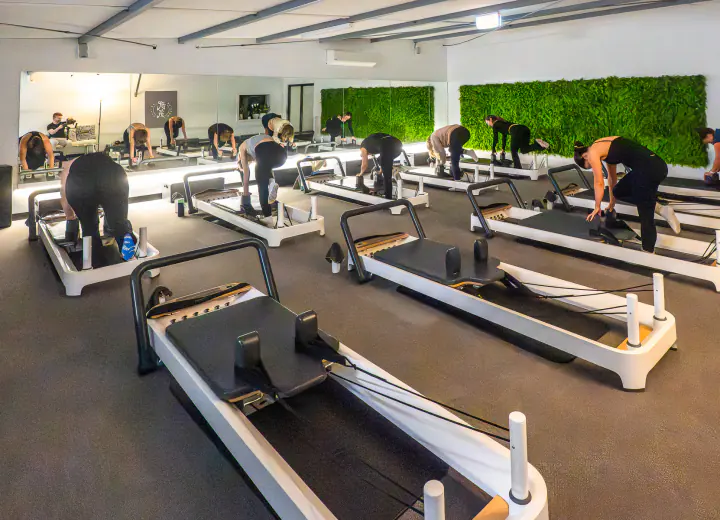
Both studios run classes from 5:45am, which fits around training schedules, work and everything else, and one membership covers Wollongong and Shellharbour.
Train like the professionals, locally
The professionals adopted the Reformer because it solved problems every active body has: stability under the skills, balance against the sport's repetitions, serious work without recovery debt. Those problems are not exclusive to the elite. Neither is the solution.
The 21 day trial gives you three weeks of unlimited classes for $65 to test the crossover on your own sport. Book through the timetable, mention what you play or run or ride on your enrolment form, and your instructor will know exactly which gaps to aim at.