



Moving Well · 13 October 2026 · 4 min read
Coming back from injury? How Pilates supports rehab
Working around knees, hips and shoulders, and how to talk to your instructor about it.

There is a frustrating gap in most injury stories. The physio appointments end, the acute pain is gone, and you are officially discharged into the wild with a printout of exercises and a vague instruction to "build back up gradually". Between clinical rehab and full training sits a no man's land, and it is exactly where a lot of recoveries stall or unravel.
Reformer Pilates has quietly become one of the best bridges across that gap, which is why physios refer people to studios like ours so often. Here is how it works, what to expect, and the ground rules that keep a comeback on track.
First, the important boundary: we are instructors, not physiotherapists. Diagnosis and clinical rehab belong with your health professionals, and if you are currently injured, cleared to exercise is the starting line for everything below. What we offer is the supervised, adjustable, progressive movement that comes after clearance, and we are very happy to work alongside whatever your physio prescribes.
Why the machine suits a mending body
Rebuilding after injury has contradictory requirements. The healing area needs load, because tissue adapts to demand, but not too much, not too suddenly, and not in the wrong direction. Most gym equipment is clumsy at this. The Reformer is precise at it.
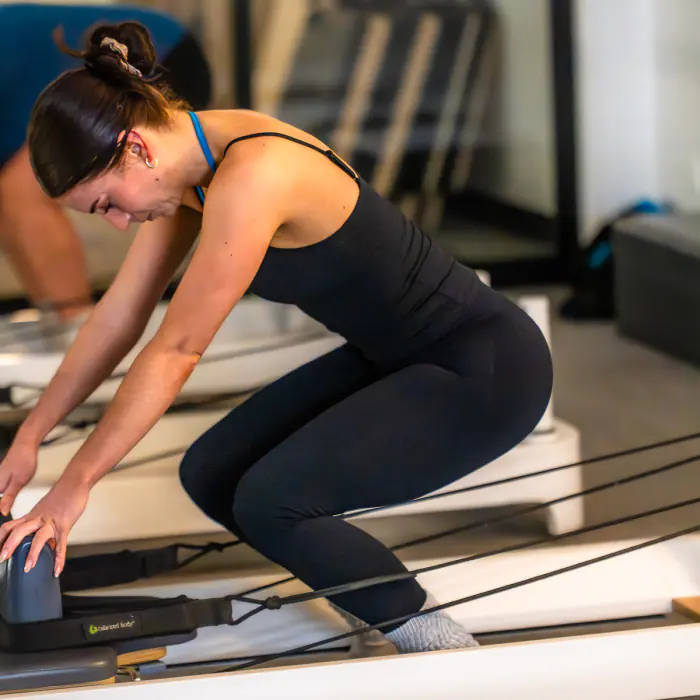
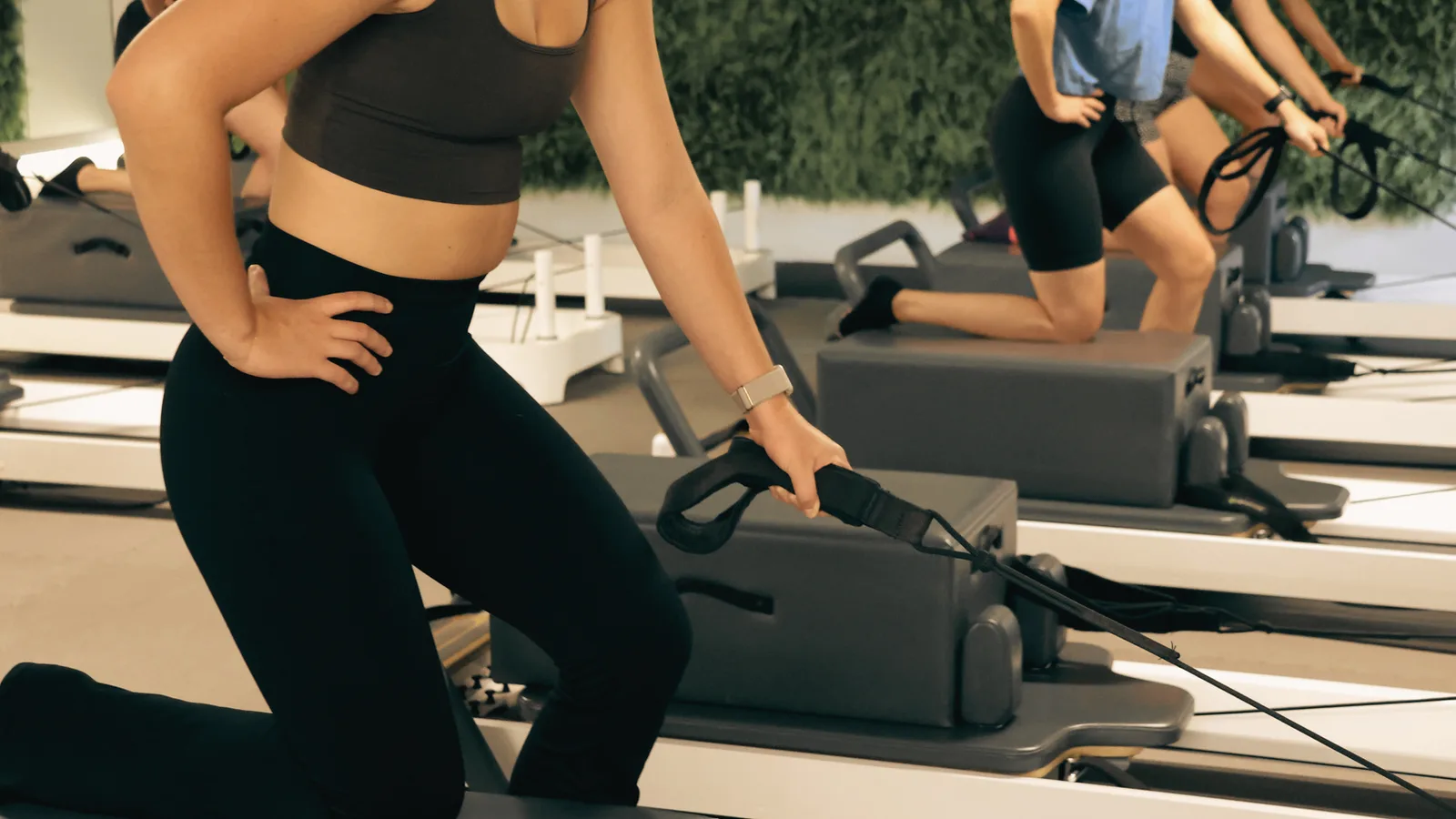
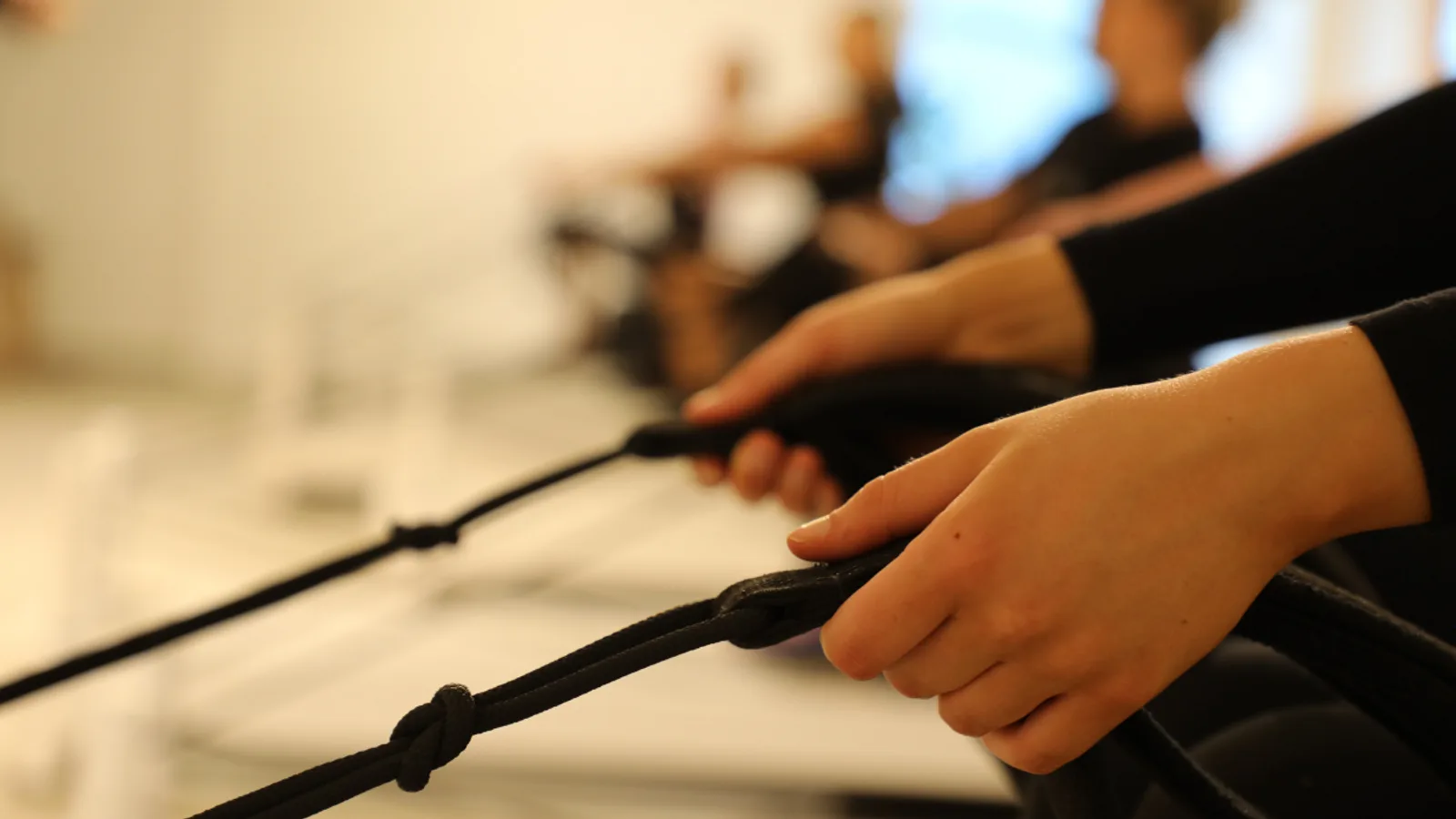
Springs adjust in seconds, so an exercise can load your recovering knee at a fraction of body weight this month and progressively more next month. The springs assist as readily as they resist, supporting movements your strength cannot yet complete alone. The carriage supports your body through most exercises, so you can train hard around an injury while it works at exactly its own pace. And everything happens smoothly, without impact or jerk, which is what sensitised tissue wants.
The method's obsession with precision is the other half. Injuries leave habits behind: the limp that outlasts the sprain, the guarded back that no longer bends, the shoulder that shrugs into every reach. Slow, cued, watched movement is how those patterns get found and unwound, and that is simply what a Pilates class is.
What your instructor actually does
Tell us about your injury history on the enrolment form and again when you meet your instructor, with whatever detail your physio gave you. This is not politeness. It changes your class.
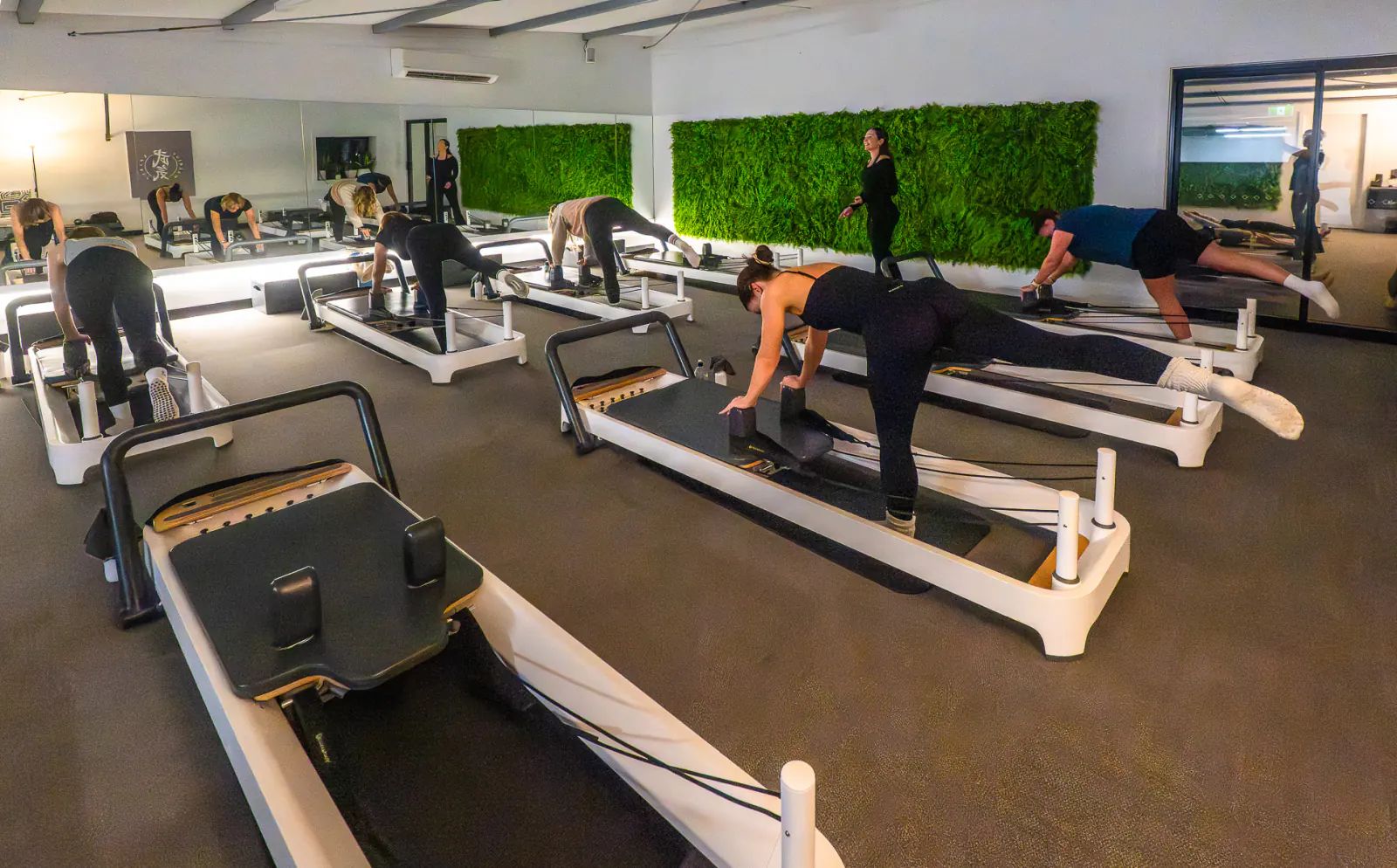
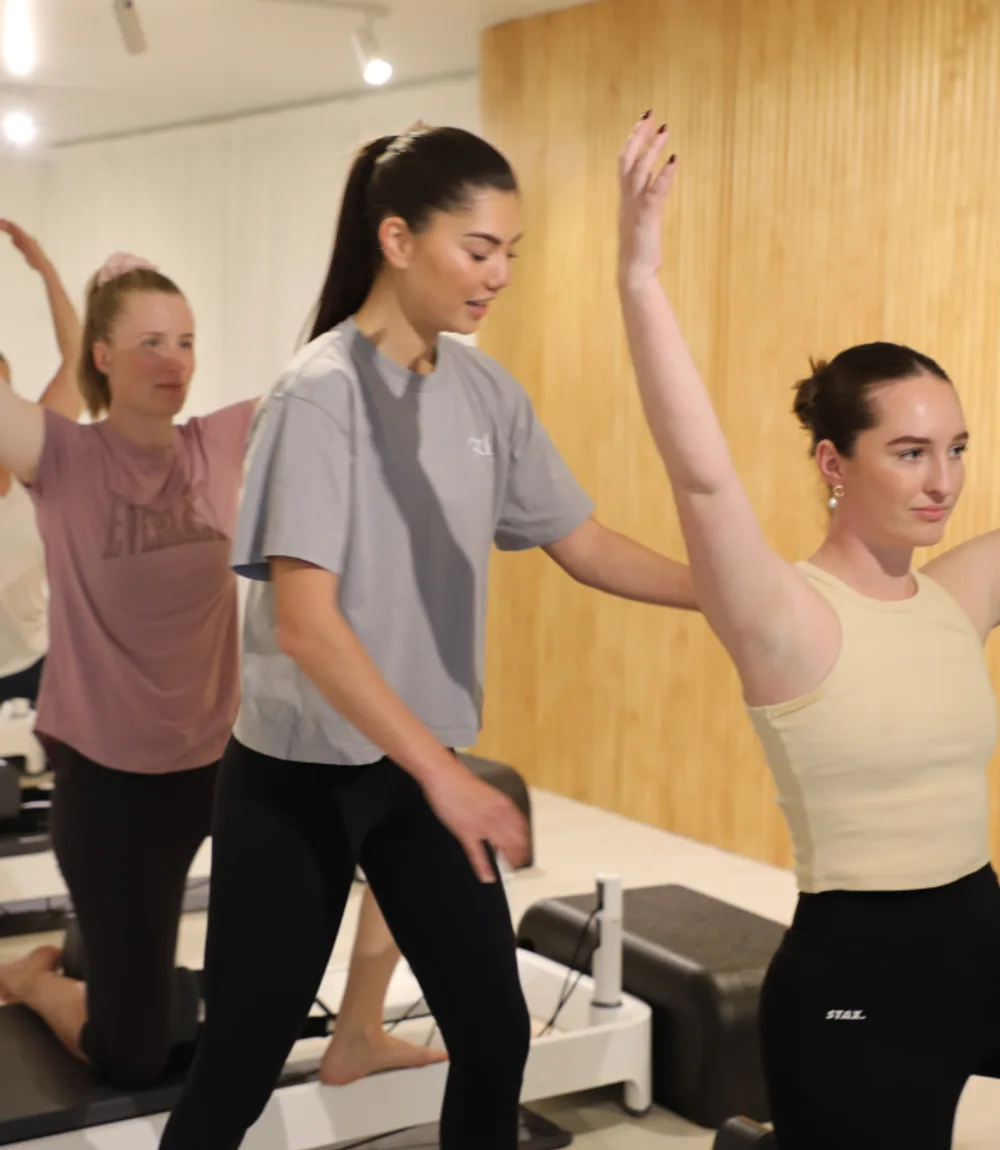
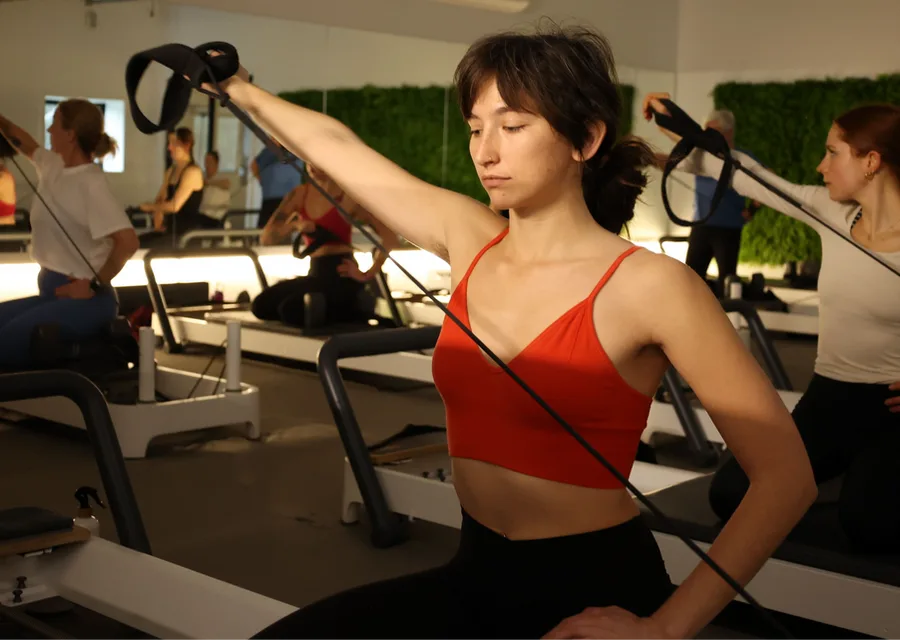
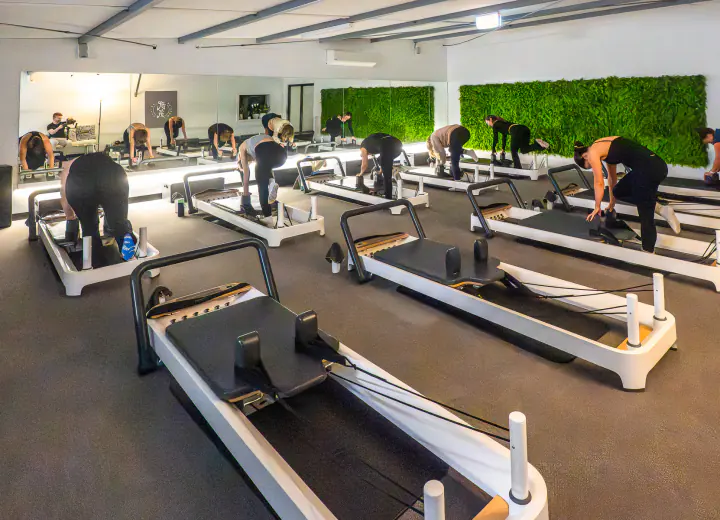
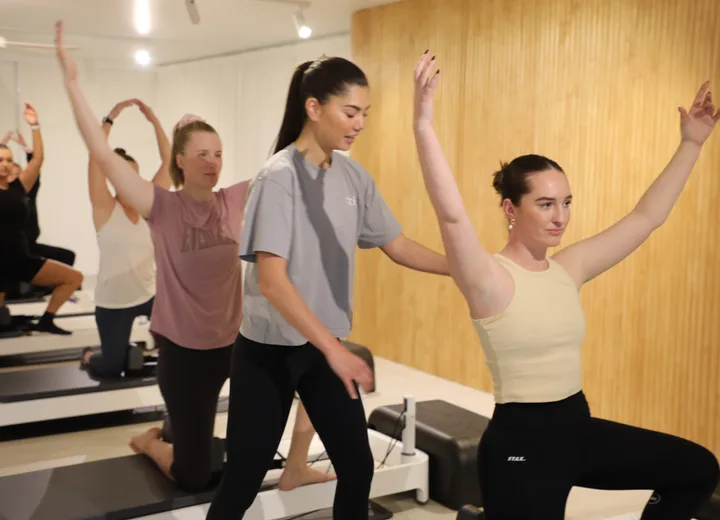
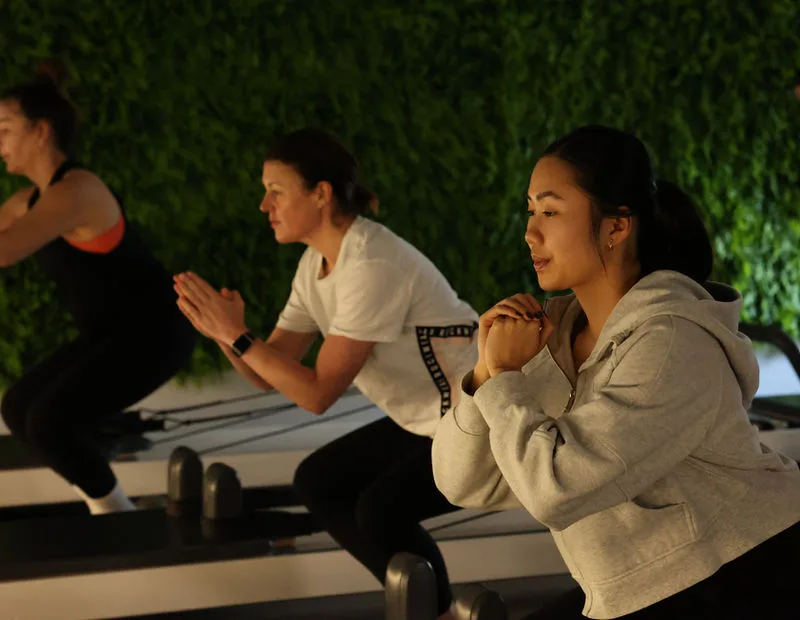
Our instructors work with rehabilitating clients every week, and in classes our size, individual modification is routine. While the room does an exercise, you might do the same movement with different springs, a reduced range, or a substitute that trains the same area more kindly. Nobody notices, because a class where three people are on custom variations is just a normal class here.
Expect closer attention, honest communication and gradual progression. What you should never expect is pressure to push through pain. Muscle effort is welcome. Sharp, familiar, warning style pain means you say so immediately and the exercise changes. That conversation is the safety system, so have it freely.
The shape of a comeback
Every recovery is its own story, but after years of watching them, a typical arc looks like this.
Early weeks live in Control classes. The slow pace suits a body relearning trust, the coaching is densest, and the foundations built there are precisely what a post injury body is missing. Wins are quiet: ranges creeping back, guarding softening, confidence returning rep by rep.
The middle phase adds Flow, as strength and confidence allow, usually with Stretch classes keeping the surrounding areas mobile so the healed region does not carry extra load from stiff neighbours. This is where most people report the mental shift, the day they realise they moved for a whole class without thinking about the injury once.
Later, depending on the goal, the timetable opens up. Jump classes rebuild impact tolerance about as gently as impact can be rebuilt. Tempo waits for automatic technique. Athletes work back towards sport, a road we map in why athletes are adding Reformer Pilates. And many members simply keep the Control and Flow rhythm that rebuilt them, permanently, having noticed it is also what maintains them.
The ground rules
- Clearance first. Your GP or physio says exercise is appropriate. Then we begin.
- Full disclosure. The injury, the surgery, the physio's advice. We can only work around what we know about.
- Pain is information, not a toll. Effort yes, warning pain no, and always say so.
- Consistency over intensity. Two calm classes a week rebuild faster than sporadic heroics, as covered in our frequency guide.
- Patience with the timeline. Tissue heals on biology's schedule. The machine just makes every week of it productive.
The comeback starts with a conversation
If you are somewhere in the post injury gap right now, discharged but not yet yourself, this is exactly the situation our studios handle well, and have since 2016.
Book a Control class at Wollongong or Shellharbour, note your injury history when you enrol, and arrive a few minutes early to talk it through with your instructor. The 21 day trial, $65 for three unlimited weeks, is a sensible way to test the fit. Bring your physio's advice with you. We will take it from there, carefully, together.