


Benefits of Pilates · 9 October 2026 · 5 min read
How Pilates makes you more flexible without hours of stretching
Strengthening through a full range beats passive stretching for most people. Here is why.
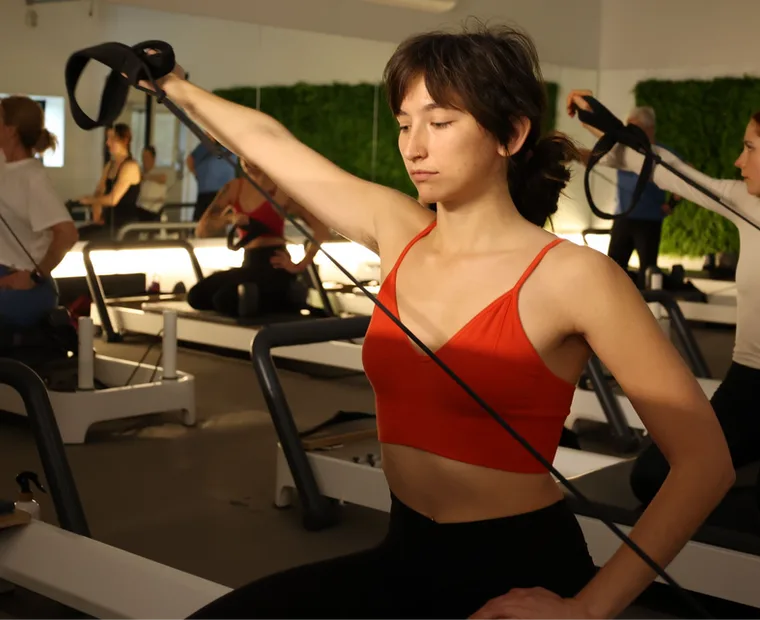
Ask people why they avoid Pilates and "I'm not flexible enough" makes every top five. Ask people why they start and "I want to get more flexible" is right up there too. Flexibility sits strangely at the centre of the whole conversation, so let us clear it up: how Pilates actually improves your range of motion, why the method beats passive stretching for most bodies, and why touching your toes is an outcome here, never an entry requirement.
The problem with just stretching
The traditional prescription for stiffness is static stretching: pull the tight muscle long, hold, hope. It feels productive, and it has its place. As a complete strategy, though, it has a flaw that explains years of frustrated hamstring campaigns.
A lot of tightness is not short muscle. It is protective tension. Your nervous system limits range it does not trust, tightening muscles around joints it cannot guarantee to control at longer lengths. Stretch passively and you are asking for range while offering no new evidence of control, so the system gives back its centimetres reluctantly and takes them again by morning.
This is why the person who stretches dutifully every night can stay stiff for years while their physio keeps saying strange things like "your hamstrings aren't actually short".
What Pilates does differently
Pilates rarely stretches for stretching's sake. Instead, nearly every exercise strengthens muscles while they move through their full available range, under control, with spring assistance or resistance shaping the load. That combination, strength through range, is precisely the evidence your nervous system was waiting for.
When you control a long position with your own muscle, rather than hanging in it passively, the brain's calculation changes. This range is managed, supervised, safe. Permission expands. Research comparing approaches has repeatedly found that full range strength training improves flexibility about as well as stretching programs, with the small bonus that you also get stronger, which stretching alone never offered.
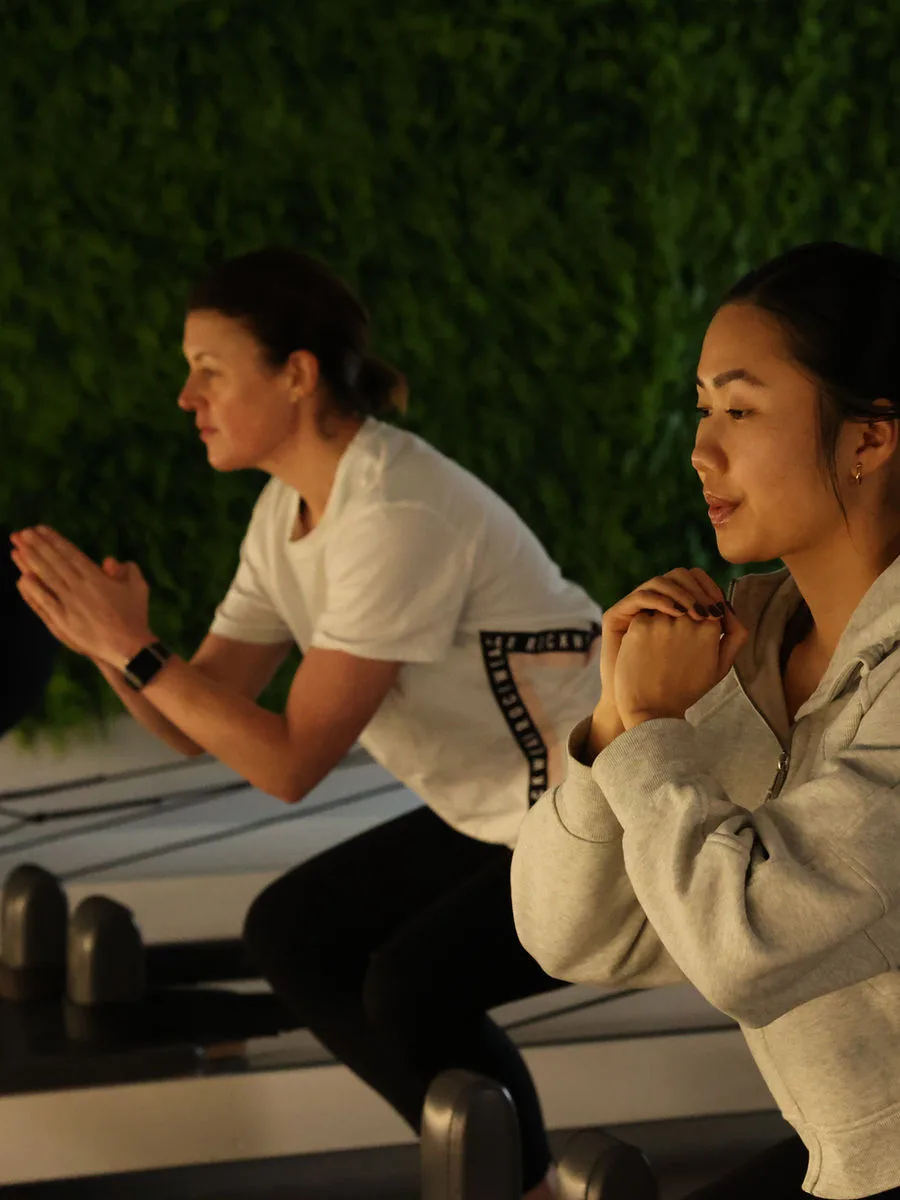
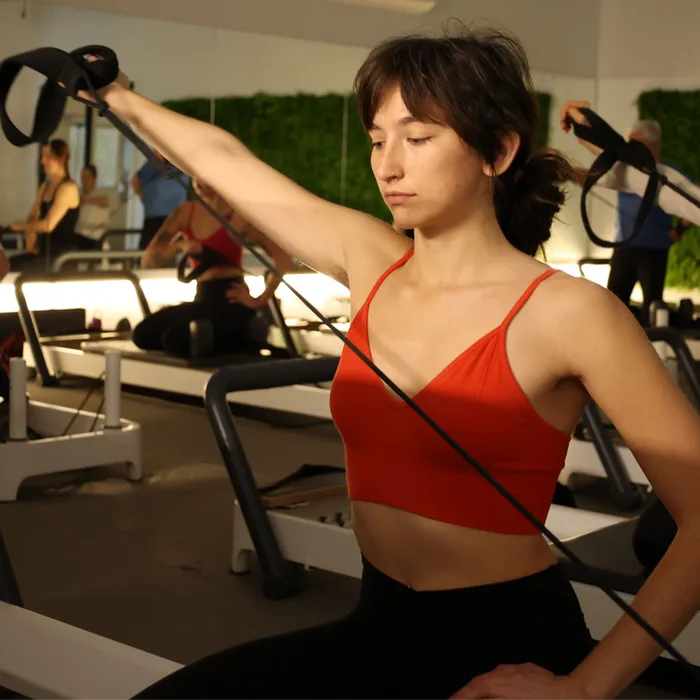
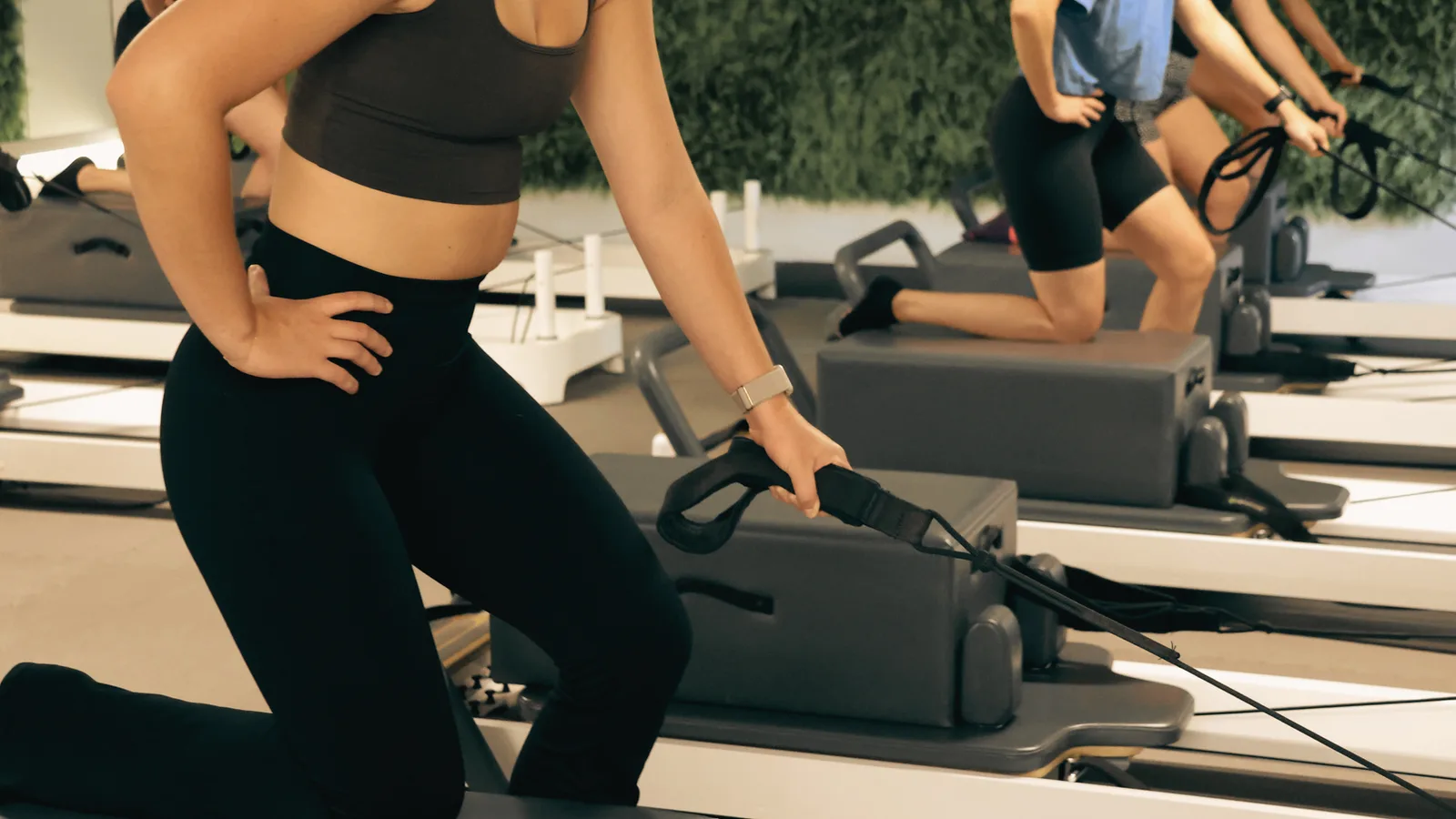
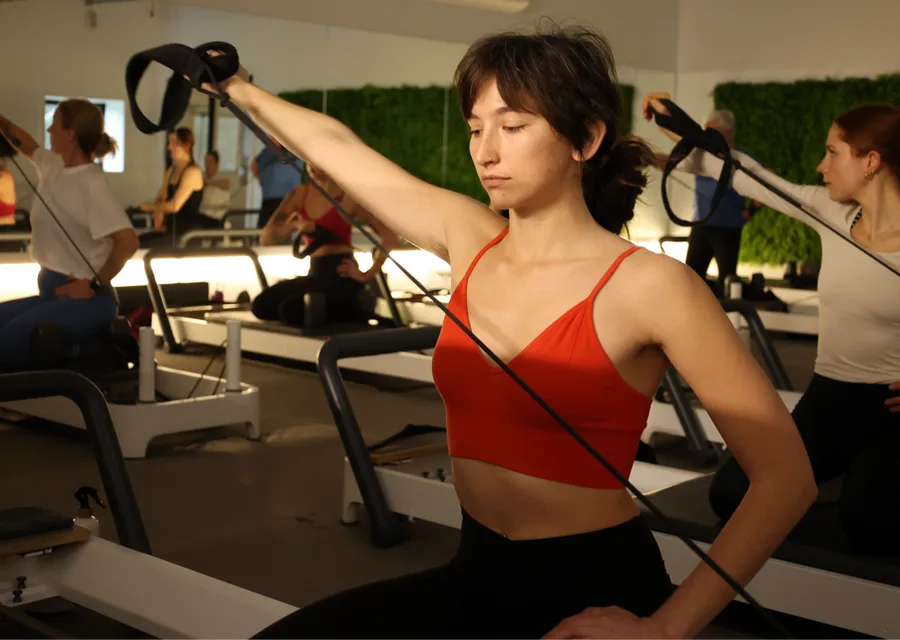
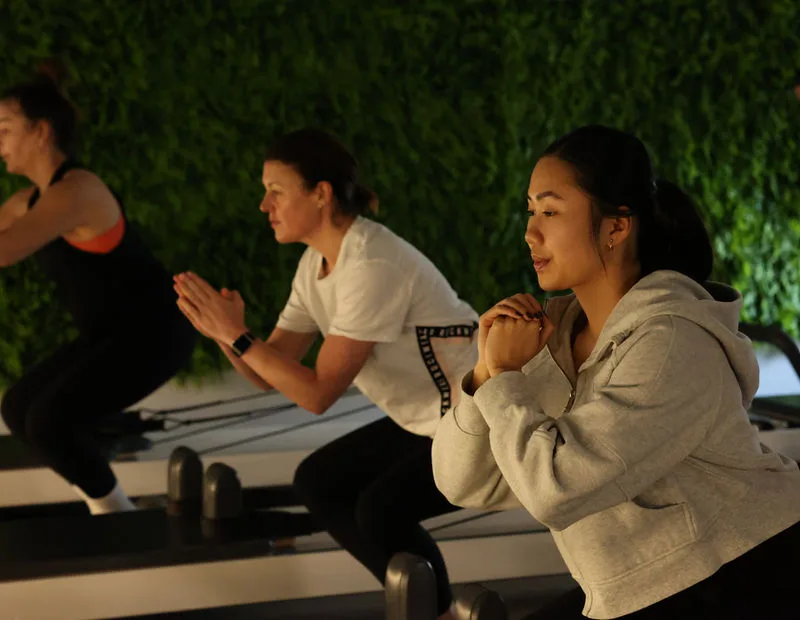
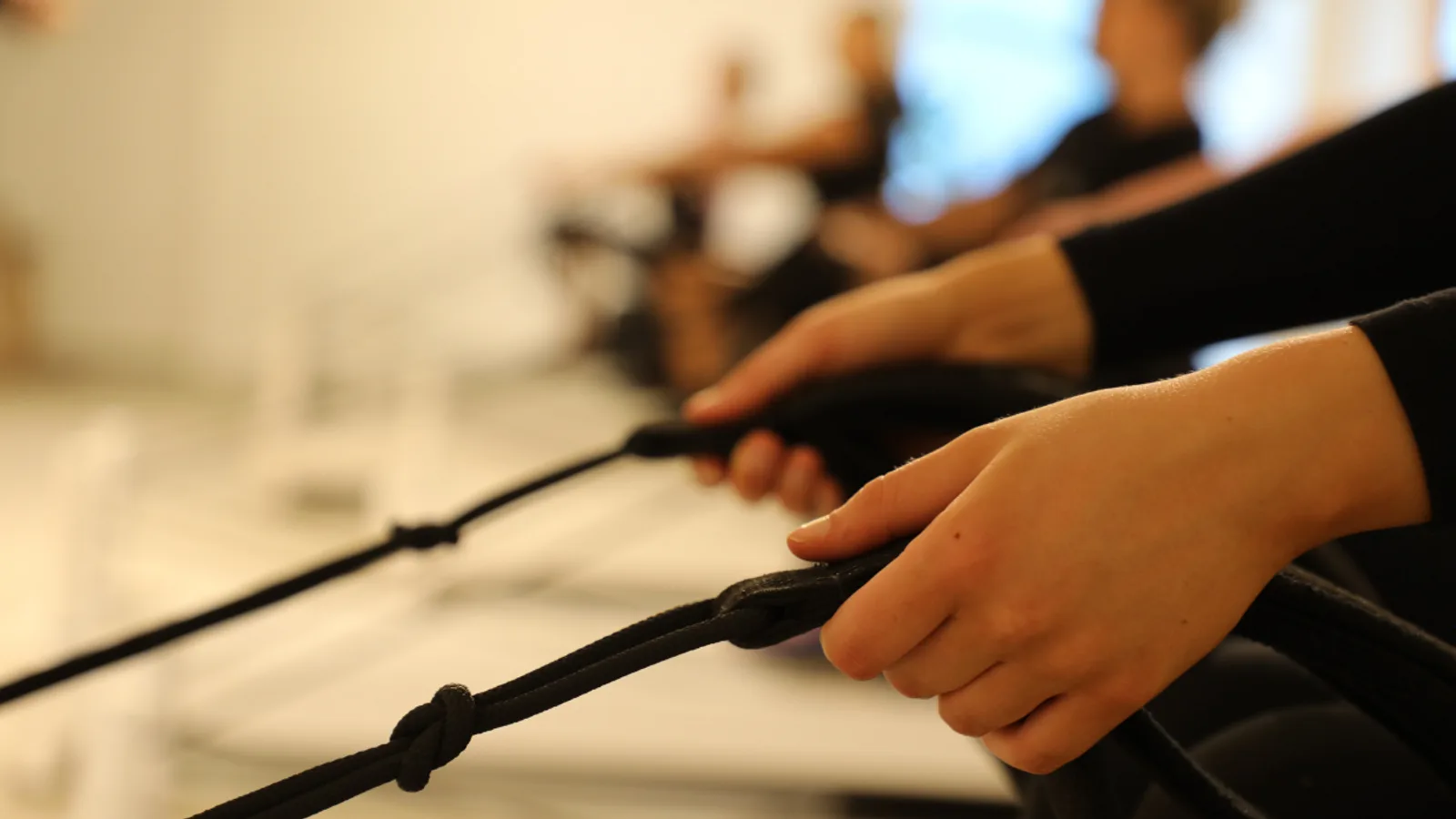
The Reformer is close to a purpose built machine for this. Springs support your legs through arcs and circles bigger than you could control unassisted. The straps let you work at long muscle lengths with the load dialled to whatever your body accepts today. Every press out and controlled return trains the exact combination, length plus strength, that unlocks lasting range. The mechanics of that controlled return are their own story, told in what all those springs actually do.
Where you will feel it first
Progress arrives in a fairly predictable order, because daily life makes certain areas predictably stubborn.
Hamstrings usually move first. Straps work meets them within your first classes, and members regularly report the toe touch situation improving within a month, often after years of static stretching had achieved nothing much.
Hips follow. Sitting keeps them folded and guarded, and the lunges, leg circles and hip openers scattered through every class coax them open again. Getting up off the floor stops being a production.
Then the one people do not expect: the upper back. Years of desks leave the thoracic spine locked into a gentle forward curl, and Pilates extension and rotation work restores movement there that many members had forgotten existed. Reversing that curl changes posture, breathing and even neck comfort, as we describe in what eight weeks does for your posture.
Timelines vary with starting point and consistency, and the usual rule applies: two to three classes a week compounds, once a week maintains.
"But I can't even touch my toes"
Good. You are the target market.
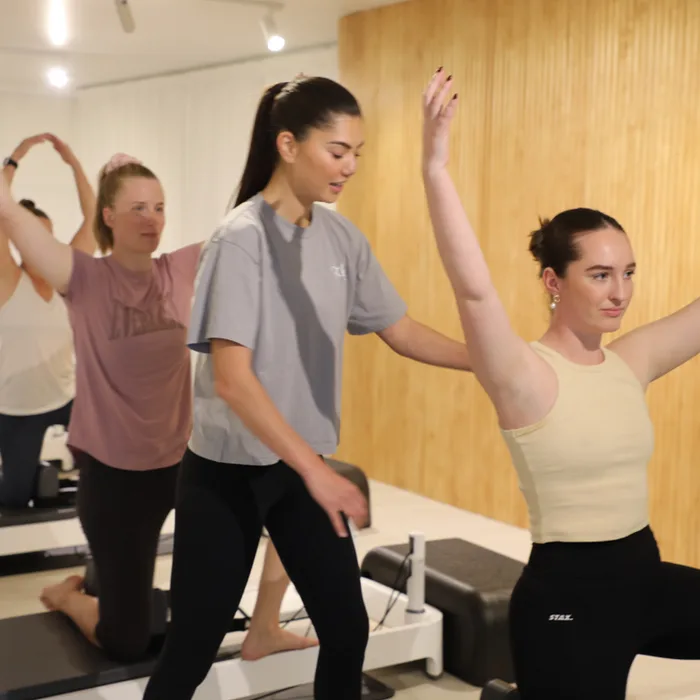
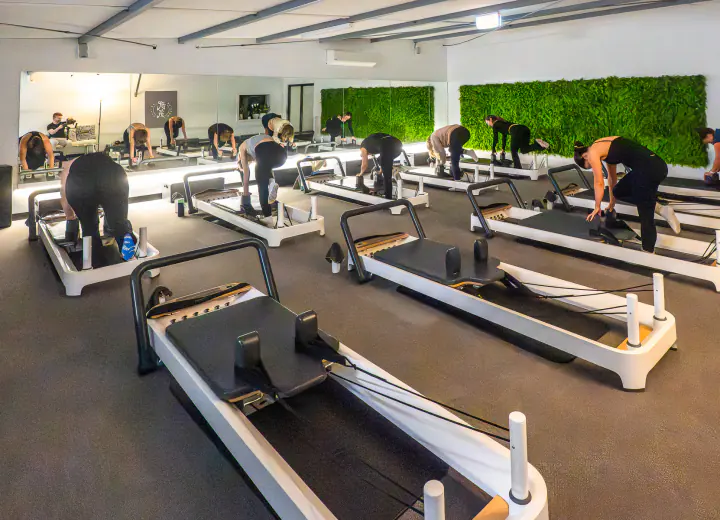
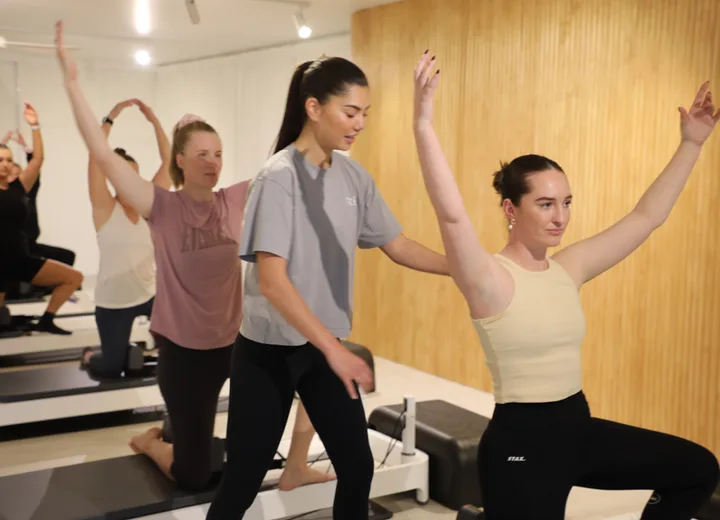
Arriving inflexible at a Pilates studio is like arriving hungry at a restaurant. It is the point of the place. The springs will assist every movement your body cannot yet complete, your instructor will adjust positions so you work within your real range, and nobody, truly nobody, is grading anyone's toe touch. Our classes at both studios hold members whose hands stop at their knees alongside former dancers, doing the same exercises at different settings, which is the entire design of the method.
Flexibility is not the ticket in. It is one of the things the room hands you on the way through.
Keeping it, and stretching smart
Two honest notes to finish.
Range you do not use drifts away again, because the nervous system keeps auditing. The maintenance plan is simply continued training, plus a life that occasionally visits the new range: sitting on the floor with the kids, reaching the high shelf without the step stool, walking somewhere hilly.
And stretching still has its place, which is why Stretch classes hold a proud spot on our timetable. Long holds and deep release feel wonderful, calm the nervous system, and pair beautifully with the strength work that makes their gains stick. The combination beats either alone. Think of Stretch classes as the dessert course, with Flow and Control as the meal.
Come get your range back
If you have spent years believing you are just not a flexible person, we would gently suggest the evidence is incomplete. You have not yet tried strength through range, coached, on a machine built for it.
The 21 day trial gives you three weeks of unlimited classes at Wollongong and Shellharbour for $65. Book a Control class to start, add a Stretch class in week two, and check back in with your toes at the end of the month. They may be closer than they appear.