



Moving Well · 16 November 2026 · 6 min read
Where should I feel this? Learning to read your body in class
How to tell useful muscle effort from strain, why you sometimes feel an exercise in the wrong place, and what to do about it.
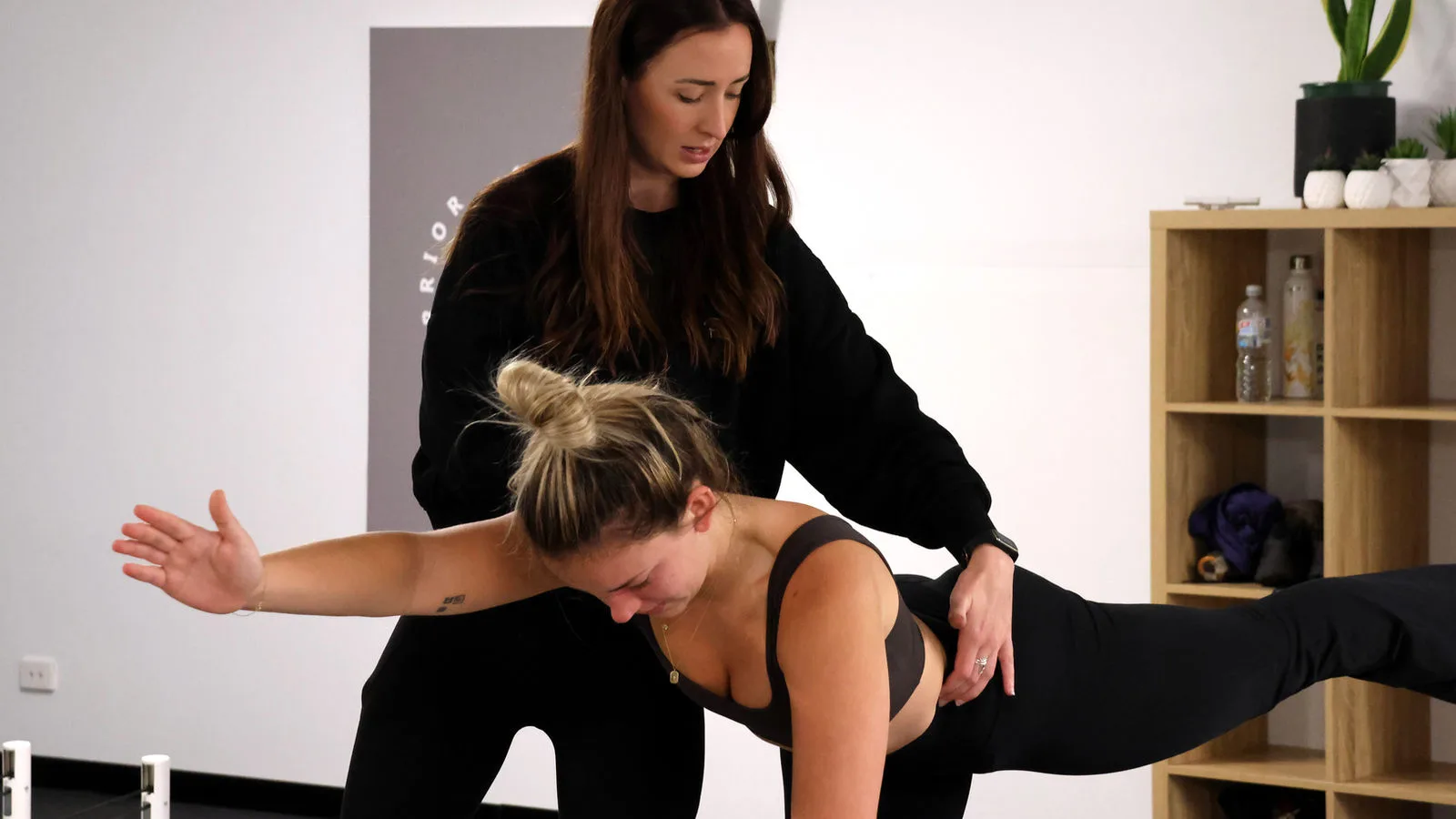
Halfway through a new exercise, many people look up at their instructor with the same expression. Something is working hard, but they are not sure it is the right something. The instructor said this one was for your glutes, and all you can feel is the front of your thigh.
It is one of the most useful questions you can ask in a Pilates class, and our instructors expect it. Telling you where you should be feeling the work is a normal part of how we teach, especially in your first few weeks. This guide explains why the sensation sometimes shows up in the wrong place and how to tell good effort from a warning sign. It finishes with practical ways to redirect the work.
Why the right muscle does not always switch on
Your body is very good at getting a job done. When you ask it to push the carriage out, it will use whichever muscles have done that kind of work most often. If the front of your thighs or your lower back have been doing the heavy lifting for years, they will step in first, even when the exercise is designed for something else.
This is a habit and nothing more. The muscles you are aiming for are usually there and capable. They just have not been asked to lead for a while, so the connection between your brain and those muscles needs some practice.
That is why Pilates puts so much attention on slow, precise movement. Each repetition done with control is a chance to practise the new pattern. Over weeks, the right muscles start to join in sooner, and the exercise feels completely different.
Good effort versus warning signs
Before working out where you feel something, it helps to sort sensations into two groups.
Useful effort tends to feel like:
- A building warmth or burn in the muscle you are working
- Shaking or trembling as a muscle tires, which is very common in Pilates
- A stretching sensation that eases as you breathe and settle
- General tiredness by the end of a set
Warning signs tend to feel like:
- Sharp or stabbing pain
- Pain in a joint itself, such as the knee or shoulder, as opposed to the muscle around it
- Pins and needles, or pain that travels down an arm or leg
- Anything that reminds you of an old injury flaring up
Stop the exercise and tell your instructor straight away if you feel anything from the second list. They can adjust the position or the springs, or swap the exercise for another one. If it continues after class, check in with your GP or physio.
Common mix ups and how to shift them
Some patterns come up in almost every class. If one of these sounds familiar, the fixes below are a good starting point, and your instructor can tailor them to you.
Feeling the front of the thighs in glute work. Often the hips are not quite extending, or the knee is doing more than it should. Try pressing through your heel instead of your toes, and think about lengthening the front of your hip as the leg moves away. Slightly smaller movements often help.
Feeling the lower back in abdominal work. This usually means the lower back is arching as the load increases. Ask whether the exercise should be done in imprint, with your lower back resting lightly on the mat, and try lowering your legs less far. Lighter springs can also make it easier to keep your trunk steady.
Feeling the neck in curl ups. Many people lift with their neck instead of their abdominals. Imagine holding a small piece of fruit between your chin and chest, with your gaze towards your knees. Let your hands support the weight of your head if the exercise allows it.
Feeling the top of the shoulders in arm work. Shoulders tend to creep up as the effort rises. Let the back of your shoulders feel heavy, and think about the work coming from under your armpits and along the sides of your back.
Feeling nothing at all. Sometimes the springs are simply too light for you, or the exercise has become easy. Ask your instructor whether to add load or slow the tempo down.
The role of springs and tempo
It surprises many people that a lighter spring can make an exercise harder. With less help from the springs, your muscles have to control the carriage more carefully, especially on the way back in. Your instructor can suggest when to go lighter and when to add load.
Speed matters too. Moving quickly lets momentum do some of the work, and the stronger, more habitual muscles take over. Slowing an exercise down nearly always makes it easier to feel the target muscle. That is a big reason we recommend beginners start in Control classes, where the pace leaves room to find these sensations. You can read more in why Control classes build the best foundations.
Simple ways to build the connection
Small habits during class make a real difference to how quickly the right muscles start working.
- Touch the muscle. In exercises where your hands are free, place a hand on the muscle you are trying to work. Feeling it tighten under your fingers helps your brain find it.
- Use your breath. Exhaling on the effort helps your deep abdominal muscles engage, which steadies your trunk so the limbs can work more precisely. Our article on how to breathe in a Pilates class covers this.
- Shrink the movement. If you cannot feel the right area, make the movement smaller until you can, then grow it from there.
- Listen for the cue. When your instructor says where you should feel an exercise, pause for a breath and look for that spot before you start moving.
- Ask. A simple "I am feeling this in my back" gives your instructor exactly the information they need. Small classes mean there is time for that conversation.
Patience with the process
Expect the connection to come and go at first. Your glutes may switch on perfectly on a fresh Monday morning, then hand the job back to your thighs in a tired Thursday evening class. That is normal, and each class adds to the pattern even when it does not feel perfect.
Many people find that after a few weeks, they start feeling exercises in the right place without trying. They also tend to notice the same muscles working on the stairs at home, which is a good sign that the new pattern is becoming part of everyday movement.
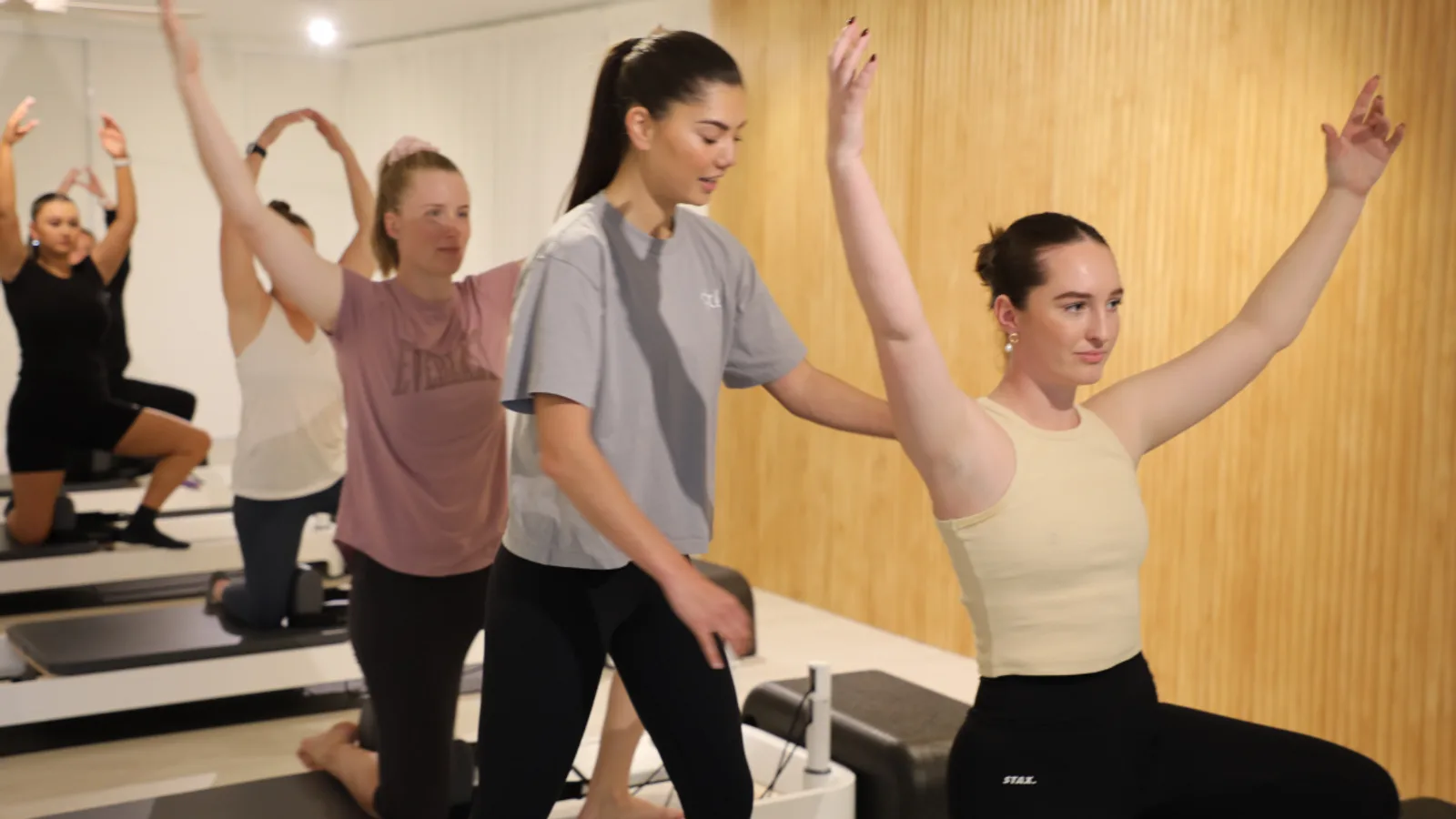
Our instructors watch technique closely and will happily help you work out what you are feeling and why. Book a Control class on the timetable at Wollongong or Shellharbour, and bring your questions with you.