



Getting Started · 23 September 2026 · 5 min read
Your first reformer class: what to expect and what to wear
A walk-through of the machine, the springs, the grip socks and the first ten minutes.
Booking your first Reformer class is the hard part. Everything after that is easier than you think. Here is exactly what will happen from the moment you walk through the door at Keira Street or Benson Avenue, so nothing on the day comes as a surprise.
Before you arrive
Book your spot through our timetable rather than just turning up. Classes are small and they do fill, especially the early morning and after work sessions. When you book, the system asks a couple of quick questions, and if it is your very first visit you will complete an enrolment form so we know about any injuries or conditions before you start.
Aim to arrive about ten minutes early. At Wollongong there are a few parks out the front and plenty of street parking nearby. At Shellharbour we are directly opposite the Stockland car park, so parking is never the thing that makes you late. Those spare minutes give you time to meet your instructor, store your things and get settled on your machine without rushing.
One thing worth knowing in advance: if you arrive more than ten minutes after a class has started, you will not be able to join in. It sounds strict, but it is a safety thing. The warm up matters, and a Reformer is not a machine to jump onto cold.
What to wear
Comfortable exercise clothes you can move in. Leggings or shorts with a bit of stretch, and a top that will not fall over your head the moment you are upside down in a stretch. Avoid anything with zips down the back, since you will spend a fair amount of time lying on the carriage.
The one non negotiable is grip socks. The studio has a strict clean socks policy, and socks are required at all times while you exercise. They keep you from sliding on the carriage and they keep the equipment hygienic for everyone. If you do not own a pair yet, do not stress. We sell them at both studios, so you can grab some when you arrive.
Bring a drink bottle too. There is no set rest break, but there is always a moment to sip between exercises.
Meeting the machine
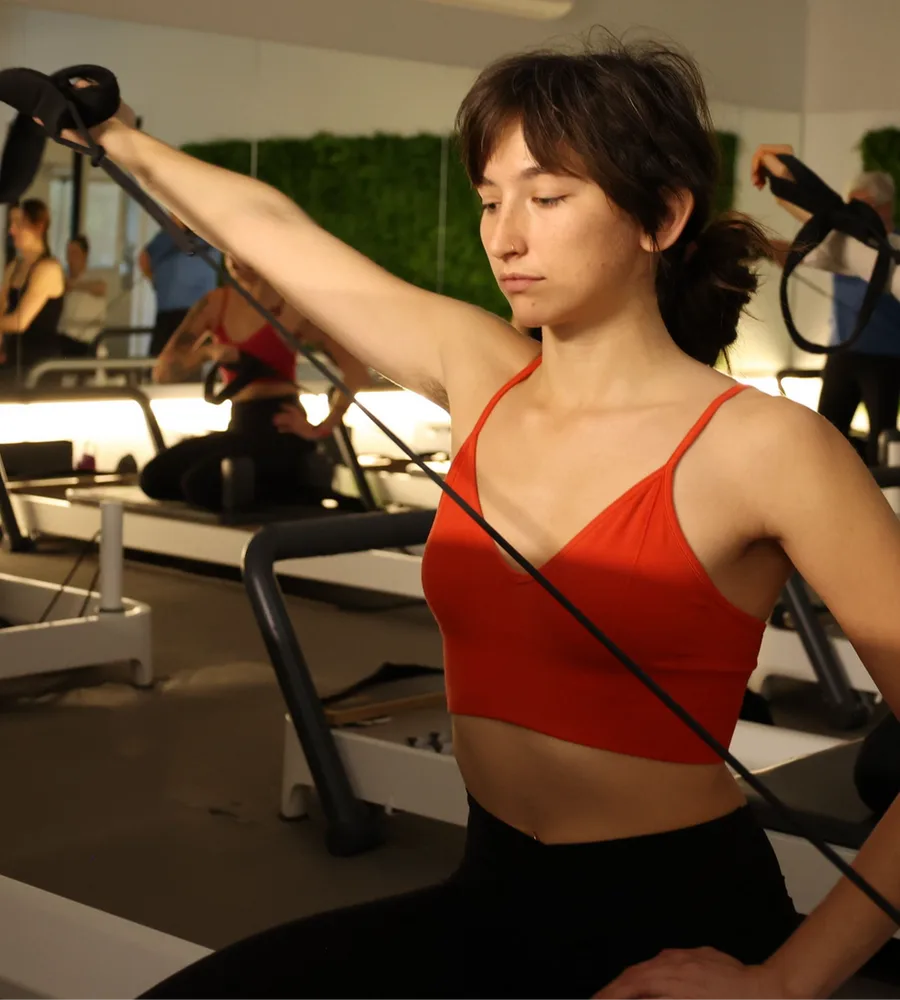
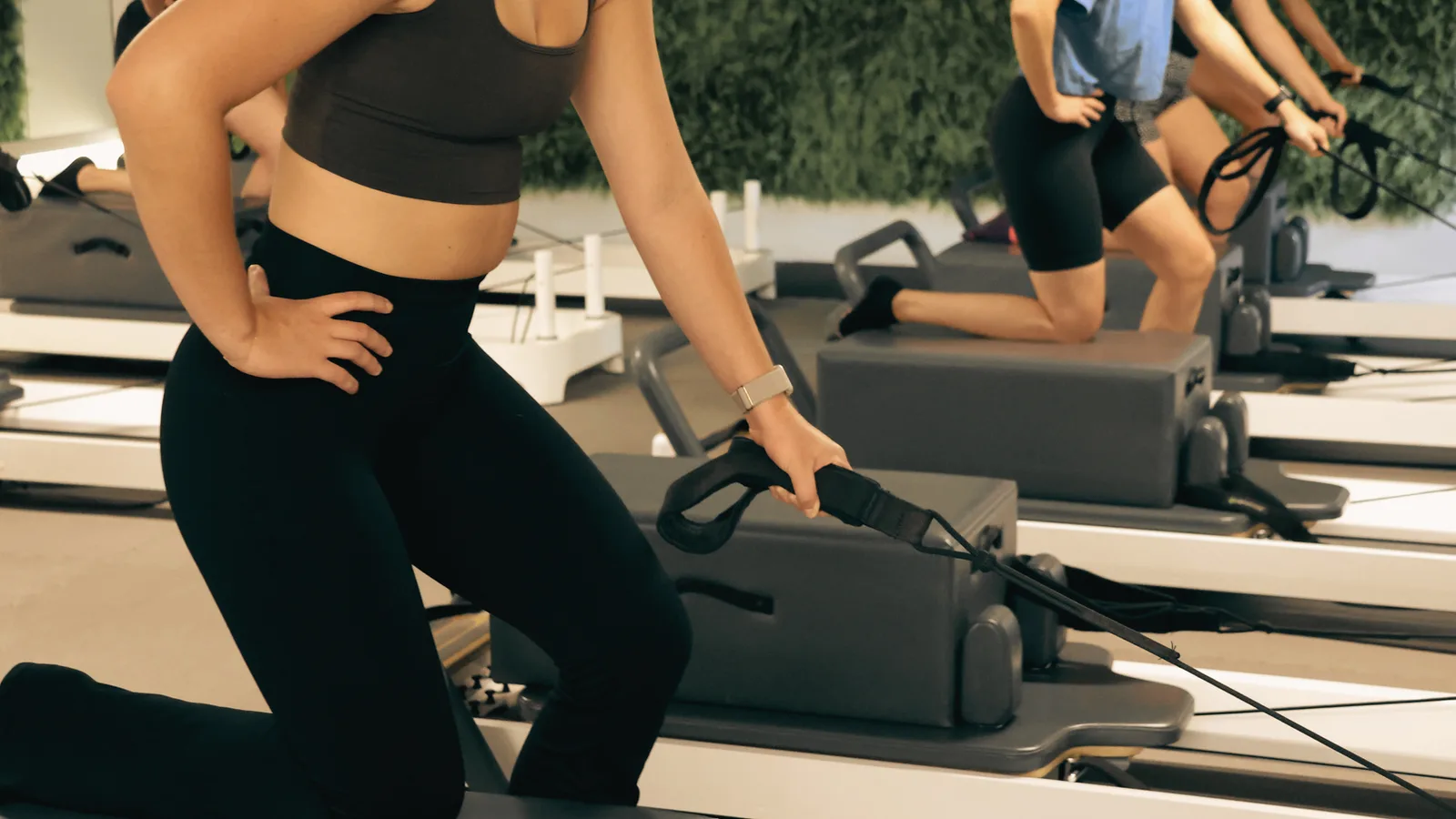
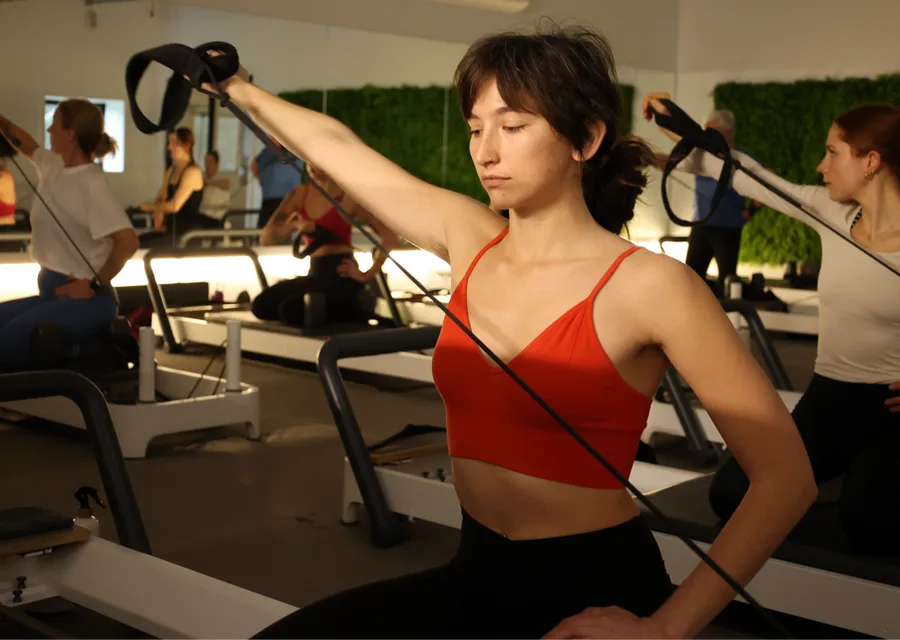
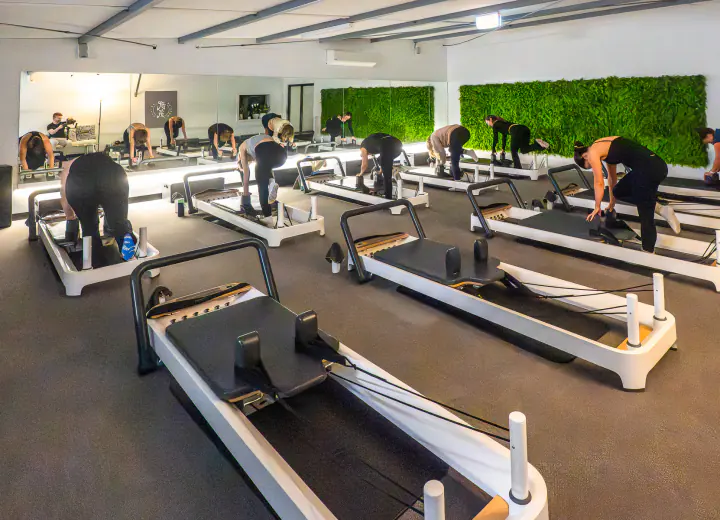
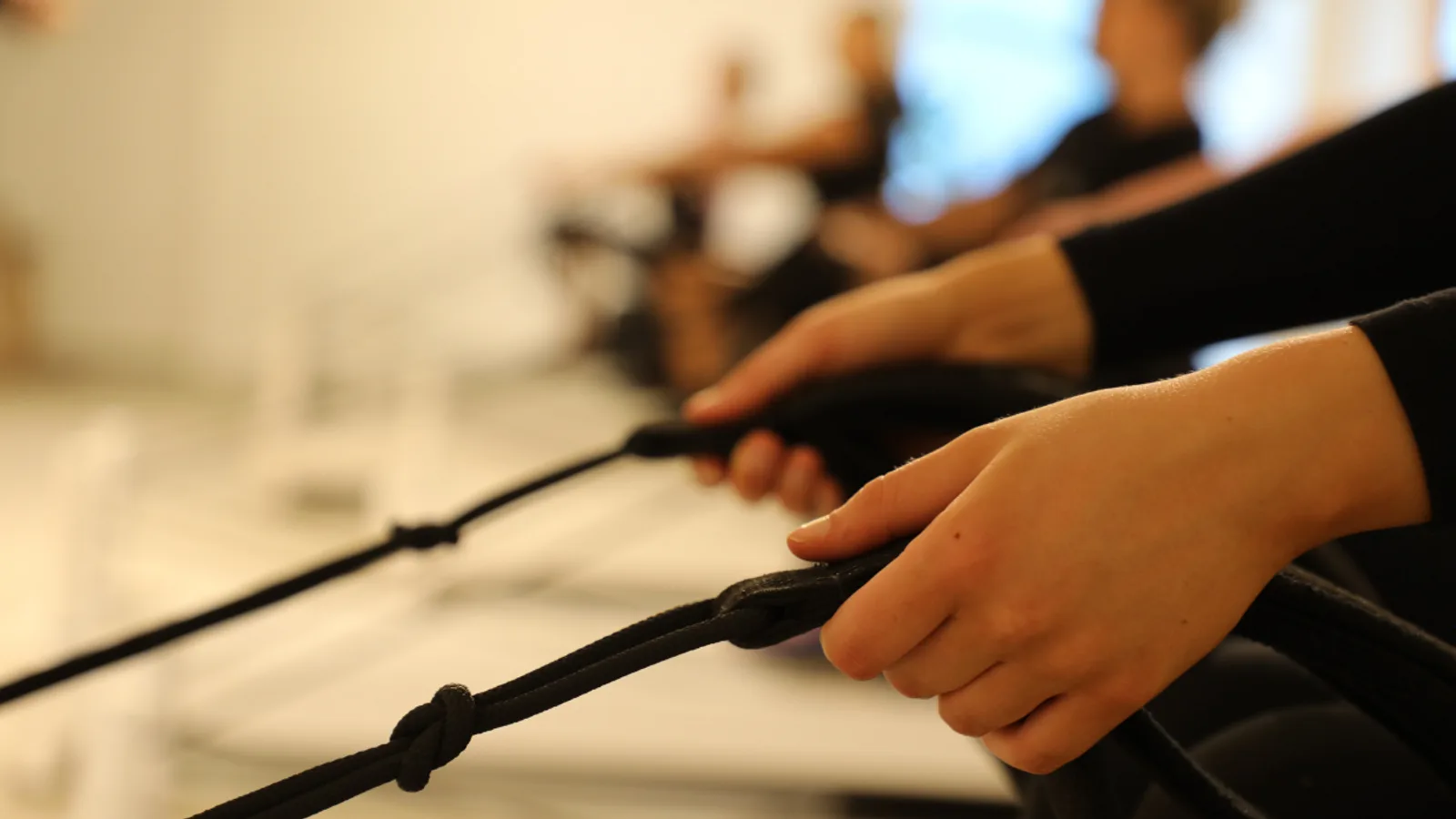
The Reformer looks more complicated than it is. There is a flat moving platform called the carriage, a set of springs underneath that add or remove resistance, a bar at one end for your feet or hands, and two long straps at the other. That is the whole machine.
Your instructor will show you how to adjust your springs before class begins, and they will call spring changes all the way through, so you are never left guessing. A surprise for most new people: lighter springs are often harder, because your body has to do the stabilising work the springs are not doing. So if the person next to you has more springs on than you do, it means nothing about who is working harder.
The first ten minutes
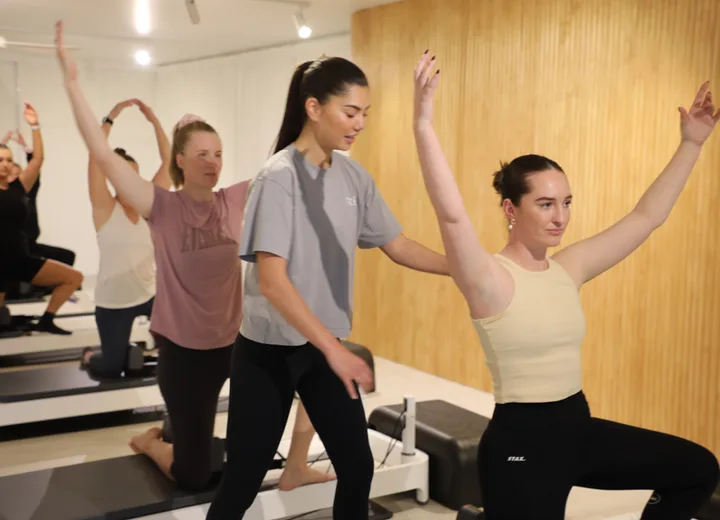
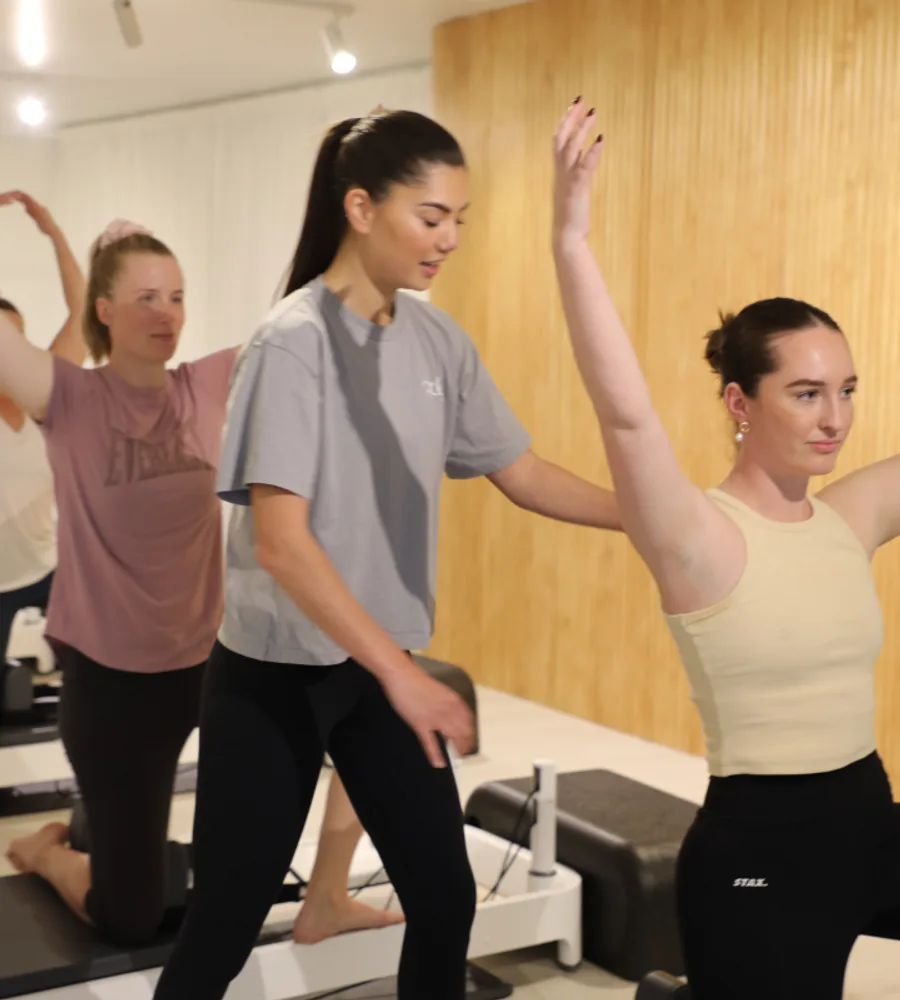
Your instructor knows it is your first class. That is not a small detail. They will keep an eye on you, cue you a little more closely and come past to adjust your setup when something needs a tweak.
Most classes open with footwork. You lie on your back with your feet on the bar and press the carriage out and in. It feels almost too simple, and that is the point. It warms up your ankles, knees and hips, it teaches you how the springs feel, and it gives your instructor a good look at how you move before anything harder shows up.
It is completely normal for an instructor to correct your form during class and to tell you where you should be feeling each exercise. Nobody is singling you out. That coaching is the reason classes here are small, and the regulars will tell you it is the reason they stay.
What you will actually feel
Expect your muscles to shake a little, usually in your legs or your middle. Shaking is not weakness. It is what deep stabilising muscles do when they are asked to work properly for the first time in a while.
Expect to be a beat behind the group on some transitions. Everyone is, in their first class. The choreography of moving between exercises becomes automatic somewhere around visit three or four.
And expect to feel worked without feeling wrecked. Most people walk out of their first class taller, a bit wobbly in the legs and quietly surprised by how much happened in 45 minutes. The soreness that shows up over the next day or two lives mostly in the abdominals, and it is the good kind.
Which class should your first one be?
Start with Control. It is the slowest paced class on our timetable, built around perfecting form and the fundamental movements everything else grows from. You will find the full rundown of all six class styles on our classes page, but for a first visit, Control gives you time to ask questions and get the details right.
Once you feel confident on the machine, a Flow class is the natural next step, and the timetable at both studios gives you plenty of times to choose from, starting at 5:45am for the early risers.
A few small courtesies
Switch your phone to silent before class starts. Sessions begin and end on time regardless of arrivals, and 45 minutes goes quickly when nothing interrupts it. If your plans change, cancel your booking at least two hours before class so someone on the waitlist can take your spot.
That is genuinely all there is to it. Wear something comfortable, bring grip socks and water, arrive ten minutes early and let your instructor do the rest. If you are still deciding whether Pilates is your thing, the 21 day trial gives you unlimited classes at both studios for three weeks, which is enough time to get past the wobbly stage and into the part where you start looking forward to it.