




Trending · 8 October 2026 · 5 min read
Wall Pilates went viral. How does it compare to the studio?
What the TikTok trend gets right, what it misses, and when an instructor matters.
If your social feed has shown you someone doing leg presses against their living room wall lately, you have met wall Pilates, one of the biggest fitness trends of the past few years. The apps have millions of downloads, the hashtag has billions of views, and at least one member a week asks us what we think of it.
Our answer is more generous than you might expect from a Reformer studio, with some honest caveats. Here is the fair assessment.
What wall Pilates actually is
Wall Pilates takes mat Pilates exercises and adds a wall as a prop. Feet press into the wall during bridges and ab work, legs slide up it for stretches, hands brace against it for balance and support.
The wall does two genuinely useful things. It gives your feet something to push against, adding light resistance and stability feedback that a plain mat cannot offer. And it supports positions that would otherwise demand more strength or balance, making some exercises accessible to people who could not yet do the free version.
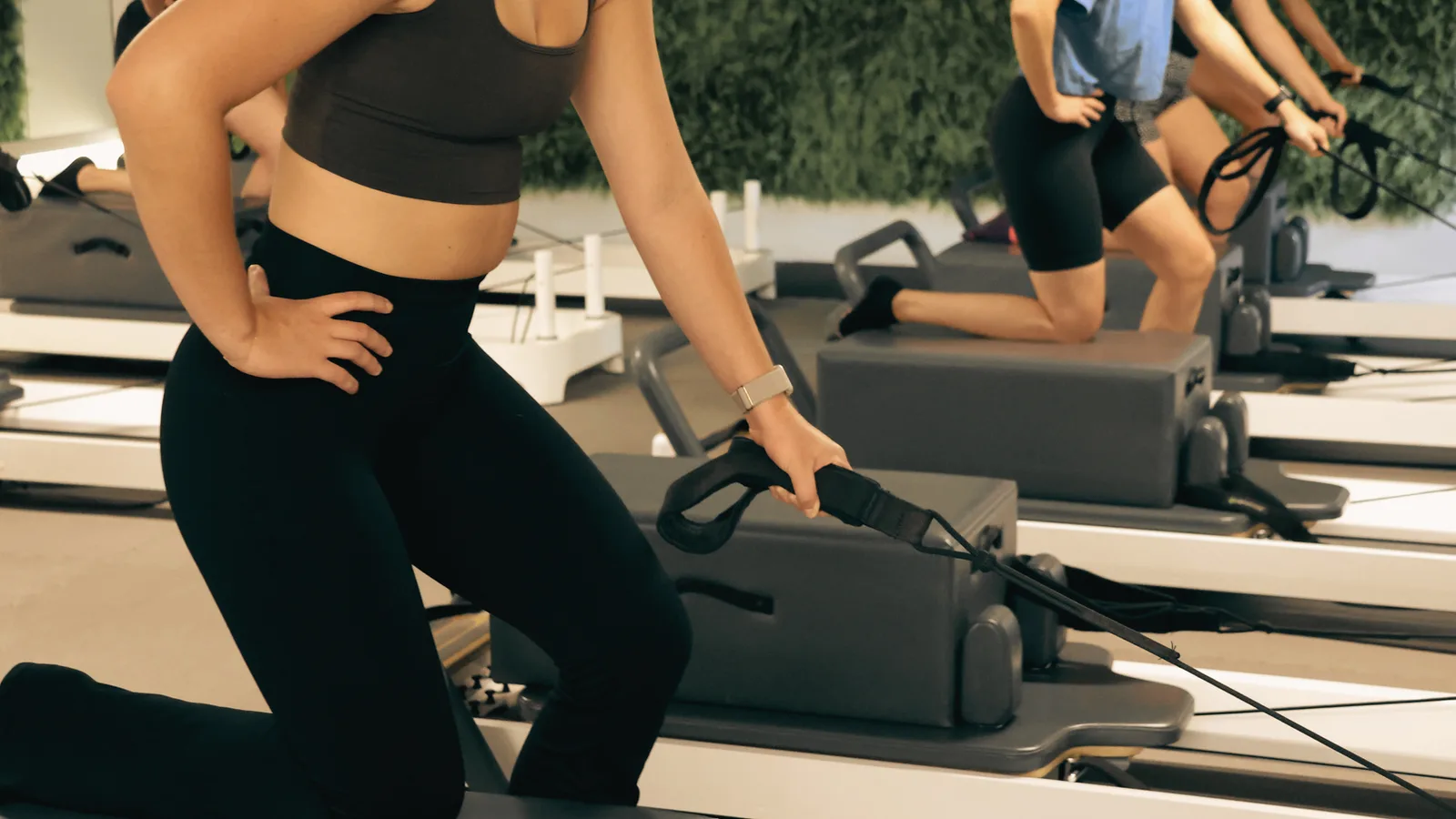
If that logic sounds familiar, it should. Something to push against, adjustable support, help for the positions you cannot hold alone: that is a description of a Reformer, approximated in drywall. Wall Pilates is essentially the flat pack version of what the springs and carriage do properly, which is exactly why the trend does not offend us. It is reaching towards the right idea.
What the trend gets right
Credit where due, and there is real credit.
It gets people moving, at home, for free, with zero intimidation. For someone who would never yet walk into a studio, that is genuinely valuable, and some of our favourite members arrived exactly this way: a viral app got them curious, and curiosity eventually walked through our door on Keira Street.
The exercises themselves are mostly legitimate Pilates repertoire too. Bridges, hundreds, leg circles and wall sits are real exercises with real benefits, and doing them several times a week beats doing nothing several times a week by an enormous margin.
For travel weeks, tight budgets and gentle rehab days, wall work is a perfectly respectable tool. We would rather you did wall Pilates than skipped movement entirely, every single time.
What it cannot give you
Now the caveats, which are structural rather than snobbish.
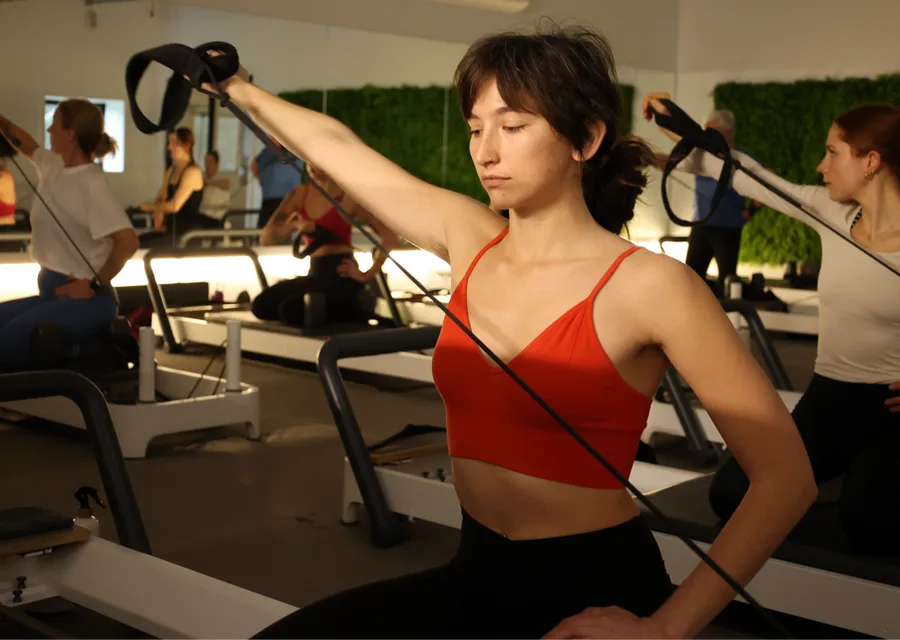
A wall pushes back, but it never pushes first. Spring resistance loads your muscles through the whole range of a movement, growing as you press, resisting your control on the return. That progressive, adjustable load is what builds strength efficiently, and it is the reason the springs are the engine of the method. A wall offers one resistance setting: wall.
Progression is the second wall, so to speak. Training works by gradually asking more of your body. On a Reformer, more is always one spring, one tempo or one variation away. Wall routines run out of road quickly, which is why so many people report the same arc: great first fortnight, plateau by week six, quietly stopped by week ten.
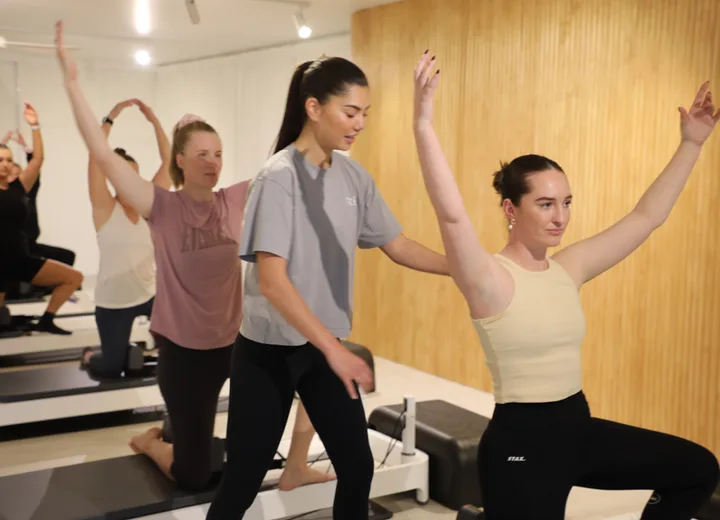
And then there is the thing no app has solved: nobody is watching you. Pilates is a precision method. The difference between an exercise working your deep core and quietly straining your neck is often a two centimetre adjustment that you cannot feel and a camera cannot coach. In our classes, an instructor makes exactly those adjustments all session long, for every person in the room. Videos demonstrate. They cannot correct. Over months, uncorrected small errors do not just slow progress, they become ingrained habits that take longer to unlearn later.
The honest comparison
So the fair summary looks like this. Wall Pilates is a decent entry ramp and a fine supplement. It is free, accessible and better than inactivity. The studio version offers what the trend fundamentally cannot: real progressive resistance, expert eyes on your form, programming that evolves as you do, and the accountability of a booked spot in a room of people who will notice if you stop coming.
They are not really competitors. One is a taste of the method. The other is the method.
Use both, in the right order
Our actual recommendation, which might surprise you: keep the wall.
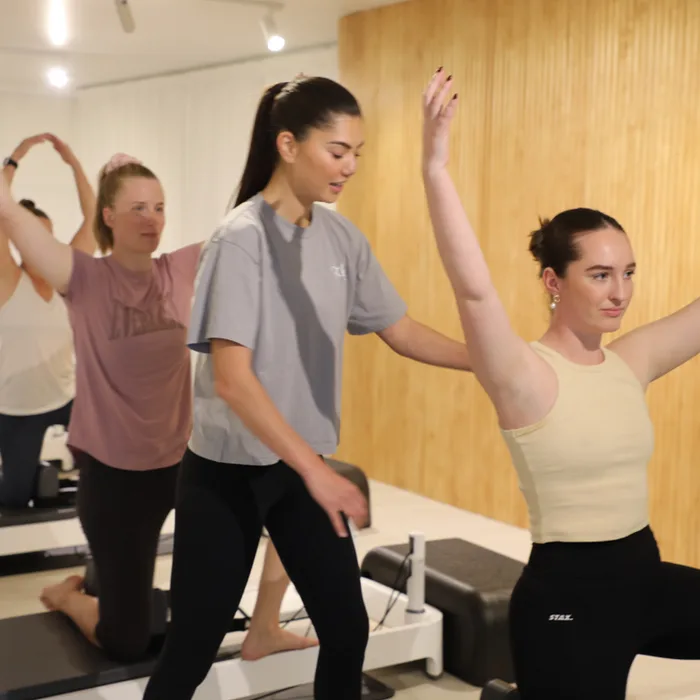
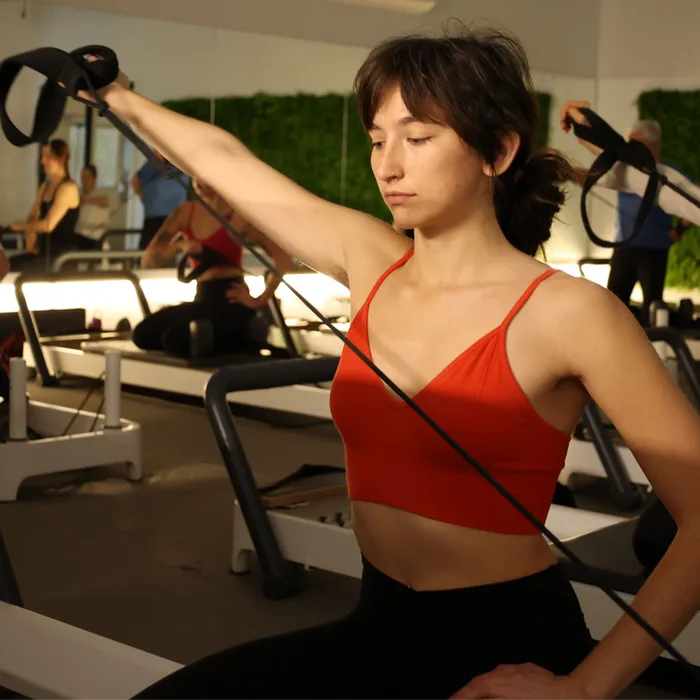
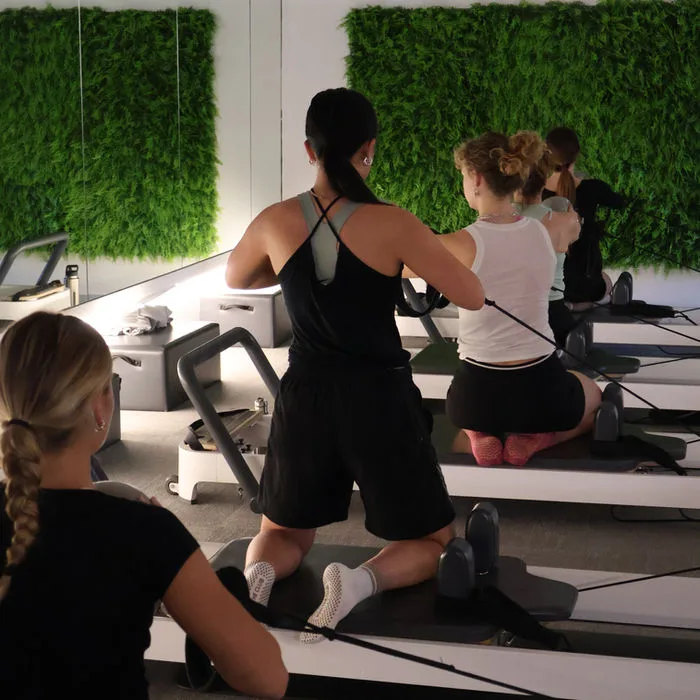
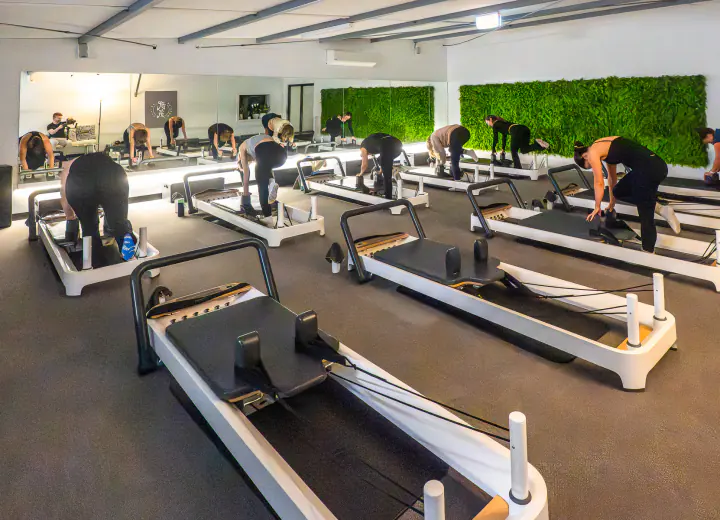
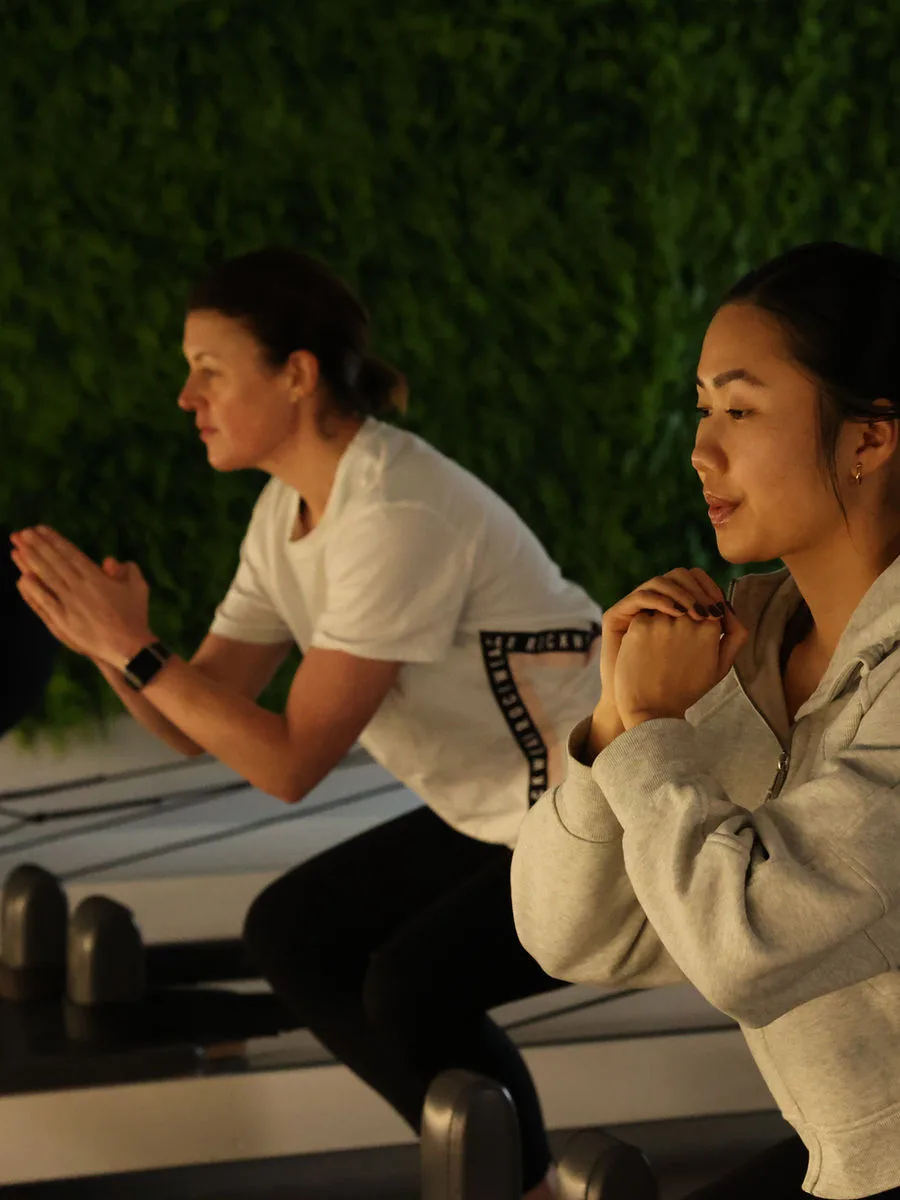
If wall Pilates videos got you moving, that momentum is precious. Bring it to a Control class, where an instructor will take the movements you have been approximating and teach you what they feel like done precisely, on the machine they were reaching towards all along. Most converts describe the first Reformer class as the moment the exercises suddenly made sense, the way hearing a song live explains what the phone speaker was attempting.
Then let the two arrangements share your week. Studio classes as the backbone, where strength gets built and technique gets corrected. Wall and mat work at home between sessions on the days you cannot get in, now performed with the precision your instructor installed. Home practice stops being a plateau and becomes reinforcement, and members who mix it this way progress noticeably faster than either approach manages alone.
From the feed to the floor
Trends come and go, and we have watched a few sweep through since 2016. This one, at least, points people towards something real. If the algorithm has been showing you walls, consider it a sign.
The 21 day trial gives you unlimited classes at our Wollongong and Shellharbour studios for $65, which is three weeks to feel what the wall was imitating. Book a Control class on the timetable, bring your grip socks, and come meet the machine behind the trend.