




Benefits of Pilates · 30 September 2026 · 5 min read
Does Pilates help with weight loss? An honest answer
What classes burn, what they build, and the role of muscle in how you feel and function.
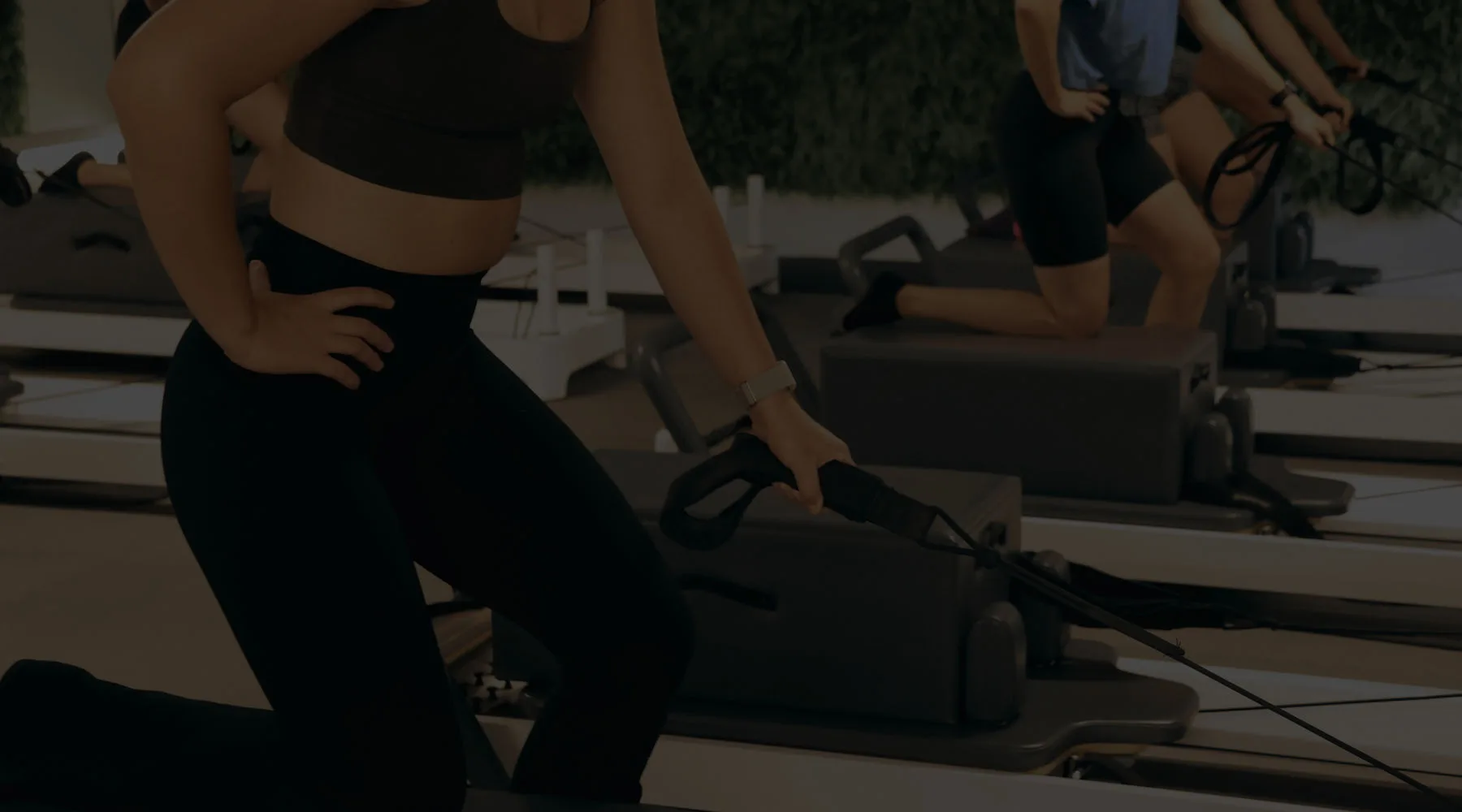
This is one of the most googled questions about Pilates, and most answers to it are either sales pitches or lectures. We would rather give you the honest version, because we think honesty is more useful, and because the true answer is actually better news than the hype.
The short version: Pilates alone probably will not melt kilos off you, but it changes your body composition, your habits and your relationship with exercise in ways that make lasting change far more achievable. Here is the longer version.
The calorie arithmetic, honestly
Weight change ultimately comes down to energy balance over time. A 45 minute Reformer class burns a moderate amount of energy, more than a walk, less than a hard run. A Jump class pushes that higher, a Stretch class sits lower. If burning maximum calories per minute were the only goal, we would tell you to go run hills.
Anyone who promises that Pilates classes alone will produce dramatic weight loss is selling something. What the classes actually do is subtler and, over the long run, more valuable.
Muscle changes the equation
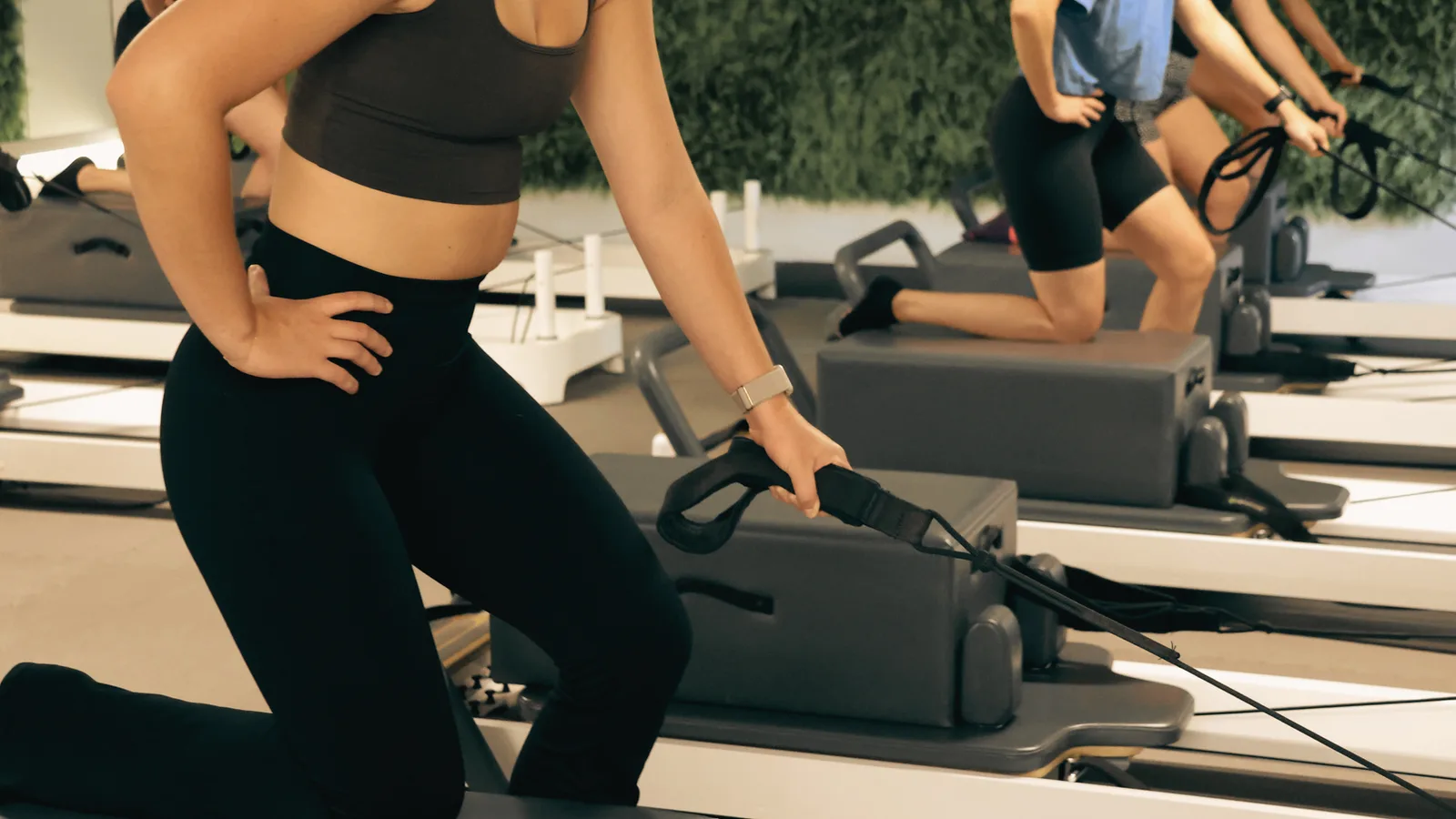
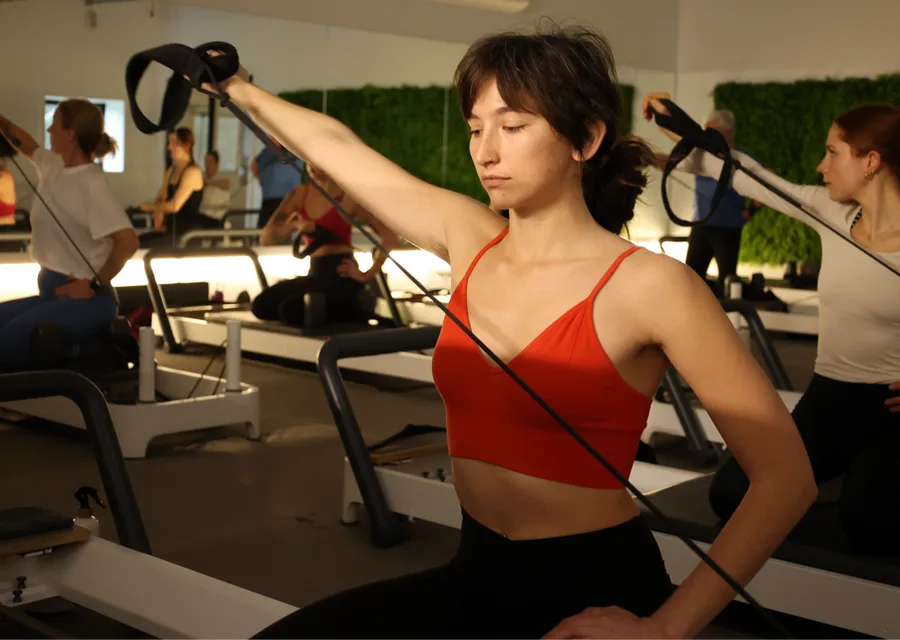
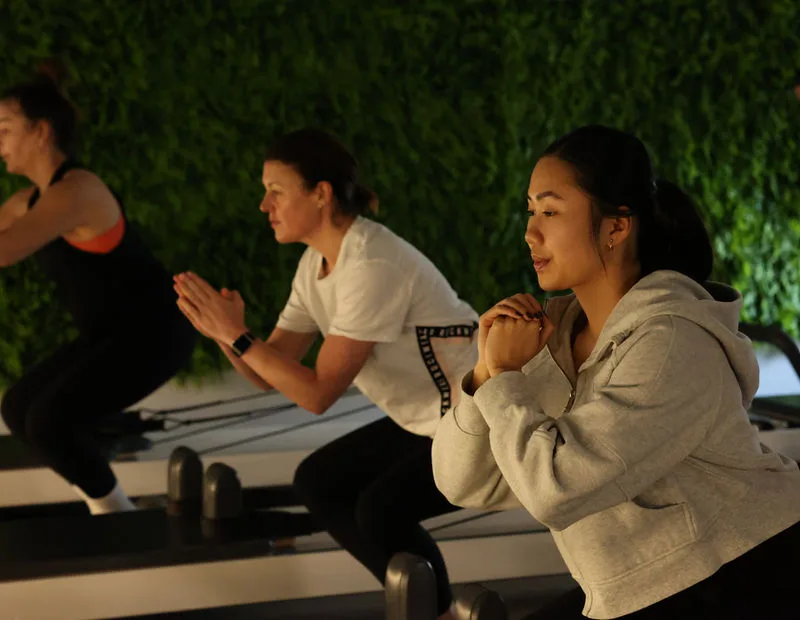
Reformer Pilates is resistance training. Spring loaded, full body, progressive resistance training. And building muscle shifts the arithmetic in your favour in a few compounding ways.
Muscle is metabolically active tissue, so a stronger body uses more energy even at rest. The difference is not enormous per day, but it runs every hour of every day, quietly.
Muscle also changes shape in a way scales cannot measure. A very common story here: a member's weight barely moves in the first months, while their clothes fit completely differently. They are firmer through the middle, their posture has lifted, and they look taller and leaner at the same weight. That is muscle replacing what was lost to years of desks and cars. Stepping on a scale to measure that progress is using the wrong instrument.
Members typically start noticing changes in their abdominals after about ten sessions, which is also roughly when the habit starts feeling like part of life rather than a project.
The consistency effect
Here is the mechanism nobody markets, and the one we would bet on every time: the best exercise for weight management is the one you actually keep doing, and Pilates is unusually easy to keep doing.
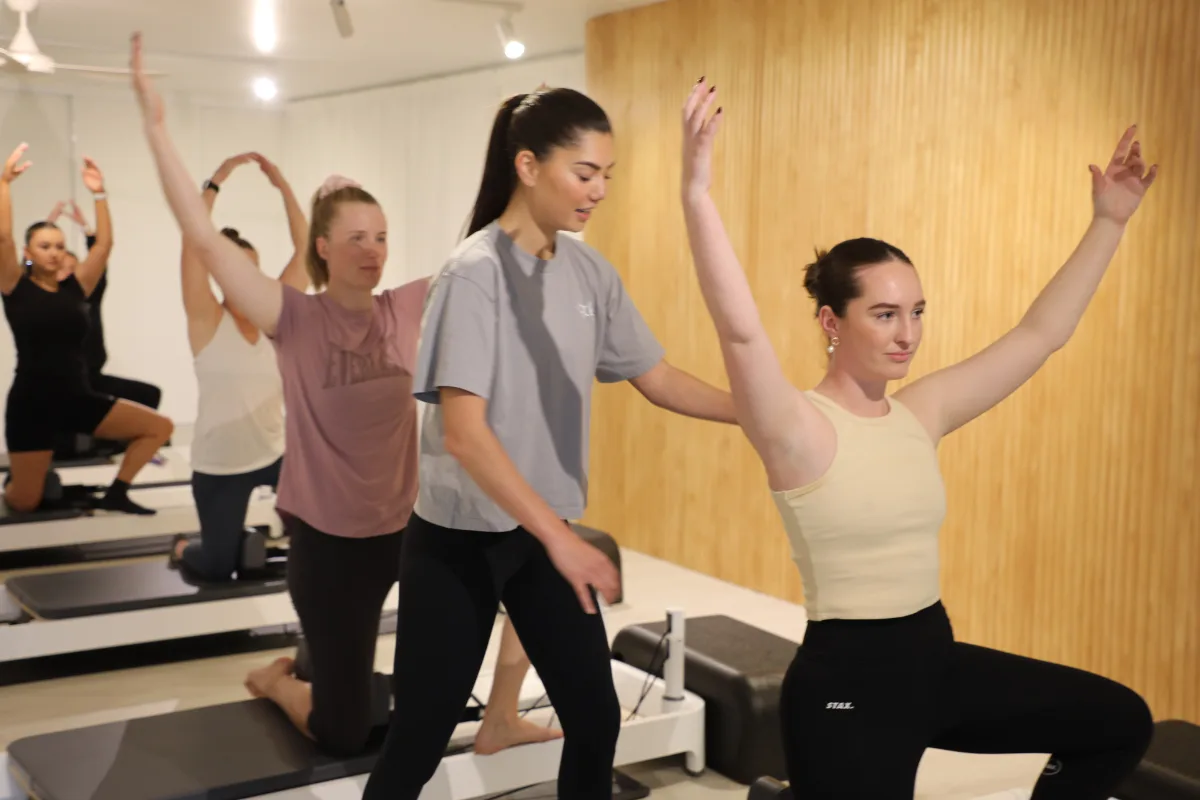
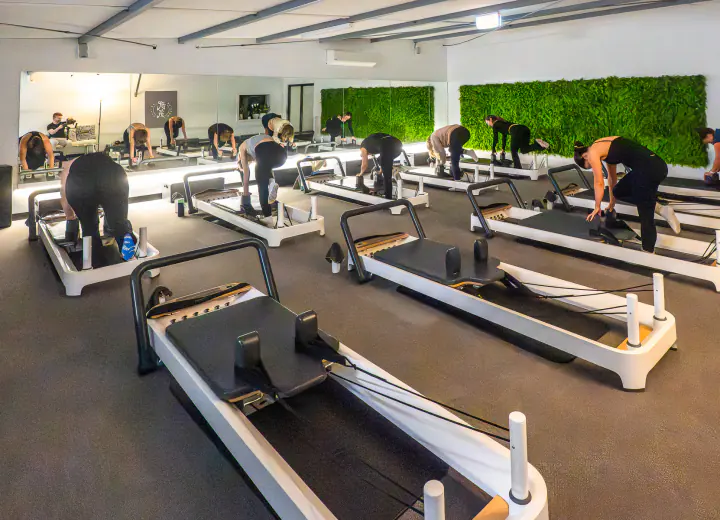
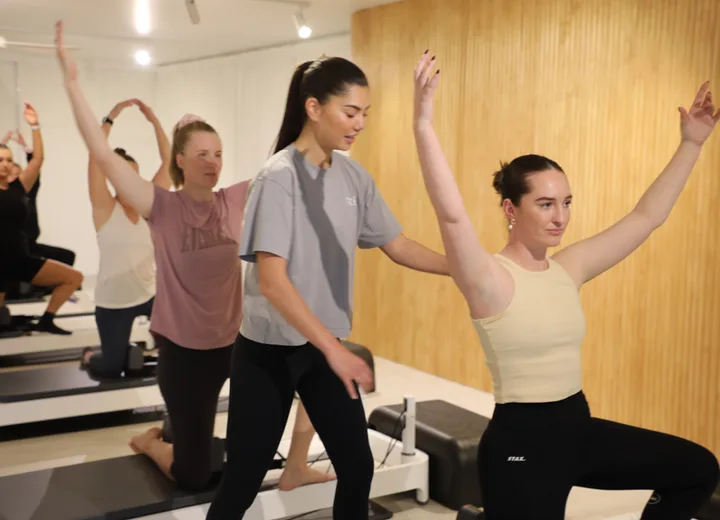
Think about why people quit exercise programs. Injury, boredom, punishing intensity, anonymity. Now look at what a Reformer studio offers instead. Low impact work that spares your joints. Classes that change constantly, taught by an instructor who knows your name and notices when you are away. A booked spot in a small class, which is a commitment device far stronger than a gym membership nobody checks. Six class styles to match your energy on any given day, from Tempo when you are firing to Stretch when you are cooked.
People who join gyms in January famously vanish by March. Pilates members, in our experience since 2016, are still here years later. Whatever the per class calorie difference, consistency wins that contest by a mile.
The appetite and stress angle
There is another quiet contributor. A lot of unwanted eating is stress eating, and Pilates is genuinely good stress management. The breath work, the concentration, the hour where your phone is on silent and nobody can reach you. Members regularly describe class as the most mentally quiet part of their day.
Lower stress and better sleep both correlate with better appetite regulation. We will not overclaim the size of the effect, but everyone who has demolished a packet of biscuits at 9pm after a horrible day understands the mechanism personally. We wrote more about the sleep side in Pilates for better sleep.
What we would actually recommend
If reshaping your body is the goal, here is the combination we would genuinely suggest, no products involved.
- Two to three Reformer classes a week as your strength base. A mix of Flow with some Jump for extra cardio works well.
- Walking on the days between. The Illawarra hands you the coastline for free, and daily walking adds more to the energy side of the ledger than most people expect.
- Reasonable eating you can sustain. Not a dramatic diet. Boring consistency beats heroic fortnights.
- Patience measured in months. Take photos, notice how clothes fit and track how classes feel. Give the scale a rest.
That combination is unglamorous, evidence friendly and extremely repeatable, which is the entire trick.
The reframe that actually sticks
One more thing, offered gently. Many people who arrive wanting weight loss end up caring about it less, not because they gave up but because better goals overtook it. They start chasing their first full teaser, or noticing they can carry all the shopping in one trip, or realising their back stopped hurting somewhere around week six.
Strength, capability and feeling at home in your body are goals that pay out every single week, and weight often drifts in the right direction while you are busy pursuing them. That has been our observation over thousands of members, for whatever it is worth.
Come test it properly
Three weeks is long enough to feel the strength changes begin and to discover whether this is the exercise you would actually stick with, which is the question that matters. Our 21 day trial gives you unlimited classes at both the Wollongong and Shellharbour studios for $65.
Book through the timetable, start with Control, add a Jump class in week two, and judge the results by how you feel climbing the stairs afterwards. The scale was never the interesting measurement anyway.