


Benefits of Pilates · 29 October 2026 · 7 min read
Pilates and balance: why steadiness is worth training now
Balance is a skill you can train at any age. How the Reformer builds steadiness, and what the research says about exercise and falls.
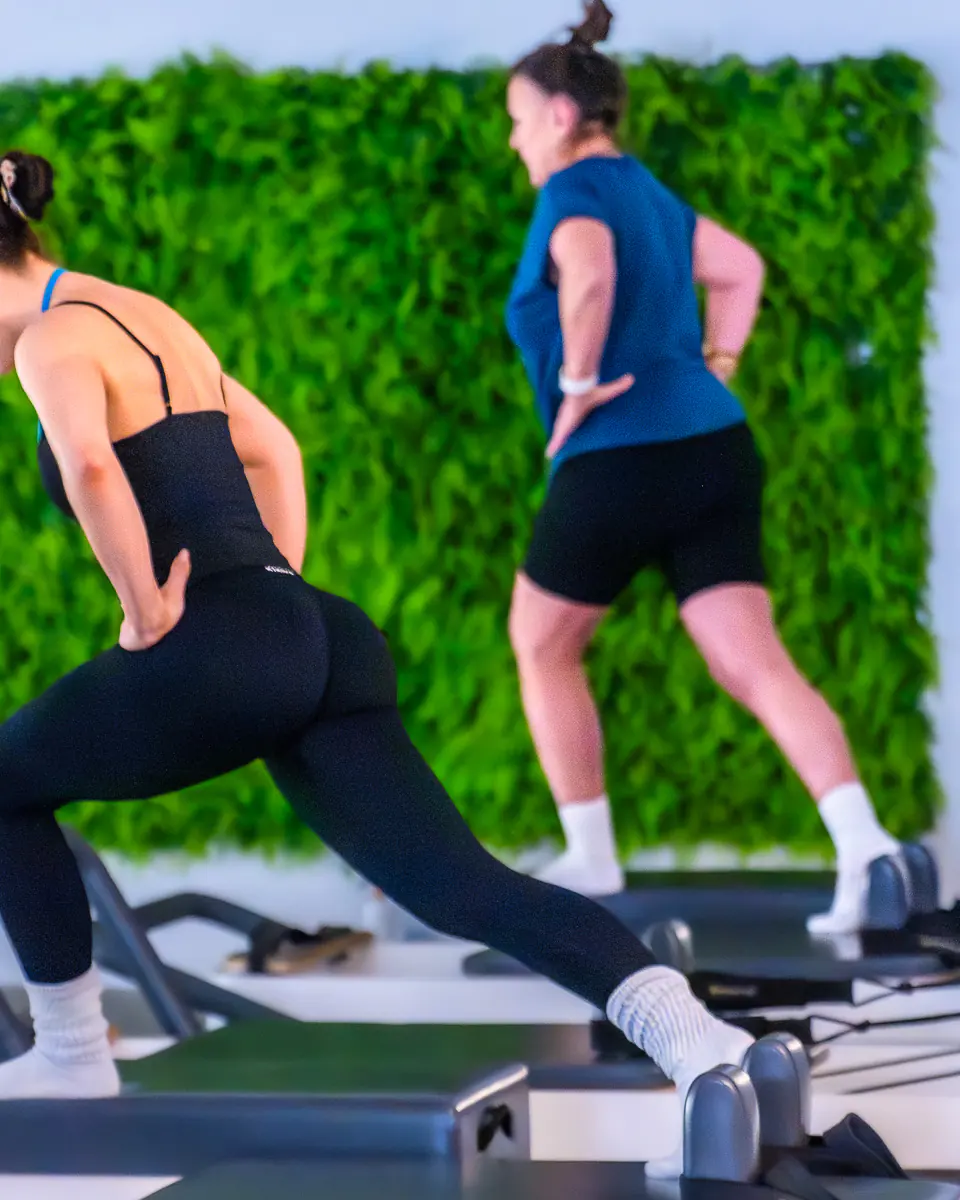
Most of us only think about balance when it goes wrong. A wobble stepping off a kerb, or the careful way you pull on your jeans while leaning against the wardrobe. Balance feels like something you either have or you don't.
It is better described as a skill, and like any skill it improves with practice and fades without it. The good news is that a Reformer class is one of the most efficient balance sessions you can book, even though nobody walks in calling it that. This article explains why, and what you can expect to notice.
What balance is made of
Staying upright is a team effort between several systems in your body. Your eyes tell you where the horizon is. Your inner ear senses tilt and speed. Sensors in your joints and muscles report where each part of you is in space, a sense called proprioception. Then your muscles have to respond to all of that information quickly and with the right amount of force.
When any part of that chain gets lazy, balance suffers. Long days of sitting mean your ankles and hips rarely have to make small corrections. Weak glutes and a weak trunk mean your body takes longer to catch itself. Over years, those small losses add up, which is why balance tends to decline gradually with age unless you give it a reason not to.
Training balance means giving every link in that chain regular, safe practice. Pilates happens to do that in nearly every exercise.
Why the Reformer is a balance machine
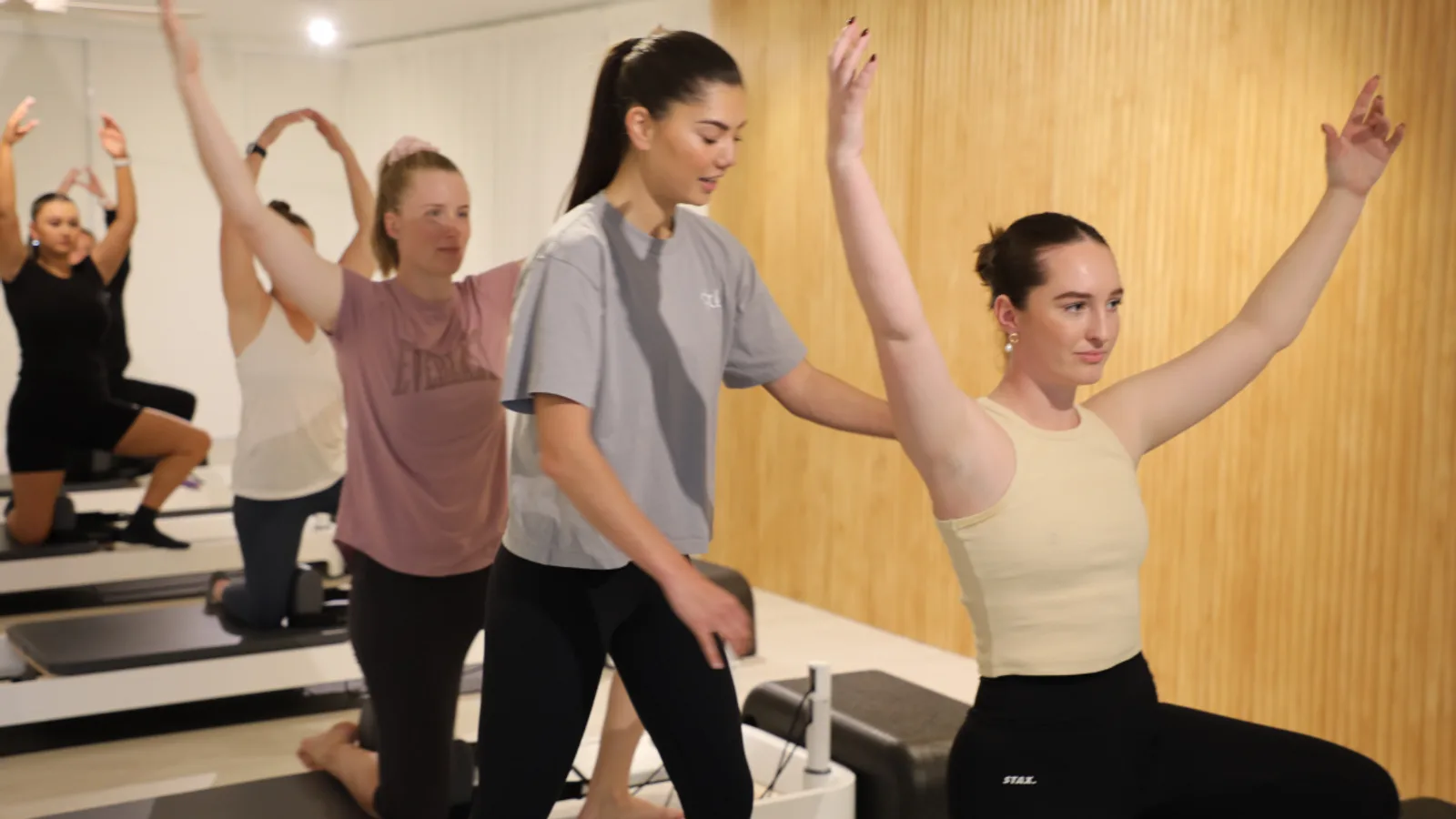
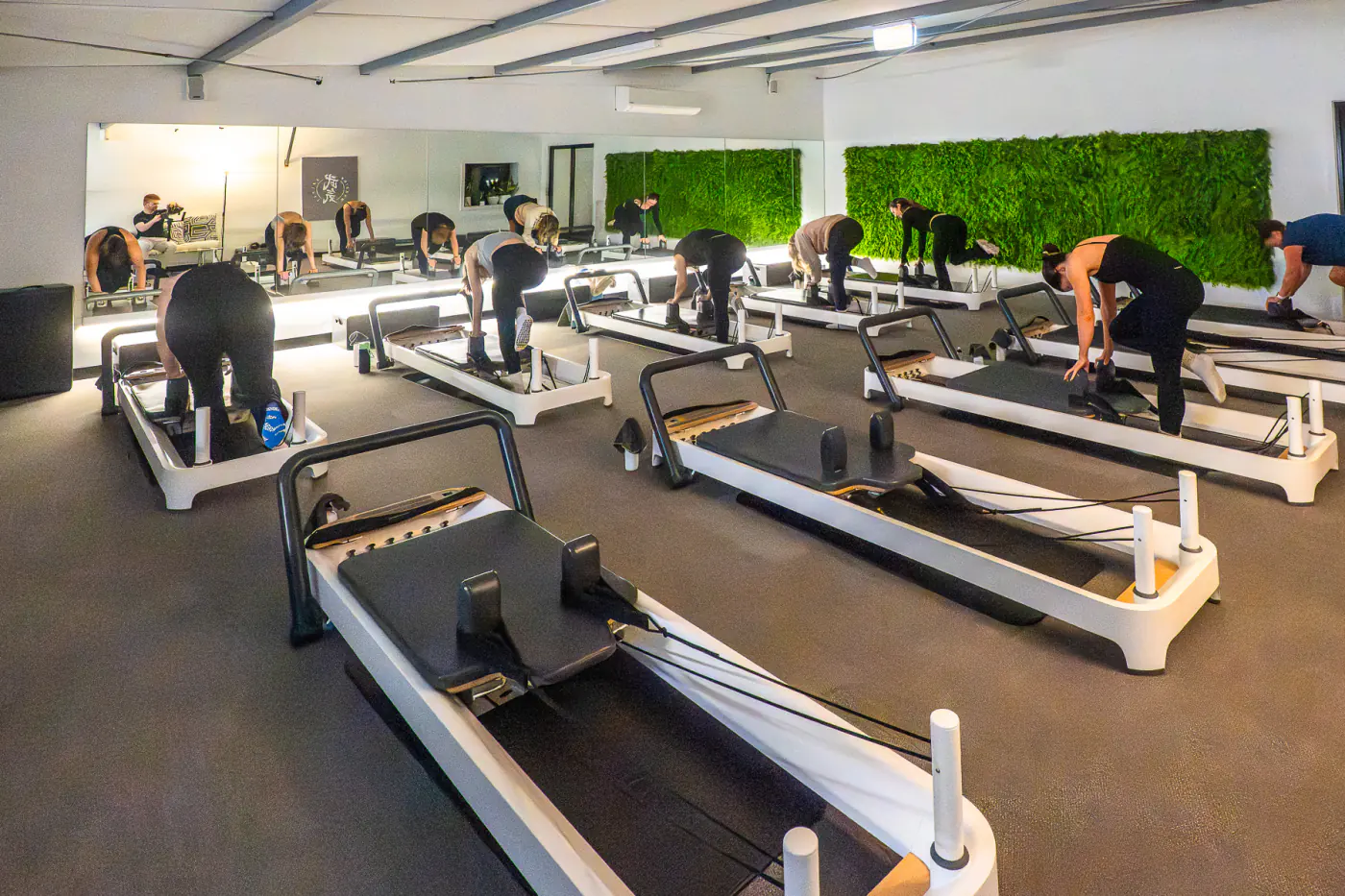
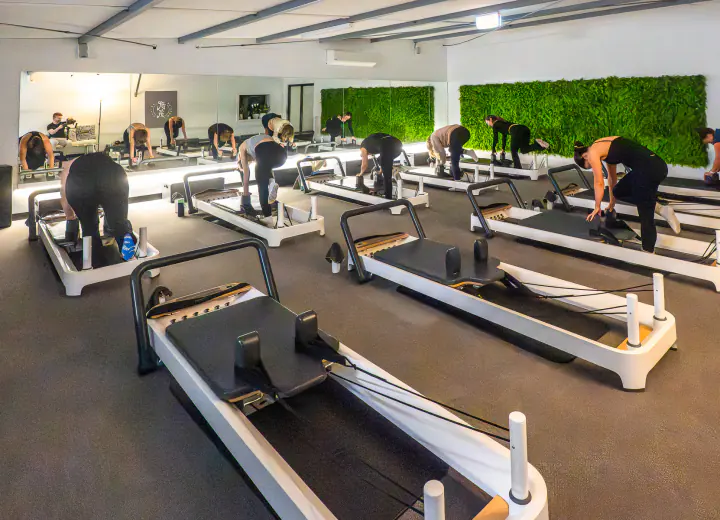
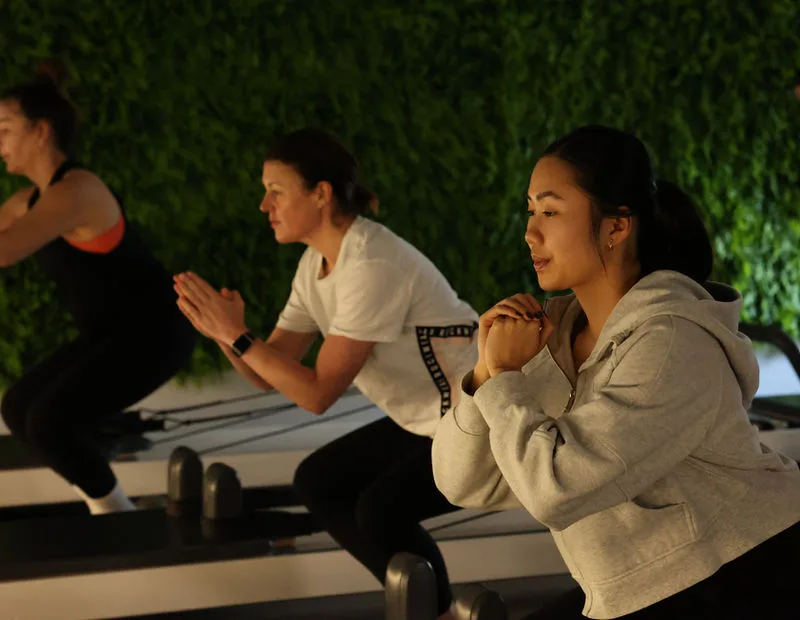
The carriage on a Reformer moves. That one fact changes everything about how your body works on it. When you kneel or lunge on a surface that can slide, your deep stabilising muscles have to switch on to keep you still while the bigger muscles do the visible work.
A few examples from a typical class:
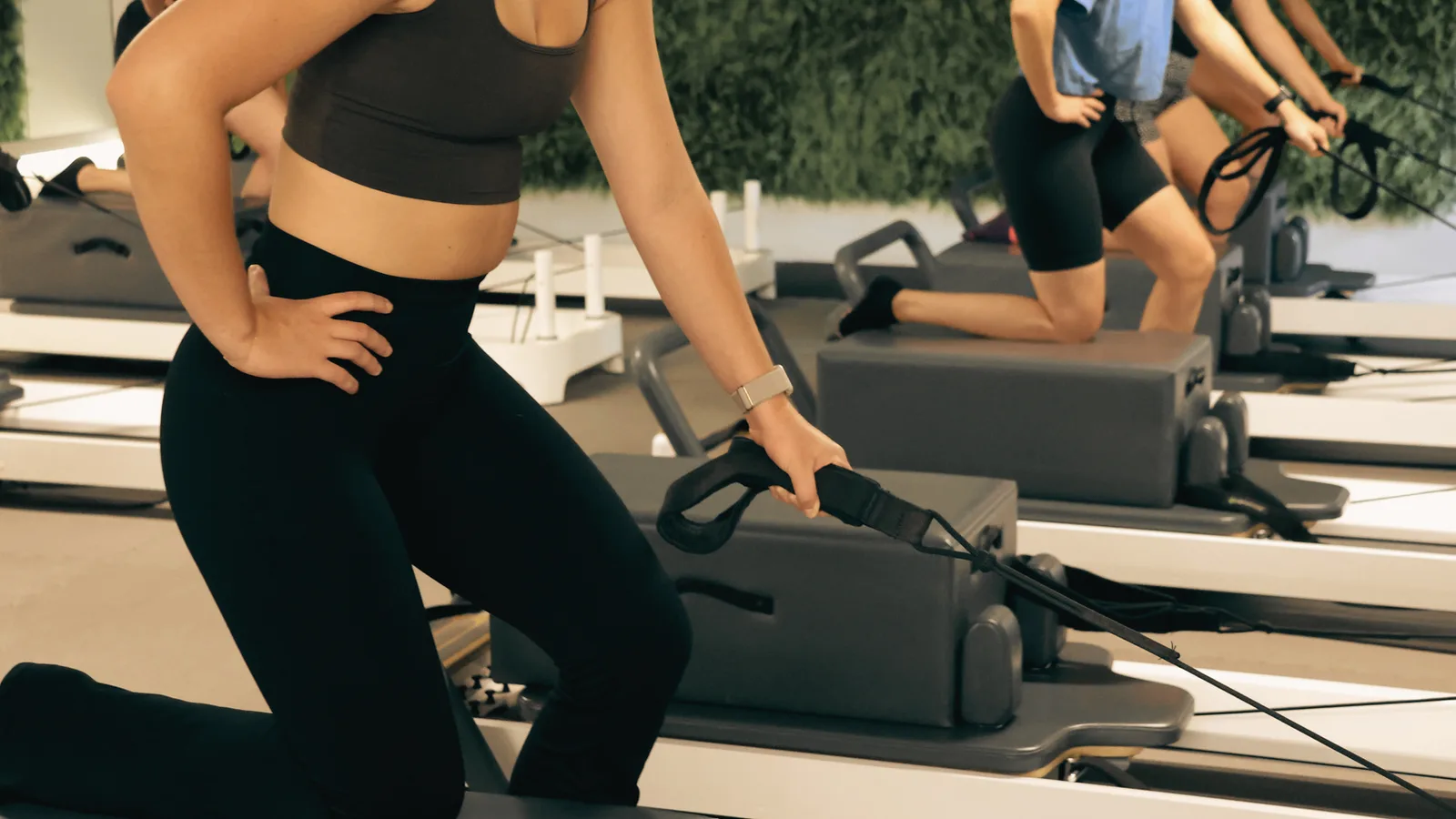
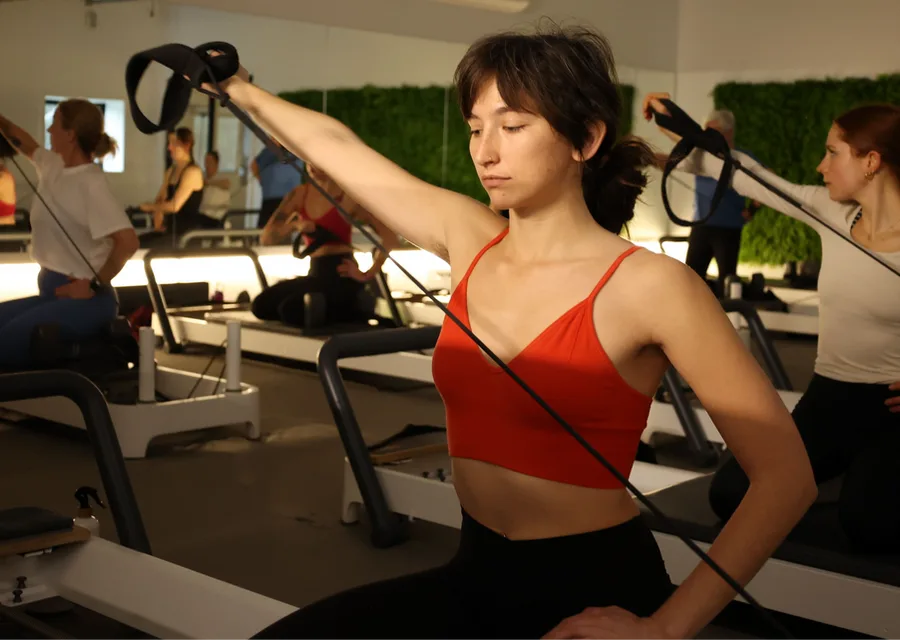
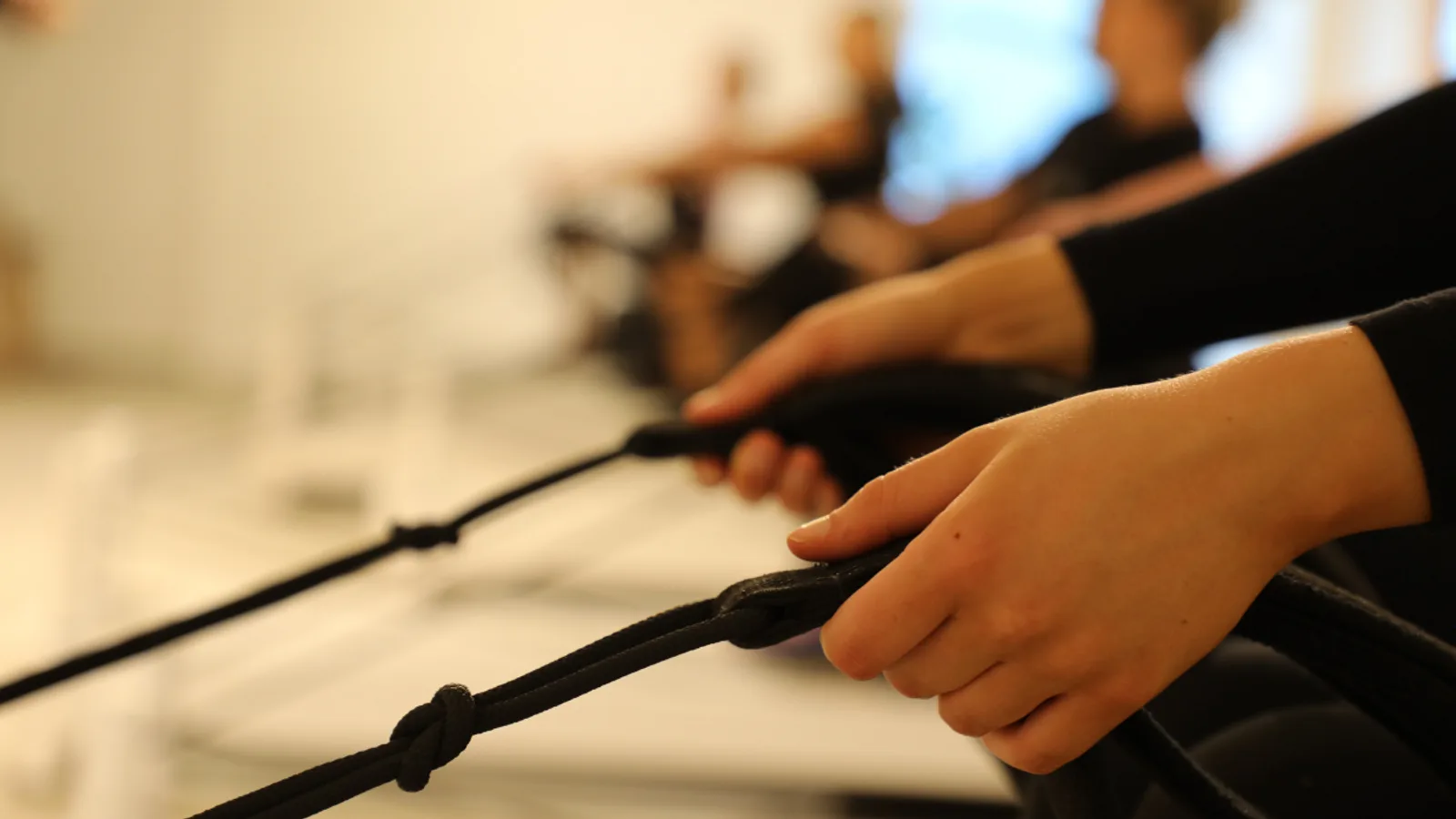
- Kneeling arm work. Kneeling on the carriage while you draw the straps forward asks your trunk to hold you steady against a moving base. Your hips and abdominals do most of the balancing, and you will feel it even though your arms appear to be doing the exercise.
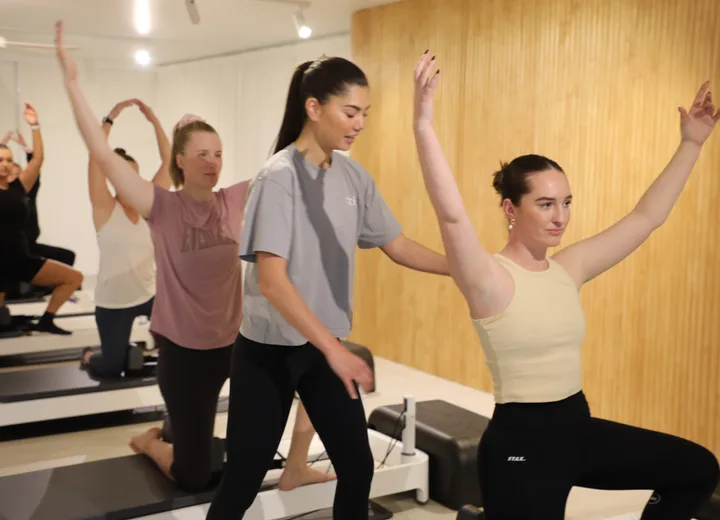
- Standing lunges. One foot on the platform, one on the carriage, with the springs pulling. This trains single-leg control in a way that maps directly onto walking and stepping in and out of the car.
- Work on the box. Sitting or kneeling on the box lifts you off the carriage and narrows your base of support, so small shifts become obvious and your body has to correct them.
- Single-leg footwork. Pressing out with one leg at a time shows up any difference between sides, and trains your knee to track over your foot under load.
Springs add something a mat cannot. Because the resistance changes as you move, your muscles are constantly adjusting rather than holding one fixed effort. That steady stream of small corrections is the raw material balance is built from.
What the research says
Balance training has strong evidence behind it, particularly for falls. A 2019 Cochrane review, which pooled 108 trials involving more than 23,000 people with an average age of 76, found that exercise reduces the rate of falls in older people living in the community by around 23 per cent. The reviewers rated the evidence for programs that include balance and functional exercises as high certainty.
Pilates research specifically is smaller but encouraging. A 2023 systematic review and meta-analysis of randomised trials, published in the journal Healthcare, concluded that Pilates programs improve balance in older adults. Many of the individual trials in this area are small, so we treat it as a promising sign rather than a final word.
You don't need to be 76 for any of this to matter. Balance built in your thirties and forties is balance you carry into your sixties and seventies. Starting early simply means you are maintaining a skill instead of trying to win it back.
How you will notice it changing
Balance improvements are sneaky, because you rarely notice the stumble that didn't happen. The changes tend to show up in everyday moments instead.
Putting on socks and shoes while standing becomes easy. Carrying shopping up stairs feels steadier. Walking on soft sand or uneven bush tracks stops feeling like a negotiation. If you surf or run, you may feel more planted, and if you chase toddlers around, you may find you recover faster from awkward lunges and grabs.
Inside the studio, the signs are just as clear. The kneeling exercises that made you grab the frame in week one start to feel calm. You stop needing a hand on the footbar during standing work. Your instructor might add a variation that narrows your base or takes away a point of support, which is a good sign they think you are ready.
A simple home check
If you like a baseline, try this before you start a block of classes and again a couple of months later. Stand near a kitchen bench so you can grab it if you need to. Lift one foot a few centimetres off the floor and time how long you can stay steady without touching anything. Repeat on the other side. Then, if that felt easy, try it with your eyes closed.
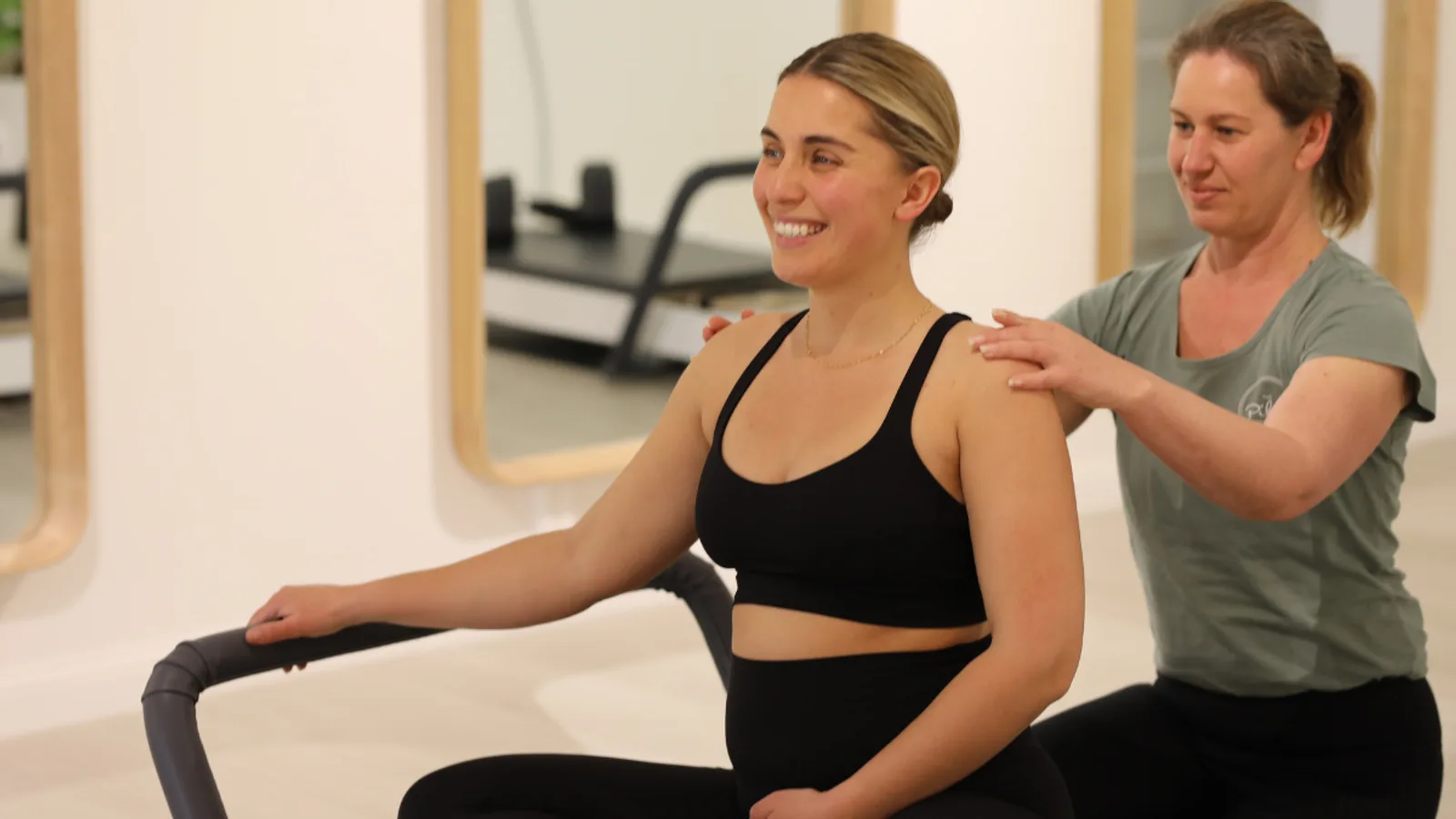
Write the numbers down and forget about them. Retesting after eight to ten weeks of regular classes is a nice way to see progress that a mirror won't show you. If you find standing on one leg very difficult, or you have had falls or dizzy spells, talk to your GP or physio before you start any new program, and let your instructor know so they can set you up safely.
Getting the most out of balance work in class
A few habits make a real difference.
- Slow down when the base gets small. Kneeling and standing exercises reward control over speed. If you are wobbling, reduce the range before you reduce the focus.
- Use your eyes. Pick a fixed point ahead of you during standing and kneeling work. It gives your brain a reference while your muscles learn the job.
- Hold the frame when you need it. Holding on is a tool, and instructors would much rather you use it than strain to stay upright. Let go a little at a time as you get steadier.
- Notice your weaker side. Most people have one. Take note of it and give that side your best attention instead of rushing to get it over with.
- Book a Control class now and then. Our slowest class gives you time to settle into each position, which is when balance work does its best teaching.
Which classes suit balance training
Every Reformer class at our studios includes balance work in some form, because the moving carriage makes it unavoidable. Control is the best place to learn the positions properly. Flow builds on them with longer sequences and more transitions. On the mat, Yoga adds standing balances and slow transitions that complement Reformer work beautifully. You can read more about the six styles on our classes page.
Start building it this spring
Balance is one of those qualities you don't miss until you need it, and by then it takes longer to rebuild. A couple of classes a week is plenty to start making a difference, and both studios run sessions from 5:45am on weekdays, so it can fit around work and school runs.
If you are new, the 21 day trial gives you unlimited group classes at Wollongong and Shellharbour for $65, with no membership and no lock-in. Pick a Control class on the timetable, tell your instructor it's your first time, and start training the skill that keeps you on your feet.