



Getting Started · 25 October 2026 · 5 min read
Coming from the gym? What to expect from Reformer Pilates
Lifters often expect Pilates to be easy. What is different on the Reformer, and the mistakes gym regulars make in their first few weeks.
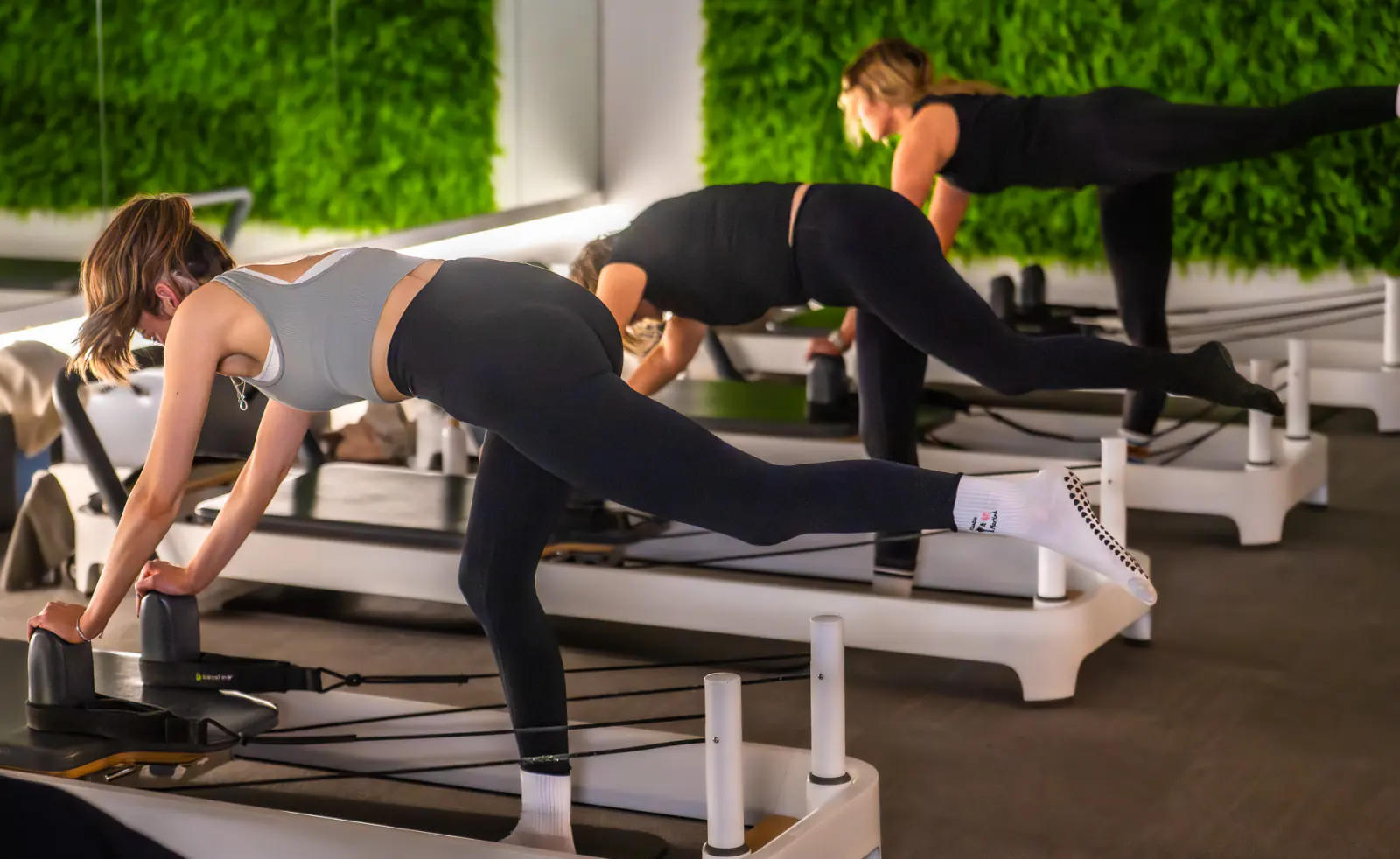
If you already train in a gym, walking into your first Reformer class feels familiar and unfamiliar at the same time. You know what a lunge is, and you have held more planks than you can count. Then the instructor puts you on a light spring, asks you to do something slowly, and your legs start shaking in a way they haven't since your first week of squats.
That surprise is common, and it is a good sign. Pilates trains your body in a different way from most gym work, and those differences are the reason so many lifters and runners end up keeping it in their week. This guide covers what changes and what carries over, along with how to get the most from your first few weeks.
What feels different
Springs instead of plates
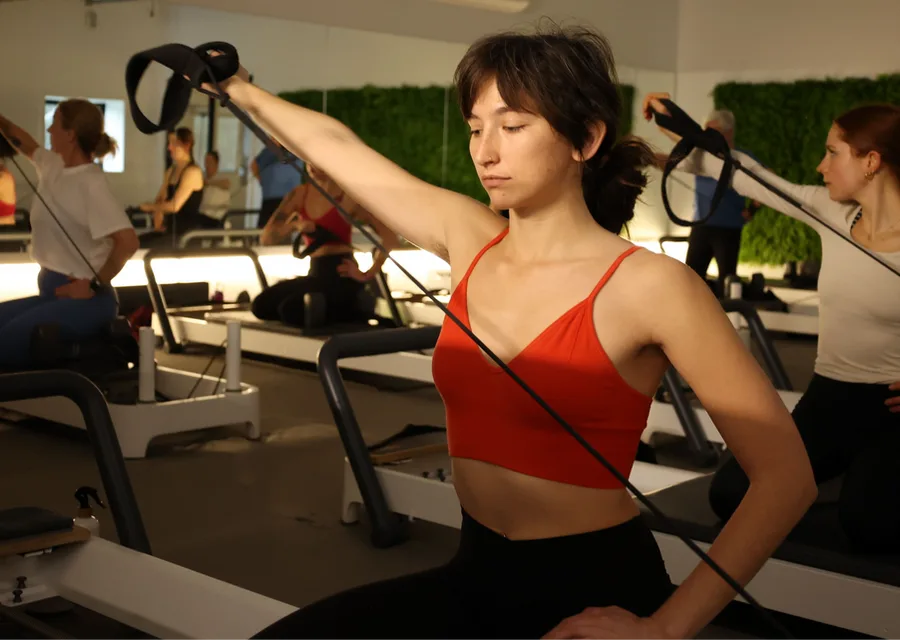
A barbell or dumbbell has a fixed weight. Springs work differently. The resistance increases the further you stretch them, so an exercise gets harder towards the end of the movement and pulls you back on the return. You have to control the load in both directions, and you can't let gravity do half the job.
That means a spring setting that looks light can feel heavy, especially on the way back. If you are used to judging an exercise by the number on the plate, expect to recalibrate. Our article on what all those springs do explains how they work.
Lighter is sometimes harder
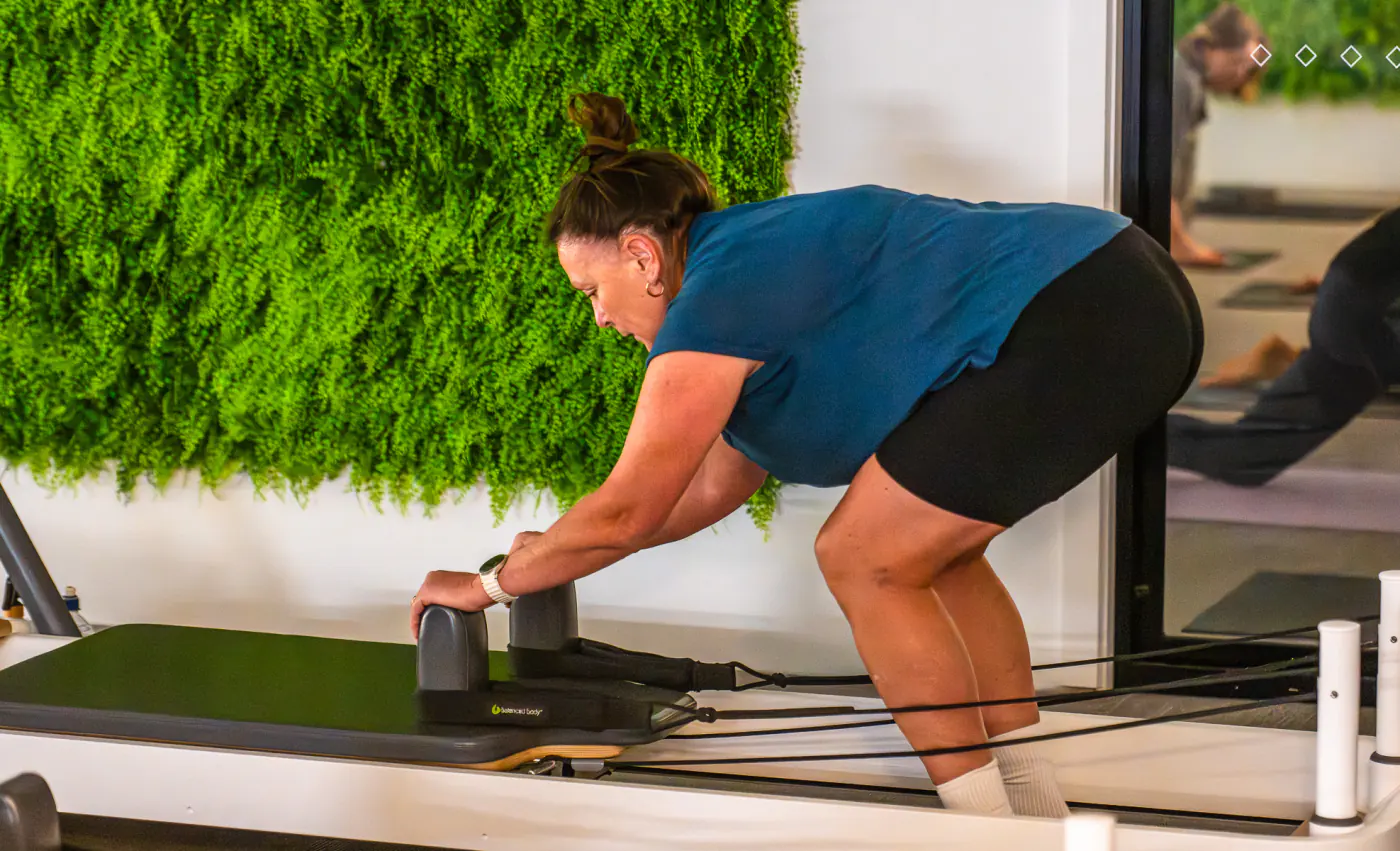
On the Reformer, a lighter spring can make an exercise more difficult. Planks and kneeling exercises are a good example. With less spring tension, the carriage is freer to move, so your trunk has to work harder to keep it still. This catches nearly every gym regular out at some point, so don't assume the heaviest setting is the "advanced" one.
Tempo matters
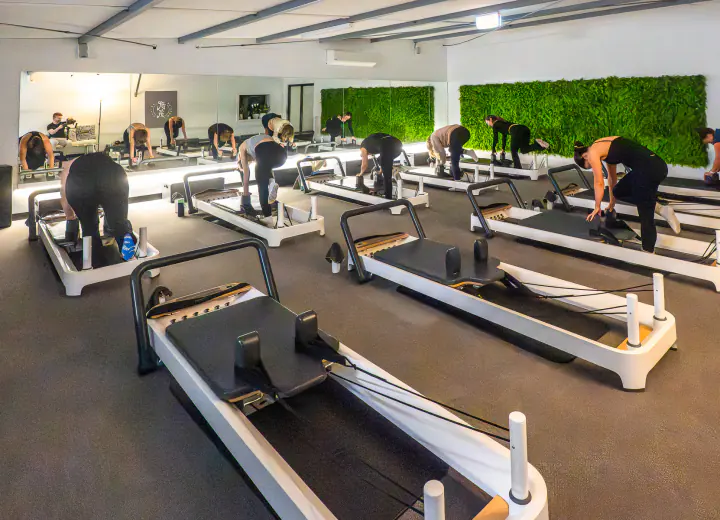
Most Reformer work is slow and controlled. You might take three or four counts to press out and the same to return. Time under tension is high and rests are short. The class moves from one exercise to the next with little downtime, so your heart rate stays up more than you might expect from a slow class.
The small muscles show up
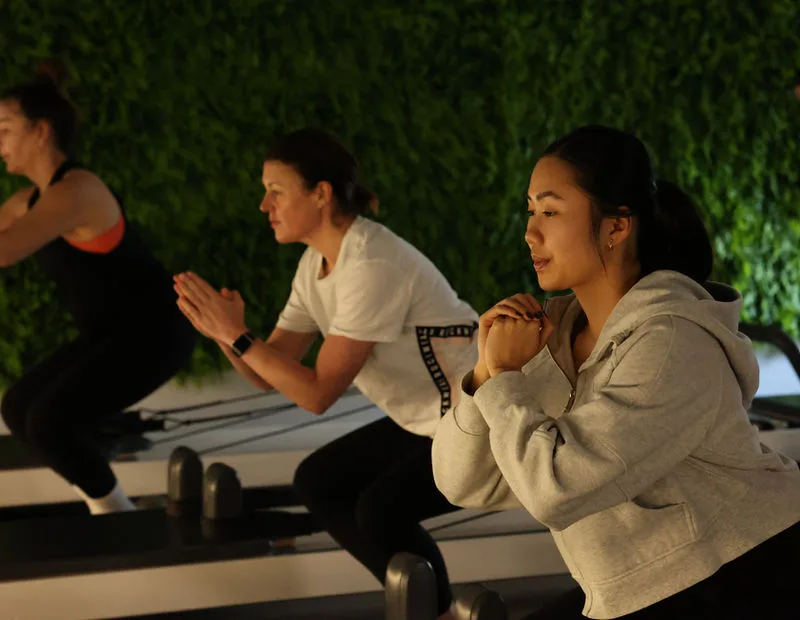
Gym training is great at building the big movers. Pilates spends a lot of time on the muscles that stabilise your hips and spine. On a moving carriage, those muscles have to work in every exercise. You may find that your biggest lifts don't help much when a deep hip stabiliser has never been asked to work on its own.
It is coached
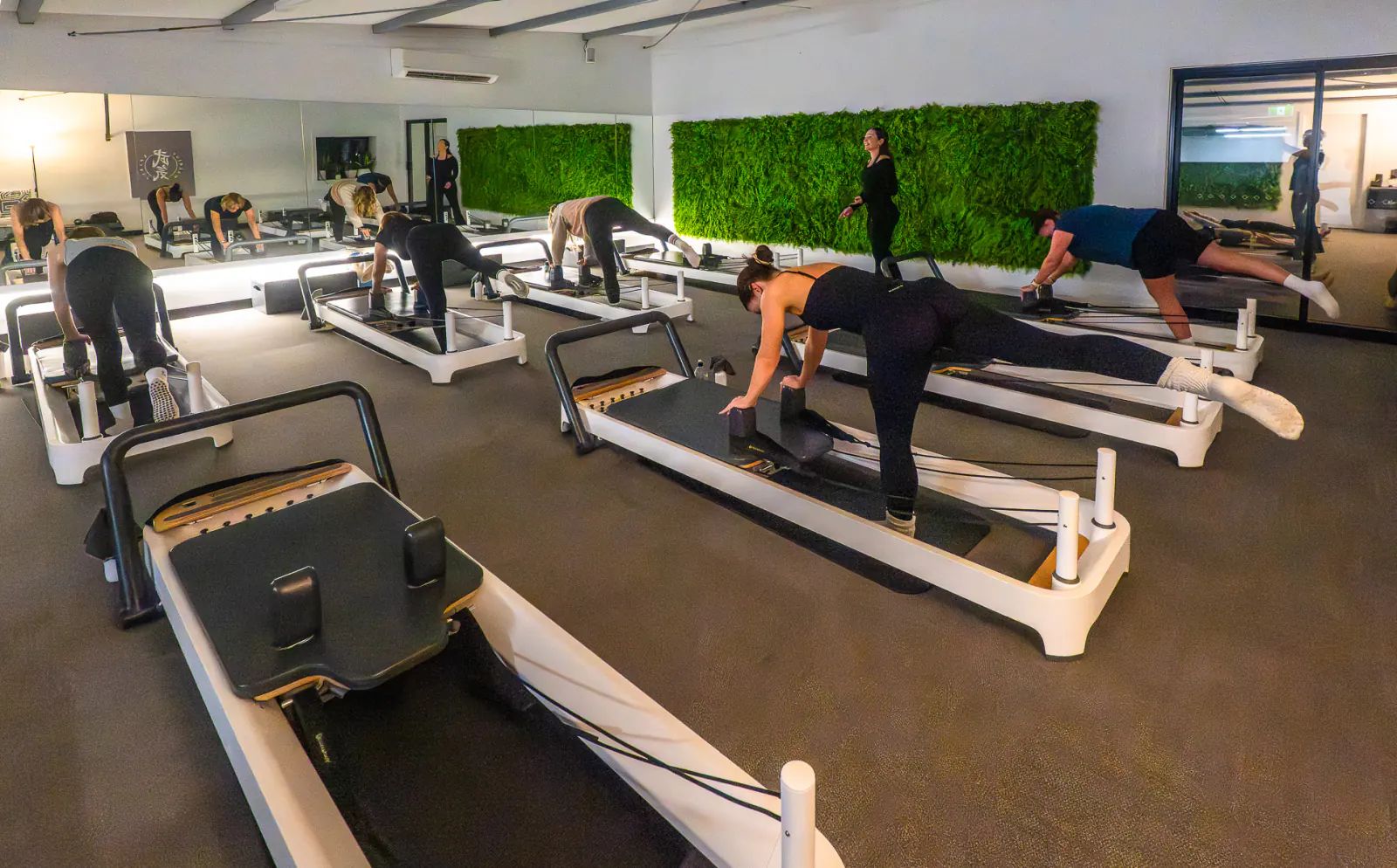
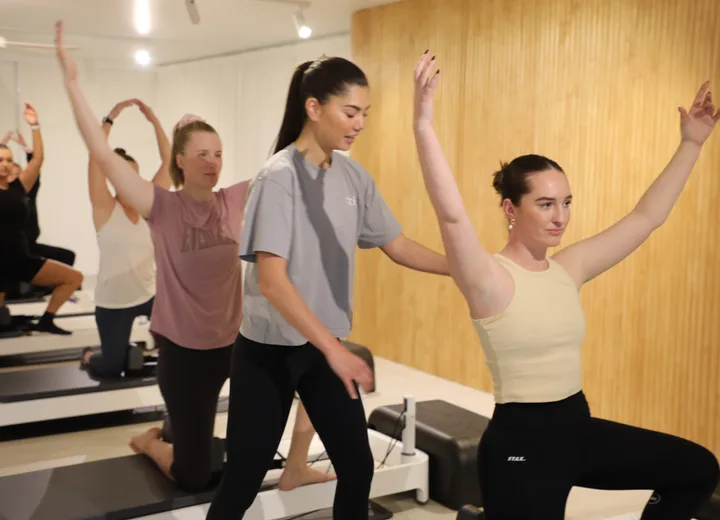
Classes are small, and instructors correct your technique throughout. If you are used to training alone with headphones in, the steady stream of cues can feel strange at first. Most people come to love it, because it picks up habits a mirror never shows you.
What carries over
Plenty of what you have built in the gym is useful on the Reformer.
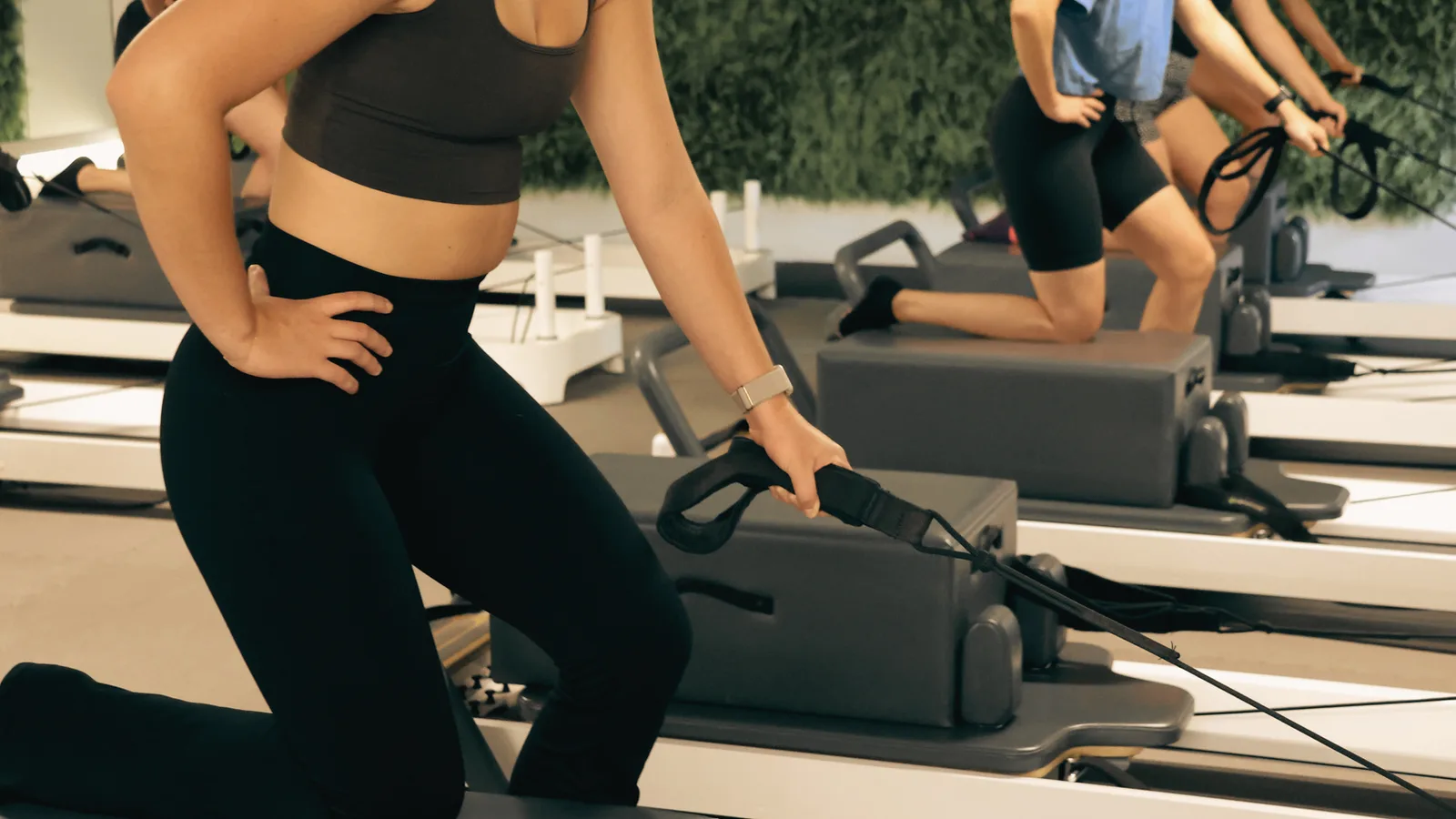
- Strength. You will have a head start on many exercises, particularly leg work and pulling movements with the straps.
- Body awareness. If you have learned to brace for a squat or keep a neutral spine during a deadlift, you already understand some of the key Pilates ideas.
- Work ethic. You know how to stay with an uncomfortable set. That helps when the shaking starts.
Common mistakes in the first few weeks
- Going too heavy. It is tempting to add springs to make an exercise feel "real". More load often means less control, which defeats the point. Use the setting your instructor suggests.
- Rushing the return. In the gym, the lowering phase is often where people get lazy. On the Reformer, controlling the carriage home is half the exercise.
- Gripping and bracing everything. Lifters are used to bracing hard. Pilates usually asks for a lighter, more continuous engagement so you can still breathe and move well.
- Holding your breath. Breathing is cued for a reason. A long exhale on the effort helps your trunk muscles work without building up excess pressure.
- Skipping Control. Even if you are fit, start with our Control classes. They teach the positions and the cues, and the technique you learn there makes every other class work better.
- Letting the neck do the work. In curl-up exercises, lifters often pull with the neck and jaw. Keep your eyes on your knees and let the abdominals lift you, even if the range is smaller at first.
Fitting Pilates around your training
You don't need to give up the gym. Pilates fits alongside lifting and team sport, and many people find it improves the rest of their training. A few ways to make it work:
- Use it on lighter days. A Flow or Stretch class makes a good option between heavy sessions.
- Avoid stacking it after leg day. A hard Reformer class straight after heavy squats can leave your legs too tired to keep good form. Give yourself a day if you can.
- Use it to work on weak links. If you know your hip stability or shoulder control lets you down in the gym, mention it to your instructor. They can point out which exercises target it.
- Pair it with Mpower. Our Wollongong studio has Mpower Martial Fitness on site, with Box, Build & Burn small group sessions. Combined memberships are available at a major discount if you want conditioning and Pilates in one place. Contact us to ask about them.
What to expect after a few weeks
You may notice changes within the first month. Single-leg exercises start to feel more stable, and overhead work can feel smoother as your shoulder blades learn to move well. Your first heavy session after a few weeks of Pilates may also feel more controlled, with better awareness of where your body is under the bar.
Once your technique is automatic, Tempo, our fastest class, will give you a serious workout, and Jump adds low-impact cardio on the jumpboard. You can read about all six styles on the classes page.
Try it alongside your program
The easiest way to see how Pilates fits your training is to try it for a few weeks. The 21 day trial gives you unlimited group classes at Wollongong and Shellharbour for $65, with no membership and no lock-in. Book two or three Control classes on the timetable in your first week, leave your ego at the door, and find out which muscles your gym program has been missing.