


Moving Well · 24 October 2026 · 5 min read
Getting down to the floor and back up again
Sitting on the floor and standing back up is a skill worth keeping for life. Why it matters, how to practise it safely, and how classes help.
Plenty of us end up on the floor more often than we realise. Kids and grandkids pull us down there to play, and so does weeding the garden bed. Yoga classes finish there too. Getting back up is where people differ. For some it happens in one easy movement. For others it involves a hand on the couch and a careful push.
Getting down to the floor and back up is one of those everyday abilities we take for granted until it starts to feel difficult. It draws on strength and balance, plus mobility in your hips and ankles. The good news is that it responds well to practice at any age. This article explains why it matters and how to practise it safely, along with how Pilates builds the strength behind it.
Why it is worth keeping
The practical reasons come first. Floor time is part of life with children and pets. You need it to garden or to find the remote under the couch. Many forms of exercise begin down there too, including yoga.
There is also a research angle. In a study published in the European Journal of Cardiovascular Prevention in 2012, a team led by Dr Claudio Gil Araújo in Rio de Janeiro tested more than 2,000 adults aged 51 to 80 on how easily they could sit down on the floor and stand back up without support. Over a median follow up of 6.3 years, people with lower scores on the test were more likely to die from any cause. The researchers described the score as a predictor, and an association like this does not prove that floor practice itself extends life. It does suggest that the strength and mobility behind the movement are worth looking after.
Confidence matters as well. People who can get up from the floor easily tend to feel more comfortable getting down there in the first place, whether to play or to stretch.
What the movement asks of your body
Getting to the floor and back is a combination of several abilities:
- Strong legs and glutes to lower and lift your body weight
- Mobile hips and ankles so you can fold into kneeling or sitting positions
- A steady trunk to control the transitions
- Balance, especially in the moments when you move from kneeling to standing
The others work harder when one of these is limited, and the movement starts to feel awkward. Practice helps every part of it.
A simple way down and back up
There is no single correct method, and your body will find its own preferences. This kneeling approach suits most people and is a good place to start. Practise near a sturdy chair or couch you can hold if needed.
Getting down:
- Stand with your feet hip width apart. Step one foot back and lower that knee gently to the floor, so you are half kneeling.
- Bring the other knee down beside it, so you are kneeling on both knees.
- Place your hands on the floor in front of you, coming onto all fours.
- Shift your hips to one side and lower them to the floor, ending up sitting beside your feet. From there you can sit however is comfortable.
Getting back up:
- Turn towards one side and place both hands on the floor, then come onto all fours.
- Walk your knees under your hips and lift your chest so you are kneeling upright.
- Bring one foot forward into a half kneeling position. Rest your hands on your front thigh, or on the chair beside you.
- Press through your front foot and stand up, using your hands as much as you need.
Move slowly. Pause before you walk away if you feel light headed when you stand. Getting up too quickly can make some people dizzy.
A practice ladder
If the floor feels like a long way down, build towards it in stages. Spend a week or two on each step before you move on.
Step one. Practise standing up from a dining chair without using your hands, 8 to 10 times. This builds the leg strength the floor movement needs.
Step two. Do the same from a lower seat, for example the couch.
Step three. Practise half kneeling beside a chair, using it for support, then standing back up.
Step four. Practise the full floor sequence with a chair close by. Gradually rely on it less.
Pad your knees with a folded towel or a cushion if kneeling is uncomfortable.
How Pilates helps
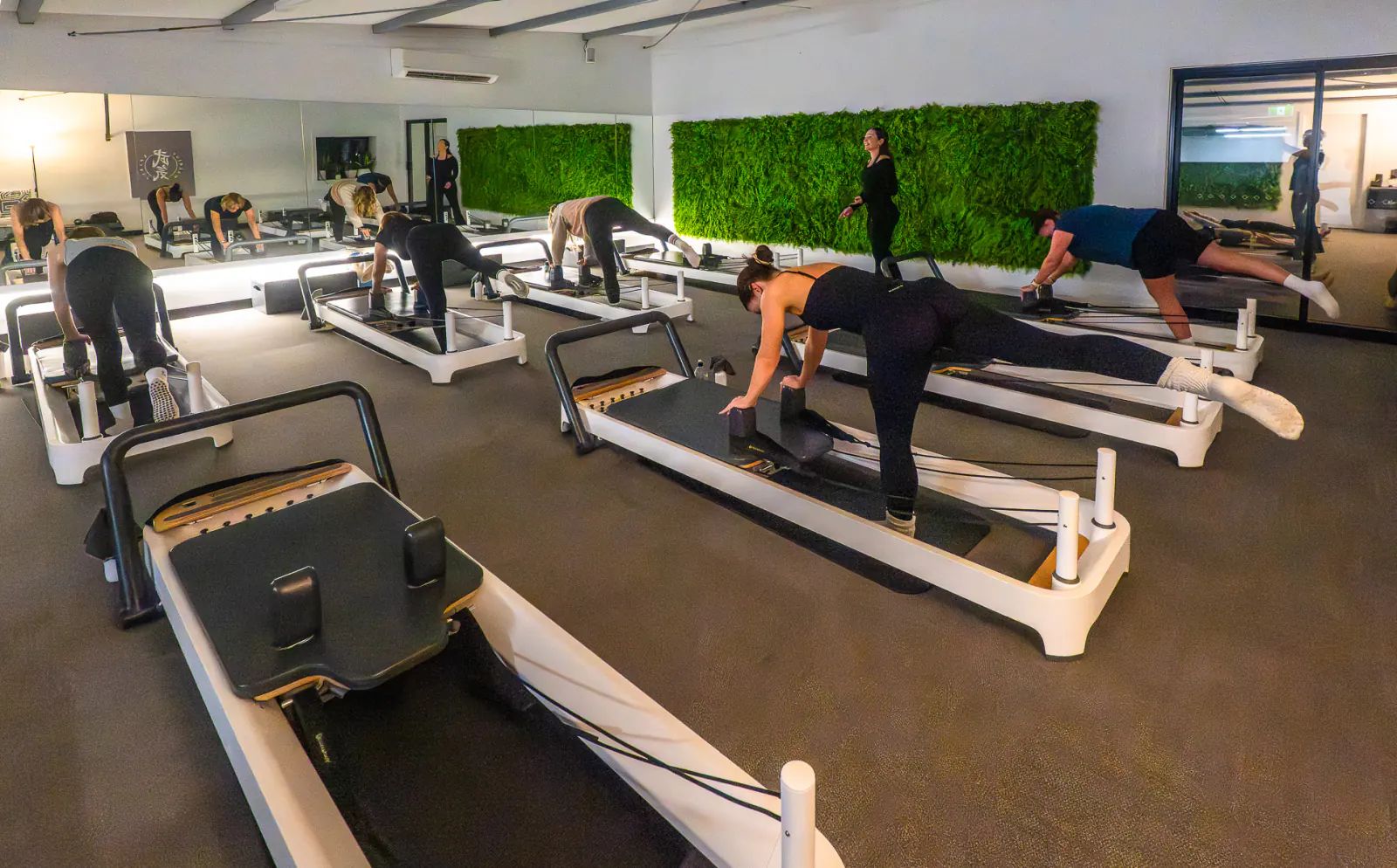
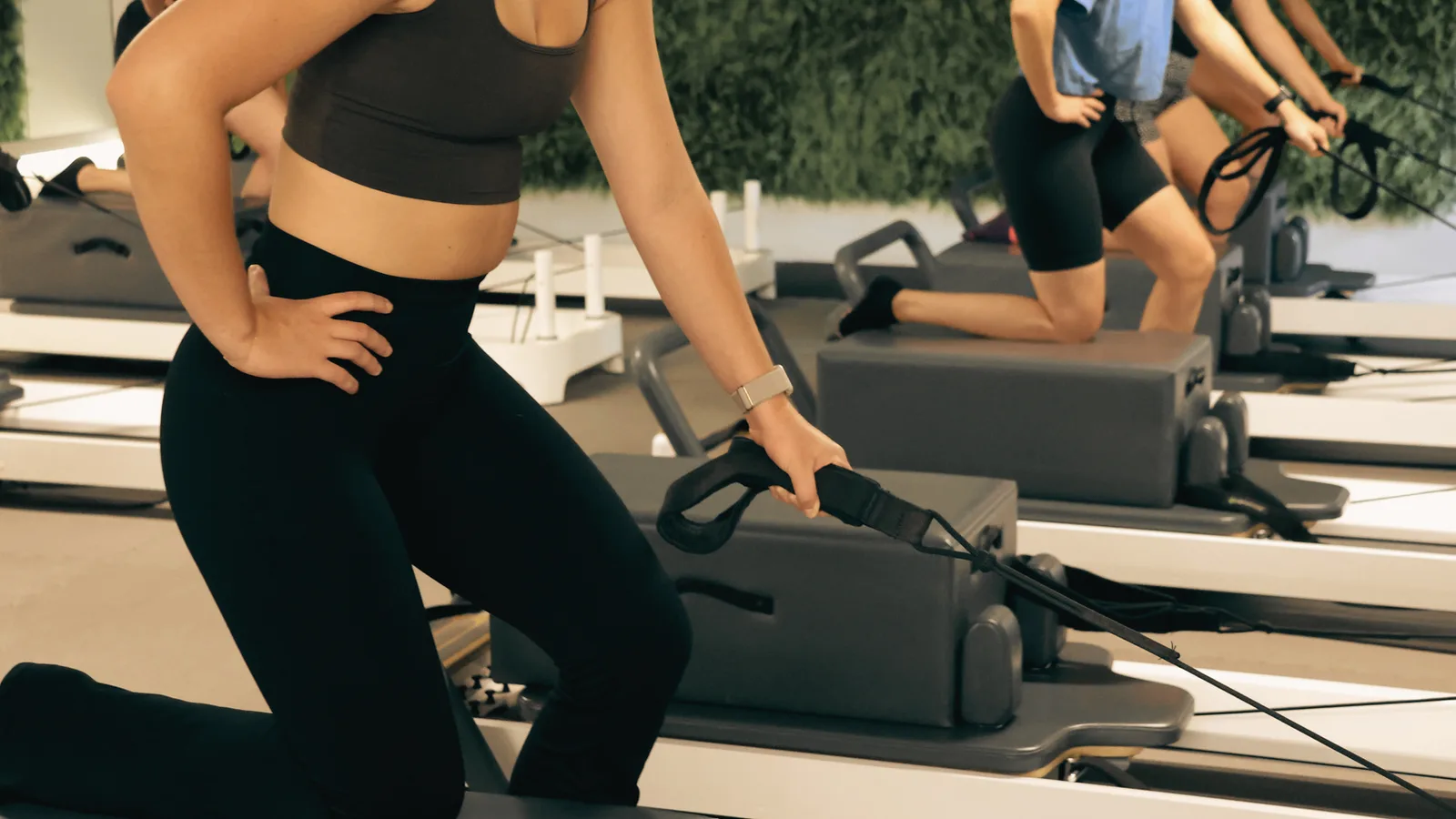
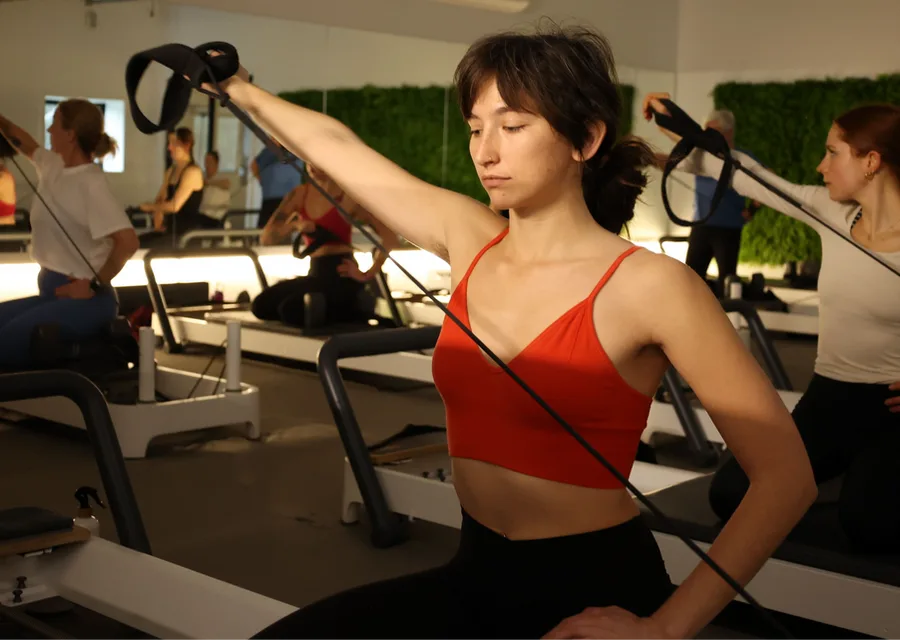
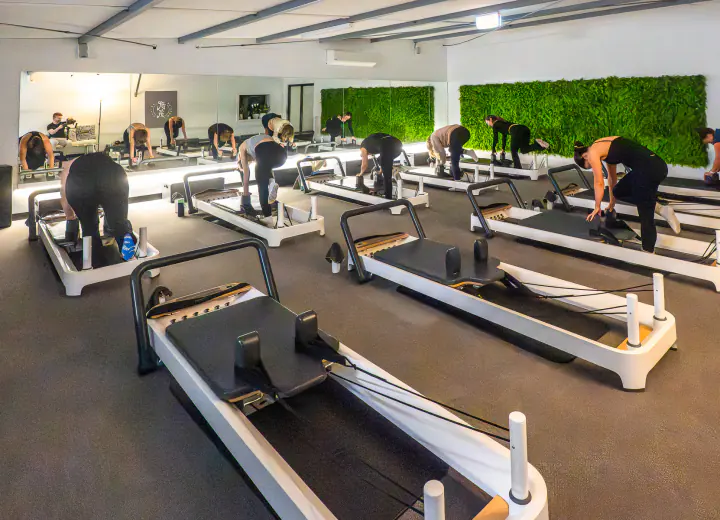
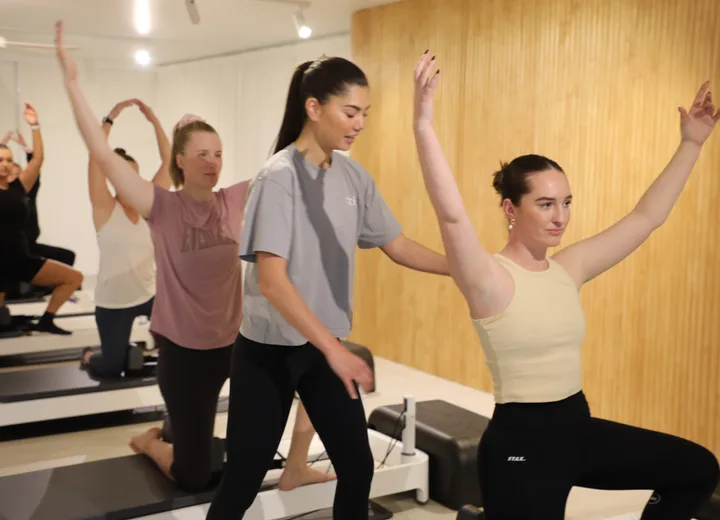
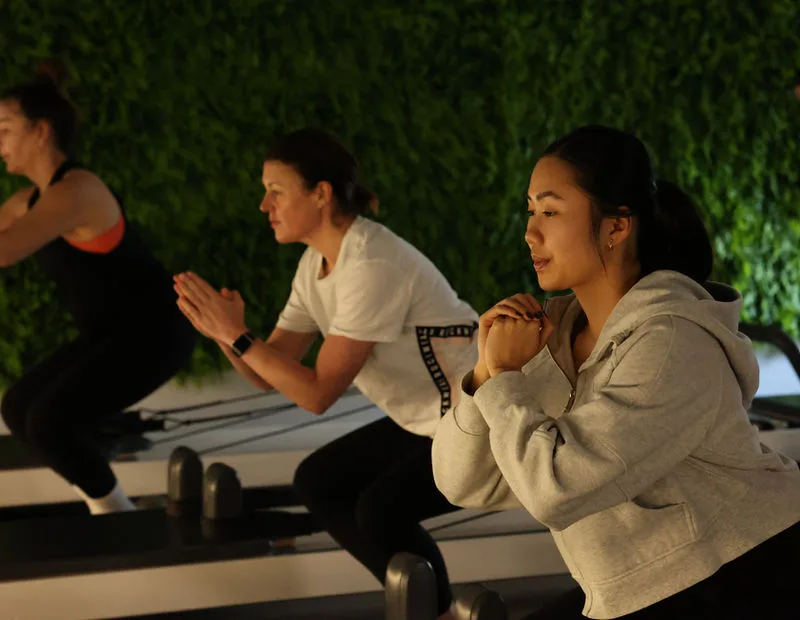
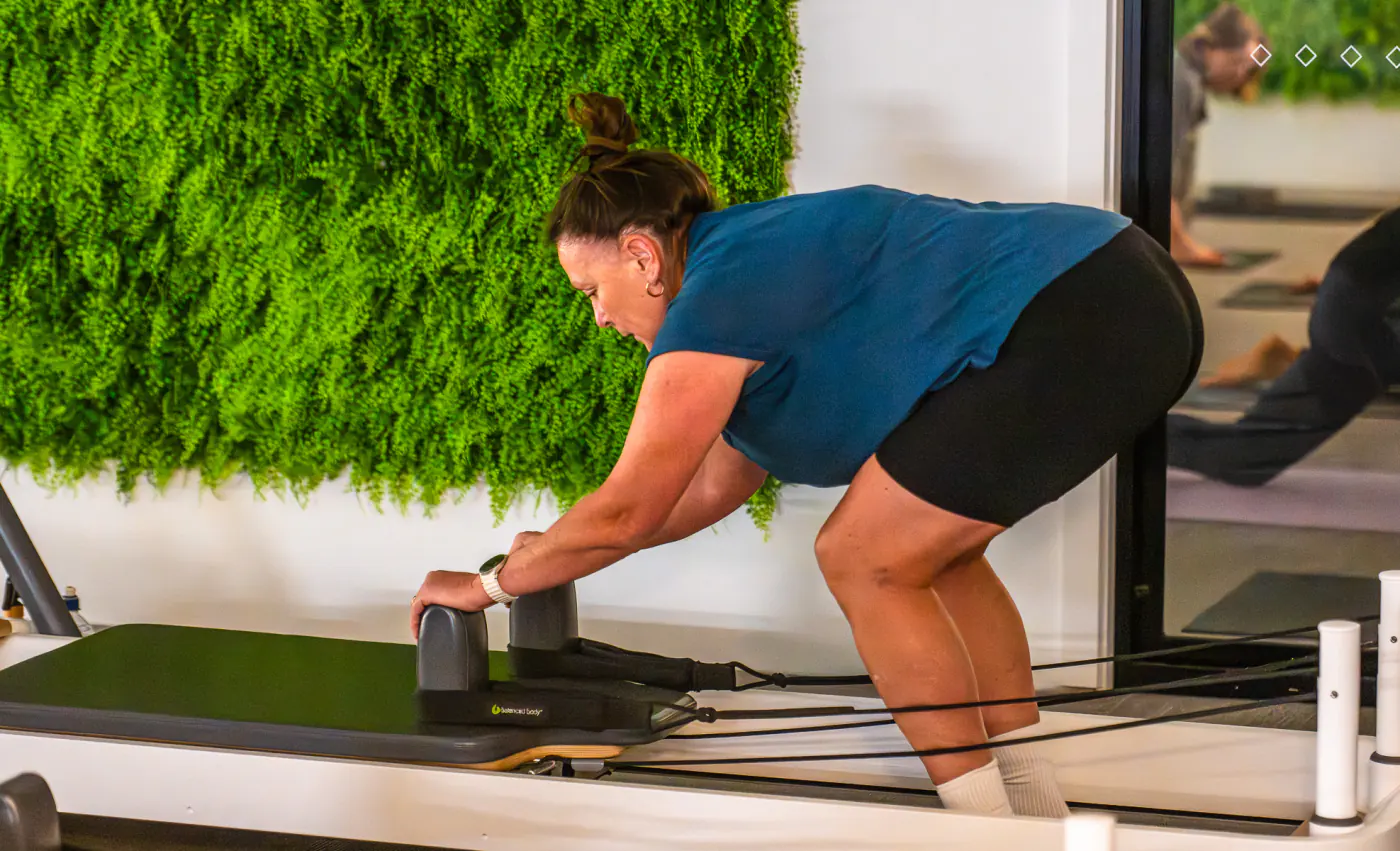
Every Reformer class includes the strength and mobility work that makes floor transfers easier. Footwork and leg exercises build strength in your legs and glutes. Kneeling work on the carriage trains your trunk to stay steady over your knees, and standing exercises challenge your balance on a moving surface.
There is a smaller benefit that people rarely notice. Getting on and off the Reformer itself is practice, with every class involving lying down and sitting up several times. Yoga classes add plenty of transitions between standing and kneeling on the mat. Over weeks, these repetitions add up.
Safety notes
Check with your GP or physio before practising floor transfers if you have had a hip or knee replacement, since some positions may need to be avoided or modified. The same applies to significant knee pain. Anyone with osteoporosis or a history of falls should also get personal advice first, as should anyone who has problems with dizziness.
Stay where you are and call for help if you ever fall and cannot get up safely. Do not force it.
Tell your instructor about any of these considerations before class. They can adjust how you get on and off the Reformer and set up exercises to suit you.
Small practice, lasting payoff
Getting down to the floor and back up is a skill that rewards a little regular practice. A few repetitions while you watch TV in the evening is enough to start. Pay attention to how it feels over the following weeks. Many people notice they need their hands less, and that sitting on the floor with the kids stops being something they plan around. If you would like the strength and control that make it easier, a Control class is a good place to begin. Find a session on the timetable at Wollongong or Shellharbour.